Most American collectors know that provenance can raise a luxury handbag’s value by as much as 40 percent. In a world flooded with imitations, understanding every detail of a bag’s journey reassures both seasoned investors and global shoppers. This guide shows how clear provenance protects your purchase, secures your investment, and unveils the story behind every authenticated designer piece you acquire.
Table of Contents
- Defining Designer Bag Provenance Clearly
- Types of Provenance in Luxury Handbags
- How Provenance Affects Authenticity and Value
- Key Provenance Documents and Tracing Methods
- Risks of Poor or Missing Provenance Evidence
Key Takeaways
| Point | Details |
|---|---|
| Importance of Provenance | Designer bag provenance ensures authenticity and safeguards against counterfeits, enhancing investment potential. |
| Necessary Documentation | Always obtain original purchase receipts and authentication certificates when acquiring pre-owned luxury handbags. |
| Value Impact | Bags with complete and verifiable provenance typically command higher resale values and greater collector interest. |
| Risks of Inadequate Evidence | Incomplete provenance poses significant risks including reduced value, counterfeit exposure, and limited legal protection. |
Defining Designer Bag Provenance Clearly
Designer bag provenance represents the comprehensive historical documentation and verification of a luxury handbag’s origin, authenticity, and journey from manufacturer to current owner. At its core, provenance answers fundamental questions about a bag’s legitimacy: Where was it manufactured? When was it produced? What is its complete ownership history?
In the world of luxury fashion, provenance goes far beyond a simple paper trail. Authenticity certification involves rigorous documentation that traces a designer bag’s entire lifecycle - from initial production at the brand’s workshop to its current possession. This documentation typically includes original purchase receipts, serial numbers, manufacturing timestamps, original packaging, and sometimes even detailed photographic evidence of the bag’s initial creation and subsequent transfers of ownership. The rise of pre-loved luxury has made comprehensive provenance even more critical for collectors and investors.
Authentic provenance serves multiple critical purposes for luxury handbag enthusiasts. It protects buyers from counterfeit products, validates the bag’s investment potential, and provides a detailed historical narrative that enhances the item’s intrinsic value. Professional authenticators examine microscopic details like stitching precision, hardware quality, leather grain consistency, and manufacturing techniques to establish a bag’s genuine provenance. These experts can often trace a bag’s history through brand-specific databases, original production records, and meticulous cross-referencing of manufacturing signatures.
Pro tip: When purchasing a pre-owned designer handbag, always request a complete provenance report and have it independently verified by a certified luxury authentication specialist to ensure your investment’s legitimacy and value.
Types of Provenance in Luxury Handbags
Luxury handbag provenance encompasses several distinct categories of documentation that collectively establish a bag’s authenticity and historical value. From investment perspectives, these provenance types serve as critical markers of a designer bag’s legitimacy and potential appreciation.
Primary Provenance Documentation includes several essential components that professional authenticators and collectors rely on for verification:
- Original Purchase Documentation: Includes original receipts, sales invoices, and brand-specific purchase records
- Manufacturing Certificates: Detailed documentation from the brand confirming production details
- Serial Number Verification: Unique identifiers that trace the bag’s original production batch and manufacturing date
- Condition Reports: Professional assessments detailing the bag’s physical condition and preservation history
Secondary provenance elements provide additional layers of authentication beyond standard documentation. These include photographic evidence of ownership, detailed repair and restoration records, and expert assessment reports. Professional authenticators meticulously cross-reference these documents to establish a comprehensive historical narrative for each luxury handbag. The intricate process involves examining microscopic manufacturing details, comparing documented characteristics against brand-specific databases, and verifying the bag’s complete ownership trajectory.
Pro tip: When collecting luxury handbags, maintain a dedicated digital and physical file documenting every aspect of your bag’s provenance, including receipts, authentication certificates, and professional condition assessments to preserve its long-term investment value.
How Provenance Affects Authenticity and Value
Provenance plays a pivotal role in establishing both the authenticity and market value of luxury designer handbags. Understanding the intricate relationship between authentication and provenance reveals how meticulous documentation directly impacts a bag’s financial worth and collector desirability.
Authenticity Verification represents the primary mechanism through which provenance protects luxury handbag investments. Professional authenticators employ sophisticated techniques to validate a bag’s legitimacy, examining microscopic manufacturing details that counterfeiters cannot replicate. These detailed assessments include:
- Analyzing thread tension and stitch consistency
- Verifying hardware quality and brand-specific manufacturing signatures
- Comparing material composition against brand standards
- Cross-referencing serial numbers with manufacturer databases
The financial implications of comprehensive provenance are substantial. Luxury handbags with complete, verifiable documentation can command significantly higher resale values compared to bags with incomplete or questionable histories. Collectors and investors prioritize bags that can demonstrate an unbroken chain of ownership, original purchase documentation, and expert authentication reports. This meticulous verification process not only protects against counterfeit risks but also establishes the bag’s potential as a long-term investment asset.
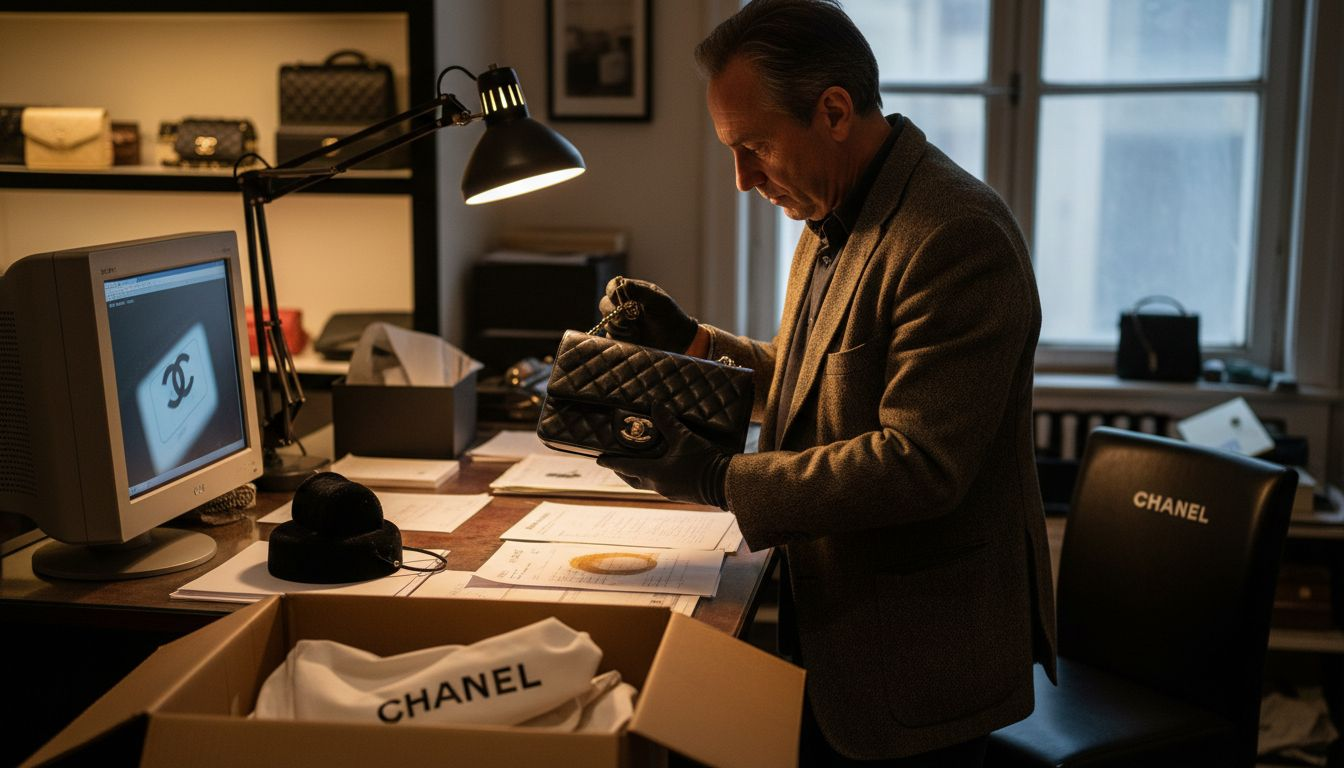
Pro tip: Always request a comprehensive authentication report from certified luxury handbag experts when purchasing pre-owned designer bags, ensuring you receive a detailed provenance document that substantiates the item’s authenticity and investment potential.
Key Provenance Documents and Tracing Methods
Luxury handbag provenance relies on a comprehensive set of documents that collectively establish an item’s authenticity and ownership history. Tracing methods for designer accessories involve sophisticated techniques that go beyond simple paperwork verification.
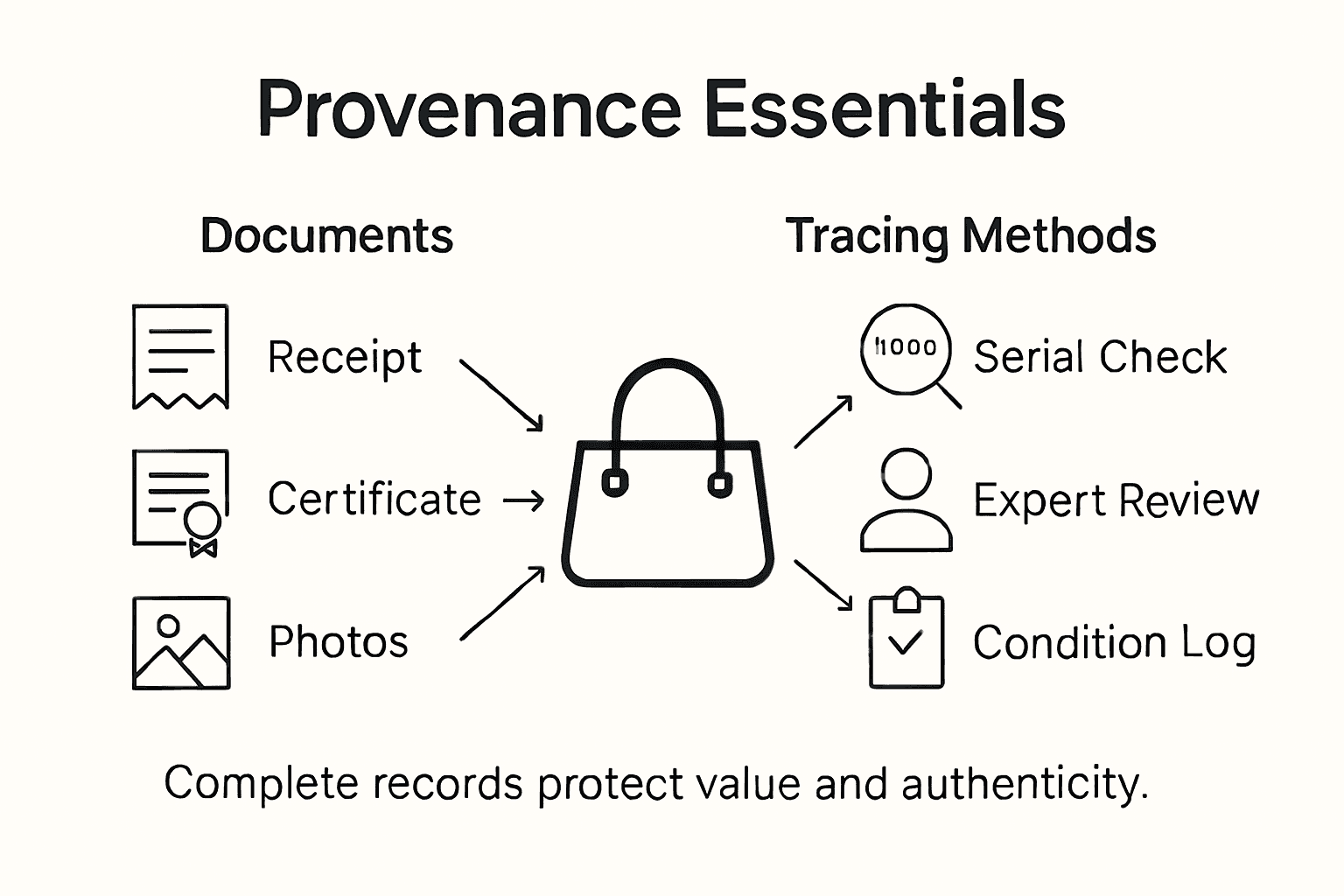
Primary Provenance Documentation includes several critical components essential for establishing a bag’s legitimate history:
Here’s a summary of how different provenance documents impact authentication and resale value:
| Provenance Document Type | Authentication Confidence | Effect on Resale Value | Typical Source |
|---|---|---|---|
| Manufacturer-issued certificates | Very high | Substantially increases value | Official brand store |
| Serial number database match | High | Boosts buyer confidence | Brand database |
| Independent condition report | Moderate to high | Stabilizes market price | Third-party authenticator |
| Photographic ownership records | Moderate | Minor positive effect | Collector or seller archive |
| Original purchase invoice | Very high | Essential for premium pricing | Authorized retailer |
- Original manufacturer purchase receipts
- Brand-issued authenticity certificates
- Serial number registration documents
- Professional condition assessment reports
- Detailed service and repair records
- Original packaging and accompanying materials
The tracing process involves multiple sophisticated verification techniques that professional authenticators employ. These methods include cross-referencing serial numbers with manufacturer databases, examining microscopic manufacturing details, and conducting comprehensive material and craftsmanship analyses. Advanced digital verification tools now complement traditional authentication methods, allowing collectors and investors to validate a handbag’s provenance with unprecedented precision. Specialized authentication services maintain extensive archives and utilize advanced technological tools to track and verify the intricate details of luxury handbag histories.
Pro tip: Maintain a dedicated digital and physical archive of all provenance documents, including high-resolution photographs of authentication markers, to preserve and protect the long-term value of your luxury handbag investment.
Risks of Poor or Missing Provenance Evidence
Designer handbag collectors face significant financial and legal risks when purchasing items with incomplete or nonexistent provenance documentation. Understanding the potential consequences of poor documentation reveals the critical importance of comprehensive ownership verification.
Primary Risks of Inadequate Provenance include several substantial challenges that can dramatically impact a luxury handbag’s value and authenticity:
Compare common risks faced when provenance evidence is missing versus properly documented bags:
| Scenario | Counterfeit Risk | Resale Price Impact | Legal Protection |
|---|---|---|---|
| Complete provenance | Very low | Highest possible resale value | Strong ownership case |
| Partial/incomplete provenance | Moderate | Lower market value | Limited protection |
| No provenance | Extremely high | Severely reduced value | No legal recourse |
- High probability of purchasing counterfeit products
- Substantially reduced resale and investment value
- Limited legal recourse in authentication disputes
- Potential inability to insure the handbag
- Compromised collector and investor credibility
- Difficulty proving ownership in case of theft
The financial implications of poor provenance extend far beyond initial purchase concerns. Professional collectors and investors recognize that undocumented luxury handbags represent significant risk vectors in the designer accessory market. Authentic bags with complete provenance can command prices up to 40% higher than those with questionable or missing documentation. Sophisticated buyers and auction houses consistently prioritize handbags with meticulously maintained historical records, creating a market dynamic that punishes incomplete provenance documentation.
Pro tip: Always request a comprehensive documentation package when purchasing pre-owned luxury handbags, including original receipts, authentication certificates, and detailed condition reports to protect your investment and ensure future marketability.
Secure Your Designer Bag Investment with Verified Provenance at Naise Shopper
The article highlights the critical challenge luxury buyers face: verifying the complete provenance of designer handbags to ensure authenticity and protect investment value. Missing or incomplete documentation increases counterfeit risks and reduces resale potential. If you want to avoid these costly pitfalls and enjoy confidence in every purchase, choosing a trusted platform that guarantees thorough authentication is essential. Naise Shopper specializes in authenticated designer handbags and offers detailed provenance verification so you can shop with peace of mind.
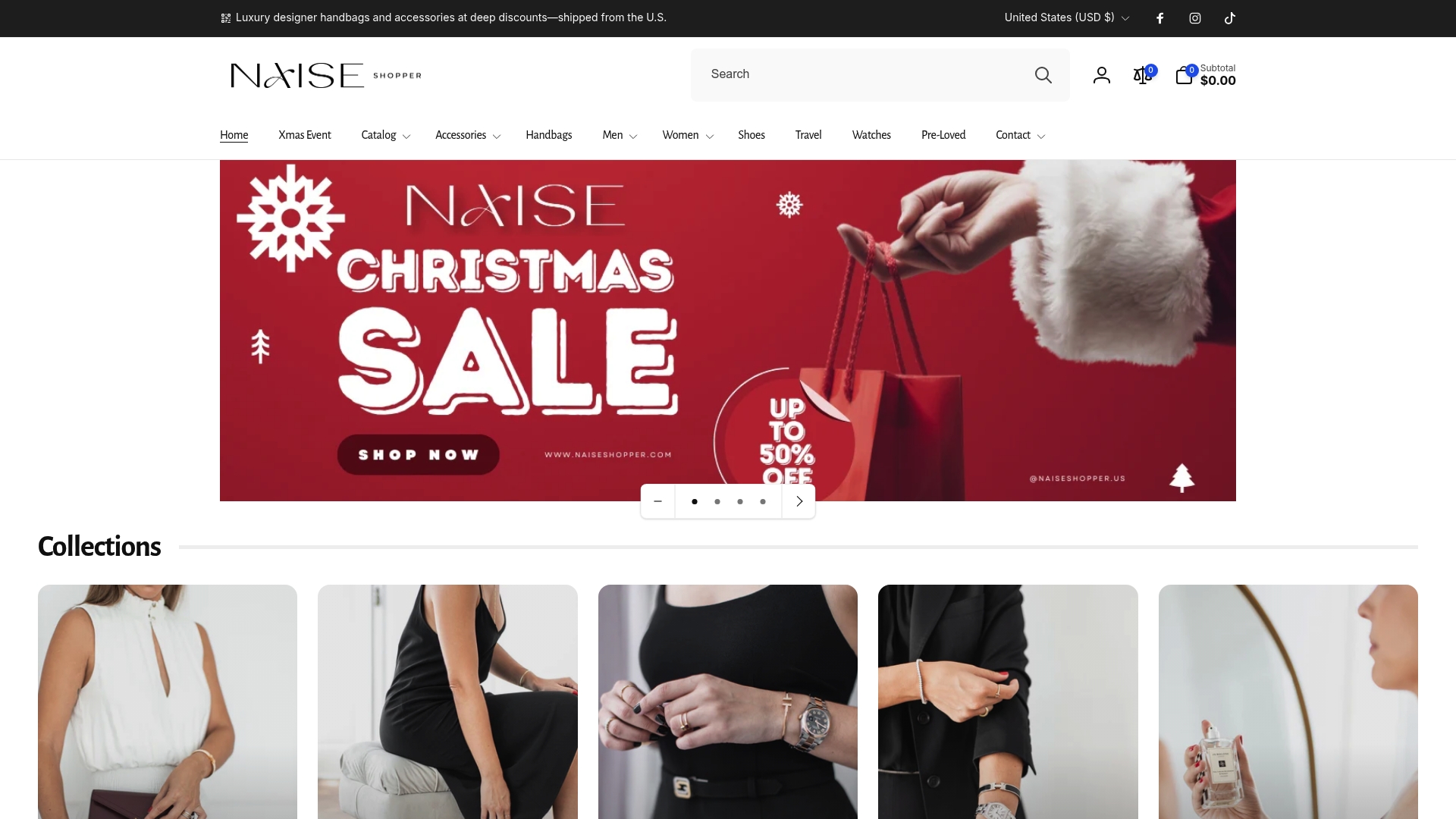
Explore Naise Shopper’s curated luxury collections featuring top brands like Gucci, Chanel, Prada, and Valentino. Benefit from our deep discounts, secure international shipping, and personal shopper assistance designed to deliver genuine products with verified history. Take control of your luxury investment today and shop only from sources that prioritize provenance and authenticity. Visit Naise Shopper now and safeguard your designer bag purchase with confidence.
Frequently Asked Questions
What is designer bag provenance?
Designer bag provenance refers to the historical documentation and verification of a luxury handbag’s origin, authenticity, and ownership journey from its manufacturer to the current owner.
Why is provenance important for designer handbags?
Provenance is essential as it protects buyers from counterfeit products, validates the handbag’s investment potential, and provides a detailed history that enhances its intrinsic value.
How does provenance affect the resale value of designer bags?
Handbags with complete and verifiable provenance can command significantly higher resale values than those with incomplete documentation, as collectors prioritize items with an unbroken chain of ownership and authentic certification.
What types of documents are considered primary provenance documentation?
Primary provenance documentation includes original purchase receipts, manufacturing certificates, serial number verification, and condition reports, all of which help establish a bag’s authenticity and history.
Recommended
- The Rise of Pre-Loved Luxury: Why Secondhand Designer Bags Are a Very
- From Investment to Icon: The Luxury Bags That Will Never Go Out of Sty
- News
- Top 5 Luxury Handbag Trends Dominating 2025 (and How to Style Them)
- Understanding the Qualities of Sustainable Handbags – The Cork Store