Exotic leather is restricted by a layered set of rules, not one ban. The main layers are CITES, the Endangered Species Act (ESA) and the Lacey Act. They mostly apply when a piece crosses a border, is sold for commercial purposes, or comes from a protected species. Python, alligator, crocodile, ostrich and stingray bags and boots are all part of fashion, and so is the paperwork behind them. Here is how the rules work, what they mean for your closet, and how to buy smart.
TL;DR
- Under U.S. rules, international trade in any CITES-listed species is unlawful unless the regulation’s requirements are met, so a permit trail matters for imports and exports.
- CITES imposes no controls on shipments between U.S. states and territories, but other federal and state laws can still apply.
- Travelers can carry some legally acquired items as personal effects without a CITES document, but only under strict conditions, and never mailed separately.
- Penalties are real: seizure, civil fines and, for knowing violations, criminal charges.
- Sea turtle and marine mammal products are the hardest category. Treat them as off limits.
Table of Contents
- The rules, layer by layer
- Which species draw the most scrutiny
- Buying inside the U.S. versus across a border
- Traveling with exotic leather
- Reselling, gifting and antiques
- What happens when the paperwork is missing
- How to shop exotic leather with confidence
- Our perspective
- Shop authenticated designer pieces with support
- FAQ
- Sources
The rules, layer by layer
Think of exotic leather law as three overlapping layers. Each one answers a different question.
CITES (the Convention on International Trade in Endangered Species) covers moving specimens across borders. In the U.S., 50 CFR Part 23 makes it unlawful to import, export, re-export or engage in international trade with a specimen of a species listed in Appendix I, II or III unless the regulation’s requirements are met. Species are sorted by appendix, and the appendix decides which documents you need.
The Endangered Species Act covers species the U.S. itself lists as endangered or threatened. Some wildlife laws, according to the U.S. Fish and Wildlife Service (FWS), prohibit all sale or purchase of products made from a protected species, while CITES requires permits or paperwork for imports and exports of listed species.
The Lacey Act covers marking, declaration and the legality of wildlife trade. You will see it cited alongside CITES in enforcement notices.

The practical takeaway: a legal item can become a problem the moment it changes hands across a border, and a single handbag can touch several of these laws at once.
Which species draw the most scrutiny
Not every exotic skin is treated equally. Here is what the official sources say about the categories shoppers ask about most.
Sea turtle and tortoiseshell
This is the clearest red line. According to the FWS, sea turtle shell and leather generally cannot be sold in interstate or international commerce. The same fact sheet lists items such as boots, belts, handbags, combs, guitar picks and furniture among the products affected. If a vintage piece is described as turtle, tortoiseshell or sea turtle leather, walk away.
Marine mammals and ivory
The FWS notes the U.S. also bans commercial trade of migratory birds and marine mammals, so walrus ivory and whale items cannot be imported. Elephant ivory has its own detailed rules. Accessory details like clasps and charms on older pieces are where these materials sometimes hide.
Alligator, crocodile and python
These are the skins most people mean by “exotic leather,” and they are widely used in fashion. They are also what enforcement actually catches. Recent FWS forfeiture notices show how it plays out:
- Python leather bags seized in Newark, NJ on April 15, 2026, cited for importing without a license and for trading contrary to CITES.
- Alligator leather watch straps seized in Jamaica, NY on March 31, 2026, cited for failure to declare, marking requirements under the Lacey Act and missing CITES documents.
Neither case says the leather itself was forbidden. The problem was the paperwork, the license or the declaration. That is the pattern worth remembering: with CITES-listed skins, the documents are the product.
Buying inside the U.S. versus across a border
Here is the good news for domestic shoppers. According to the FWS, CITES imposes no controls on shipments between states or U.S. territories, including the District of Columbia, Puerto Rico, Guam, the Northern Mariana Islands, the U.S. Virgin Islands and American Samoa. A bag that is already legally in the country, made from a species that is not otherwise barred, is a different situation from one arriving from abroad.
Crossing a border changes things. The FWS explains that importing Appendix I specimens requires both a U.S. import permit and an export permit from the exporting country, while Appendix II specimens require an export permit from the country of export. The eCFR’s CITES document rule, 50 CFR 23.20, adds that a valid CITES document must accompany a specimen in international trade unless an exemption applies.
Businesses have another layer. Wildlife products such as garments, bags, shoes and boots imported or exported commercially need an FWS import/export license. Licensed traders must keep records in the U.S. for five years, including a description such as “leather goods” or “footwear,” the species names, country of origin and the date and place of import.

Ports of entry matter
Wildlife shipments generally have to come through designated ports. The FWS lists them as Anchorage, Atlanta, Baltimore, Boston, Chicago, Dallas, Honolulu, Houston, Los Angeles, Louisville, Memphis, Miami, New Orleans, New York/Newark, Portland, San Francisco and Seattle. A parcel routed through the wrong gateway is a classic way for a legal item to get delayed.
Traveling with exotic leather
You do not need a permit every time you wear your python boots through an airport. The personal-effects exemption exists for exactly this. Under 50 CFR 23.15, a traveler does not need a CITES document for a legally acquired CITES specimen if all of the following are true:
- No live wildlife is included.
- No Appendix I species is included (with an exception for certain worked African elephant ivory).
- The quantity is reasonably necessary or appropriate for the trip.
- You own and possess it for personal use.
- It is worn or carried in your personal baggage on the same plane, boat, vehicle or train.
- It is not mailed or shipped separately.
That last point trips people up. The FWS fact sheet states the exemption applies only to items carried with the traveler, not to anything sent ahead or home by post. Buy a croc card holder on vacation and mail it home, and the exemption no longer covers it.
Rules abroad are separate. Other countries set their own limits, so check the destination’s wildlife authority before you pack a statement piece.
Reselling, gifting and antiques
Owning a piece and selling it are different questions. The FWS explains that under the ESA, the legality of selling an item made from an endangered or threatened species in interstate or international commerce may depend on its age and origin, and whether the species is native to the U.S. The ESA is the only federal wildlife law that addresses antiques, which must be at least 100 years old.
A few practical points for collectors:
- Vintage is not automatically exempt. A 1980s bag is not an antique under the ESA definition.
- Ivory is its own world. FWS guidance says personal possession of legally acquired ivory is allowed, but interstate sale of African elephant ivory is prohibited except for items meeting the antiques exemption.
- Keep your records. Receipts, species names and import documents are what let a later owner prove eligibility.
- State laws can add limits. The federal framework is the floor, not always the ceiling.
What happens when the paperwork is missing
Enforcement is not theoretical. One professional trade guide summarizes the ESA and CITES consequences this way: civil penalties up to $25,000 per violation, and for knowing violations, criminal fines up to $50,000 and up to one year in prison, plus seizure of the goods. The same guide stresses that ESA forfeiture does not depend on knowledge, so not knowing is not a defense.
For most shoppers the realistic outcome is a held or seized package, not a courtroom. That is still a lost purchase, which is why documentation up front is the cheapest insurance you can buy.
How to shop exotic leather with confidence
You do not need to be a lawyer. You need a short checklist.
- Know the species name. CITES paperwork works on scientific names, genus and species. FWS says permit applicants must provide the accurate scientific name, the specimen description and legible supporting documents. If you can name it, you can check its appendix.
- Match the route to the rules. A domestic purchase and an overseas shipment are different cases. Plan the route before you buy.
- Keep everything. Invoices, authenticity details and any permits stay with the piece for life.
- Carry it, do not mail it. If you travel with a piece, keep it in your own baggage.
- Skip the red-line materials. Sea turtle, marine mammal and unverified ivory pieces are not worth the risk.
If you love the polish of a structured bag without the extra compliance layers, there is plenty of range in smooth leather. A piece like the Saint Laurent black calf leather shoulder bag or the Bottega Veneta Mini Arco Tote in Caramel delivers maximum style with a clean, classic finish.
Buying designer from abroad
If you shop across borders often, it helps to understand how US-only releases and shipping routes work. Our guide on buying US exclusives from abroad covers the logistics, and our explainer on gray market luxury shows how to buy smart when pricing and sourcing vary.
Our perspective
Exotic leather has a glamour nothing else matches: the scale pattern of a python clutch, the glossy grain of a croc top handle. We get the pull. We also see how many shoppers feel nervous the moment a skin has a Latin name attached to it.
Our view is simple. The best luxury purchase is one you can enjoy without a second thought. That means authenticated pieces, clear information about what you are buying, and a delivery route that does not leave you guessing. Authenticity is the heart of what we do at Naise Shopper, and we guarantee it on every product we sell.
It also means choosing wisely when the rules get complicated. Smooth calf, saffiano and grained leathers from houses like Prada, Bottega Veneta, Saint Laurent and Gucci give you the full designer experience, and the range is wide enough that you never feel you are compromising on style.
And when you are buying from outside the US, a personal shopper and shipping insurance can take a lot of the stress out of the process. Style should feel exciting, not risky.
Camila
Shop authenticated designer pieces with support
If you want designer handbags, shoes, ready-to-wear, watches and accessories at a discount, with authenticity guaranteed, start at Naise Shopper. We carry Gucci, Chanel, Prada, Valentino, Bottega Veneta, Saint Laurent, Balenciaga and more, with localized pricing, secure international shipping and flexible payment options.
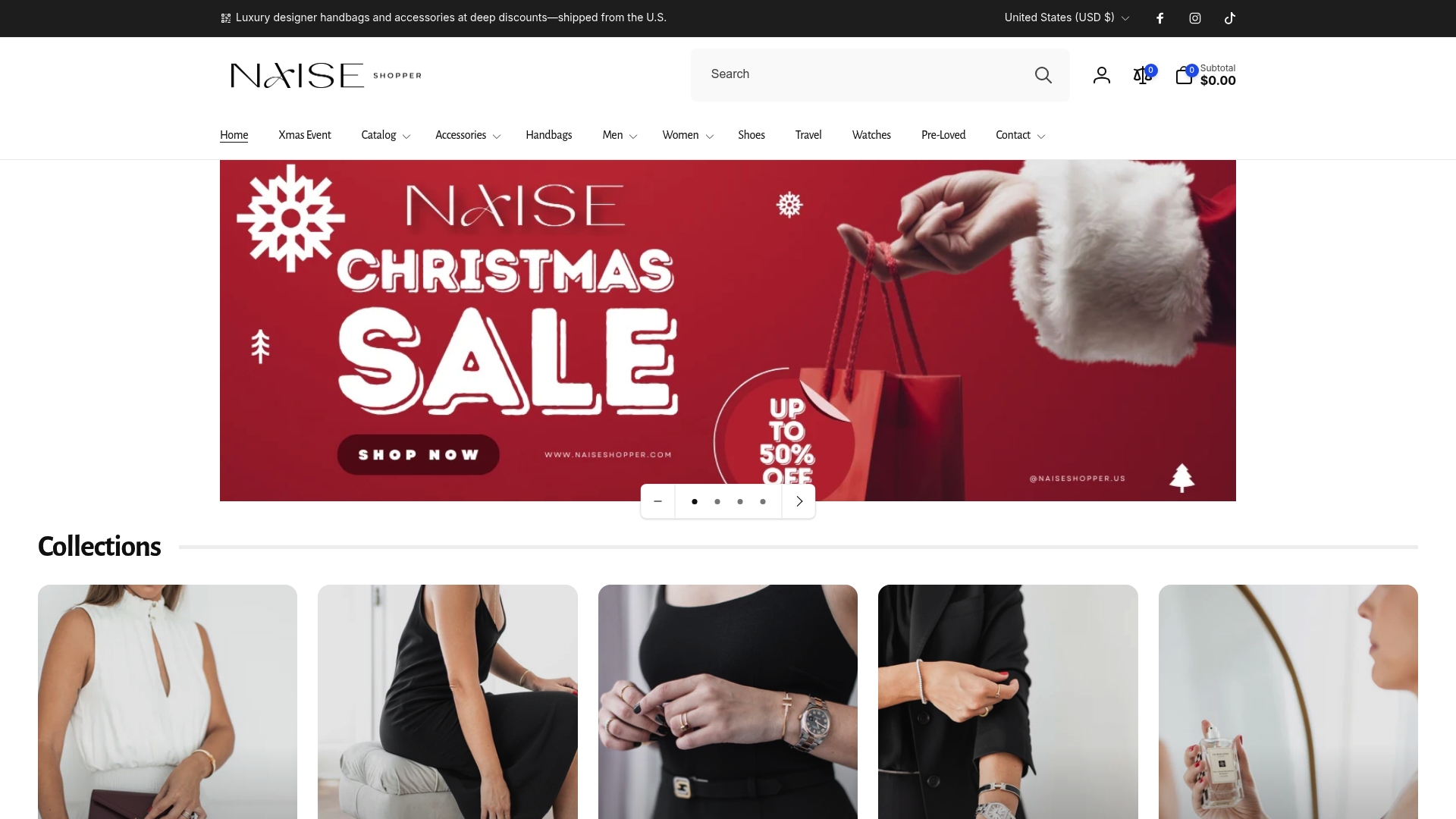
Need a hand with a US purchase? Our personal shopper services and assisted online purchasing experience are built for international buyers, and shipping insurance from the US adds peace of mind. Browse the homepage collections or try a classic like the Prada Saffiano Belt.
FAQ
Is exotic leather legal to buy in the US?
Often yes, but it depends on the species, where the item came from and how it is moving. CITES places no controls on shipments between U.S. states, while imports and exports of listed species need documents. Sea turtle products are generally barred from interstate and international sale.
Can I take my alligator or python bag on an international trip?
Possibly, under the personal-effects exemption. The item must be legally acquired, not from an Appendix I species, reasonable for the trip, owned for personal use and carried in your baggage, not mailed separately. Check the rules of the country you are visiting too.
Do I need a permit to import an exotic leather handbag I bought abroad?
If it comes in as a commercial shipment, a CITES document must accompany it unless an exemption applies, and commercial importers need an FWS license. Appendix II species generally need an export permit from the country of export. A traveler carrying it for personal use may qualify for the exemption.
Is vintage exotic leather exempt?
Not automatically. The ESA’s antiques provision requires an item to be at least 100 years old, and it is the only federal wildlife law that addresses antiques. Age, origin and species all play a role, so keep any records that come with the piece.
What happens if an exotic leather item is seized?
The goods can be forfeited, and fines can follow. The FWS publishes forfeiture notices listing the laws cited, such as importing without a license or without CITES documents. For a serious or knowing violation, speak with a qualified attorney.
Sources
- eCFR: 50 CFR Part 23 Subpart B, Prohibitions
- eCFR: 50 CFR 23.20, CITES documents required
- FWS: CITES Permits and Certificates fact sheet
- FWS: Can I sell it?
- FWS: Commercially Importing and Exporting Wildlife Jewelry
- FWS: What Can I Do With My Ivory
- eCFR: 50 CFR Part 14 Subpart I, Import/Export Licenses
- 50 CFR 14.93, applying for an import/export license
- 50 CFR 23.15, traveling internationally with personal effects
- FWS forfeiture notice, python leather bags
- FWS forfeiture notice, alligator leather watch straps
- Guide to trade in plant and wildlife products
- FWS: FAQ about international affairs permits