Most American collectors agree that mastering luxury handbag terminology is the key to savvy shopping. With brands from France to Italy competing for attention, knowing the difference between full-grain leather and exotic python can be worth thousands. This knowledge empowers buyers to spot authenticity markers, understand structure, and value craftsmanship. Gain the advantage with clear definitions and buyer protection strategies that help international enthusiasts confidently invest in discounted, authenticated designer accessories.
Table of Contents
- Definition And Fundamentals Of Handbag Terminology
- Types Of Materials And Craftsmanship Terms
- Iconic Styles And Structure Explained
- Essential Features: Logos, Hardware, And Codes
- Authentication Markers And Documentation
- Common Pitfalls And Buyer Protection Tips
Key Takeaways
| Point | Details |
|---|---|
| Understanding Handbag Terminology | Familiarize yourself with essential terms in handbag design for informed purchasing and confidence in quality assessment. |
| Recognizing Materials and Craftsmanship | Pay attention to material types and artisanal techniques to distinguish luxury handbags from lower-quality alternatives. |
| Authentication is Crucial | Ensure all original documentation and authentication markers are verified before purchasing a luxury handbag to avoid counterfeits. |
| Protecting Your Investment | Develop strategies to safeguard against counterfeiting by utilizing professional verification services and maintaining thorough documentation. |
Definition and Fundamentals of Handbag Terminology
Luxury handbag terminology represents a sophisticated language that bridges design innovation, craftsmanship, and consumer understanding. Specialized vocabulary in handbag design encompasses intricate technical details that professionals use to communicate precise aesthetic and functional characteristics of luxury accessories.
The fundamental terminology covers several critical categories of description. Structural terms define the overall silhouette and shape, including classic styles like tote, clutch, satchel, and hobo. Material descriptors specify leather types, textures, and manufacturing techniques. Hardware references include details about zippers, clasps, chains, and decorative elements that contribute to a handbag’s overall design language.
Understanding these specialized terms helps collectors and enthusiasts navigate the complex luxury handbag market, enabling more informed purchasing decisions. Professional designers and manufacturers rely on precise terminology to communicate exact specifications, while consumers gain insight into the nuanced world of luxury accessory design.
Pro tip: When shopping for luxury handbags, familiarize yourself with key terminology to confidently discuss design details and assess quality craftsmanship.
Types of Materials and Craftsmanship Terms
Luxury handbag materials represent a complex ecosystem of premium textiles and manufacturing techniques that define quality and prestige. Top-quality materials like full-grain leather and exotic skins establish a handbag’s luxury status, transforming accessories from simple functional items to coveted collector’s pieces.
The spectrum of luxury handbag materials encompasses several primary categories. Leather types range from full-grain (highest quality, using entire hide with natural markings) to top-grain (refined surface) and genuine leather (composite materials). Exotic skins like python, crocodile, and ostrich represent the pinnacle of luxury, offering unique textures and exceptional durability. Hardware materials including brass, gold-plated metal, and palladium contribute to a bag’s overall aesthetic and perceived value.

Artisanal craftsmanship techniques distinguish luxury handbags through meticulous production methods. Hand-stitching, precise edge painting, intricate interior finishing, and careful hardware attachment demonstrate the expertise behind each piece. These techniques transform raw materials into sophisticated accessories, with master artisans spending hours perfecting each detail.
Pro tip: Examine a luxury handbag’s interior stitching and hardware attachments closely - exceptional craftsmanship reveals itself in these often overlooked details.
Iconic Styles and Structure Explained
Luxury handbags transcend mere accessories, representing complex design languages that communicate style, functionality, and personal aesthetic. Structural styles emerge from a rich history of fashion innovation, each silhouette telling a unique story of design evolution and cultural significance.
The core iconic handbag styles represent distinct architectural approaches to accessory design. Tote bags offer spacious, open-top structures with parallel handles, ideal for daily versatility. Clutch bags represent minimalist elegance, designed without handles or straps for evening sophistication. Satchel bags feature structured shapes with prominent top handles and typically wider bases, originating from traditional academic and professional contexts. Hobo bags introduce soft, crescent-shaped designs with relaxed slouchy structures, emphasizing comfort and casual chic.
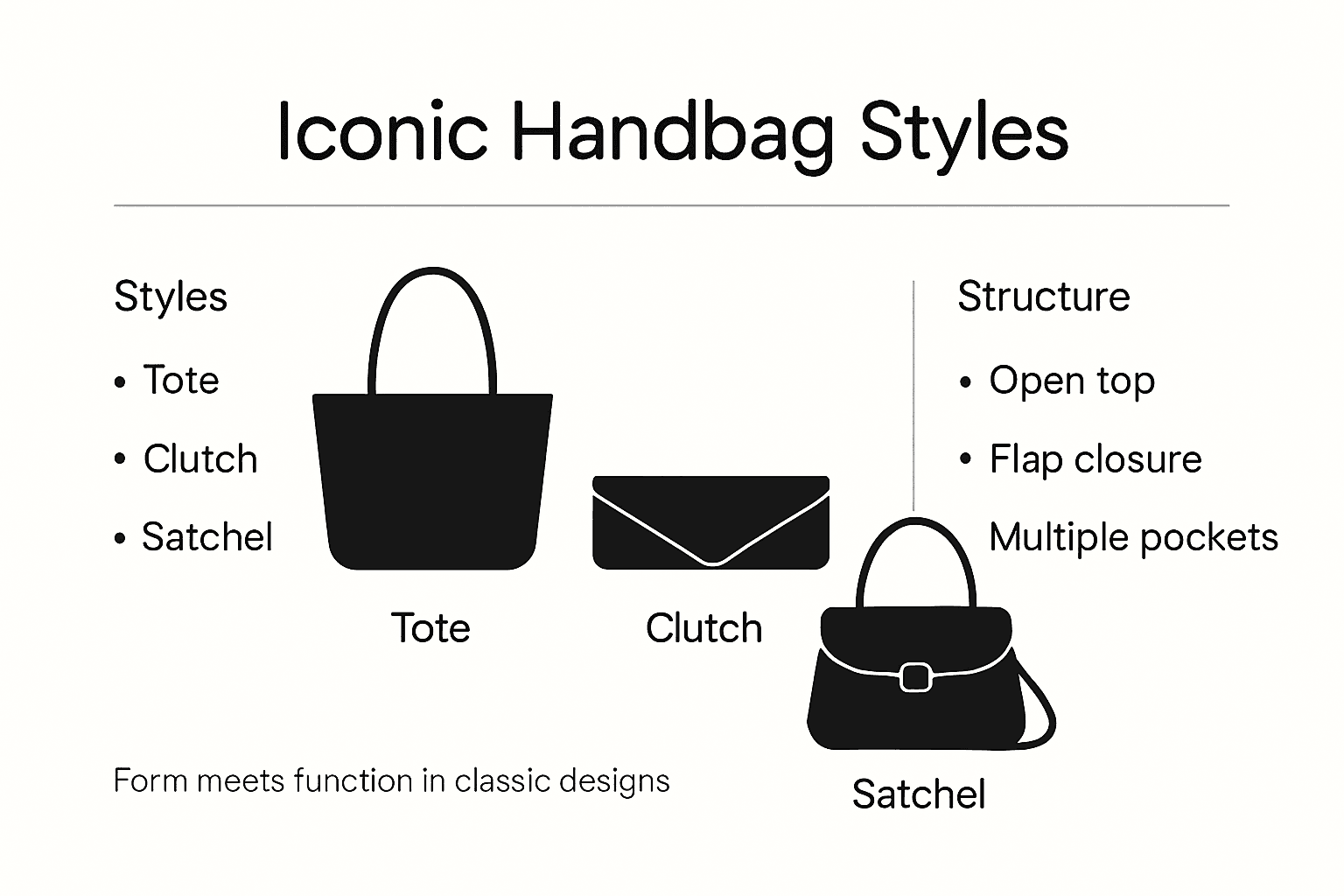
Beyond basic silhouettes, contemporary luxury handbag design explores hybrid forms that blend traditional structures with modern aesthetic sensibilities. Designers experiment with proportions, introducing micro-mini versions of classic styles, oversized statement pieces, and transformative bags with modular components that adapt to different contexts. These innovative approaches challenge traditional categorical boundaries, creating dynamic accessories that reflect individual personality and evolving fashion narratives.
Pro tip: When selecting a luxury handbag, consider how its structural design complements your personal style and practical lifestyle needs.
Here’s a summary of major luxury handbag styles and their everyday advantages:
| Handbag Style | Typical Structure | Best Use Case | Distinct Benefit |
|---|---|---|---|
| Tote | Large, open top | Daily errands | Maximized capacity |
| Clutch | No handles | Evenings out | Stylish simplicity |
| Satchel | Structured, sturdy | Work/Meetings | Organized storage |
| Hobo | Slouchy, crescent | Casual outings | Comfortable carrying |
Essential Features: Logos, Hardware, and Codes
Distinctive logos, hardware finishes, and authentication codes represent more than decorative elements in luxury handbags—they are sophisticated markers of authenticity, brand heritage, and design philosophy. These intricate details serve as visual signatures that distinguish genuine luxury accessories from counterfeit products.
Brand logos emerge as critical identification markers, typically positioned strategically on handbags. Placement varies from subtle interior tags to prominent exterior emblems, each communicating a specific design language. Hardware plays an equally significant role, with metal finishes like gold-tone, silver-tone, and brushed metals indicating quality and design intent. Zippers, clasps, and decorative elements are meticulously crafted, often featuring brand-specific engravings or unique design characteristics that signal authenticity.
Authentication codes represent the most technical aspect of luxury handbag identification. Serial numbers, typically found on interior leather tags, provide precise manufacturing information including production date, location, and unique item identifier. These codes enable collectors and buyers to verify a bag’s legitimacy, tracking its provenance and ensuring its connection to the original brand. Advanced luxury brands now incorporate digital authentication methods, including QR codes and blockchain tracking, further enhancing transparency and consumer confidence.
Pro tip: Always photograph and document a luxury handbag’s authentication codes and hardware details before purchase to support future verification.
Authentication Markers and Documentation
Global authentication strategies have evolved dramatically, transforming how luxury handbag collectors and investors verify the legitimacy of their prized possessions. Modern authentication processes combine multiple sophisticated techniques to ensure absolute certainty about a handbag’s origins and authenticity.
Authentication documentation typically encompasses several critical components. Original purchase receipts serve as primary evidence, while manufacturer certificates provide detailed manufacturing information. Provenance documentation includes original authenticity cards, serial number registrations, and comprehensive manufacturing records that trace a handbag’s entire lifecycle. Professional authentication services now offer detailed digital reports that include microscopic material analysis, historical tracking, and comprehensive visual documentation.
Technological innovations have revolutionized authentication methods. Blockchain technology enables permanent, unalterable digital records of a handbag’s complete history. Advanced digital tracking systems incorporate unique QR codes, microchips, and digital signatures that can be instantly verified across global databases. These technologies not only prevent counterfeiting but also provide collectors with unprecedented transparency about their luxury accessories’ origins, manufacturing details, and ownership history.
Pro tip: Always request and securely store all original authentication documents, as they significantly enhance a luxury handbag’s future resale value and provenance.
Use this quick reference to understand popular luxury handbag authentication methods:
| Method | Purpose | Example Technology | Added Value |
|---|---|---|---|
| Serial Number Tag | Verifies identity | Laser engraving | Tracks production origin |
| Certificate of Authenticity | Proves legitimacy | Paper or digital | Official brand verification |
| Blockchain Tracking | Secures ownership | Digital ledger | Prevents counterfeiting |
| QR/Microchip Codes | Instant digital check | Embedded hardware | Immediate authenticity scan |
Common Pitfalls and Buyer Protection Tips
Secondhand luxury handbag shopping presents complex risks that require strategic navigation. Collectors and enthusiasts must develop sophisticated approaches to protect their investments and ensure authenticity in an increasingly complex marketplace.
Counterfeiting risks represent the most significant challenge for luxury handbag buyers. Advanced counterfeit techniques have become remarkably sophisticated, often mimicking intricate details that once distinguished genuine products. Buyers should focus on multiple verification strategies: examining material quality, hardware precision, stitching consistency, and cross-referencing authentication markers. Professional verification services offer comprehensive assessments that can definitively validate a handbag’s legitimacy.
Protection strategies extend beyond initial purchase considerations. Comprehensive documentation, including original receipts, certificates, and detailed photographic evidence, creates a robust provenance trail. Buyers should prioritize platforms and sellers offering robust return policies, authentication guarantees, and transparent dispute resolution mechanisms. Digital technologies like blockchain tracking and advanced serial number verification are increasingly becoming standard protection methods that provide additional layers of buyer confidence.
Pro tip: Always request a detailed authentication report and maintain a comprehensive digital and physical documentation portfolio for your luxury handbag investments.
Master Luxury Handbag Terminology With Confidence and Shop Authenticated Designer Bags Today
Navigating luxury handbag terminology can be overwhelming. Differentiating authentic craftsmanship from counterfeits requires a sharp understanding of materials, hardware, and authentication markers. If you seek genuine designer handbags with guaranteed authenticity and want to master terms like “full-grain leather,” “serial number tags,” and “hardware finishes,” you are in the right place. Naise Shopper offers carefully curated collections featuring top brands such as Gucci, Chanel, and Prada, all backed by secure authentication and detailed verification.
Explore our exclusive selection and shop with confidence at Naise Shopper. Take advantage of deep discounts and seasonal promotions while enjoying personalized shopper assistance and international shipping. Don’t let the complexity of luxury handbag jargon hold you back. Empower your fashion journey by choosing authentic luxury the smart way today.
Frequently Asked Questions
What are the main types of luxury handbag materials?
Luxury handbags are primarily made from top-quality materials such as full-grain leather, exotic skins (like python and crocodile), and various hardware materials including brass and gold-plated metal. These materials contribute to the luxury status and durability of the handbags.
How can I identify high-quality craftsmanship in luxury handbags?
High-quality craftsmanship can be identified through meticulous details such as hand-stitching, precise edge painting, and robust hardware attachments. Inspecting the interior and exterior of a handbag for these elements can reveal the level of craftsmanship involved.
What are some iconic handbag styles to consider?
Iconic handbag styles include tote bags (spacious and versatile), clutch bags (elegant and minimalistic), satchel bags (structured with top handles), and hobo bags (soft and slouchy). Each style caters to different needs and occasions.
How do authentication codes help verify a luxury handbag’s legitimacy?
Authentication codes, typically found on interior tags, provide detailed manufacturing information like the production date and location. These codes help collectors and buyers confirm a handbag’s authenticity and trace its provenance.