Shopping for genuine designer handbags online can feel risky when counterfeiters make even seasoned collectors second-guess their purchases. The difference between a cherished investment and a disappointing fake often lies in the smallest details, so it is vital to build a solid foundation for your search. Discover how to assemble reliable reference materials and use expert-approved strategies to confidently identify authentic luxury handbags without costly mistakes.
Table of Contents
- Step 1: Gather Reliable Reference Materials
- Step 2: Analyze Brand-Specific Signature Details
- Step 3: Examine Materials and Craftsmanship Closely
- Step 4: Verify Seller Authenticity and Documentation
- Step 5: Use Technology to Authenticate and Confirm
Quick Summary
| Key Point | Explanation |
|---|---|
| 1. Collect Authenticity Resources | Gather official guides, images, and research to establish a solid foundation for spotting fake handbags. |
| 2. Examine Signature Details | Analyze logos, serial numbers, and stitching to identify brand-specific authentication markers that are often hard to replicate. |
| 3. Assess Materials and Craftsmanship | Look for quality in leather and stitching, as genuine items show superior craftsmanship that counterfeit products lack. |
| 4. Verify Seller Credibility | Investigate seller ratings and documentation to ensure they provide transparent records that confirm the item’s authenticity. |
| 5. Utilize Technology for Authentication | Leverage advanced tools like AI and image recognition software to enhance accuracy in identifying authentic products. |
Step 1: Gather reliable reference materials
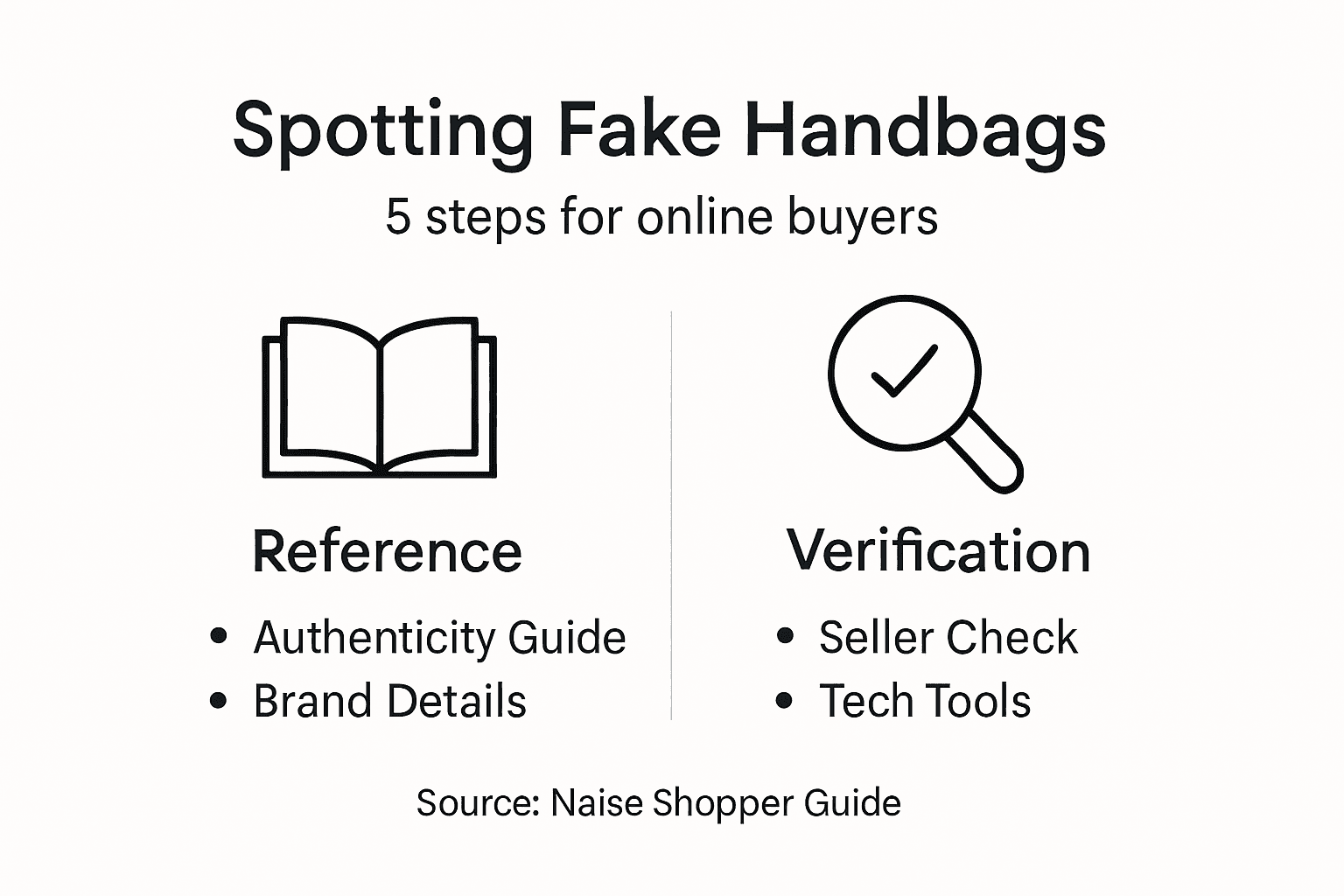
Spotting fake handbags requires assembling a comprehensive toolkit of authentic reference materials that will become your investigative foundation. In this crucial first step, you’ll strategically collect resources that help distinguish genuine designer pieces from convincing counterfeits.
Start by gathering materials from several key sources. Critical evaluation strategies will guide your research process. Your reference collection should include:
- Official designer brand authentication guides
- High-resolution product images from authorized retailers
- Manufacturer’s original product specifications
- Professional fashion authentication websites
- Academic or industry publications about counterfeit detection
Focus on sources that demonstrate clear credibility and expertise. Peer-reviewed research materials provide the most rigorous documentation for understanding authentic product characteristics. Government trade reports and scholarly databases can offer additional insights into manufacturing techniques and fraud prevention.
Professional authentication requires comprehensive, current, and authoritative reference materials.
Pro tip: Always cross-reference multiple credible sources to validate your reference materials and build a robust authentication framework.
Step 2: Analyze brand-specific signature details
In this critical authentication phase, you’ll become a detective of design nuances by meticulously examining the unique signature details that distinguish genuine luxury handbags from sophisticated counterfeits. Professional authentication techniques will be your roadmap to mastering these intricate visual forensics.
Focus your investigation on these key brand-specific signature elements:
- Logo precision: Examine font styles, spacing, and alignment
- Serial number verification: Check placement, font, and numeric sequence
- Hardware quality: Inspect metal finishes, engravings, and brand stampings
- Stitching characteristics: Analyze thread color, stitch consistency, and pattern
- Material texture: Evaluate leather grain, color saturation, and tactile qualities
Each luxury brand has unique authentication markers that require specialized knowledge. Some designers use microscopic details like thread tension, interior label placement, or specific holographic elements that counterfeiters struggle to replicate precisely.
Authentic luxury items reveal their legitimacy through meticulous, brand-specific details invisible to untrained eyes.
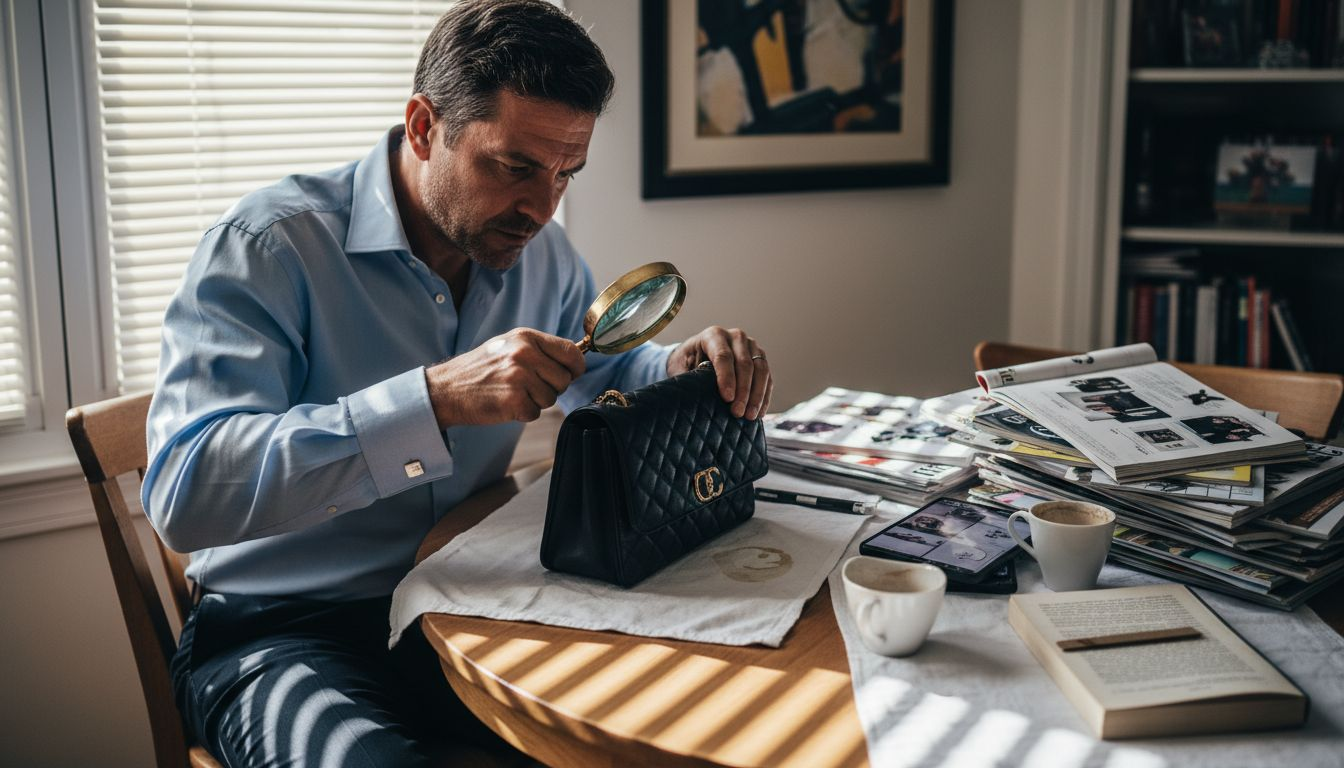
Pro tip: Invest in a high-quality magnifying glass to examine minute brand-specific details that separate genuine products from convincing fakes.
Step 3: Examine materials and craftsmanship closely
Authentic luxury handbags are distinguished by their exceptional materials and meticulous craftsmanship. In this crucial step, you’ll develop a trained eye for detecting subtle differences that separate genuine designer pieces from sophisticated counterfeits.
Focus your detailed examination on these critical material and craftsmanship indicators:
- Leather quality: Assess grain consistency, color uniformity, and natural imperfections
- Stitching precision: Evaluate thread tension, stitch density, and alignment
- Hardware durability: Inspect metal quality, plating, and engraving details
- Interior construction: Check lining materials, seam finishes, and structural integrity
- Thread and edge work: Analyze edge painting, thread color matching, and finishing techniques
Luxury craftsmanship goes beyond surface appearances. Pay attention to nuanced details like the weight of the material, the smoothness of zippers, and the consistency of leather treatments. Authentic designer pieces demonstrate an unparalleled level of manufacturing excellence that counterfeiters struggle to replicate.
True luxury is revealed in the microscopic details that most people never notice.
Pro tip: Bring a small magnifying glass and feel the materials with clean hands to detect subtle differences in texture and quality.
Step 4: Verify seller authenticity and documentation
Protecting yourself from counterfeit luxury handbags requires a thorough investigation of the seller’s credentials and supporting documentation. Professional authentication insights will guide you through this critical verification process.
Evaluate the seller’s credibility using these key indicators:
- Reputation assessment: Check seller ratings, reviews, and online presence
- Documentation verification: Examine certificates of authenticity
- Return policy scrutiny: Review comprehensive return and guarantee terms
- Platform legitimacy: Confirm seller’s standing on authorized luxury marketplaces
- Transaction transparency: Request detailed provenance and purchase history
Authentic sellers provide comprehensive documentation that goes beyond basic paperwork. Look for detailed transaction records including original purchase receipts, manufacturer certificates, and clear communication about the item’s history. Legitimate luxury retailers will welcome and encourage your thorough authentication process.
Here is a summary of the strengths and challenges of different authentication approaches:
| Approach | Strengths | Challenges |
|---|---|---|
| Manual expert authentication | Nuanced, brand-specific judgment | Time-consuming, requires expertise |
| Technology-based verification | Rapid, scalable, high precision | Access to tools, ongoing updates |
| Documentation evaluation | Provides paper trail, confirms provenance | Easier to forge, may be incomplete |
Legitimate sellers view transparency as a hallmark of their professional integrity.
Pro tip: Request additional high-resolution photos from multiple angles and ask specific authentication questions to assess the seller’s expertise and legitimacy.
Step 5: Use technology to authenticate and confirm
Technology has revolutionized the way we authenticate luxury handbags, offering powerful tools to detect counterfeits with unprecedented precision. Advanced AI authentication techniques now provide sophisticated methods for verifying product genuineness.
Leverage these technological authentication strategies:
- Image recognition software: Compare detailed product photos against authenticated databases
- Machine learning algorithms: Analyze logo details and material characteristics
- Digital forensic tools: Examine metadata and digital fingerprints of product images
- Blockchain verification: Track product provenance through secure digital records
- Mobile authentication apps: Use smartphone applications designed for instant verification
Cutting-edge technologies can detect microscopic differences that human eyes might miss. AI-powered authentication systems now use advanced machine vision algorithms trained on massive datasets to identify subtle anomalies in logos, materials, and design elements that distinguish genuine products from sophisticated fakes.
Compare the core factors that set apart authentic handbags from counterfeits:
| Attribute | Genuine Luxury Handbag | Counterfeit Handbag |
|---|---|---|
| Materials | Premium, consistent, natural finishes | Synthetic, inconsistent textures |
| Craftsmanship | Meticulous stitching and finishes | Flawed seams and loose stitches |
| Brand Details | Precise logos and unique codes | Blurry branding and wrong fonts |
| Seller Transparency | Detailed history and documentation | Vague or missing paperwork |
| Technological Trace | Valid blockchain or digital footprint | No verifiable digital records |
Technology transforms authentication from guesswork to scientific precision.
Pro tip: Download reputable brand authentication apps and learn to use their advanced scanning features for quick and reliable verification.
Confidently Choose Authentic Luxury Handbags with Naise Shopper
Spotting fake handbags online can be overwhelming given the rise of sophisticated counterfeits that mimic every detail from logos to stitching. If you value deep discounts without compromising on authenticity, you deserve a shopping experience that eliminates doubt and safeguards your investment. This guide highlights pain points such as verifying brand-specific details and seller legitimacy, which are exactly the challenges Naise Shopper addresses.
Discover a curated collection of authenticated designer handbags from luxury brands like Gucci, Chanel, and Prada at Naise Shopper. Benefit from our guarantee of genuine products supported by transparent documentation and expert authentication. Start your search today with confidence and take advantage of secure international shipping plus flexible payment options. Don’t let uncertainty slow you down. Visit our landing page now and experience luxury shopping where trust and value come first.
Frequently Asked Questions
How can I tell if a handbag is fake?
To tell if a handbag is fake, start by examining specific brand details such as the logo precision, stitching quality, and material texture. Focus on unique features that each luxury brand presents, and consider using a magnifying glass to inspect small details closely.
What reference materials should I gather to spot fake handbags?
Gather official authentication guides, high-resolution images from authorized retailers, and academic publications on counterfeit detection. Build a comprehensive toolkit by cross-referencing multiple credible sources to enhance your ability to identify genuine products.
What are some key signature elements to analyze for authenticity?
Examine elements like the precision of the logo, the placement and appearance of serial numbers, and the quality of hardware used. Focus on brand-specific characteristics like stitch patterns and interior label placement that can reveal the authenticity of the handbag.
How can I verify the credibility of a seller online?
Verify a seller’s credibility by checking their reputation through ratings and reviews. Request detailed documentation, such as certificates of authenticity, and evaluate their return policy to ensure it supports a transparent transaction.
What technology can help me authenticate luxury handbags?
Use image recognition software and mobile authentication apps to quickly verify product authenticity. Explore tools that analyze detailed product photos against authenticated databases, enhancing your ability to identify counterfeits with precision.
What should I pay attention to when examining materials and craftsmanship?
When examining materials, look for high-quality leather consistency, precise stitching, and durable hardware. Consider tactile qualities and the weight of the handbag, as genuine luxury pieces often exhibit superior craftsmanship not evident in counterfeits.