Most Gucci sneakers run true to size when you shop by centimeters, not by your usual US or UK number. Measure your foot in centimeters, match it against Gucci’s official EU chart, then adjust for the specific model. Chunky styles like the Rhyton tend to run generous, slip-on Tennis 1977s often need a half size up, and the Screener can feel tight through the toe box. Get the model notes right, and returns become the exception, not the routine.
TL;DR:
- Most Gucci sneakers fit true to size when measured in centimeters, but model-specific notes are crucial for styles like Rhyton, Screener, and slip-ons.
- Accurate foot measurement in centimeters at the end of the day yields the best sizing results, especially for models that don’t come in half sizes.
- Material type significantly impacts fit, with leather stretching over time and canvas or knit uppers remaining firm, affecting initial size choices.
- Converting sizes from US, UK, or gender-based labels to Gucci’s EU system requires careful reference to their official charts, especially for unisex or slip-on styles.
- Checking insole measurements on product pages and consulting personal shoppers can reduce sizing guesswork for online purchases.
Table of Contents
- Gucci Sneaker Sizing: How to Read the Official EU Chart
- How Do You Measure Your Foot for Gucci Sizing?
- Do Gucci Sneakers Run Big or Small by Model?
- Converting Between US, UK, EU, and Gucci Sizes
- What to Try Before Requesting a Gucci Sneaker Exchange
- Ordering Gucci Sneakers Online Without the Sizing Guesswork
- Why This Gucci Sizing Guidance Holds Up
- The Editorial Take on Gucci Sneaker Fit
- Buy Gucci Sneakers With Sizing Support Built In
- Sources
Gucci Sneaker Sizing: How to Read the Official EU Chart
Gucci’s own conversion tool is the starting point for any sizing decision, and it’s worth bookmarking before you shop. The brand publishes separate charts for men’s and women’s footwear, each mapping foot length in centimeters to EU sizes with parallel US and UK equivalents. Once you know your foot length in centimeters, Gucci’s official shoe size guide becomes the fastest way to land on the right EU number.
Here’s a simplified version of how the men’s and women’s charts typically break down, based on Gucci’s published conversions and cross-referenced with independent size chart analysis:
Notice how a men’s EU 41 and a women’s EU 38 both sit near the 26 cm mark. Gucci’s shared numbering system across genders means the EU number alone tells you nothing about which chart to use. Always confirm whether you’re looking at the men’s or women’s version before you commit to a size, especially on unisex-styled sneakers like the Ace, where both charts get used interchangeably depending on the listing.
The chart is a reliable baseline, but it isn’t gospel for every silhouette. A handful of Gucci’s chunkier or slip-on styles deviate from the standard conversion enough that you’ll want to check the model-specific notes further down before finalizing your order.
How Do You Measure Your Foot for Gucci Sizing?
Getting an accurate centimeter measurement matters more than any size chart, because a chart is only as good as the number you feed it. Here’s the method that gets you closest to your true foot length:
- Tape a sheet of paper to a hard floor against a wall, then stand on it with your heel touching the wall.
- Wear the socks you’d normally pair with sneakers, since thick socks can add a few extra millimeters.
- Mark the tip of your longest toe on the paper (this isn’t always the big toe).
- Measure the distance from the wall edge to that mark in centimeters, not inches.
- Repeat for the other foot. Most people have one foot slightly longer than the other.
- Use the larger measurement when you check it against Gucci’s cm-based conversion.
Measure at the end of the day rather than first thing in the morning. Feet swell gradually over the day from standing and walking, so an evening measurement reflects the size your foot actually reaches during normal wear, not its smallest resting state.
Pro Tip: Pull the insole out of a pair of sneakers you already own and love the fit of, then measure it heel to toe. That number, compared against Gucci’s chart, is often a faster and more accurate gut check than the wall method alone.
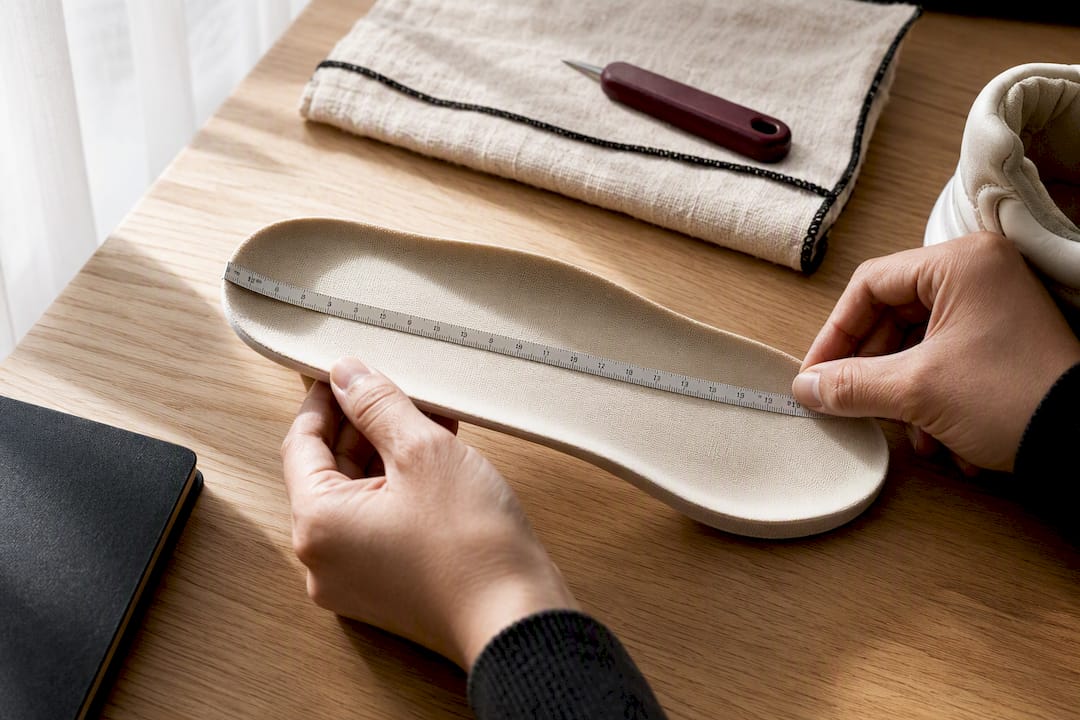
If your two feet measure differently, size for the larger one and use lacing or an insole to snug up the smaller side. A shoe that’s tight on your bigger foot will bother you every time you wear it. A shoe that’s slightly loose on your smaller foot is an easy fix.
Do Gucci Sneakers Run Big or Small by Model?
This is where a generic size chart stops being enough. Gucci’s sneaker lineup spans several construction styles, and each one wears its EU size a little differently. Independent fit reviews on the Rhyton and other silhouettes consistently point to the same pattern: the outsole shape and upper material change how true to size a shoe feels, even when the label says the same number.
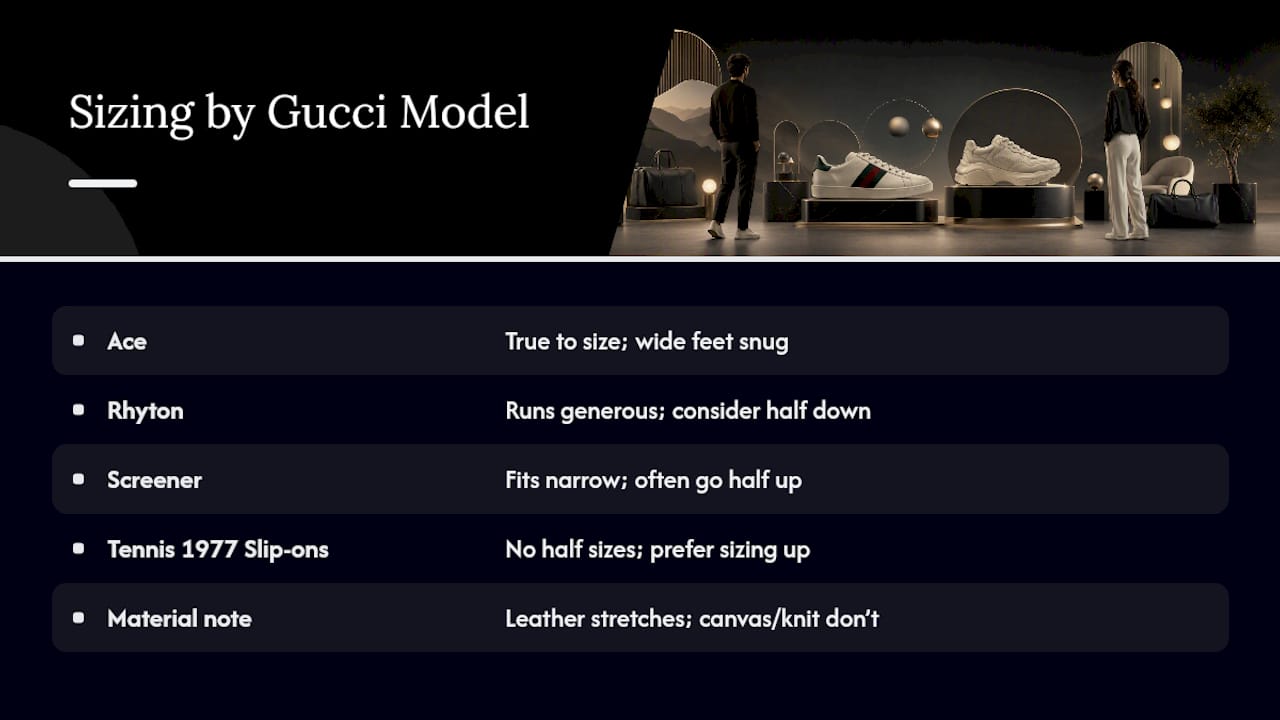
Ace. The GG-embossed leather Ace tends to run true to size for most foot shapes, though buyers with wider feet sometimes find the toe box snug in the first few wears. The Ace GG embossed sneaker and its women’s counterpart both use a leather upper that softens with wear, so true to size is the safer bet over sizing up preemptively.
Rhyton. This chunky, dad-shoe-inspired silhouette runs generously through the toe box thanks to its exaggerated sole unit. Most fit reports recommend staying true to size or even considering a half size down if you have narrow feet, since the extra volume built into the design already accounts for room most sneakers don’t have.
Screener. The Screener’s slimmer last and lower-profile construction means it fits noticeably narrower than the Ace or Rhyton. Feet with a wider forefoot tend to feel pinched at true size, and going up half a size is the more common fix. If you’re eyeing the Screener with Web detailing, factor in that narrower last before you order.
Tennis 1977 and slip-ons. These retro-styled sneakers and Gucci’s slip-on silhouettes present a different problem entirely: many don’t come in half sizes. If your measured foot lands between two whole sizes, sizing up is usually the smarter call, since a slightly loose slip-on is far easier to live with than one that pinches at the ankle opening with every step.
Material matters as much as the model. Leather uppers, like those on the Ace, stretch modestly over the first few weeks of wear. Canvas and the technical knit panels used on newer styles like the Gucci Run hold their shape and barely stretch at all, so a canvas sneaker that feels tight out of the box will likely stay that way.
Converting Between US, UK, EU, and Gucci Sizes
Once you have your foot length in centimeters, converting to Gucci’s system is straightforward, but a few conversion quirks trip up first-time buyers. A 26 cm foot lands around EU 41 on the men’s chart or EU 38 on the women’s chart, which shows why gender matters more than the raw number itself.
A few conversion notes worth keeping in your back pocket:
- US to EU: A US men’s 9 typically converts to roughly EU 42, while a US women’s 8 lands near EU 39. Always verify against the official Gucci chart rather than a generic cross-brand converter, since luxury labels sometimes run their own last dimensions.
- UK to EU: UK sizing tends to sit about one full size below the US equivalent, so a UK 8 is closer to a US 9.
- Men’s to women’s: The common rule of thumb is subtracting roughly 1.5 to 2 sizes from a men’s US number to estimate the women’s equivalent, though this varies by last shape and doesn’t apply cleanly to every unisex Gucci style.
- Between sizes with no half-size option: When a model skips half sizes, as several slip-ons do, sizing up protects against a cramped toe box better than sizing down protects against slipping.
For a broader reference beyond Gucci specifically, this US to EU conversion breakdown is a useful cross-check if you’re translating sizes from another brand’s fit into what you’d expect from Gucci.
What to Try Before Requesting a Gucci Sneaker Exchange
A pair that feels slightly off doesn’t always need an exchange. Try these fixes first, since a return on an authenticated luxury sneaker takes time and shipping you can often skip entirely:
- Thin insoles (around 2 to 3mm) tighten a shoe that runs a touch long without crowding the toe box the way a thicker pad would.
- Thicker socks buy you extra volume in a shoe that’s slightly too roomy, particularly in the heel.
- Re-lacing with a tighter pull through the midfoot eyelets can correct heel slip on styles like the Ace without touching the forefoot fit at all.
- Leather stretch happens gradually over several weeks of normal wear and typically loosens a snug toe box by a small but noticeable margin.
- Canvas and knit uppers don’t stretch meaningfully, so a tight fit at purchase is close to the fit you’ll have permanently.
Pro Tip: If a leather Gucci sneaker feels tight at the widest part of your foot but fine everywhere else, wear it around the house for short stretches over a few days rather than pushing through a full day out. Leather molds faster with intermittent pressure than with one long forced break-in session.
If you’ve tried an insole swap and different lacing and the shoe still pinches or gaps, that’s a genuine sizing mismatch, not a break-in issue, and it’s worth exchanging rather than pushing through.
Ordering Gucci Sneakers Online Without the Sizing Guesswork
Buying luxury sneakers sight unseen carries real risk, but a few habits cut that risk down substantially. If your measurement lands right between two sizes, ordering both and returning the one that doesn’t work is a common tactic among online sneaker buyers, and it beats guessing wrong and paying return shipping twice.
Before you check out anywhere, run through this list:
- Confirm the product page lists an actual insole length in centimeters, not just a size number.
- Read any model-specific fit notes on the listing itself, since sellers who carry authenticated stock often flag known sizing quirks.
- Check the return window and who covers return shipping before you commit to a purchase you haven’t tried on.
- Ask about personal shopper sizing support if you’re unsure between two sizes on a specific style.
Product pages list insole measurements directly on Gucci product pages and suggest seeking personal shopper assistance for shoppers who want a second opinion before checkout. Shipping insurance is available for anyone worried about transit issues on a high-value order, which matters more with sneakers than with items you can size by feel.
Why This Gucci Sizing Guidance Holds Up
This guide combines Gucci’s own published size charts with fit patterns pulled from multiple independent reviewers who’ve tested specific silhouettes like the Rhyton and Ace against real-world foot shapes. Camila, who covers luxury accessory sizing for Naiseshopper including the brand’s belt sizing guide, built this piece by cross-referencing the official EU chart against model-specific fit reports rather than repeating a single generic conversion table.
Product pages list insole measurements for authenticated Gucci sneakers, which gives shoppers a concrete number to check against their own measured foot length before buying. That’s a different approach from sizing charts alone, since an insole measurement reflects the actual shoe you’d receive rather than a brand-wide average.
The synthesis here isn’t guesswork stacked on guesswork. It pairs Gucci’s own chart, the closest thing to an authoritative baseline, with fit reports from buyers and reviewers who’ve actually worn specific models. Where the two disagree, as they sometimes do on the Screener’s narrow last or the Rhyton’s roomier toe box, this guide flags the discrepancy rather than smoothing it over.
The Editorial Take on Gucci Sneaker Fit
The conventional wisdom that “Gucci runs true to size” is technically defensible and practically useless. It’s true on average across the brand’s full sneaker catalog, and average is exactly what doesn’t help you when you’re staring at a specific Screener or Rhyton listing trying to decide between two sizes.
What the research actually supports is a two-step process: measure in centimeters against the official chart first, then override that number based on the specific model’s known tendencies. Skip the second step and you’re relying on a chart built for a brand-wide average, not the shoe on your screen.
The most overlooked variable isn’t the chart at all. It’s material. A leather Ace and a knit-paneled Gucci Run can carry the identical EU size label and fit completely differently a month into wear, because one stretches and the other doesn’t. Prioritize checking what the upper is made of before you obsess over half sizes.
— Camila
Buy Gucci Sneakers With Sizing Support Built In
Authenticated Gucci sneakers come with actual insole measurements listed on the product page, which gives shoppers something more precise than a generic size chart to check their measured foot against. That’s the real advantage here: you’re not guessing between a brand-wide average and your own foot length, you’re comparing your number against the specific pair you’re about to buy.
If you’re still unsure between two sizes on a specific silhouette, consider personal shopper services to help weigh the model-specific fit notes against your measurements. Shipping insurance may be available for added peace of mind during transit. While browsing sizing details on footwear, it’s worth checking fit specs on other categories too, including items like the Gucci G-Timeless watch, where band sizing follows a separate conversion logic. Check the insole measurement on the listing, message a personal shopper with any sizing question, and place your order with insured shipping for the safest route to a pair that actually fits.
Sources
- Gucci Shoe Size Chart - How Do Gucci Fit in 2026?
- How Do Gucci Rhyton Sneakers Fit? A Complete Guide