TL;DR:
- Layering site markdowns, validated promo codes, and cashback during clearance can save 30 to 50 percent on luxury items. Proper execution involves signing up with dynamic email aliases, confirming discounts before purchase, and authenticating items through trusted platforms. Timing purchases during end-of-season or private sales maximizes savings while preserving authenticity and exclusivity.
Maximize luxury coupons by following this 6-step stacking checklist: (1) join VIP and brand email lists using dynamic email aliases, (2) combine site markdowns with validated promo codes, (3) route purchases through cashback platforms like Rakuten or card-linked offers like Amex Offers, (4) test stackability and single-use rules before committing to a purchase, (5) time buys during final sale windows and private events, and (6) use authenticated marketplaces like Naiseshopper when counterfeit risk is a concern. Executed together, layering seasonal flash sales, verified codes, and cashback can yield 30–50% off luxury purchases.
TL;DR: Stack sale markdowns, a validated promo code, and a cashback portal during a final-clearance window and you can realistically achieve 30–50% off authenticated luxury pieces.
- Join brand VIP/email lists and use dynamic email aliases to unlock welcome codes
- Combine active site markdowns with a validated promo code at checkout
- Activate Rakuten cashback or an Amex Offers credit before you pay
- Test every code for stackability before completing a high-value purchase
- Buy during the final phases of January or July clearance, Black Friday, or private member events
- Use Naiseshopper or another authenticated marketplace when authentication risk is high
Table of Contents
- How to maximize luxury coupons: executing each step in practice
- Where do you actually find verified luxury coupon codes?
- What coupon rules and exclusions actually affect your stack?
- When should you buy to get the deepest luxury discounts?
- How do you keep quality and exclusivity intact while using coupons?
- How do you spot a luxury coupon scam before it costs you?
- Key Takeaways
- The discount that actually preserves the bag’s value
- Naiseshopper: authenticated luxury discounts, ready to stack
- Useful sources and tools
How to maximize luxury coupons: executing each step in practice
The checklist above is only as powerful as the execution behind it. Here is how to run each step on a real cart.
-
Join VIP and email lists with a dynamic alias. Sign up for brand newsletters using the format
yourname+brandname@provider.com. Every alias routes to your main inbox, so you stay organized while triggering unique welcome offers. This is the fastest way to access first-purchase codes that are never posted publicly. -
Locate the active site markdown. Before applying any code, confirm the item is already on sale. Most luxury retailers run mid-season and end-of-season markdowns on their own sites. Screenshot the pre-code price so you have a baseline.
-
Validate your promo code. Pull codes from your VIP email, a coupon aggregator, or a browser extension like Honey. Honey auto-tests available codes at checkout, saving you the manual search. Only proceed with a code that applies cleanly to your item category.
-
Activate cashback before checkout. Open Rakuten, search for the retailer, and click through to the store from the Rakuten portal. Card-linked offers like Amex Offers operate on the banking side independently of retailer discounts, so activating one does not interfere with your promo code.
-
Test stackability without completing the purchase. Add the item to your cart, apply the code, and confirm the discount appears alongside the sale price. If the code rejects, check whether the item is excluded (clearance, new-season, or brand-specific exclusions are common). Testing on a lower-value item first confirms the stack works before you commit to a high-ticket piece.
-
Complete checkout with all layers active. Promo code applied, cashback portal active, card-linked offer enrolled. Then confirm the order total reflects every discount.
Sample stack calculation:
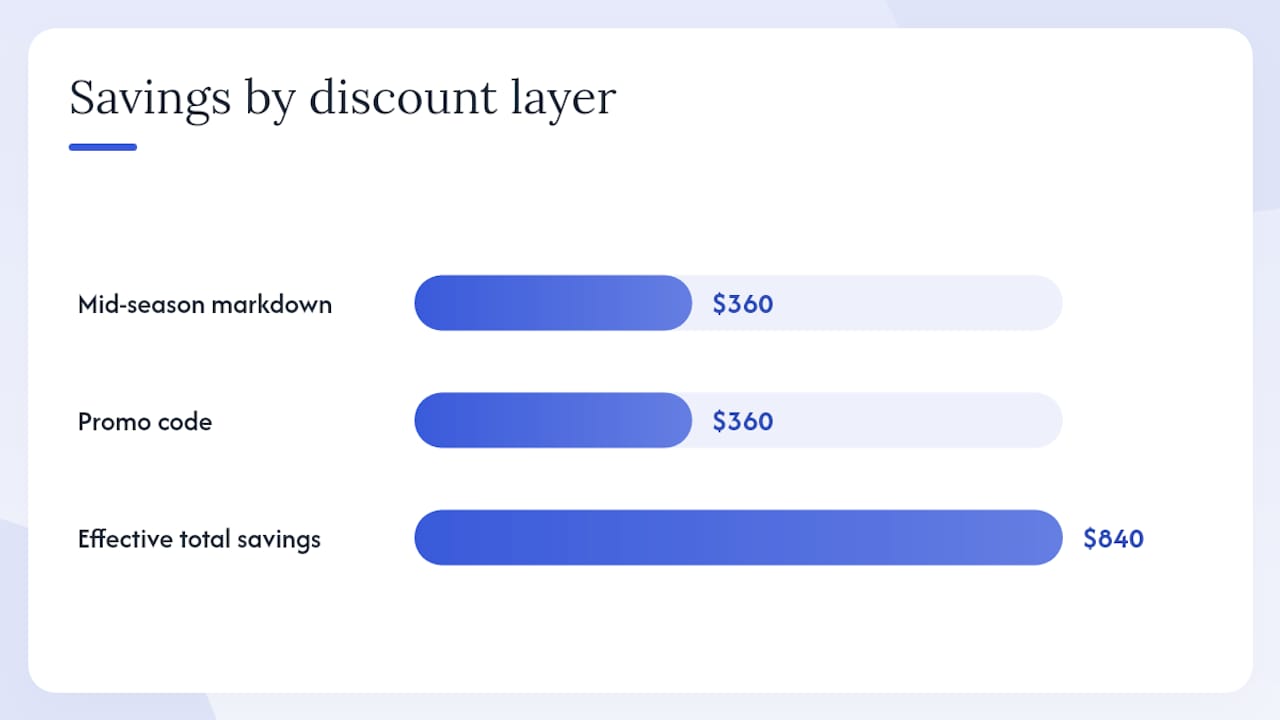
| Discount Layer | Amount | Running Price |
|---|---|---|
| Item MSRP | — | $1,200 |
| Mid-season markdown (30%) | $360 | $1,200 |
| Promo code (30%) | $360 | $840 |
| Rakuten cashback (—) | $— | $840 |
| Effective total savings | — | $840 |
Pro Tip: Never complete a high-value purchase to “test” a code. Use the checkout preview to confirm the discount applies, then back out and re-enter when you are ready to buy. This avoids accidental charges and preserves single-use codes.
Where do you actually find verified luxury coupon codes?
Knowing which channels to prioritize saves hours of searching and protects you from expired or fraudulent codes. Here is where legitimate luxury discounts actually live, and what each channel typically delivers.
- Rakuten: — A cashback portal that tracks your purchase and returns a percentage as cash back. Works independently of retailer codes, so it stacks cleanly with most promo discounts.
Pro Tip: Prioritize gated, account-specific channels over public coupon sites. Targeted, conditional offers protect brand value and tend to be deeper and more reliable than sitewide codes posted on aggregator pages.
| Channel | Typical Discount Depth | Stacks with Cashback? | Best For |
|---|---|---|---|
| Brand VIP email | moderate discount range | Usually yes | First-purchase and loyalty codes |
| Honey extension | Varies | Yes | Auto-testing at checkout |
| Rakuten | 2–10% cashback | Yes | Adding cashback to any purchase |
| Amex Offers | Fixed statement credit | Yes | High-ticket single purchases |
| Authenticated marketplace | Curated markdowns | Depends on platform | Safe discounts on verified items |
| Personal shopper | Negotiated | Case by case | Bespoke pricing on high-value items |
What coupon rules and exclusions actually affect your stack?
Understanding the fine print is what separates a successful stack from a wasted code. Selective, account-gated offers are the norm in luxury retail precisely because blanket sitewide codes erode brand equity. Here is what to watch for.
Common restrictions:
- “New customer only” codes are single-use and account-gated. They will not fire on an existing account, and they rarely stack with other codes.
- Brand exclusions are standard. Chanel, Hermès, and select Gucci lines are frequently carved out of sitewide promotions entirely.
- Product-category restrictions often block clearance items, new-season arrivals, or limited editions from any additional discount.
- Minimum spend thresholds can push you toward buying more than you planned. Confirm the threshold applies to the post-markdown price, not the MSRP.
- Single-code-per-order policies are nearly universal. You can apply one promo code at checkout; cashback and card credits are separate because they operate outside the retailer’s system.
Do/Don’t stacking guide:
| Scenario | Expected Outcome |
|---|---|
| Sale price + promo code + Rakuten cashback | Usually works — cashback is bank-side |
| Two promo codes on one order | Almost never works |
| Promo code on a clearance item | Often blocked — check exclusions |
| New-customer code on existing account | Will not apply |
| Amex Offer + promo code + sale price | Works when Amex threshold is met |
| Personal shopper bespoke code + cashback | Case by case — confirm with shopper |
If a code fails and you believe you qualify, contact the retailer’s live chat or digital stylist. A polite, specific request (“I received this code via email but it is not applying to my cart — can you confirm whether it covers this category?”) often results in a manual override or a replacement code. Keep the original email as proof.
When should you buy to get the deepest luxury discounts?
Timing is the highest-leverage variable in any luxury coupon strategy. The calendar below reflects U.S. retail cycles where the savings are most predictable.
- Final two weeks of January: Post-holiday clearance transitions to deep markdown mode. Extra-percentage-off codes tend to appear during this window as retailers clear fall/winter inventory fast.
- Final two weeks of July: The summer equivalent. Spring/summer collections move to clearance, and private member codes often surface for loyalty customers.
- Black Friday and Cyber Monday: The most widely known window, but also the most competitive. Codes are plentiful, but popular sizes and colorways sell out quickly. Have your wishlist ready before the event opens.
- Private member pre-sales: Many luxury retailers open sale access 24–48 hours early for loyalty members or app users. This is where the best selection meets the best prices.
- Fiscal quarter-end events: Retailers under revenue pressure at the end of Q1 (March) and Q3 (September) sometimes release short, gated promo windows. These are easy to miss without alerts.
Timing comparison: mid-season vs. clearance window
Buying a $1,200 bag mid-season at a 20% markdown saves $240. Waiting two weeks into the clearance transition, when a private extra-30%-off code arrives, saves $360 on the same item at the same starting price. The difference is $120 and roughly 14 days of patience, assuming the item is still in stock.
Pro Tip: Set calendar reminders for the last two weeks of January and July, and enable push notifications from any brand app you follow. Private clearance codes are short-lived and rarely announced in advance — you need to be watching when they drop.
How do you keep quality and exclusivity intact while using coupons?
A deep discount means nothing if the item is not authentic. This is where coupon strategy and authentication discipline intersect, and where cutting corners costs far more than the savings gained.
Authentication checklist before applying any code to a high-value item:
- Confirm the seller provides certification tags, original receipts, or serial number documentation
- Look for third-party grading or verification (especially on resale)
- Check the return window and buyer protection policy before checkout
- Verify shipping insurance is included or available as an add-on
- Confirm the platform has a published authenticity guarantee, not just a marketing claim
Luxury programs that favor experiential rewards and gated discounts preserve perceived value far better than public percentage-off codes. That same logic applies to you as a shopper: a private, authenticated discount from a trusted platform is worth more than a deeper public code from an unverified source.
Naiseshopper’s model is built around this principle. Every item ships with an authenticity guarantee, buyer protection, and optional shipping insurance. For U.S. shoppers, the personal shopper service can negotiate pricing on specific pieces, combining a platform promotion with a curated discount that a public code could never match. Explore luxury fashion loyalty benefits to understand how experiential perks and gated access add value beyond the discount itself.
Authentication vs. discount source comparison:
| Source | Authentication Guarantee | Buyer Protection | Stacking Possible |
|---|---|---|---|
| Brand’s own site | Yes | Limited | Sometimes |
| Authenticated marketplace (Naiseshopper) | Yes | Yes | Yes |
| Unverified resale site | No | Rarely | Not recommended |
| Public coupon aggregator | N/A | N/A | Depends on retailer |
Pro Tip: For purchases above $500, skip the public code hunt entirely. Use an authenticated marketplace or personal shopper to combine a negotiated discount with a documented authenticity guarantee. The peace of mind is part of the value.
How do you spot a luxury coupon scam before it costs you?
Not every “luxury deal” is what it claims to be. Counterfeit goods and fraudulent codes are real risks, and the red flags are consistent enough that you can screen most of them in under a minute.
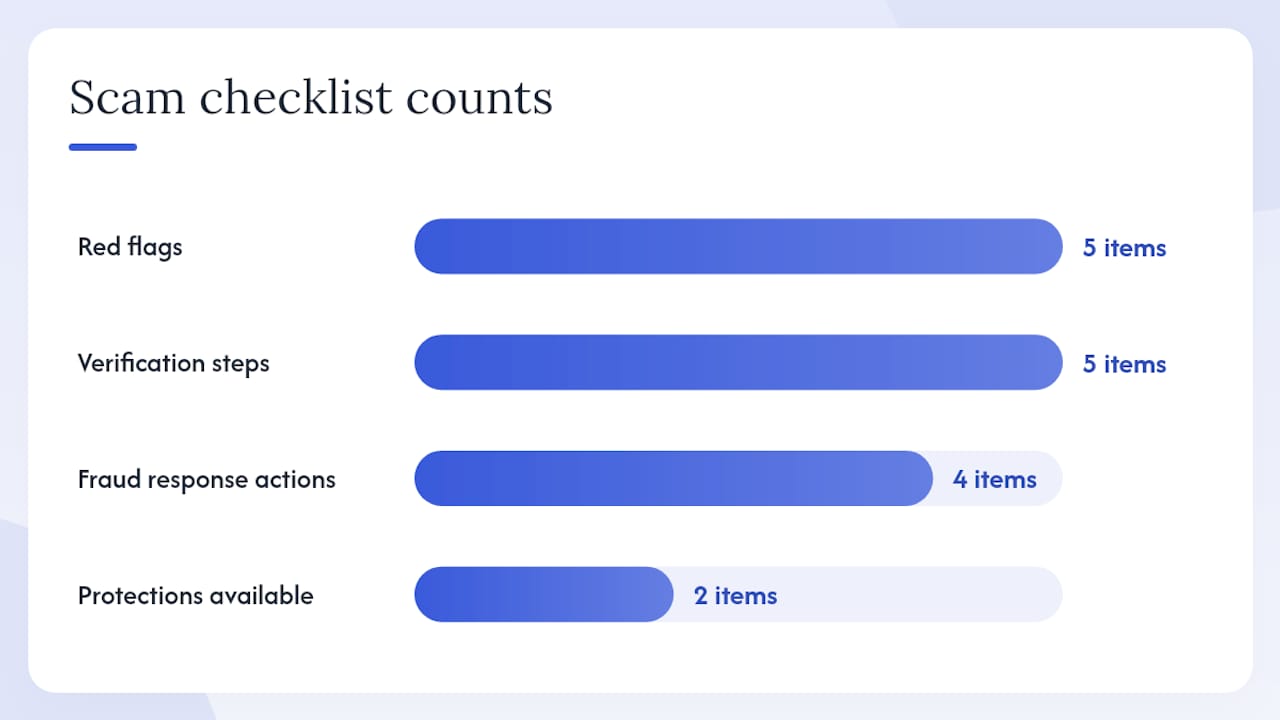
Red flags to watch for:
- A sitewide code offering 40–60% off a new-season, full-price collection from a brand that never discounts publicly (Chanel, Hermès)
- No seller credentials, no published return policy, and no authentication documentation
- Checkout pages without HTTPS or with unfamiliar payment processors
- Pressure to pay via wire transfer, cryptocurrency, or gift cards
- Codes sourced from social media accounts with no verifiable brand affiliation
Verification steps before completing any purchase:
- Check the seller’s reputation on the platform (reviews, ratings, response time).
- Confirm the authentication guarantee is documented, not just stated in a banner.
- Apply the code at checkout without completing the purchase to confirm it is real and applies correctly.
- Verify any card-linked offer (Amex Offers, Chase Offers) directly in your bank’s app before relying on it.
- Search the coupon code in quotes on Google. If it appears on dozens of aggregator sites with no source, it is likely expired or fake.
If you suspect fraud:
- Stop the purchase immediately and do not submit payment.
- Screenshot the listing, the code, and any communications.
- Contact the platform’s support team with your screenshots.
- Report the incident to your card issuer and, if applicable, to the FTC at reportfraud.ftc.gov.
U.S. shoppers have strong card-based buyer protections. Paying with a credit card (especially one with purchase protection) gives you a chargeback option if goods are not as described. Authenticated marketplaces reduce counterfeit risk structurally by verifying inventory before it reaches you.
Key Takeaways
Stacking a sale markdown, a validated promo code, and a cashback portal during a final-clearance window is the most reliable way to reach 30–50% off authenticated luxury purchases in the U.S.
| Point | Details |
|---|---|
| Stack all three layers | Combine a site markdown, a validated promo code, and Rakuten or Amex cashback for the deepest discount. |
| Time your purchase precisely | The final two weeks of January and July clearance windows are when extra-percentage private codes appear. |
| Test before you commit | Apply codes at checkout preview on a lower-value item to confirm stackability before buying high-ticket pieces. |
| Authenticate before you discount | Confirm certification tags, buyer protection, and a return window before applying any code to a purchase above $500. |
| Use Naiseshopper for safe stacking | Naiseshopper combines authenticated inventory, platform promotions, and personal shopper assistance for U.S. buyers. |
The discount that actually preserves the bag’s value
Most luxury coupon advice focuses entirely on the percentage saved. What it misses is the cost of getting it wrong: a counterfeit Prada tote bought with a 50%-off code from an unverified site is not a deal. It is a loss, and a frustrating one.
The strategy that holds up over time is not about chasing the deepest public code. It is about accessing the right channels. Brand VIP lists, private member pre-sales, and authenticated marketplaces exist precisely because luxury brands know that blanket discounting erodes the thing you are paying for: exclusivity and quality. When you work within those gated channels, you get the savings without sacrificing the experience or the resale value of the piece.
There is also a practical argument for patience. Waiting for the final two weeks of a clearance cycle, with a wishlist already built and alerts set, consistently outperforms impulse buying mid-season with a generic code. The inventory thins, but the savings deepen. And when you combine that timing with a cashback portal and a card-linked credit, the effective discount is real money, not a marketing number.
The readers who get the most from this approach are the ones who treat it like a system, not a one-time hack. Build the wishlist. Join the VIP list. Set the calendar reminder. Test the stack. Then buy with confidence.
Naiseshopper: authenticated luxury discounts, ready to stack
Authenticated designer pieces at genuine markdowns, with buyer protection and personal shopper assistance built in. That is the concrete difference Naiseshopper offers U.S. shoppers compared to hunting public codes on unverified sites.
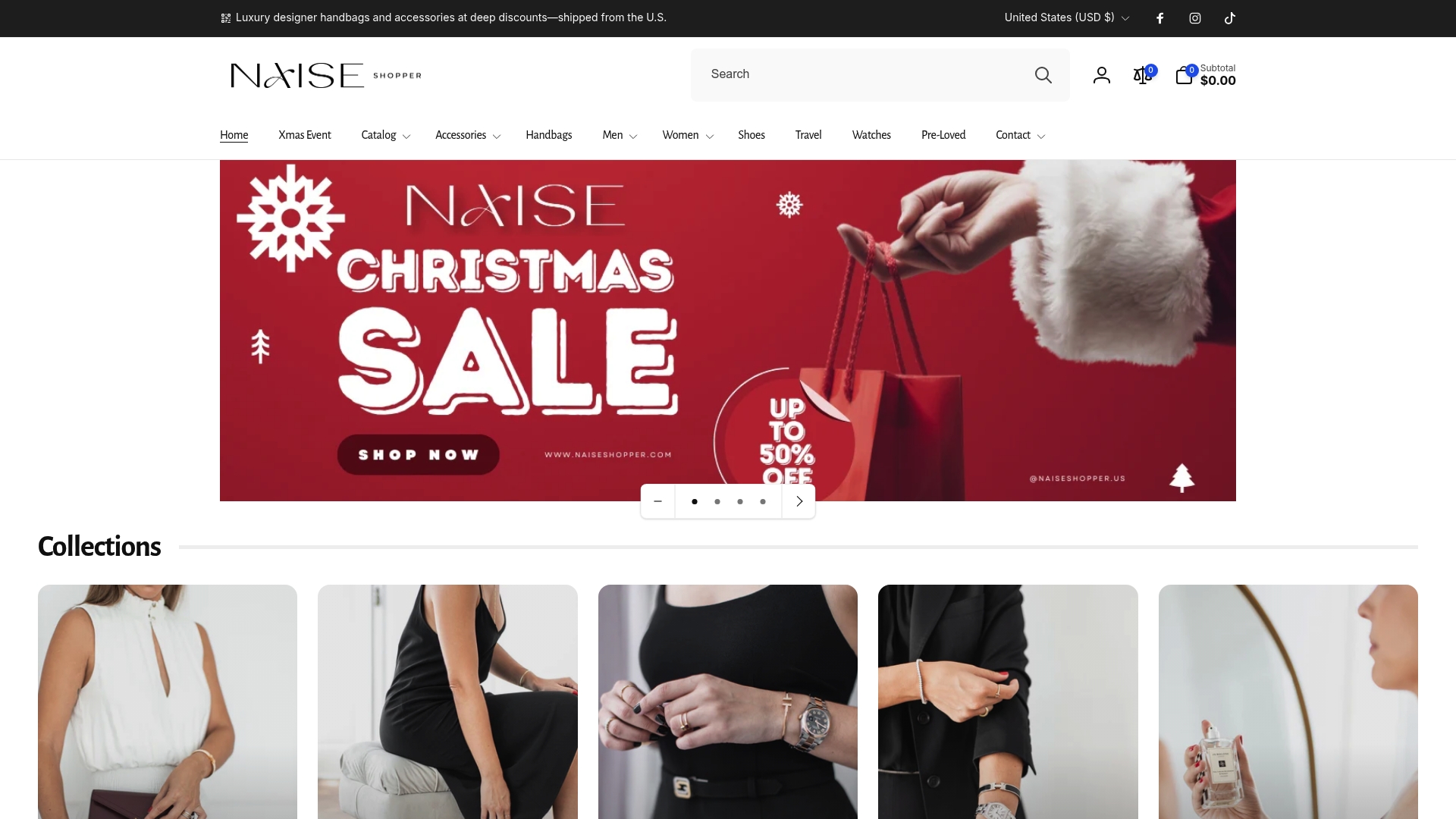
Every item on Naiseshopper ships with an authenticity guarantee and optional shipping insurance. The personal shopper service helps U.S. buyers source specific pieces, negotiate pricing, and combine platform promotions with curated discounts. Seasonal promo events, including the Xmas Event and other curated sales, let you apply the stacking tactics from this article directly: site markdown plus platform coupon plus Rakuten cashback, all on verified Gucci, Chanel, Prada, Valentino, and Balenciaga inventory.
Start with a high-value piece where authentication matters most. The Gucci G-Timeless Quartz Black Watch 38mm is a strong example: a high-ticket item where buyer protection and authentication documentation are non-negotiable, and where the personal shopper service can help you time the purchase against an active platform promotion. Browse the full authenticated collection at Naiseshopper and apply your stack on your next purchase.
Useful sources and tools
- Honey: Browser extension that auto-tests coupon codes at checkout across hundreds of retailers. Free to install; works in the background during any shopping session.
- Rakuten: Cashback portal that tracks purchases and returns a percentage as cash. Activate before checkout by clicking through to the retailer from the Rakuten site or app.
- Naiseshopper: Authenticated luxury fashion platform with curated markdowns, buyer protection, shipping insurance, and personal shopper assistance for U.S. purchases.
- Promotions in luxury retail: Talon.One analysis: Explains why gated, targeted offers outperform blanket sitewide codes for both brands and shoppers.
- Smart Luxury Shopper’s Toolkit: David’s Guide: Practical guidance on testing codes, timing purchases, and navigating promo restrictions at premium brands.
- FTC Fraud Reporting: U.S. government portal to report counterfeit goods, fraudulent sellers, and coupon scams.