Finding authentic luxury that feels both unique and relevant has become more challenging as trends shift and technology rapidly changes. For modern shoppers intent on discovering genuine discounted treasures, understanding the evolving world of luxury fashion is crucial. In 2026, the meaning of high-end style is shaped by brand adaptability and the pursuit of authenticity, where heritage meets innovation, and conscious choices matter as much as visual impact.
Table of Contents
- Defining Luxury Fashion Trends In 2026
- Major Types Of Luxury Fashion Trends
- How Top Brands Influence Global Style
- Navigating Seasonality And Trend Cycles
- Smart Buying: Risks, Rewards, And Authentication
Key Takeaways
| Point | Details |
|---|---|
| Adaptability is Crucial | Brands must merge traditional heritage with innovation, focusing on sustainability and authenticity to meet evolving consumer demands. |
| Diverse Fashion Trends | The four primary trend types—Minimalism, Maximalism, Tailored Silhouettes, and Functional Fashion—reflect broader cultural shifts, emphasizing versatility and personal expression. |
| Cultural Storytelling as Strategy | Luxury brands leverage cultural narratives to connect with consumers meaningfully, thereby influencing global style trends beyond mere aesthetics. |
| Smart Buying and Authenticity | Strategic purchasing involves understanding market dynamics, utilizing verification technologies, and viewing luxury items as long-term investments rather than disposable commodities. |
Defining Luxury Fashion Trends in 2026
Luxury fashion in 2026 emerges as a dynamic landscape of transformation, driven by technological innovation, shifting consumer values, and global economic complexities. Evolving consumer priorities are fundamentally reshaping how designers conceptualize and deliver high-end fashion experiences.
The emerging luxury fashion paradigm centers on adaptability and authenticity. Brands must now balance traditional heritage with forward-thinking innovation, recognizing that modern consumers demand more than just aesthetic appeal. Sustainability, technological integration, and cultural responsiveness have become critical differentiators in the luxury market. Brand adaptability represents the new competitive advantage, where agility trumps static design philosophies.
Key trend indicators for luxury fashion in 2026 include a significant shift towards personalization, digital immersion, and ethical production. Consumers increasingly seek brands that not only deliver exceptional quality but also demonstrate social responsibility and technological sophistication. This means luxury fashion is no longer just about exclusivity, but about creating meaningful connections through transparent practices, innovative design, and genuine cultural understanding.
Pro tip: Invest in versatile luxury pieces that transcend seasonal trends and offer sustainable, timeless appeal to maximize your fashion investment.
Major Types of Luxury Fashion Trends
Luxury fashion trends in 2026 represent a complex tapestry of stylistic expressions that transcend traditional categorizations. Emerging fashion categories reveal a sophisticated landscape where multiple aesthetic approaches coexist and interact dynamically.
The primary trend types can be broadly classified into four fundamental categories. First, minimalism represents a refined approach characterized by clean lines, neutral color palettes, and understated elegance. Second, maximalism emerges as its dramatic counterpoint, featuring bold prints, layered textures, and expressive silhouettes. Third, tailored silhouettes demonstrate a return to structured design, emphasizing precision and architectural construction. Fourth, functional fashion integrates technological innovations with wearable design, prioritizing adaptability and practical sophistication.
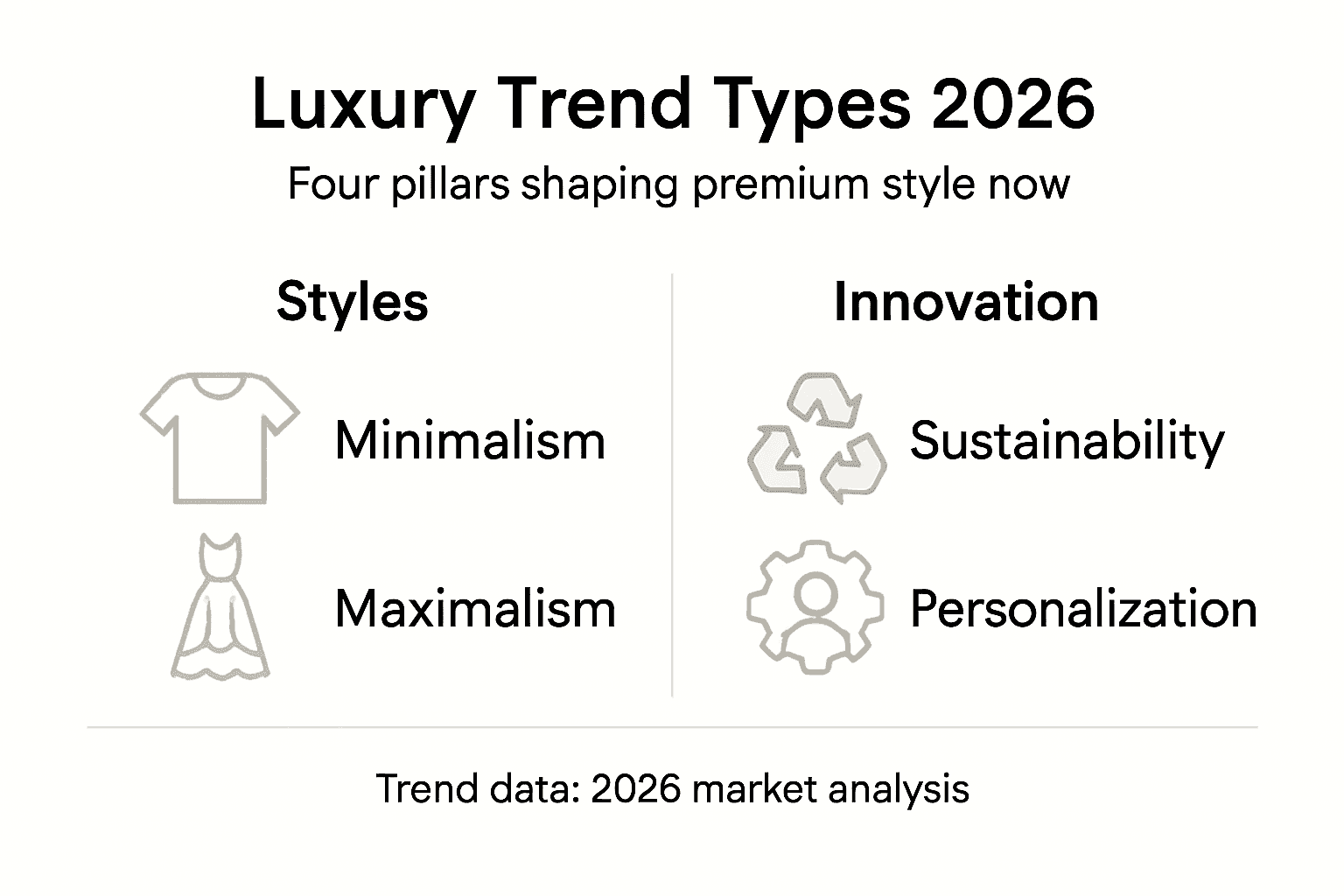
Luxury trend forecasts indicate that these trend types are not isolated phenomena but interconnected expressions of broader cultural shifts. Contemporary luxury fashion embraces complexity, allowing consumers to mix and match across traditional stylistic boundaries. Tactile materials like brushed cashmere, raw denim, and innovative textiles become critical elements that define these trend categories, transforming fashion from mere clothing into a nuanced form of personal communication.
Pro tip: Curate a versatile wardrobe by selecting pieces that can seamlessly transition between different trend categories, maximizing your fashion investment.
Here’s a summary of the four major luxury fashion trend types in 2026 and their distinguishing traits:
| Trend Type | Key Characteristics | Typical Materials | Consumer Appeal |
|---|---|---|---|
| Minimalism | Clean lines, neutral tones, subtle details | Brushed cashmere, wool | Understated elegance, versatility |
| Maximalism | Bold prints, vivid colors, layered styles | Brocade, rich silks | Artistic flair, dramatic statements |
| Tailored Silhouettes | Sharp cuts, precise structure, tailoring | Raw denim, structured blends | Architectural looks, timeless style |
| Functional Fashion | Tech integration, practical design | Innovative textiles, smart fabrics | Modern functionality, adaptability |
How Top Brands Influence Global Style
Luxury fashion brands are no longer just selling products but crafting global narratives that reshape consumer perceptions and cultural aesthetics. Digital marketing strategies have transformed how these brands communicate, engage, and ultimately influence worldwide style trends.

These top brands strategically leverage multiple channels to establish their global influence. Cultural storytelling becomes a primary mechanism, where brands transcend traditional marketing by connecting with consumers through deeper, more meaningful narratives. They do this by aligning their design philosophies with broader social movements, sustainability initiatives, and technological innovations. Each collection becomes a statement about values, not just an assemblage of clothing and accessories.
Luxury brand influence extends beyond aesthetic trends, encompassing broader societal shifts. Modern luxury brands are redefining global style by emphasizing craftsmanship, ethical production, and cultural relevance. They are not merely selling fashion but proposing a holistic lifestyle approach that resonates with increasingly conscious and discerning global consumers. This approach transforms fashion from a commercial product into a nuanced form of cultural expression and personal identity.
Pro tip: Follow luxury brands on social media to understand their evolving narratives and gain insights into global style trends before they become mainstream.
Navigating Seasonality and Trend Cycles
Luxury fashion trend cycles in 2026 represent a sophisticated dance between enduring style and seasonal innovation. Seasonal fashion forecasts reveal a nuanced approach where intelligent wardrobe planning trumps fleeting micro-trends, emphasizing strategic investment and timeless versatility.
The contemporary trend landscape moves beyond traditional seasonal boundaries, introducing a more fluid and adaptive model of style consumption. Seasonal highlights now focus on versatile pieces that transcend singular moments, with designers creating collections that blend functional minimalism with strategic layering potential. Winter might showcase fur accents and leather trousers, but the emphasis remains on pieces that can seamlessly transition across multiple contexts and climate conditions.
Trend cycle dynamics demonstrate a profound shift from rapid consumption to mindful selection. Modern luxury consumers prioritize pieces with extended relevance, viewing fashion as an investment rather than a disposable commodity. This approach requires understanding the intricate balance between statement seasonal elements and foundational wardrobe pieces that maintain aesthetic and functional value across changing trends.
Pro tip: Invest in neutral-toned, high-quality base pieces that can be styled multiple ways, allowing maximum versatility across seasonal transitions.
Smart Buying: Risks, Rewards, and Authentication
Luxury fashion purchasing in 2026 demands strategic intelligence, where understanding the intricate landscape of risks and rewards becomes paramount. Smart buying strategies have transformed from simple consumer transactions into sophisticated investment decisions requiring meticulous research and discernment.
Authentication emerges as the critical cornerstone of intelligent luxury acquisition. Verification technologies now leverage advanced blockchain and artificial intelligence platforms to combat counterfeiting and ensure product legitimacy. Modern buyers must navigate complex marketplaces, distinguishing between genuine luxury assets and sophisticated replicas. This requires a multifaceted approach that combines technological verification, market knowledge, and an understanding of brand provenance and resale potential.
Global luxury retail trends highlight the evolving ecosystem of luxury purchasing, where hyper-personalization intersects with rigorous authentication protocols. Consumers are increasingly viewing luxury items as financial instruments, prioritizing pieces with potential appreciation value. The most successful buyers will be those who combine emotional connection with analytical assessment, understanding that each luxury purchase represents not just a fashion statement, but a potential long-term investment.
Pro tip: Always request comprehensive authentication documentation and preserve original packaging to maintain potential resale value for luxury items.
The table below compares cutting-edge luxury item authentication methods as of 2026:
| Authentication Method | Technology Used | Strengths | Challenges |
|---|---|---|---|
| Blockchain Verification | Distributed ledger | Tamper-proof records | Requires brand participation |
| AI-Powered Image Analysis | Machine learning algorithms | Fast counterfeit detection | Needs regular training updates |
| NFC/RFID Tagging | Embedded microchips | Easy on-the-spot validation | Tag cloning remains a risk |
| Holographic Labels | Advanced printing | Difficult to replicate | May add extra manufacturing cost |
Elevate Your Style with Authenticated Luxury Pieces from Naise Shopper
Navigating the complexities of luxury fashion trends means finding pieces that offer timeless appeal, authenticity, and adaptability across seasons. The challenge of ensuring genuine designer quality while embracing evolving styles can feel overwhelming. At Naise Shopper, we understand the importance of verified authenticity and sustainable investment in luxury fashion. Our curated collections feature iconic brands like Gucci, Chanel, and Saint Laurent, helping you build a wardrobe that balances modern innovation with classic craftsmanship.
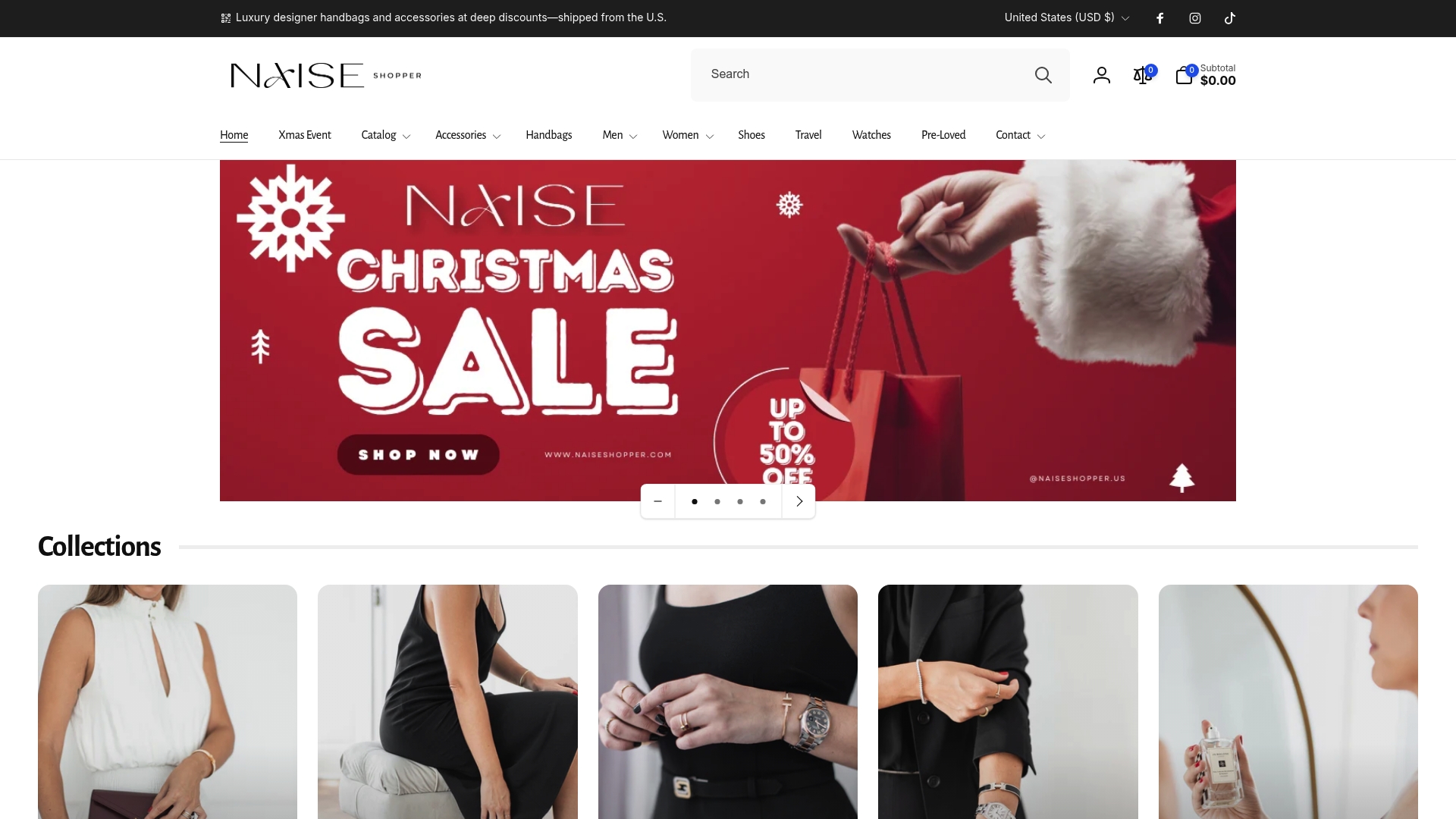
Explore our expertly authenticated selections and experience the confidence that comes from owning genuine luxury items. Whether you are seeking personalized timeless pieces or cutting-edge designs that reflect the latest global trends, Naise Shopper makes it easy with secure international shipping and flexible payment options. Visit Naise Shopper now to discover exclusive deals and elevate your fashion investment today.
Frequently Asked Questions
What are the major luxury fashion trends in 2026?
The major luxury fashion trends in 2026 include minimalism with clean lines and neutral tones, maximalism featuring bold prints and layered styles, tailored silhouettes emphasizing structured design, and functional fashion that integrates technology into wearable design.
How does sustainability influence luxury fashion today?
Sustainability has become a critical differentiator in luxury fashion, with consumers demanding brands demonstrate social responsibility, transparency, and ethical production practices alongside exceptional quality and innovative design.
What is the importance of personalization in luxury fashion trends?
Personalization is vital as modern luxury consumers increasingly seek brands that create meaningful connections through customized experiences and offerings, making their investment in fashion feel unique and tailored to their preferences.
How can buyers authenticate luxury fashion items?
Buyers can authenticate luxury fashion items using several methods including blockchain verification, AI-powered image analysis, NFC/RFID tagging, and holographic labels, which all help combat counterfeiting and ensure product legitimacy.