Choose quartz if you want set-it-and-forget-it accuracy and minimal upkeep. Choose automatic if you want mechanical artistry and a piece you’ll service and pass down. That’s the whole decision, and everything else is detail.
- Travel, work, daily grind: quartz wins. It loses roughly 15 seconds a month, not a day.
- Collecting, gifting, rotation wear: automatic wins. You’re buying a tiny mechanical universe, not just a clock.
- Both, honestly: plenty of serious watch people own one of each and reach for whichever fits the day.
Key Takeaways
Quartz delivers superior raw accuracy and lower upkeep, while automatic watches offer mechanical craftsmanship and stronger long-term serviceability from established makers.
| Point | Details |
|---|---|
| Accuracy gap is real | Quartz runs about ±15 seconds a month versus ±10 to 25 seconds a day for standard automatics. |
| Maintenance costs diverge | Quartz needs battery swaps every 2 to 3 years; automatics need full service every 5 to 7 years. |
| Value depends on price tier | Quartz wins on specs per dollar under $500; automatics build resale value above $2,000 with documented service. |
| Exceptions blur the rule | High-end quartz and chronometer-certified automatics narrow the accuracy gap significantly. |
| Naiseshopper carries both | Authenticated Gucci quartz and automatic watches, including dive models, ship insured to U.S. buyers. |
Table of Contents
- Quartz vs Automatic Watch: How the Quartz Movement Keeps Time
- How an Automatic Movement Generates and Regulates Power
- Automatic vs Quartz Accuracy and Reliability, Side by Side
- Watch Servicing Costs: What Quartz and Automatic Actually Need
- Watch Price and Resale Value: Quartz vs Automatic Watch Ownership Costs
- Which Should You Buy: A Practical Checklist
- Find Authenticated Quartz and Automatic Designer Watches
- Sources
Quartz vs Automatic Watch: How the Quartz Movement Keeps Time
A battery sends current through a quartz crystal, the crystal vibrates, and a circuit counts those vibrations to fire one pulse per second to the hands. That’s the entire mechanism, and it’s why quartz is the accuracy champion of the two.
The crystal oscillates at exactly 32,768 Hz, a frequency chosen because it divides cleanly down to one pulse per second using simple binary counters. No gears fighting friction, no springs losing tension. Just electricity and a vibrating sliver of quartz doing the same job millions of times a day without drifting.
- Typical accuracy: ±15 seconds per month, according to Lug2Lug’s movement comparison.
- Battery life: usually 2 to 3 years, longer in solar-powered variants.
- Thinner cases and fewer moving parts mean better shock tolerance and lower long-term maintenance.
Pro Tip: If you travel across time zones often, a quartz watch with a quickset date and independent hour hand saves you from resetting the whole movement every landing.
How an Automatic Movement Generates and Regulates Power
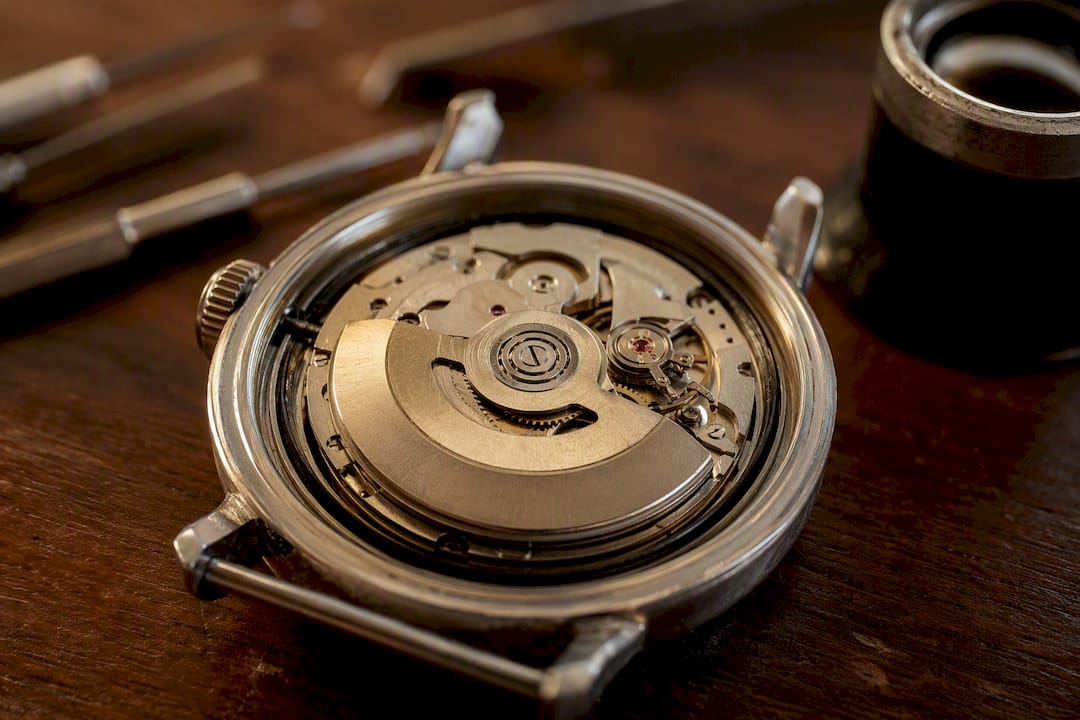
An automatic watch runs on a coiled mainspring that a rotor winds every time your wrist moves, and an escapement releases that stored energy in tiny, regulated bursts. There’s no battery involved anywhere in the chain.
The escapement is the heartbeat of the watch. It locks and unlocks the mainspring’s energy hundreds of times an hour, and how precisely it does that determines the watch’s accuracy, which is why mechanical performance gets measured in seconds per day rather than seconds per month. A typical automatic runs ±10 to 25 seconds a day, a wider spread than quartz by an order of magnitude.
- Power reserve typically runs 38 to 70 hours depending on the caliber.
- Set the watch down for a few days and it stops cold, requiring a full reset of time and often date.
- A watch winder keeps an unworn automatic running, though most collectors just wear theirs enough to keep momentum going.
Pro Tip: If you rotate watches and hate resetting the date every Monday, a winder costs less than one service visit and keeps your automatic ready to grab.
Automatic vs Quartz Accuracy and Reliability, Side by Side
Quartz wins on raw precision. Automatic wins on mechanical interest and the kind of serviceability that keeps a watch alive for generations. Neither claim is close.
| Dimension | Quartz | Automatic |
|---|---|---|
| Accuracy | ±15 sec/month | ±10–25 sec/day (±2–5 sec/day if chronometer certified) |
| Maintenance | Battery swap every 2–3 years | Full service every 5–7 years |
| Power source | Battery + quartz crystal | Mainspring + rotor, no battery |
| Durability | Fewer moving parts, shock resistant | More parts, needs lubrication and care |
| Price/value | Strong specs per dollar | Often stronger resale from established makers |
| Aesthetic appeal | Clinical precision | Sweep hand, audible tick, visible craft |
High-accuracy quartz calibers, like the ones found in certain Grand Seiko and Citizen models, close the gap to a few seconds a year. On the mechanical side, chronometer certification is the industry’s answer to the same problem, forcing a movement through multi-position, multi-temperature testing before it earns the label.
Watch Servicing Costs: What Quartz and Automatic Actually Need
Quartz needs a battery change every few years. Automatic needs a full mechanical service every 5 to 7 years, and that gap in upkeep is the real cost difference between the two movement types.
- Battery replacement: typically $10 to $40 at a jeweler, done in minutes.
- Gasket reseal for water resistance: often bundled with the battery swap, adds $20 to $50.
- Full mechanical service (disassembly, cleaning, lubrication, regulation): commonly $150 to $500 depending on the brand and complexity.
Quartz has far fewer moving parts, so there’s simply less to wear out or misalign. That mechanical simplicity is also the environmental trade-off: quartz batteries need proper disposal, while automatics carry no battery waste but demand periodic lubricant changes and skilled labor.
Pro Tip: Keep the original service papers and receipts for any automatic. A documented service history protects resale value more than the watch’s condition alone.
Watch Price and Resale Value: Quartz vs Automatic Watch Ownership Costs
At entry and mid-range prices, quartz usually gives you more watch for the money. Case finishing, sapphire crystal, and water resistance often outshine an automatic at the same price point because the manufacturer isn’t spending on movement complexity.
- Under $500: quartz typically outspecs automatic on materials and finishing, per MenWatches’ comparison guide.
- $500 to $2,000: automatics from recognized manufacturers start holding real resale value, especially with documented service history.
- Above $2,000: mechanical craftsmanship and brand heritage start driving resale far more than raw specs.
A $6,000 mechanical service invoice on an aging automatic can make replacing the watch cheaper than fixing it. Quartz rarely hits that wall. Before buying either used, run the piece through a proper luxury watch authentication process to protect both your purchase and its resale future.
Which Should You Buy: A Practical Checklist
If you wear one watch daily and want to stop thinking about it, buy quartz. If you want a piece with mechanical soul that you’ll maintain and maybe hand down, buy automatic.
- How often will you wear it? Daily beaters favor quartz; occasional or rotation pieces favor automatic.
- How much do you value dead-on accuracy? Quartz is the clear answer.
- What’s your service budget over ten years? Quartz costs less to keep running.
- Do you want a serviceable heirloom? Automatics can be restored for decades; quartz circuit boards eventually become obsolete.
- Does thickness and weight matter to your wrist? Quartz cases run thinner and lighter since there’s no rotor or mainspring barrel to house.
- Travel or professional daily wear: quartz watches for daily wear : quartz.
- Field, dive, or sport use: quartz for reliability, or an automatic dive watch if you want mechanical resilience with a rotor.
- Formal dress occasions: automatic, for the visual and tactile experience.
- Starting a collection: automatic, since it teaches you the mechanics of watchmaking.
Solar-powered and sweep-second quartz models split the difference nicely: no dead battery panic, and a motion that mimics a mechanical sweep instead of the classic tick.
High-End Quartz, Hybrids, and Chronometer-Grade Automatics
Not every quartz watch behaves like a $50 drugstore piece. High-accuracy calibers from Grand Seiko and Citizen push quartz precision to a few seconds a year, and Rolex’s discontinued Oysterquartz line proves even heritage mechanical houses have dabbled in quartz.
Solar quartz removes battery anxiety entirely. On the mechanical side, chronometer certification tightens accuracy to roughly ±2 to 5 seconds a day, a real jump from a standard automatic.
How Collectors Actually Wear Both
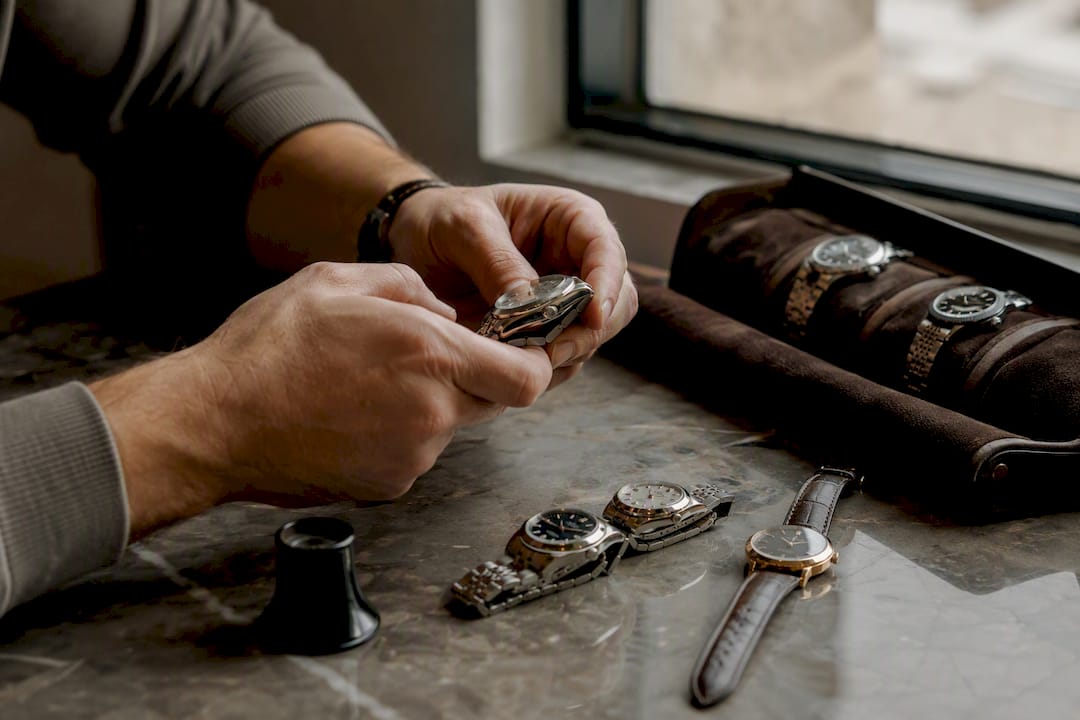
Most serious collectors don’t pick a side. They reach for quartz on travel days and demanding weeks, then switch to an automatic for weekends, dinners, or whenever the mechanical motion itself is the point. Naiseshopper’s designer watch assortment covers both movement types, so building that kind of rotation doesn’t require compromise.
Find Authenticated Quartz and Automatic Designer Watches
Whichever movement fits your life, the harder problem is finding a genuine piece at a fair price, and that’s exactly where Naiseshopper earns its keep. Every watch in the catalog ships with an authenticity guarantee, so you’re not gambling on a resale listing or an unverified boutique.

Naiseshopper’s current lineup includes the Gucci G-Timeless Quartz Black Watch for buyers who want dead-on accuracy in a compact 38mm case, alongside dive-ready automatic pieces like the Gucci Dive Watch in stainless steel for shoppers who want mechanical presence on the wrist. If a quartz dive-style piece fits your rotation better, the Gucci G-Timeless Dive Quartz delivers that tool-watch look without the maintenance schedule. Every order ships secured with U.S. delivery and shipping insurance included, and pricing reflects Naiseshopper’s discount model against retail. Browse the current watch selection and check availability on the piece that fits your movement preference before it sells out.
Sources
- Automatic vs Quartz vs Manual — Lug2Lug
- Chronometry — Wikipedia
- Automatic vs Quartz Watches — Paul Rich