Duty-free means the tariff and excise tax are removed the moment you buy at a bonded airport or port shop. Tax-free means you pay the local sales tax upfront and reclaim it later through a refund process. Which one wins for you depends on the item, the store, the refund fees involved, and what your home country lets you bring back duty-free.
TL;DR:
- Duty-free shopping offers instant savings on high-excise items like alcohol, tobacco, and perfume because taxes are removed at the point of sale in bonded shops.
- Tax-free refunds require buying at participating stores with VAT or GST included, then claiming a refund at the airport after customs inspection, often reducing the actual savings to 10-15%.
- U.S. travelers can bring back purchases up to $800 duty-free annually, but exceeding this limit results in customs duties, making strategic planning crucial.
- Luxury goods like designer handbags or watches often justify the paperwork effort due to high declared value, but authenticity and proper documentation are critical to avoid paying duty twice.
- For high-value cross-border luxury shopping, using personal shopper services with insured international shipping can reduce risks and streamline customs compliance.
Table of Contents
- Duty Free vs Tax Free: A Quick Comparison
- How Duty-Free Shopping Actually Works
- How Tax-Free Refunds Get Processed
- How U.S. Customs Rules Change the Math
- A Simple Checklist for Deciding Where to Buy
- What Luxury Shoppers Need to Know About Cross-Border Buys
- The One Rule Worth Remembering
- A Safer Route for High-Value Luxury Purchases
- Where to Verify These Rules Yourself
- Sources
- FAQ
Duty Free vs Tax Free: A Quick Comparison
Both terms describe a tax break, but they trigger at completely different moments and in completely different places. Duty-free savings show up instantly on the receipt. Tax-free savings arrive weeks later, minus a processing cut.
- Where it happens: Duty-free lives in airport terminals, seaports, and onboard planes and ferries; tax-free happens at regular retail stores that participate in a VAT or GST refund scheme.
- When you see the money: Duty-free is instant, baked into the shelf price; tax-free requires paperwork and a refund claim after you leave.
- What sells well: Duty-free leans toward alcohol, tobacco, and fragrance because those carry the heaviest excise taxes; tax-free covers a much wider range, including clothing, handbags, and electronics.
- What it actually nets you: Tax-free refunds can theoretically return 10% to 25% of the purchase price, but operator fees and currency conversion often shrink that.
Quick math to remember: even where local VAT sits near 20%, travelers frequently walk away with something closer to 10% to 15% net after the refund operator takes its cut. That gap between the sticker VAT rate and what actually lands in your account is the single most misunderstood part of tax-free shopping.
How Duty-Free Shopping Actually Works
Duty-free stores sit inside what’s called a bonded warehouse. Legally, the merchandise is still in customs transit, never fully imported into the country you’re standing in, so the government never collects import duty or excise tax on it. That’s why a bottle of Scotch at the airport can cost noticeably less than the same bottle at a corner store back home.
You typically need a boarding pass or passport showing you’re leaving the country to buy there. Some shops seal your purchase in a tamper-proof bag or hand it to you at the gate right before boarding, especially with liquids that would otherwise get flagged at security.
- Alcohol, tobacco, and perfume dominate duty-free shelves because they carry the highest excise rates.
- Luxury cosmetics and designer accessories show up too, though selection is usually thinner than a full retail store.
- Sunglasses and small leather goods are common airport buys since they travel easily and rarely need alterations.
Pro Tip: A 15% duty-free discount on a $40 souvenir barely matters. Save the duty-free stop for categories where the savings are real, like spirits or fragrance, and do your fashion shopping somewhere with better selection.
How Tax-Free Refunds Get Processed
Tax-free shopping is a four-step loop, not an instant discount. You pay full price, including VAT or GST, at checkout. Then you work backward to get that tax refunded before you leave the country.
- Buy from a retailer enrolled in a tax-free refund program and ask for the paperwork at the register.
- Fill out the tax-free form with your passport details and keep every original receipt.
- Get the form stamped by customs at the airport, port, or border crossing before departure, with the goods still unused and available for inspection.
- Submit the stamped form to the refund operator for your cash, credit card refund, or voucher.
Eligibility almost always requires being a non-resident of the country where you shopped. If you consume or use the item locally, most schemes disqualify the refund entirely. Minimum purchase thresholds also vary by country, so a $50 scarf might not qualify while a $500 handbag does. The most common failure points are simple: a missing receipt, a customs stamp collected too late, or goods that already show wear.
How U.S. Customs Rules Change the Math
Buying something duty-free abroad doesn’t mean its duty-free once you’re home. Every purchase you bring back counts against your personal exemption, and U.S. Customs and Border Protection enforces that limit regardless of where or how you bought it.
- U.S. residents returning from international travel generally get an $800 personal exemption, and this often comes with a requirement that you’ve been out of the country for at least 48 hours.
- Anything above that $800 threshold typically gets taxed at the applicable customs duty rate for that category of goods.
- Timing rules and frequency limits can reduce or eliminate the exemption for travelers who cross borders often, so it pays to check current guidance before a trip.
- Mailed or shipped packages fall under separate de minimis rules, which is one reason a personal shopper service that ships items properly declared matters for high-value goods.
Keep every receipt and the original tax-free form. If CBP asks what you’re bringing back, having paperwork ready is faster than trying to reconstruct a price from memory.
A Simple Checklist for Deciding Where to Buy
Before you commit to either route, run through this sequence:
- Check retailer participation. Not every store offers tax-free refunds, and confirming this before you buy saves you from carrying paperwork that goes nowhere.
- Estimate your net refund. Subtract the operator fee and expected currency conversion loss from the local VAT rate before deciding the paperwork is worth it.
- Match the purchase to the right channel. Big-ticket items like designer handbags or watches usually justify the tax-free process; small consumables and last-minute gifts are often better handled duty-free.
- Confirm your home-country exemption. Compare your total spending against your personal allowance so you’re not surprised at arrival.
Pro Tip: If a purchase pushes you close to your $800 exemption, buy it earlier in the trip and keep the receipt separate. It’s easier to declare accurately when you’re not digging through a suitcase at the customs desk.
What Luxury Shoppers Need to Know About Cross-Border Buys
High-value fashion changes the calculation. A $3,000 handbag isn’t a rounding error against an $800 exemption, and getting the paperwork wrong can mean paying duty twice, once implicitly through a bad exchange rate and again at customs.
- Declared value matters more than the receipt total once currency conversion and any bundled discounts are factored in.
- Authentication documentation protects you if customs questions the item’s origin or value, something designer handbag import rules address directly for U.S. buyers.
- Insured international shipping reduces the risk of loss or damage eating into what you saved on tax or duty in the first place.
- For multi-leg trips or complex customs situations, a personal shopper or redirecting service can consolidate purchases and handle documentation so you’re not managing five countries’ worth of forms alone.
The One Rule Worth Remembering
Buy strategically, not reflexively. Save tax-free paperwork for big-ticket fashion and electronics where the refund justifies the effort, and reserve duty-free counters for small, last-minute items where instant savings beat any refund math. Everything else is just arithmetic dressed up as a shopping decision.
— Camila
A Safer Route for High-Value Luxury Purchases
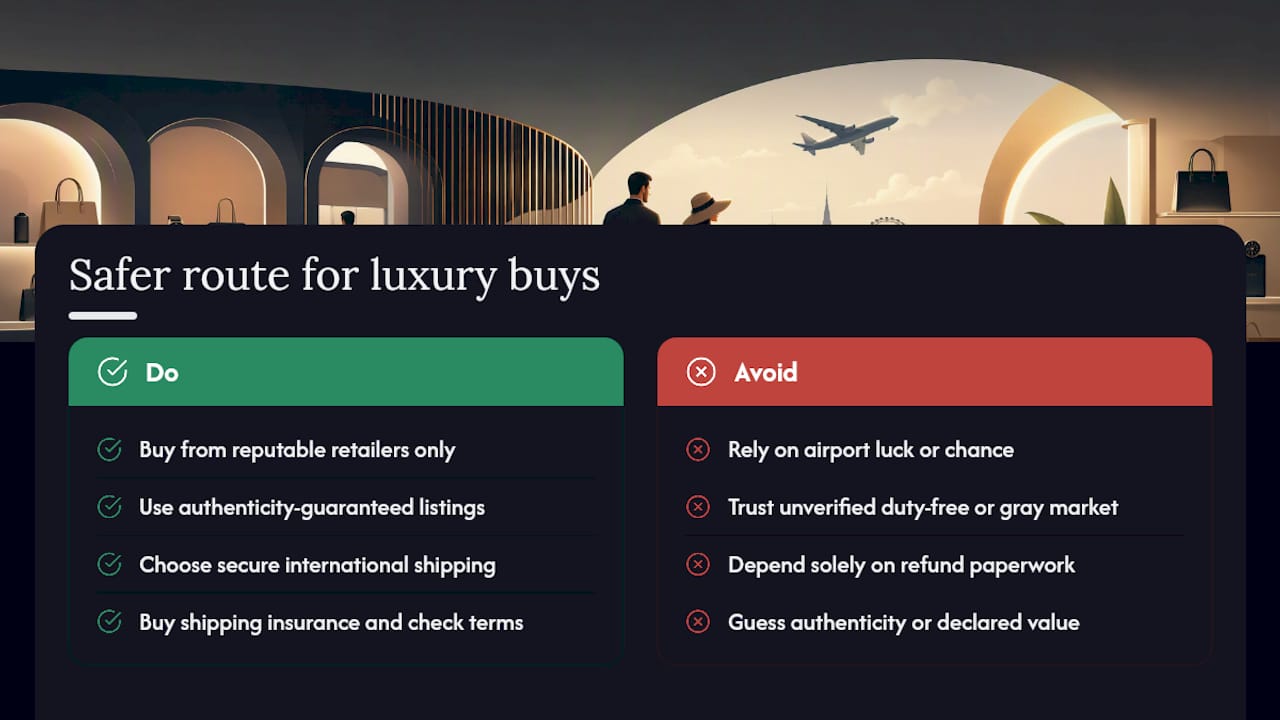
A practical alternative exists when a purchase is too valuable to leave to airport luck or a stack of refund forms. Handbags, watches, or shoes purchased from reputable sources often offer authenticity guarantees, reducing risks of customs issues common with unverified duty-free or gray-market buys.
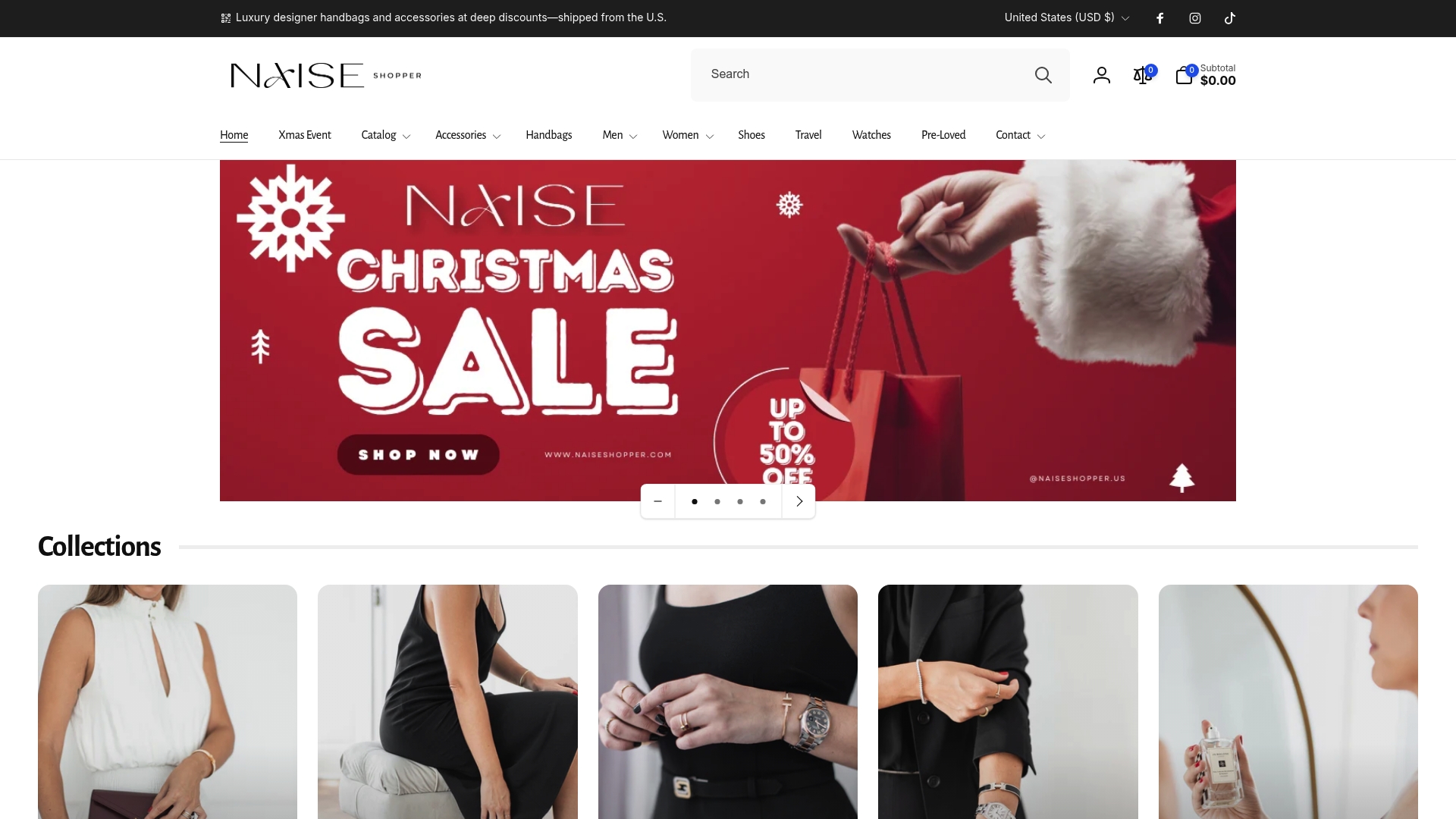
That matters most for exactly the categories this article has covered: designer handbags, watches, and accessories where a wrong guess on authenticity or declared value costs far more than any tax refund saves. Naiseshopper pairs curated collections from houses like Gucci, Prada, and Valentino with secure international shipping, shipping insurance, and localized pricing across many countries, so the paperwork headache of cross-border luxury buying is handled before the item ever reaches your door. If your trip involves complex logistics, the personal shopper service can also purchase and consolidate items on your behalf in the US.
If you’re eyeing a piece like the Gucci G-Timeless watch or a pair of Valentino Garavani sandals, start by browsing the current collections and checking shipping insurance options before you travel.
Where to Verify These Rules Yourself
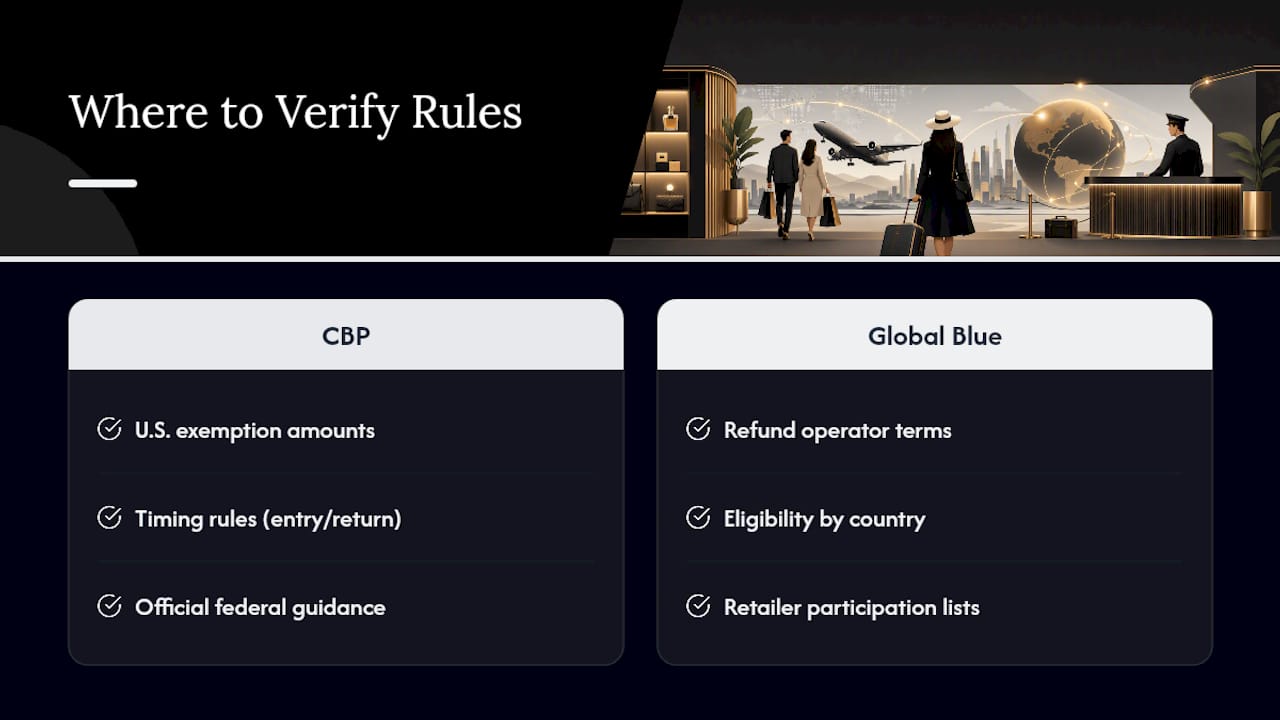
For the most current U.S. exemption amounts and timing rules, check CBP’s exemption guidance directly. For refund operator terms and eligibility by country, Global Blue’s explainer breaks down retailer participation clearly.
Sources
- Is Duty Free Tax Free? Differences and U.S. Rules - LegalClarity
- What Is Duty Free versus Tax Free Shopping - BNO News
- Understanding Tax Free vs. Duty Free Shopping - Global Blue
FAQ
Is Duty-Free the Same as Tax Free?
No. Duty-free removes import duty and excise tax at the point of sale in a bonded transit shop, while tax-free is a refund of local VAT or GST you claim after paying it at a regular retailer, as LegalClarity explains.
Is It Really Cheaper to Buy Duty-Free?
Sometimes, but not always. It’s most reliable on high-excise items like alcohol and tobacco; on other goods, a tax-free refund from a city store can beat the airport price once you subtract operator fees.
Can U.S. Citizens Buy Duty-Free?
Yes, U.S. citizens can buy duty-free abroad, but the purchase still counts toward their personal customs exemption when they return, generally $800, so it isn’t a free pass on unlimited spending.
Is It Better to Buy From Duty-Free?
It depends on the item. Duty-free wins for small, last-minute buys and excise-heavy goods, while tax-free refunds tend to make more sense for big-ticket fashion, watches, or electronics where the refund percentage justifies the paperwork, and using a service like Naiseshopper’s personal shopper option can simplify high-value purchases further.