TL;DR:
- Mastering luxury layering requires building outfits with a three-tier system of base, mid, and outer layers, each chosen for specific fabric weights and functions. Strategic proportion control, such as staggering hemlines and defining the waist, ensures a sleek silhouette free of bulkiness. Using the 2:1:1 accessory rule and curating a versatile wardrobe of high-quality staples enhances cohesion and effortless elegance.
Layering luxury fashion sounds simple until you’re standing in front of a mirror with three expensive pieces that collectively look like a rumpled mess. Bulk, clashing proportions, and accessories that compete for attention are the most common complaints from style-conscious dressers who know their labels but struggle to make them work together. Knowing how to layer luxury fashion correctly means understanding structure, fabric hierarchy, and intentional accessory placement. This guide covers all of it, from building your three-tier foundation to mastering the accessory rules that keep everything cohesive and polished.
Table of Contents
- Key takeaways
- How to layer luxury fashion: the three-tier foundation
- Mastering proportions for a sleek layered look
- How to layer luxury accessories without clutter
- Building a wardrobe built for layering
- The luxury layering workflow from start to finish
- My honest take on what layering actually teaches you
- Shop the staples that make layering effortless
- FAQ
Key takeaways
| Point | Details |
|---|---|
| Use the three-tier system | Build every look with a base, mid, and outer layer matched to the right fabric weights. |
| Stagger your hemlines | Varying layer lengths prevents boxy, shapeless silhouettes and adds architectural dimension. |
| Follow the 2:1:1 accessory rule | Combine two simple, one medium, and one bold accessory piece to avoid visual clutter. |
| Invest in versatile staples | A long tailored coat, fine cashmere knit, and a classic blazer carry the entire wardrobe. |
| Plan with a layering formula | Use the 3-2-1 outfit rule to generate 30-plus looks from a small curated set of pieces. |
How to layer luxury fashion: the three-tier foundation
Every polished layered outfit starts with the same structure. Luxury layering follows a three-tier system of base, mid, and outer layers, each chosen for a specific function and fabric weight. Getting this foundation right is what separates a refined look from a bulky one.
The base layer is your closest-to-skin piece. This is where silk shirts, fine cotton tees, and merino wool turtlenecks live. The job of the base layer is comfort and temperature regulation. It needs to fit close to the body so it doesn’t add visual bulk under everything on top. A Prada slim-fit silk shirt, for instance, works beautifully because it lies flat and adds a subtle sheen that peeks out at the collar or cuffs.
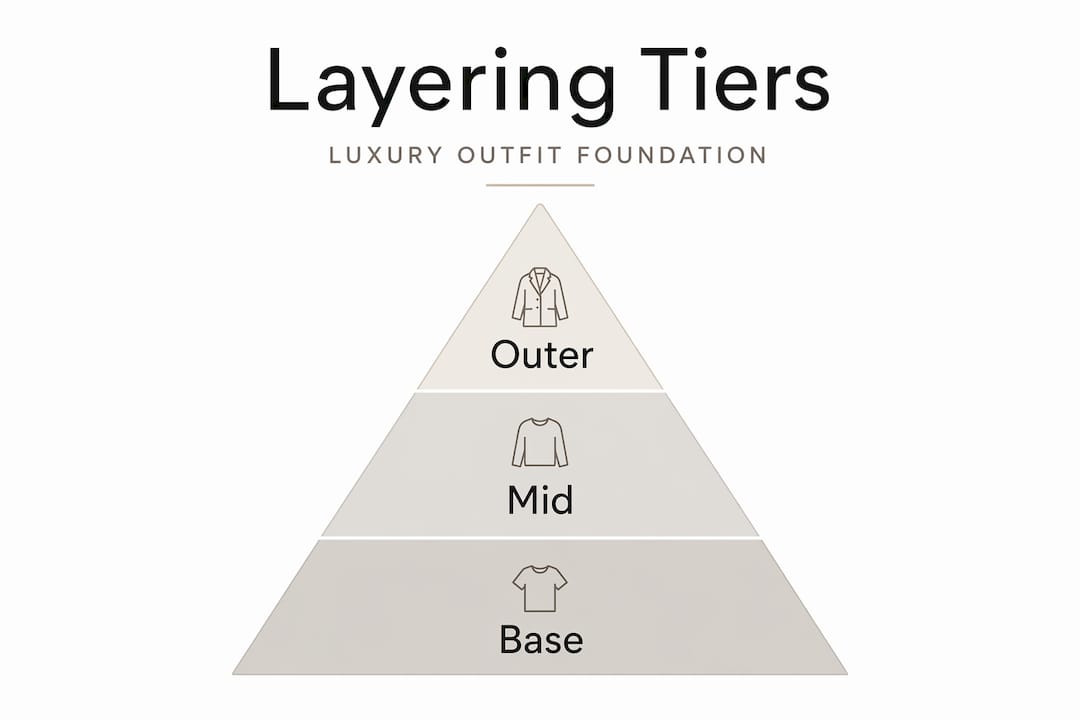
The mid layer is where texture and warmth come in. Cashmere adds warmth without bulk and keeps the silhouette tailored, making it the ultimate mid-layer material. Think cashmere crewnecks, fine wool cardigans, or a structured blazer in bouclé. This layer should sit comfortably over your base without pulling at the shoulders.
The outer layer provides structure and weather protection. Wool overcoats, trench coats, and leather jackets belong here. The key is that your outer layer must accommodate the base and mid layers beneath it without straining at the buttons or chest. Buy your outerwear slightly larger than your standard size to account for the layers underneath.
| Layer | Ideal fabrics | Primary function |
|---|---|---|
| Base | Silk, fine cotton, merino wool | Comfort, temperature regulation, close fit |
| Mid | Cashmere, fine wool, tailored blazer | Insulation, texture, visual interest |
| Outer | Wool overcoat, trench, leather jacket | Structure, weather protection, silhouette |
Pro Tip: Always build from the thinnest fabric inward. Fabric weight progression from lightest base to heaviest outer layer allows each garment to drape naturally, preventing bunching and keeping your silhouette clean.
Mastering proportions for a sleek layered look
Proportion control is where most layered outfits fall apart. People pile on great pieces and end up looking wider and shorter than intended. The fix is architectural thinking.
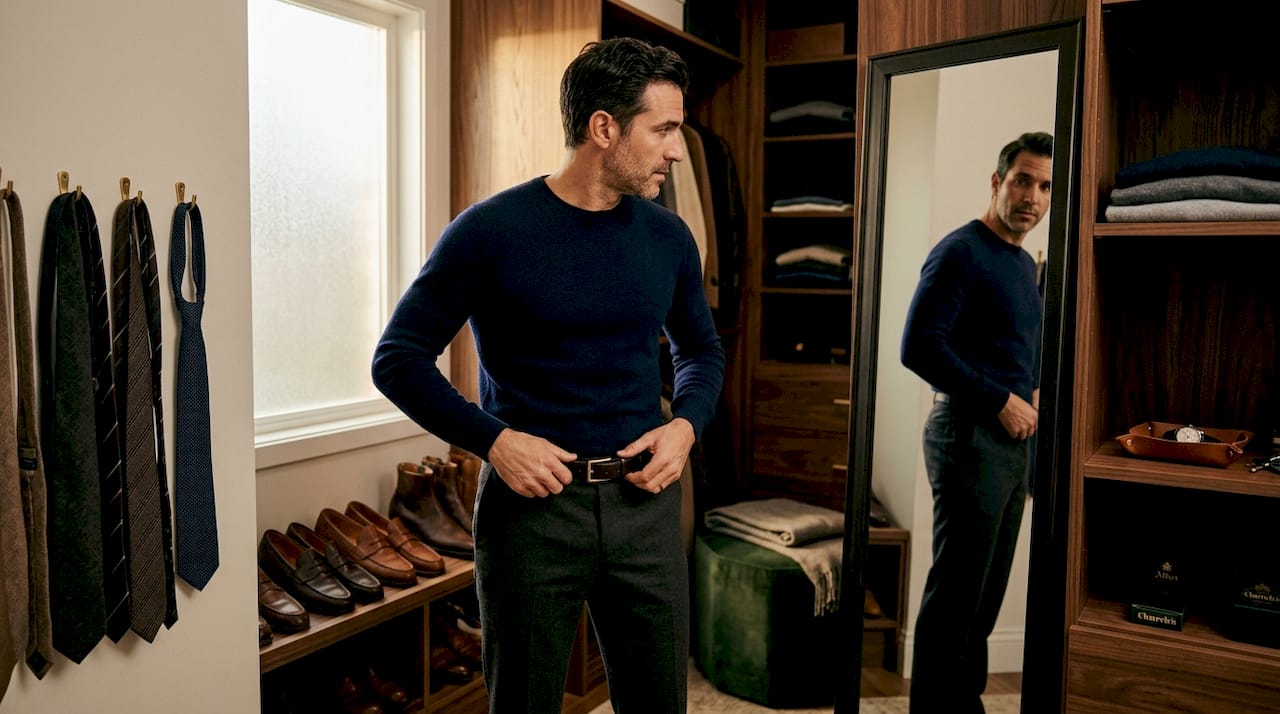
The Rule of Varying Lengths is your most powerful tool here. Stagger your hemlines so each visible layer lands at a different point. A classic combination: a tucked-in silk base shirt, a hip-length cashmere sweater, and a knee-length wool coat. Each layer creates a visual stop that elongates the frame rather than cutting it.
Here are the key proportion rules to keep in mind:
- Never end two layers at the same hemline. It creates a boxy, stacked effect that reads as confusion rather than intention.
- Pair a fitted base with a relaxed mid layer, then a structured outer layer. This graduated volume keeps the look balanced.
- Tuck in your base layer on at least one side to define your waist, especially when wearing roomier mid layers.
- Use a belt over a blazer or coat to reclaim the waist and break up vertical layers visually.
- Mixing contrasting textures tricks the eye and prevents the look from appearing dense. Leather over a ribbed knit, or structured wool over cashmere, creates dimension without adding real weight.
The waist definition point is frequently overlooked but transformative. A Saint Laurent or Bottega Veneta leather belt worn over a long cashmere cardigan creates an entirely different silhouette than leaving it open. It shifts the look from cozy to intentional in seconds.
Pro Tip: When shopping for outerwear to layer over multiple pieces, size up one full size. Outerwear that fits comfortably over layers avoids that strained, button-pulling look that immediately signals poor planning.
How to layer luxury accessories without clutter
Accessories are the finishing language of a layered outfit. Get them right and the whole look clicks together. Get them wrong and even the most beautiful coat and cashmere combination falls apart. The secret is applying the same intentional thinking you use for clothing layers.
Start with the 2:1:1 accessory layering rule. Here’s how it works:
- Two simple pieces. These are your quiet foundations. Think thin gold bands, delicate chain bracelets, or small hoop earrings. They add presence without demanding attention.
- One medium-impact piece. A classic watch, a structured cuff, or a patterned silk scarf adds visual interest without overwhelming. A Gucci G-Timeless watch stacked with a fine chain bracelet is a perfect medium-impact moment.
- One bold statement. A chunky chain necklace, an oversized brooch on a lapel, or a dramatic silk scarf tied at the neck. One is enough. Two bold pieces at once creates noise, not style.
For jewelry specifically, keep 60 to 70% of your stack in the same metal family. Mixing gold, silver, and rose gold in equal measure looks accidental. Dominant gold with one silver accent reads as deliberate.
Scarves, belts, and watches act as polished final layers that complete the look without adding physical bulk. A Chanel silk scarf draped over a wool coat collar, tucked just enough to show the print, delivers more visual interest than an additional clothing layer ever could. You can find expert designer accessory styling tips to refine this skill further.
Pro Tip: Mix accessory scale intentionally. Pair thin, delicate jewelry at the wrist with a bolder neckpiece, or vice versa. Uniform scale across all accessories creates visual flatness. Contrast in scale creates luxury depth.
Building a wardrobe built for layering
The most effective luxury layering comes from a curated wardrobe, not a crowded one. Italian luxury layering is a masterclass in this principle. Neutrals, repetition, and discernment create more elegant results than chasing variety.
The tonal color family approach is particularly powerful. Instead of mixing colors across the spectrum, choose one family and work within it:
- Camel plus ivory plus warm brown: classic, deeply wearable, and endlessly layerable.
- Charcoal plus black plus cool gray: sharp, urban, and modern.
- Cream plus blush plus taupe: soft, feminine, and sophisticated for transitional seasons.
Within each tonal family, texture variation is what keeps the look visually alive. A cream silk base, an ivory cashmere ribbed mid-layer, and an off-white structured blazer are three shades of the same color rendered in three completely different textures. The eye reads depth, not monotony.
Modular luxury layering sets have seen a 35% sales increase, reflecting how strongly the market has shifted toward versatile, transitional pieces. Shoppers are buying with intention, prioritizing pieces that work across multiple combinations.
| Staple piece | Styling role | Versatility |
|---|---|---|
| Long tailored wool coat | Outer structure, silhouette anchor | Works over every mid and base layer |
| Fine cashmere crewneck | Insulating mid layer | Pairs with blazers, coats, scarves |
| Classic silk button-down | Refined base layer | Tuck in, layer under, or wear alone |
| Tailored blazer | Mid or outer layer depending on season | Bridges casual and formal effortlessly |
| Leather or fabric belt | Waist definition tool | Transforms open layers into structured looks |
For smart luxury buys that serve multiple layering roles, prioritize craft over trend. A well-constructed cashmere coat from Bottega Veneta or Prada will outlayer five seasons of fast luxury purchases.
The luxury layering workflow from start to finish
Assembling a layered luxury look is far easier when you follow a repeatable workflow. Here is the step-by-step process that eliminates guesswork.
-
Choose your base layer. Select a form-fitting, thin piece suited to the occasion and temperature. A silk blouse for evening, a fine merino turtleneck for daytime cool weather, or a crisp cotton poplin for warmer transitional days. Fit matters most here. It should graze the body without clinging.
-
Add your mid layer with intention. This is where personality enters. A Valentino cashmere cardigan for texture, a tailored Gucci blazer for structure, or a fine ribbed knit for a more relaxed mood. Each mid-layer choice affects the overall mood. Ask yourself whether this piece adds warmth, texture, or structure. Each layer should contribute at least one of those elements. If it adds nothing, skip it.
-
Select your outer layer with fit in mind. Your coat or jacket must close comfortably over every layer beneath. Pull it on before committing to the combination. If it strains anywhere, the layers beneath are too bulky or the outerwear is too small.
-
Add accessories using the 2:1:1 rule. Stack your jewelry from thinnest to boldest, choose your scarf or belt, and step back. The accessories should feel like they belong to the outfit, not like they were added on top of it.
Common mistakes to avoid:
- Over-layering. Three well-chosen layers always beat five that fight each other. Wrong fabric weights and over-layering consistently produce bulky, shapeless results.
- Matching hemlines. Two layers ending at the hip simultaneously create a visual shelf. Stagger intentionally.
- Ignoring outerwear fit. A coat that binds at the shoulders over your mid layer ruins every piece beneath it.
- Uniform textures. All smooth fabrics or all matte fabrics read as flat. Mix at least two texture families per look.
The 3-2-1 outfit planning rule is worth adopting as your wardrobe framework. Three tops, two bottoms, and one statement layer, paired with two accent accessories, generates over 30 distinct looks from a handful of pieces.
Pro Tip: Before the season starts, lay out your core layering staples and test three to five combinations. Photograph the ones that work. This luxury layering workflow saves time on rushed mornings and proves how much versatility you already own.
My honest take on what layering actually teaches you
I spent years thinking that more layers meant more style. It doesn’t. The most impactful shift I made was treating every layer as a decision with a reason, not as a reflex.
The outfits that stopped people were always the simpler ones. A perfectly fitted cashmere turtleneck under a Balenciaga wool coat, finished with one bold gold chain. No blazer stuffed underneath, no scarf competing with the neckline, no three bracelets canceling each other out. Simplicity read as confidence, and confidence is what luxury actually communicates.
Layering is a form of visual storytelling, signaling confidence and mindful dressing when done thoughtfully. That insight changed everything for me. I stopped asking “what else can I add?” and started asking “what does this look actually need?”
The biggest myth I’ve seen repeated is that luxury layering requires a large wardrobe. It doesn’t. It requires the right wardrobe. Five versatile, high-quality staples styled with intention beat fifty pieces styled at random. Experiment with texture, trust your proportions, and resist the urge to pile on. The look that feels slightly underdressed is almost always the one that photographs best.
— Camila
Shop the staples that make layering effortless
Ready to build your layering wardrobe with pieces that genuinely deliver? Naiseshopper carries authenticated designer staples from Gucci, Saint Laurent, Bottega Veneta, Prada, and more, at prices that make the investment easier to commit to.
Start with footwear that anchors your layered look from the ground up. The Saint Laurent mid-top blue sneakers add a bold, modern contrast under long tailored coats. For a more refined finish, the Jimmy Choo pointed leather flats work beautifully with everything from wide-leg trousers to midi skirts layered over sheer bases. Browse the full authenticated collection at Naiseshopper and use our luxury shopping guide to shop with confidence and precision.
FAQ
What is the correct order to layer luxury clothing?
Build from thinnest to thickest: base layer first in silk or fine merino, mid layer in cashmere or a blazer, and outer layer in structured wool or leather. This fabric weight progression prevents bunching and keeps the silhouette clean.
How do you layer luxury accessories without overdoing it?
Follow the 2:1:1 rule: two simple pieces, one medium-impact piece, and one bold statement. Keep 60 to 70% of your jewelry in the same metal tone to maintain a cohesive, polished result.
What fabrics work best for luxury fashion layering in winter?
Cashmere and fine merino for mid layers, silk or cotton for bases, and structured wool or leather for outer layers. Cashmere specifically traps heat efficiently while keeping the look tailored rather than bulky.
How do you avoid looking bulky when layering high-end clothing?
Stagger your hemlines so each layer ends at a different point, mix textures rather than volume, and define your waist with a belt or tuck. Choosing outerwear one size up also prevents that strained, overstuffed appearance.
How many layers is too many for a luxury outfit?
Three layers almost always produces the most refined result. Beyond three, you risk competing proportions and visual clutter. Each layer should contribute warmth, texture, or structure. If it does none of those, remove it.