TL;DR:
- Luxury pricing combines economics, craftsmanship, and brand storytelling to create perceived value and exclusivity.
- In 2026, excessive price hikes have led many consumers to postpone purchases, impacting demand and resale markets.
You pick up a Chanel bag, glance at the price, and your stomach drops. Understanding luxury price tags is the first step to knowing whether that number reflects genuine worth or a masterclass in perception management. The answer is almost always both. Luxury product pricing is shaped by economics, artistry, psychology, and brand mythology working together. This article breaks down every layer, from Veblen goods theory to the 2026 market correction, so you can shop with clarity and confidence.
Table of Contents
- Key takeaways
- Understanding luxury price tags through economics
- Craftsmanship and quality behind the price
- Brand reputation and storytelling
- The 2026 luxury market reality
- How to evaluate a luxury price tag
- My honest take on luxury pricing today
- Shop luxury that earns its price tag
- FAQ
Key takeaways
| Point | Details |
|---|---|
| Price is a product feature | In luxury, higher prices actively increase desirability by signaling exclusivity and social status. |
| Craftsmanship drives real costs | Artisanal production methods break economies of scale, pushing prices far beyond raw materials. |
| Brand storytelling adds value | Heritage, limited editions, and waitlists engineer scarcity that inflates perceived and resale worth. |
| Market shifts are real in 2026 | Aggressive pricing has pushed 60 million customers away, reshaping how brands must now compete. |
| Informed buyers shop smarter | Evaluating craftsmanship, brand credibility, and resale value helps you find genuine luxury worth buying. |
Understanding luxury price tags through economics
Most people assume luxury goods are expensive because they are made from rare materials. That is part of the story. The deeper truth sits in a concept called Veblen goods: products where demand rises with price because a high price tag itself signals exclusivity and social status. Standard economics says higher prices reduce demand. Veblen goods flip that rule entirely.
Thorstein Veblen identified this over a century ago, and the luxury fashion industry has been refining the playbook ever since. When Hermès prices a Birkin at $10,000 or above, the price is not just covering costs. It is creating a psychological barrier that makes ownership feel rare and meaningful. Removing that barrier would destroy the product’s appeal.
Scarcity amplifies this effect. Luxury brands use icon products and waitlists to engineer exclusivity, and waitlist scarcity increases resale value by approximately 22% annually for top-tier houses like Louis Vuitton. That is not accidental. It is a precision pricing strategy.
Key economic forces shaping luxury pricing right now include:
- Veblen demand curves: Price increases can drive more desire, not less.
- Artificial scarcity: Limited production runs and waitlists transform ordinary items into coveted status objects.
- Price as identity: Owning expensive goods communicates social standing in ways that cheaper alternatives simply cannot replicate.
- Prestige elasticity: Some consumer segments become less interested in a brand once it becomes too accessible.
Pro Tip: When a luxury brand raises prices without any change in materials or design, pay attention to its waitlist behavior. If the waitlist grows after the hike, that is Veblen economics in action.
Craftsmanship and quality behind the price
Genuinely great luxury goods cost a lot to make. Not because of a single expensive material, but because of the cumulative cost of perfection at every stage of production. Artisanal refinements and bespoke processes break economies of scale in ways that no spreadsheet can fully capture.
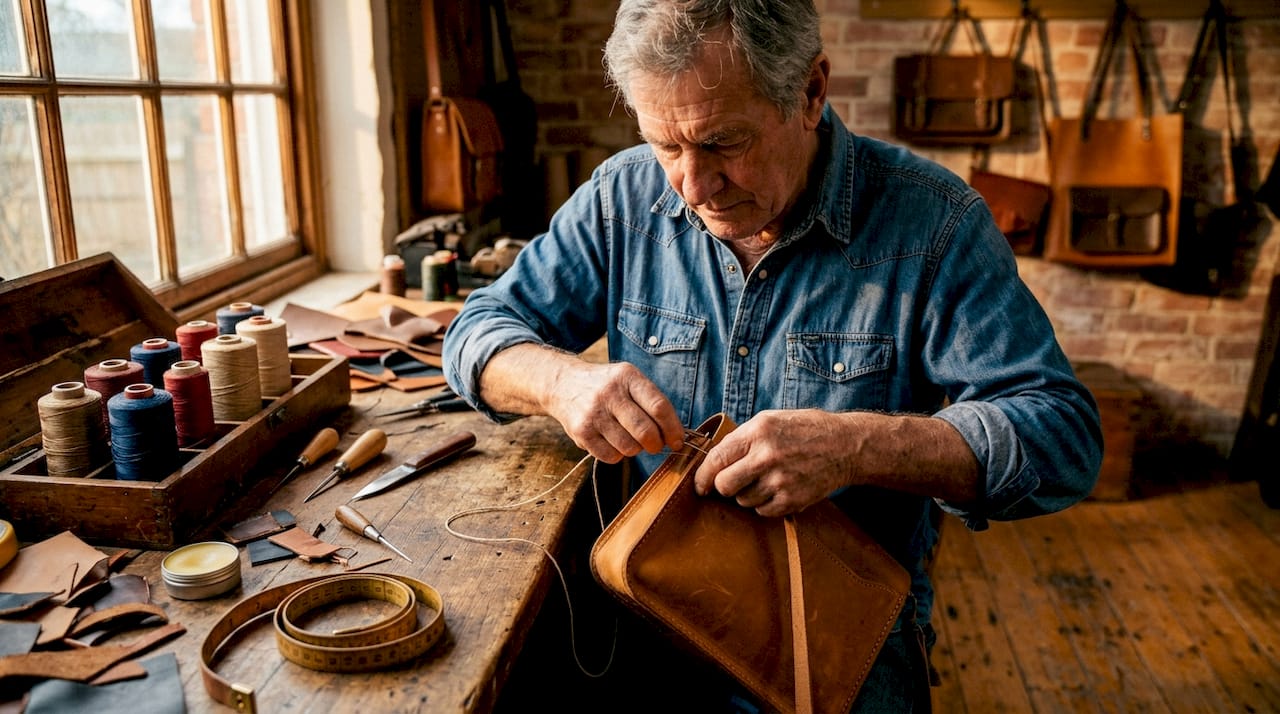
Think about what goes into a hand-stitched leather bag from a storied Parisian atelier. The leather is selected hide by hide. Stitching is done by craftspeople who train for years. Hardware is polished to tolerances that machines cannot match consistently. Each of those steps costs real time and real money, and none of them can be rushed without degrading the final product.
Here is what actually drives craftsmanship costs beyond raw materials:
- Skilled labor time. A single artisan may spend 20 or more hours on one bag. That labor is neither cheap nor replaceable.
- Material selection waste. Premium leather tanneries reject a significant percentage of each hide. The cost of rejected material gets absorbed into the price of the piece that ships.
- Refinement metrics. Luxury designers obsess over elements that most consumers feel before they can name. The weight of a zipper pull, the resistance of a clasp, the drape of a silk lining. These tactile cues influence perceived value profoundly, even when buyers cannot explain why.
- Iteration and sampling. Luxury houses produce dozens of prototypes before approving a silhouette for production. That design refinement cost lands in the final price.
- Quality control redundancy. Multiple independent inspections at each production stage catch flaws that would never reach a fast fashion quality check at all.
Pro Tip: When evaluating price vs quality in luxury, pick up the item and handle it for 30 seconds before looking at the price tag again. Your hands know more than your eyes when it comes to assessing genuine craftsmanship.
To understand what defines luxury fashion at its core, craftsmanship is always the baseline standard. Everything else is amplification.
Brand reputation and storytelling
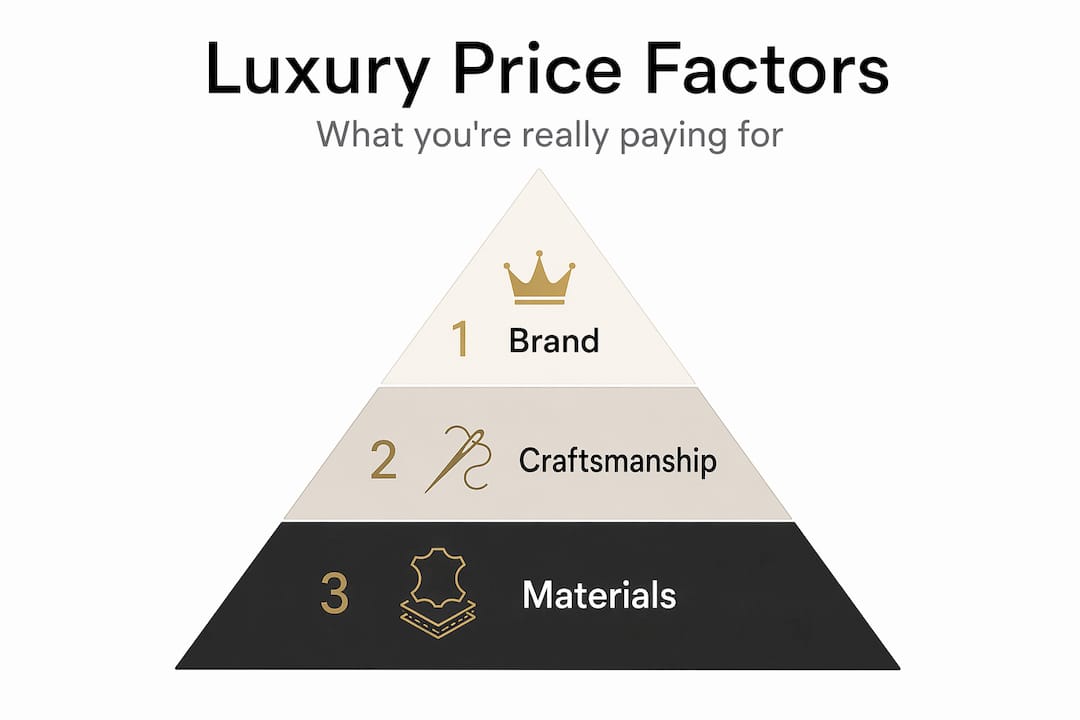
Here is where luxury product pricing gets genuinely fascinating. Two bags can be made from nearly identical materials with comparable construction quality, yet one sells for three times the price of the other. The difference is brand equity, and it is worth every penny to the right buyer.
Brand equity in luxury is built over decades of consistent positioning, celebrity association, cultural moments, and deliberate scarcity. When you buy a Saint Laurent piece, you are buying into a heritage that stretches from 1961 to the current season. That continuity has real monetary value because it is impossible to manufacture overnight.
Luxury storytelling also works through limited editions. A standard Gucci sneaker is desirable. A limited collaboration version of the same silhouette sells out in hours and lists on resale platforms at double retail. The physical product barely changed. The story around it changed everything.
The social signaling function of price is also measurable. Research confirms that higher prices turn items into status symbols, reinforcing identity among buyers who are explicitly paying for that social communication. This is not vanity. It is a documented economic behavior.
What brand reputation actually adds to a luxury price tag:
- Heritage premium: Decades of cultural relevance that competitors cannot buy their way into quickly.
- Scarcity engineering: Controlled distribution, limited colorways, and exclusive drops that make ownership feel like an achievement.
- Association equity: Runway presence, celebrity styling, and editorial placement that connect the product to aspiration at scale.
- Perceived quality assurance: Consumers trust that a recognized luxury brand has policed its own standards relentlessly.
A striking data point: price as a luxury indicator rose from 52% in 2021 to 62% by 2025 among US adults, while quality as the defining factor dropped from 55% to 49%. Consumers are increasingly equating expense with luxury itself, which tells you exactly why brand pricing strategies keep pushing higher.
The 2026 luxury market reality
The industry has hit a wall. Luxury prices increased about 80% over five years, and the result has been the loss of approximately 60 million customers who felt priced out and, frankly, betrayed. This is the risk that comes with treating price hikes as a substitute for creative excellence.
The Chanel Classic Flap is the most discussed case. Its price rose 108% between 2019 and 2024 with no corresponding improvement in materials or construction. That kind of move builds short-term revenue and long-term resentment.
| Luxury market indicator | 2021 | 2026 |
|---|---|---|
| Price as luxury definition (US adults) | 52% | 62% |
| Quality as luxury definition (US adults) | 55% | 49% |
| Aspirational consumers who are price-sensitive | N/A | 62% |
| Consumers delaying luxury purchases | N/A | 54% |
The aspirational consumer segment, the group that stretches to buy one great piece per season, is now under significant economic pressure. Research from early 2026 shows that 62% of this group describe themselves as price-sensitive and 54% are actively delaying purchases due to economic uncertainty.
“Price hikes without creative and qualitative consistency cause customer alienation and revenue decline.” This insight from current luxury market analysis captures exactly where several major houses find themselves today.
The secondary market has also absorbed the fallout. When primary market prices climbed beyond what many buyers considered rational, consumers shifted toward resale platforms in significant numbers. Some secondary market values then dropped sharply, reflecting that the primary market had simply overshot.
How to evaluate a luxury price tag
You do not need to be an economist or a fashion editor to shop smart. You need a clear framework for separating genuine value from inflated hype. Here is how to approach it.
- Check the craftsmanship signals. Weight, stitching regularity, hardware finish, and lining quality are all visible and tactile. A $3,000 bag that feels flimsy at the zipper is telling you something real.
- Research the brand’s price trajectory. If prices have climbed 50% or more in three years with no design evolution, you are partially paying for the brand’s revenue targets, not the product’s value.
- Consider resale potential. Pieces from Chanel, Hermès, and Louis Vuitton historically hold or gain value. Trendy pieces from brands relying on hype cycles rarely do.
- Distinguish heritage from marketing. A brand founded in 1920 carries genuine historical weight. A brand launched five years ago charging similar prices is selling positioning, not pedigree.
- Use aspirational shopping strategies wisely. Authenticated platforms with deep discounts on genuine pieces give you access to real luxury without paying the full Veblen premium.
The aspirational luxury shopper who shops with a clear value framework consistently gets more satisfaction from their purchases than the buyer who chases the highest price tag as a proxy for quality.
My honest take on luxury pricing today
I have watched consumers cycle through the same emotional arc for years: awe at the price, desire for the object, and then, too often, a low-grade feeling of being manipulated. Here is what I have learned after closely following this market: the price tag has never been a reliable indicator of quality on its own. It has always been a bundle, part production cost, part brand investment, part social signal, and part whatever the market will bear.
What concerns me about 2026 is that some of the biggest houses confused price increases with brand building. Raising a price is not the same as earning a higher price. The brands that earn it, the ones with genuine artisanal differentiation and creative consistency, rarely need to hike 80% in five years to maintain their status.
My advice is simple: buy the item that excites you for what it is, not for what its price communicates. The most satisfying luxury purchases I have seen are the ones where the buyer could articulate exactly what they loved about the craftsmanship or design before they ever looked at the tag.
The market correction happening now is actually healthy for consumers. Brands are being pushed to justify their prices again, which means better products at more honest price points are coming.
— Camila
Shop luxury that earns its price tag
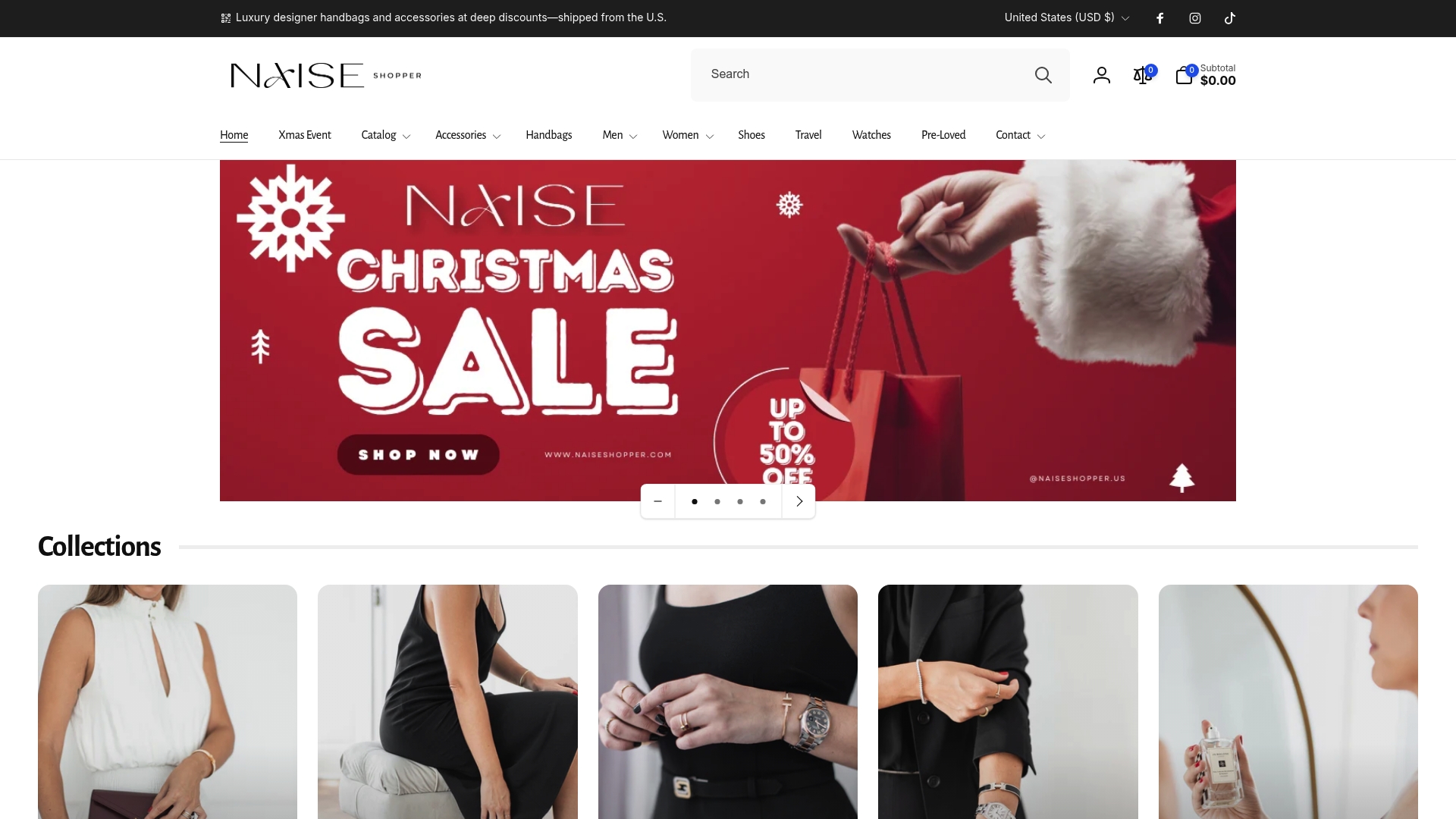
Now that you understand what goes into a luxury price, you can shop with real confidence. At Naiseshopper, every piece is authenticated and offered at prices that make genuine luxury far more accessible. The Saint Laurent mid-top blue sneakers are a perfect example of brand prestige meeting serious craftsmanship. Clean silhouette, premium materials, and that unmistakable Saint Laurent attitude. If refined elegance is more your speed, the Jimmy Choo pointed toe leather flats and the stunning Jimmy Choo ballet pink mirror sandals deliver exactly the kind of quality and finish that justifies every dollar. Browse the full collection at Naiseshopper and discover authentic designer pieces that put the value back in luxury.
FAQ
What makes luxury goods more expensive than regular products?
Luxury goods cost more due to a combination of artisanal production, premium materials, brand equity, and deliberate scarcity. The price itself also functions as a feature, signaling status in a way that lower-priced alternatives cannot replicate.
Are higher luxury prices always a sign of better quality?
Not always. While genuine craftsmanship drives real costs, some brands raise prices primarily as a positioning strategy. The Chanel Classic Flap rose 108% in five years with no documented quality improvement, showing that price increases can reflect market strategy rather than product upgrades.
What are Veblen goods and how do they relate to luxury pricing?
Veblen goods are products where demand increases as price rises because the high price signals exclusivity and status. Most luxury fashion items behave this way, which is why brands can charge more and often sell more at the same time.
How can I tell if a luxury item is worth its price?
Handle the item and assess construction quality directly. Research the brand’s price history and resale performance. Pieces from houses with genuine heritage and consistent craftsmanship tend to hold value, while trend-driven price hikes rarely do.
Why are luxury consumers pulling back in 2026?
An 80% price increase across the luxury sector over five years pushed 60 million customers away. With 62% of aspirational consumers now describing themselves as price-sensitive and 54% delaying purchases, brands that over-indexed on price hikes without creative substance are now facing real demand pressure.