The single tactic that wins designer sale events is simple: arrive early, grab first, and authenticate before you pay. Sample sales often offer steep discounts off retail, but most items are final sale, so preparation and speed matter more than luck. Here are three things you can do right now: sign up for alerts on 260 Sample Sale, check Naiseshopper’s authenticated inventory for reference pricing on pieces you want, and pack your sale bag tonight.
The playbook in one line: Prepare before you go, move fast on the floor, and never skip authentication — those three habits separate the shoppers who score from the ones who regret.
Table of Contents
- How to maximize designer sale events before you leave home
- When should you go: day one vs. last-day markdowns
- How to shop the room: grab first, evaluate second
- Quick authentication checklist for in-venue buys
- Should you shop online or go in person?
- How to build insider access to designer sale events
- How to prioritize items and avoid impulse buys
- Common scams and pitfalls at designer sale events
- How to assess condition and alteration costs before buying
- Key Takeaways
- The part most shoppers skip (and why it costs them)
- Naiseshopper: authenticated designer pieces without the sample-sale stress
- Further reading and trusted places to watch for designer sales
How to maximize designer sale events before you leave home
Showing up unprepared is the most expensive mistake you can make. Confirm the RSVP or ticket requirement, exact address, door hours, and entry policy at least 48 hours out. Many events cap attendance or require pre-registration, and some accept only card payments while others are cash-preferred.
Packing checklist:
- Foldable tote or structured bag (racks fill fast and staff rarely provide bags)
- Measuring tape and your brand-specific size notes (Prada and Valentino sizing differs from US standard)
- Reference photos of full-price versions saved to your phone
- Small lint roller and a portable phone charger
- Clear wallet with your card, some cash, and ID
Keep your wishlist to one to three target pieces. A focused list prevents the impulse spiral that leads to final-sale regret. Editors consistently flag careful evaluation as the single best defense against buyer’s remorse at sample sales — and that evaluation starts before you walk in the door.
Pro Tip: If you can’t attend in person, Naiseshopper’s personal shopper service can source and purchase specific authenticated pieces on your behalf across the US, removing the logistical pressure entirely.
When should you go: day one vs. last-day markdowns
Pick day one when you need a specific item or size. Pick the last day when you want the deepest price and can be flexible on what you find.
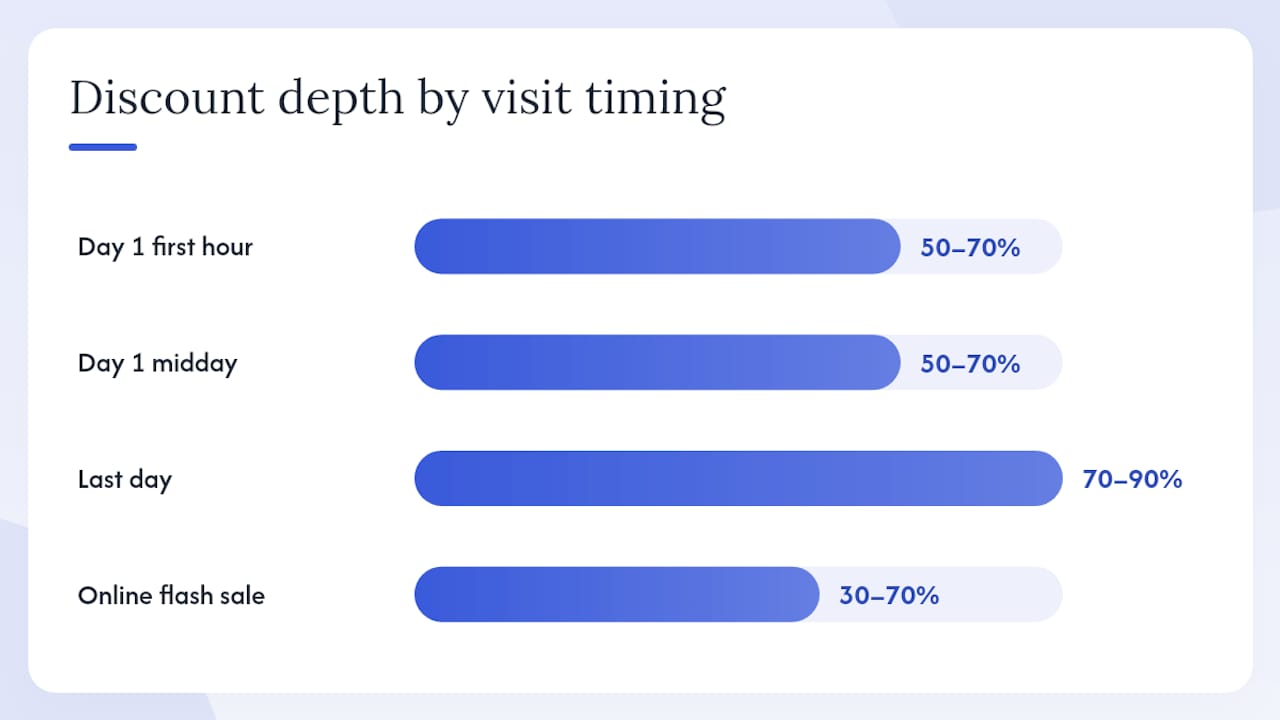
Outlets typically offer moderate to substantial discounts off retail, and sample sales push further. The trade-off is real: early attendance means full selection at moderate discounts; late attendance means picked-over racks at steeper cuts.
| When to go | Who should go | Expected discount | Return policy |
|---|---|---|---|
| Day 1, first hour | Shoppers targeting a specific piece or size | 70–90% off for some final-day events; most items 50–70% off | Usually final sale |
| Day 1, midday | Balanced shoppers, some flexibility | 50–70% off | Usually final sale |
| Last day | Flexible shoppers, any size | 70–90% off on remaining stock | Final sale, no exceptions |
| Online flash sale | Remote shoppers, convenience-first | 30–70% off (outlet range) | Varies by platform |
For day-one arrival, join the line 30–45 minutes before doors open. Bring your wishlist and move directly to the category you want. Last-day tactics require patience: scan every rack left to right, check folded items on tables, and look at the floor near fixtures where pieces get dropped.
How to shop the room: grab first, evaluate second
In a chaotic sample sale, hesitation costs you the piece. Claim it first, then decide.
Here is the sequence that works:
- Enter and sweep the highest-value area (bags, shoes, outerwear) within the first two minutes.
- Claim any promising piece by draping it over your arm or placing it in your tote.
- Move to a quieter corner or wall to evaluate what you’ve grabbed.
- Run a fast inspection: seams, hardware, tags, lining, odor, stains, and missing components.
- Return anything that fails inspection before joining the checkout line.
Wearing fitted layers — leggings and a tight tank or bodysuit — lets you try pieces on without a fitting room. Drape jackets over your outfit, step into skirts over leggings, and hold bags at arm’s length to judge proportion.
Pro Tip: When time is short, apply the three-question rule before committing: Does it fit right now (not after alterations)? Can you style it three different ways? Is the repair cost, if any, under 10% of what you’re paying? If any answer is no, put it back.
Quick authentication checklist for in-venue buys
Authentication is non-negotiable at sample sales, where provenance can be unclear and returns are rarely an option. Consumers want fast certificates and traceability, while experts emphasize standardized, expert-verified procedures — so use both layers when you can.
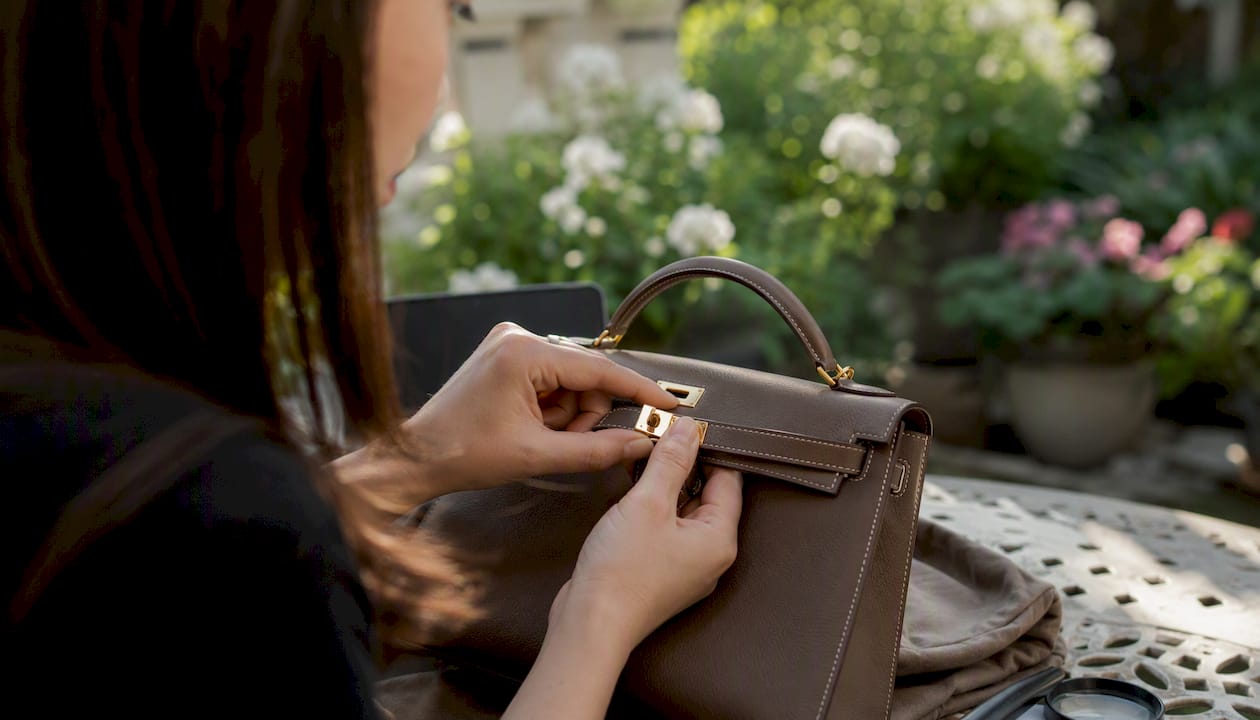
Fast in-venue checks:
| Check | What to look for | Red flag |
|---|---|---|
| Serial number / date code | Correct format for the brand (e.g., Gucci’s code format) | Missing, scratched off, or wrong format |
| Hardware weight and finish | Solid, heavy, consistent plating | Lightweight, flaking, or uneven color |
| Stitching | Uniform count, tight, no loose threads | Uneven spacing or fraying |
| Logo placement | Centered, correctly spelled, clean edges | Off-center, blurry, or misspelled |
| Lining and leather smell | Rich leather scent, clean fabric lining | Chemical or plastic odor |
If something feels off, escalate: request a receipt or sale history, ask for a written guarantee, and photograph every detail before buying. You can cross-reference against Naiseshopper’s luxury authentication resources or consult a professional authenticator post-purchase. Avoid cash-only sellers with no documentation — that combination is the clearest risk signal at any sale event.
Should you shop online or go in person?
Online is better for convenience, return options, and authenticated outlet buys. In-person wins for one-off finds, deep markdowns, and tactile inspection.
High-quality product detail, provenance information, and clear authenticity signals reduce hesitation for high-ticket online purchases. Platforms like The Outnet and Yoox carry authenticated past-season stock with structured return policies. Lyst aggregates listings across retailers so you can track price drops on specific pieces. The Honey browser extension automatically applies coupon codes and tracks price history, making it easy to confirm whether a “sale” price is genuinely lower than recent history.
Use price-tracking tools, alerts, and curated newsletters to catch outlet and flash-sale deals and verify true savings. Set Lyst alerts for specific pieces, build wishlists on The Outnet, and use Honey on any checkout page to surface better prices. For online purchases, always confirm the return window, authentication guarantee, and shipping insurance before paying. Frictionless checkout and visible security badges reduce abandonment for expensive purchases — if a checkout feels sketchy, trust that instinct.
How to build insider access to designer sale events
The best sales aren’t always public. Relationships with boutique staff, PR contacts, and brand representatives often unlock pre-sale access, private shopping hours, or advance notice of upcoming events.
Start by introducing yourself to sales associates at your favorite brand boutiques. Regular customers who spend consistently get added to private client lists, which often include first access to sample sales and trunk shows. Follow brand PR accounts on Instagram — many post event invitations 24–48 hours before public announcements. Sign up for every brand newsletter you care about, because email lists frequently receive exclusive early-bird codes or pre-registration links.
Concierge and white-glove services improve conversion and trust for high-value shoppers, and the same principle applies in reverse: presenting yourself as a serious, knowledgeable buyer makes staff more likely to flag upcoming events your way. Attend trunk shows and brand events even when you’re not buying — those interactions build the relationships that pay off later.
How to prioritize items and avoid impulse buys
A wishlist of one to three pieces is your best filter. Before the event, audit your wardrobe for gaps: a structured bag in a neutral, a versatile heel, a blazer that works day-to-night. Those gaps define your targets.
At the event, hold every piece against that list. If it doesn’t fill a gap or replace something worn out, it’s a bonus buy, not a priority. Bonus buys are fine, but they go back on the rack if your priority pieces are still available. The final-sale reality at most sample sales makes this discipline worth practicing: there is no return if the piece sits unworn.
Color and silhouette versatility are the two fastest filters. A Bottega Veneta intrecciato tote in a neutral works across seasons; a neon mini bag in a trend color has a shorter useful life. Ask yourself which pieces in your closet it pairs with before committing.
Common scams and pitfalls at designer sale events
Counterfeit goods do appear at informal pop-up sales and unverified online flash events. The clearest warning signs: cash-only payment with no receipt, no brand tags or serial numbers, pricing that seems too low even for a sample sale (a Chanel bag at $200 is not a deal, it’s a fake), and sellers who resist close inspection or photography.
Unofficial “sample sales” advertised only on social media with no verifiable brand connection are a frequent scam format. Verify the event organizer before attending: legitimate sales are typically hosted by the brand directly, by established event companies like 260 Sample Sale, or by reputable department stores. If the organizer has no traceable history, skip it.
Online, watch for listings that use stock photos instead of actual product images, sellers with no verified reviews, and checkout pages without HTTPS or visible security badges. Always pay by credit card rather than wire transfer or peer-to-peer apps — credit cards offer chargeback protection that cash and Venmo do not.
How to assess condition and alteration costs before buying
Sample pieces have a working life before they reach the sale floor. Check for wear at stress points: bag handles and corners, shoe toe boxes and heel caps, garment underarms and collar edges. Minor scuffs on leather are usually fixable; deep scratches on patent leather or hardware corrosion are harder to reverse.
For ready-to-wear, check seam allowances before assuming alterations are easy. A jacket with half-inch seams has little room to let out; a dress with two-inch seams can be taken in significantly. Hold the piece up to natural light to spot thin spots, pulls, or repairs in the fabric.
Alteration costs vary by city and complexity, but a rough rule: if the alteration cost plus purchase price exceeds 70% of the full retail price, the “deal” has largely evaporated. A $300 sample blazer that needs $200 in alterations is a $500 blazer, not a bargain.
Key Takeaways
Arriving early with a focused wishlist, moving fast on the floor, and authenticating before you pay are the three habits that consistently separate great sample-sale finds from costly mistakes.
| Point | Details |
|---|---|
| Arrive early with a wishlist | Day-one attendance secures selection; limit targets to 1–3 pieces to stay focused. |
| Grab first, evaluate second | Claim promising pieces immediately, then inspect seams, hardware, tags, and lining in a quiet corner. |
| Authenticate every piece | Check serial numbers, hardware weight, stitching, and logo placement; escalate to a professional if uncertain. |
| Budget for true cost | Add sales tax, alterations ($80–$200 for garments), and authentication fees to calculate real savings. |
| Naiseshopper for authenticated buys | Use Naiseshopper’s authenticated inventory and personal shopper service for high-value or remote purchases. |
The part most shoppers skip (and why it costs them)
The conventional wisdom around sample sales focuses almost entirely on speed: get there early, grab fast, check out before someone else does. That advice is correct, but incomplete. The shoppers who consistently win aren’t just fast — they’re prepared. They know their sizes in three brands. They have reference photos. They’ve already decided their budget ceiling per category.
What I find underrated is the authentication habit. Most shoppers treat it as an advanced step, something for serious collectors. But at a sample sale, where final sale is the rule and provenance can be murky, a two-minute authentication check is the single highest-ROI action you can take. The research on consumer authentication preferences confirms that shoppers want fast certificates and traceability — and that gap between what they want and what most sale events provide is exactly where mistakes happen.
The other underrated move: using authenticated online platforms like Naiseshopper as a pricing reference before you walk into any in-person event. Knowing what a Gucci G-Timeless watch or a Prada heel retails for on an authenticated platform gives you an instant benchmark. You’ll know immediately whether the sale price is genuinely steep or just dressed up as one.
Naiseshopper: authenticated designer pieces without the sample-sale stress
Scored a great piece at a sample sale but want the security of a verified return policy and authentication guarantee? Naiseshopper carries discounted, authenticated designer inventory across bags, shoes, ready-to-wear, and watches from Gucci, Chanel, Prada, Valentino, and more — with personal shopper assistance for US buyers who want expert guidance on specific pieces.
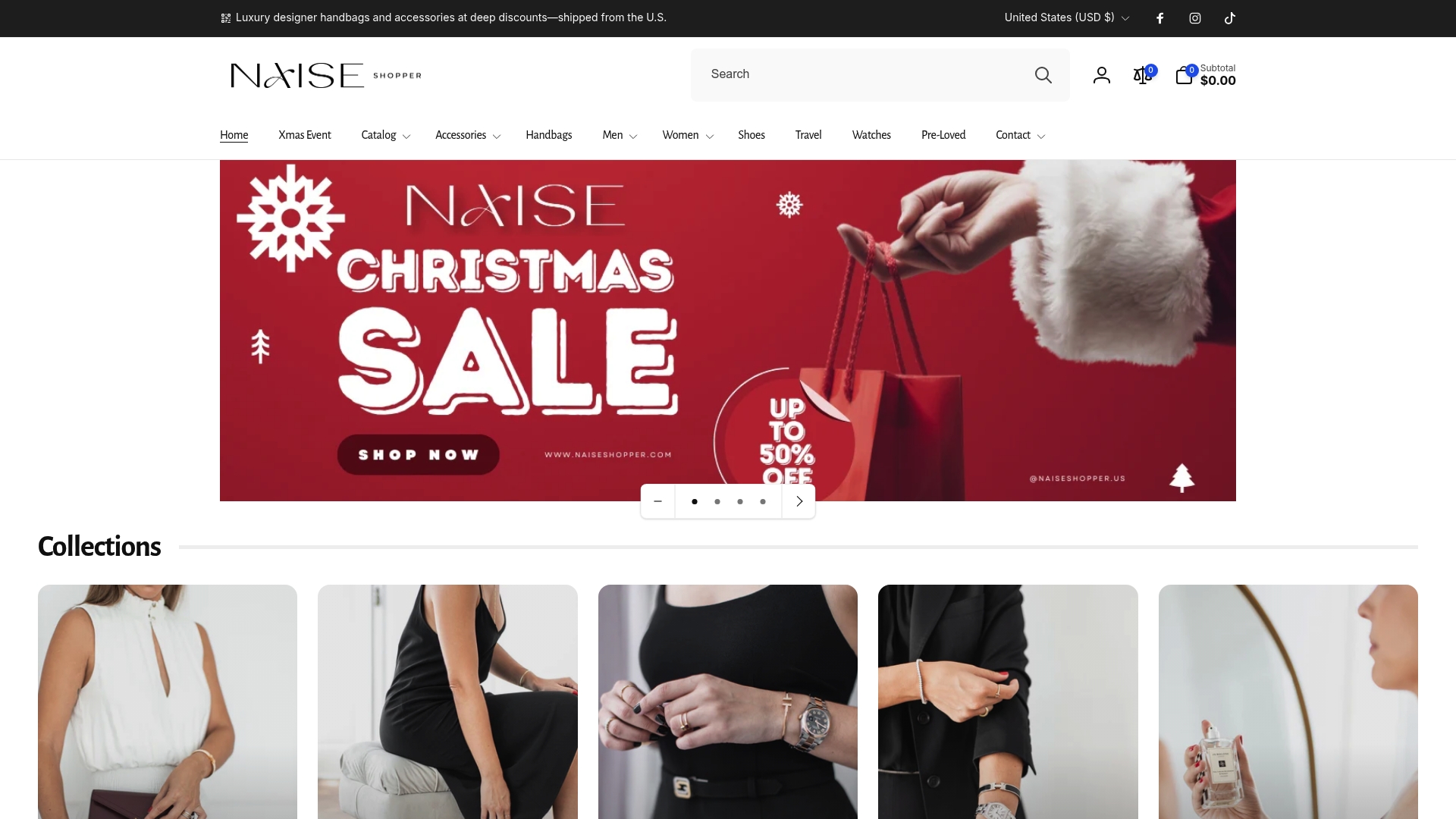
Current authenticated finds include the Prada Black Leather Floral Heels Stilettos Pumps, the Valentino Garavani Beige Leather Stiletto Heels Sandals, and the Gucci G-Timeless Quartz Black Watch 38mm — each listed with full provenance detail and luxury shopping security including shipping insurance. Browse the full collection and use the personal shopper service at naiseshopper.com.
Further reading and trusted places to watch for designer sales
| Source | What it offers | Best for |
|---|---|---|
| 260 Sample Sale | NYC-based sample sale alerts and ticketed events | In-person US sample sales |
| The Outnet | Authenticated past-season designer stock with returns | Online outlet shopping |
| Yoox | Multi-brand outlet with deep discounts on past seasons | Online outlet, wide selection |
| Lyst | Price-drop alerts and aggregated designer listings | Price tracking and wishlist alerts |
| Honey | Browser extension for automatic coupon codes and price history | Online checkout savings |
| Naiseshopper blog | Authentication guides, shopping tips, and deal alerts | Authenticated buying resources |
For deeper reading on authentication and smart luxury buying, the following sources informed this guide: Broke Rich Auntie on winning NYC sample sales, Herm.io on outlet and sample sale strategies, Grazia’s sample sale shopping guide, Who What Wear on shopping like a fashion editor, and Springer’s research on authentication methods.
This article is general shopping guidance, not legal or financial advice. Verify current sale terms, return policies, and authentication standards directly with the seller or a qualified professional before purchasing.