Spotting a luxury handbag online can spark excitement, but doubts about authenticity often linger. For savvy shoppers, a thorough authentication toolkit is the first step toward securing genuine designer pieces. Knowing how to examine material quality, brand labels, and seller credentials protects both your investment and peace of mind. This guide reveals practical methods and professional-level tools, helping you confidently assess designer bags before committing to purchase.
Table of Contents
- Step 1: Gather Essential Authentication Tools
- Step 2: Examine Brand Labels and Serial Codes
- Step 3: Inspect Craftsmanship and Materials
- Step 4: Verify Seller Credentials and Documentation
- Step 5: Authenticate with Professional Services
Quick Summary
| Key Insight | Explanation |
|---|---|
| 1. Assemble Essential Tools | Gather a digital magnifying glass, LED lighting, gloves, precision tools, and a camera for effective handbag authentication. |
| 2. Scrutinize Labels and Codes | Examine label placement and serial numbers specific to each brand to ensure authenticity. |
| 3. Focus on Craftsmanship | Check the quality of materials, stitching, and hardware, as authentic bags showcase superior craftsmanship. |
| 4. Verify Seller’s Credentials | Research the seller’s reputation and request documentation to minimize the risk of purchasing a counterfeit bag. |
| 5. Use Professional Services | Consider professional authentication to ensure definitive verification, especially for high-value items. |
Step 1: Gather Essential Authentication Tools
Authententicating a luxury designer handbag requires having the right tools and understanding how to use them effectively. In this section, you’ll learn exactly what equipment you need to conduct a professional-level bag authentication check.
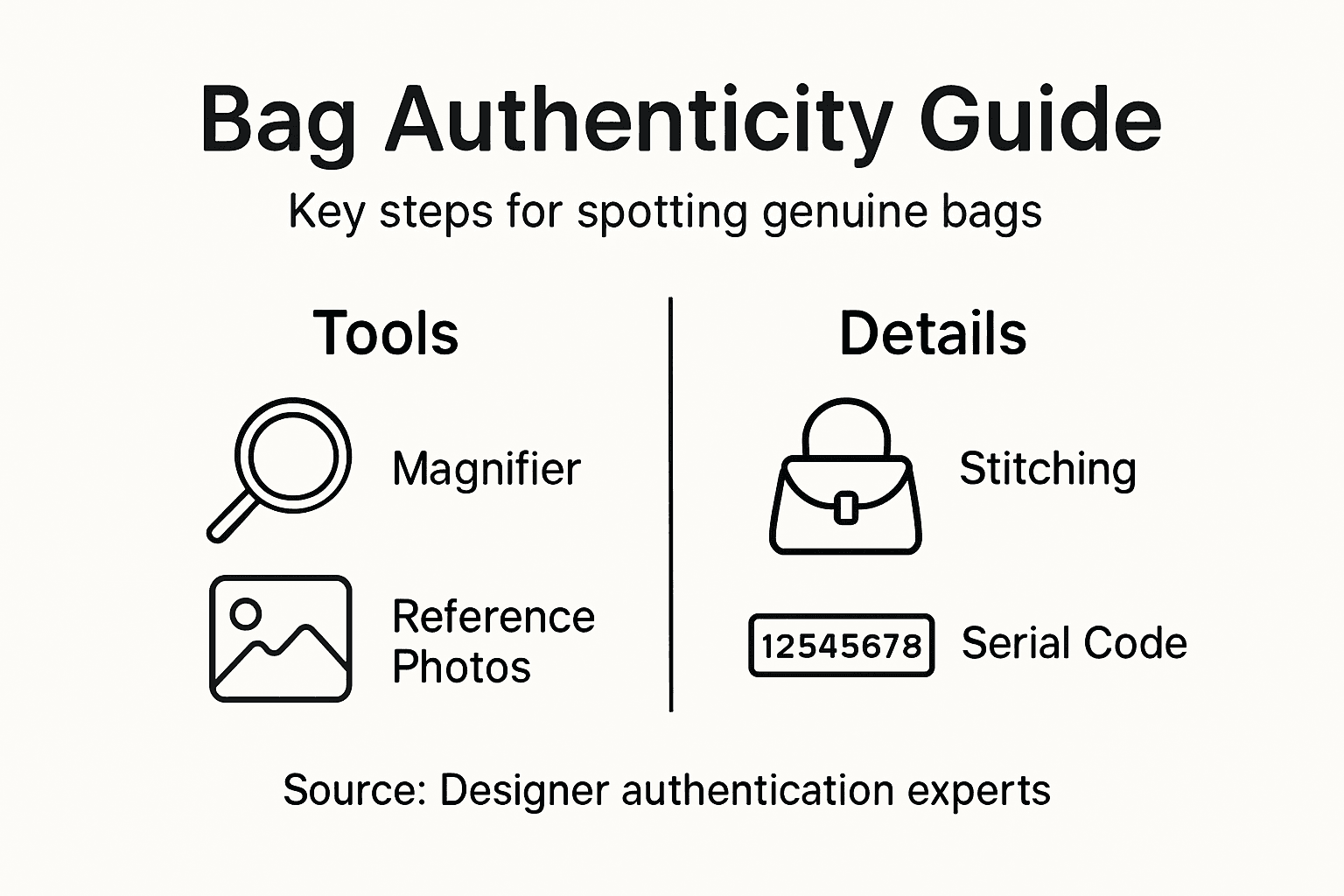
To get started, you’ll want to assemble a comprehensive authentication toolkit that includes specialized instruments for close examination. Essential tools include:
- A high-quality digital magnifying glass with at least 10x magnification
- Bright, adjustable LED lighting for consistent color and material assessment
- White cotton gloves to handle designer bags without transferring oils
- A precision inspection toolkit with measuring instruments
- A smartphone or digital camera for detailed documentation
The goal is creating a systematic approach to examining every aspect of the bag. By having these tools ready, you can methodically inspect material quality, stitching integrity, hardware precision, and logo authenticity. Each instrument serves a specific purpose in uncovering potential signs of counterfeiting.
Professional authentication requires patience, precision, and the right equipment to detect subtle differences between genuine and fake designer items.
Pro tip: Invest in a professional jeweler’s loupe with 20x-30x magnification for examining minute details like logo embossing and hardware stampings.
Step 2: Examine Brand Labels and Serial Codes
Authenticating a designer handbag requires a meticulous examination of its unique identifying markers - brand labels and serial codes. This step will help you decode the critical information that distinguishes genuine luxury items from sophisticated counterfeits.
Each designer brand uses different label placement and serial code formats that require specific attention to detail. Start by carefully examining:
- Label location on the bag’s interior lining
- Embossed or printed serial number placement
- Quality and precision of logo stamping
- Font consistency and alignment
- Material and finish of the label itself
For most luxury brands, serial codes provide a digital fingerprint that can be cross-referenced with manufacturer databases. Some brands like Louis Vuitton and Chanel have particularly complex coding systems that require advanced verification techniques.
Authentic designer bags have consistently precise label details that counterfeiters struggle to replicate perfectly.
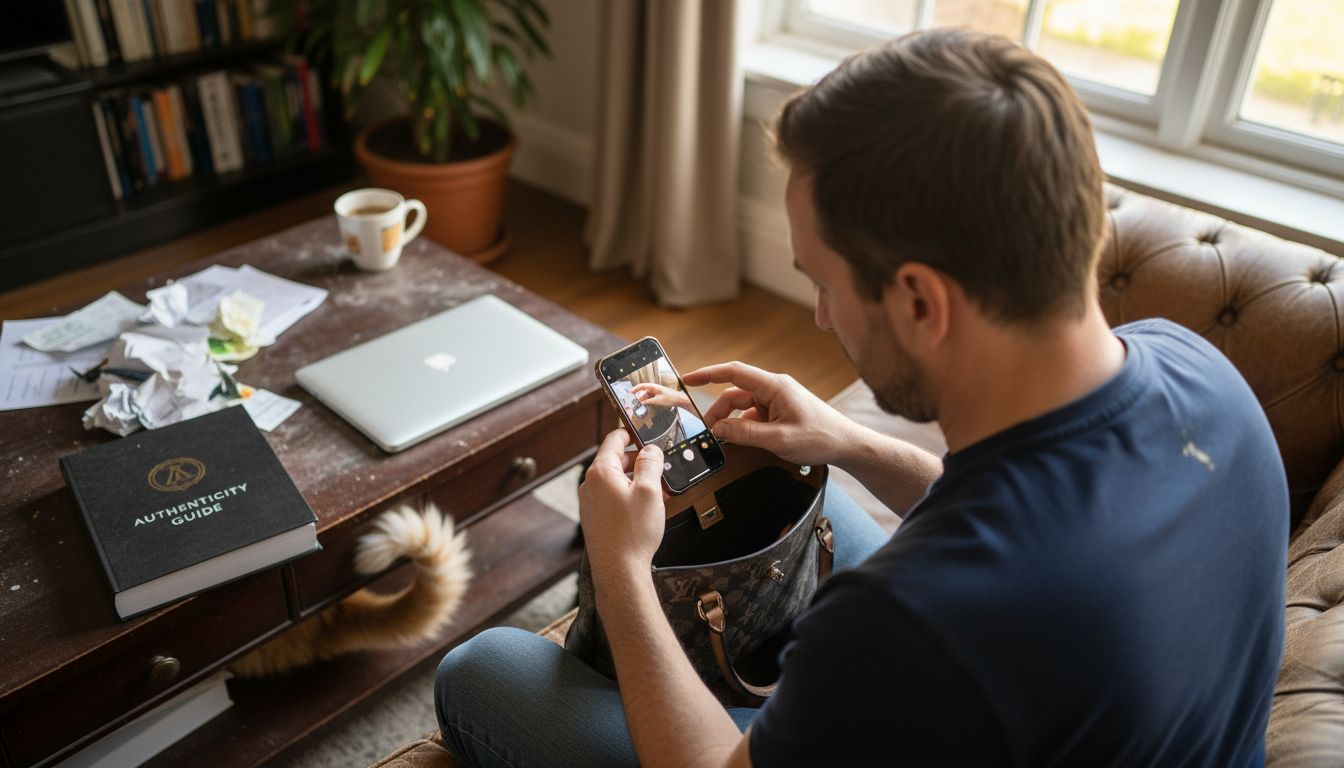
Pro tip: Keep digital photographs of labels and serial codes for side-by-side comparison with official brand reference images, which can reveal subtle differences invisible to the naked eye.
Step 3: Inspect Craftsmanship and Materials
Authenticity lives in the details, and nowhere is this more true than in the meticulous craftsmanship of luxury designer handbags. Professional authentication techniques require a comprehensive examination of materials and construction that separates genuine luxury items from clever counterfeits.
When inspecting a bag, focus on these critical craftsmanship elements:
- Leather quality - genuine leather should feel supple and have a natural grain
- Stitching precision - look for tight, uniform stitches without irregular spacing
- Hardware weight and finish - authentic bags have solid, well-crafted metal components
- Interior lining construction - check for clean, precise seams and quality fabric
- Edge finishing - examine how leather edges are sealed and treated
Pay special attention to the tactile and visual characteristics of the materials. Authentic designer bags demonstrate exceptional attention to detail in every aspect of construction. The leather should feel luxurious and substantial, with a consistent texture that speaks to high-quality manufacturing.
True luxury is revealed not just in appearance, but in the nuanced details of craftsmanship that mass-produced counterfeits can never fully replicate.
Pro tip: Warm the bag gently in your hands and smell the leather - authentic designer bags have a distinct, high-quality leather scent that synthetic materials cannot perfectly mimic.
Step 4: Verify Seller Credentials and Documentation
Buying a luxury designer handbag requires more than just examining the item itself - you must thoroughly investigate the seller’s legitimacy and documentation. Reputable authentication practices demand a comprehensive background check to minimize fraud risks and ensure a genuine transaction.
When verifying seller credentials, pay close attention to these critical elements:
- Seller reputation on online marketplaces and luxury resale platforms
- Customer review history and authenticity ratings
- Verification badges or professional authentication certifications
- Length of time selling luxury goods online
- Transparent return and authentication policies
Document verification is equally crucial. Always request and carefully examine original supporting materials such as purchase receipts, authenticity certificates, and brand warranty cards. Legitimate sellers will have no hesitation providing comprehensive documentation that can be independently verified.
A trustworthy seller is as important as an authentic bag - their transparency and credentials speak volumes about the product’s legitimacy.
Pro tip: Request high-resolution scans of all documentation and cross-reference serial numbers with the original brand’s authentication database before completing your purchase.
Step 5: Authenticate with Professional Services
When personal authentication techniques fall short, turning to professional authentication services becomes your ultimate safeguard. Expert authentication providers combine cutting-edge technology with years of specialized expertise to deliver definitive verification of designer handbags.
When selecting a professional authentication service, consider these key factors:
- Reputation in the luxury authentication industry
- Expertise of individual authenticators
- Technology-assisted verification methods
- Turnaround time for authentication
- Certification and documentation provided
- Cost of authentication service
Most professional services require detailed photographic documentation or physical item submission. They will conduct a comprehensive examination using advanced techniques like microscopic material analysis, hardware verification, and cross-referencing with brand databases. These experts can detect counterfeiting methods that even experienced collectors might miss.
Professional authentication is not an expense - it’s an investment in protecting your luxury purchase and ensuring its genuine value.
Pro tip: Request sample authentication reports from different services to compare their depth of analysis and choose the most thorough verification process.
Compare professional authentication services to self-authentication to understand their advantages:
| Aspect | Self-Authentication | Professional Service |
|---|---|---|
| Expertise Level | Basic to intermediate | Industry specialist |
| Verification Technology | Manual & visual | Advanced tools & databases |
| Certainty of Results | Depends on skill | Highly reliable |
| Cost to Consumer | Minimal | Service fee required |
Here’s a quick reference for the primary authentication steps and what each focuses on:
| Step | Main Focus | Key Outcome |
|---|---|---|
| Tools & Equipment | Systematic inspection | Detects subtle counterfeit signs |
| Brand Labels/Codes | Unique identifiers | Confirms brand authenticity |
| Craftsmanship/Materials | Construction quality | Differentiates genuine from fake |
| Seller Credentials | Trustworthiness | Reduces purchase risk |
| Professional Services | Expert analysis | Provides definitive verification |
Secure Your Authentic Designer Bag with Confidence
Authenticating a designer handbag takes skill, patience, and insider knowledge to spot genuine luxury details like authentic serial codes and craftsmanship. Instead of risking counterfeit finds or time-consuming verification, trust a platform that guarantees authenticity and offers only verified high-end items. Naise Shopper specializes in providing authenticated designer handbags and luxury accessories across premier brands like Gucci, Chanel, and Prada, eliminating the guesswork for you.
Start shopping with peace of mind at Naise Shopper. Explore curated collections where authenticity checks and trusted seller verification are standard. Benefit from deep discounts, international shipping, and personal shopper assistance that make owning your dream luxury bag easier and safer than ever. Don’t wait to secure genuine elegance and value - visit Naise Shopper’s landing page now and experience hassle-free luxury shopping.
Discover expert-backed authenticity and exclusive promotions today through Naise Shopper. Your next authentic designer piece awaits.
Frequently Asked Questions
What essential tools do I need to authenticate a designer handbag?
To authenticate a designer handbag, you need a digital magnifying glass with at least 10x magnification, bright LED lighting, white cotton gloves, a precision inspection toolkit, and a smartphone or digital camera. Gather these tools to systematically inspect the bag’s material quality, stitching, hardware precision, and logo authenticity.
How do I examine brand labels and serial codes for authenticity?
Carefully check the label’s location inside the bag, observe the embossing or printing quality of the serial number, and evaluate the font consistency. Take clear photographs of the labels and serial codes for comparison with official brand references to help identify discrepancies that may indicate a counterfeit.
What craftsmanship details should I inspect when assessing a designer bag?
Focus on critical elements such as leather quality, stitching precision, hardware weight, interior lining construction, and edge finishing. Authentic designer bags will show meticulous attention to detail in these areas, which counterfeit items often lack.
How can I verify a seller’s legitimacy when purchasing a luxury handbag?
Check the seller’s reputation on online marketplaces, read customer reviews, and look for verification badges or certifications. Always request documentation such as purchase receipts and authenticity certificates to confirm the bag’s legitimacy before completing your purchase.
When should I consider using professional authentication services for a designer bag?
If you’re uncertain about your ability to authenticate a handbag or if the bag’s details seem suspicious, consider turning to professional authentication services. These experts use advanced techniques and provide a certification that can validate your purchase, significantly reducing the risk of acquiring a counterfeit item.