Spotting genuine luxury is an art every fashionable woman wants to master. With the rise of global designer markets and tempting offers online, authenticating your next Parisian bag or Milanese accessory protects more than just your wallet—it safeguards your style, values, and peace of mind. This guide uncovers the subtle markers of true luxury item authenticity and reveals how the world’s top brands defend their legacy, giving you the confidence to invest in pieces that are truly special.
Table of Contents
- What Is Luxury Item Authenticity?
- Types of Authentication Methods and Tools
- Key Brand-Specific Authentication Features
- Technology’s Role in Luxury Authentication
- Risks and Costs of Counterfeit Purchases
- Common Mistakes in Authenticity Evaluation
Key Takeaways
| Point | Details |
|---|---|
| Luxury item authenticity encompasses heritage and craftsmanship | It is crucial for consumers to understand that authenticity is about more than verifying a product’s origin; it integrates emotional and cultural significance as well. |
| Authentication methods have evolved with technology | Advanced tools like blockchain, AI, and digital verification provide more reliable and accessible ways to confirm luxury product genuineness. |
| Counterfeit purchases pose significant risks | Financial losses, brand reputation damage, and safety hazards are common consequences of buying counterfeit luxury items. |
| Comprehensive evaluation is necessary for authenticity | Consumers should employ a multi-faceted authentication approach, combining expert advice and modern verification techniques to avoid pitfalls in authenticity evaluation. |
What Is Luxury Item Authenticity?
Luxury item authenticity represents far more than verifying a product’s origin - it is a nuanced concept encompassing heritage, craftsmanship, and emotional value. Complex sociological dimensions of luxury consumption reveal that authentic luxury goods transcend mere material possession, embodying cultural significance and personal status.
At its core, luxury item authenticity involves several critical components:
- Provenance verification: Confirming the item’s genuine origin and manufacturing history
- Craftsmanship validation: Assessing the quality of materials and production techniques
- Design integrity: Ensuring the product matches original brand specifications
- Emotional and symbolic value: Understanding the deeper meaning behind authentic luxury items
The global luxury market, rapidly expanding toward a $1.5 trillion valuation, underscores the growing importance of authenticity. Consumers increasingly seek genuine products that represent not just material quality, but also emotional connection and personal identity. Passionate consumption of luxury products demonstrates that authenticity is about more than avoiding counterfeits - it’s about experiencing true brand heritage.
Pro tip: Research the specific authentication markers for luxury brands before making a significant investment to protect your purchasing power and ensure genuine quality.
Types of Authentication Methods and Tools
Authentication methods for luxury items have evolved significantly, moving beyond traditional expert verification to incorporate cutting-edge technologies. Emerging technology-based authentication approaches now offer more comprehensive and accessible ways to validate luxury product genuineness, transforming how consumers and brands interact with authenticity.
The primary authentication methods can be categorized into several key approaches:
- Expert Verification: Traditional method involving professional authentication specialists
- Digital Traceability: Blockchain and digital tracking technologies
- Physical Inspection: Detailed examination of materials, craftsmanship, and manufacturing details
- Serial Number Validation: Checking unique product identifiers against manufacturer databases
- Advanced Technological Tools: AI and machine learning-powered authentication systems
Blockchain requirement engineering has particularly revolutionized authentication processes by providing unprecedented product lifecycle transparency. These decentralized applications enable detailed tracking of ownership, manufacturing origins, and transfer histories, creating robust systems that significantly reduce counterfeit risks.
Technology has transformed authentication from a complex, expensive process to a more streamlined and accessible approach. Digital platforms now offer instant verification methods that combine multiple validation techniques, giving consumers unprecedented confidence in their luxury purchases.
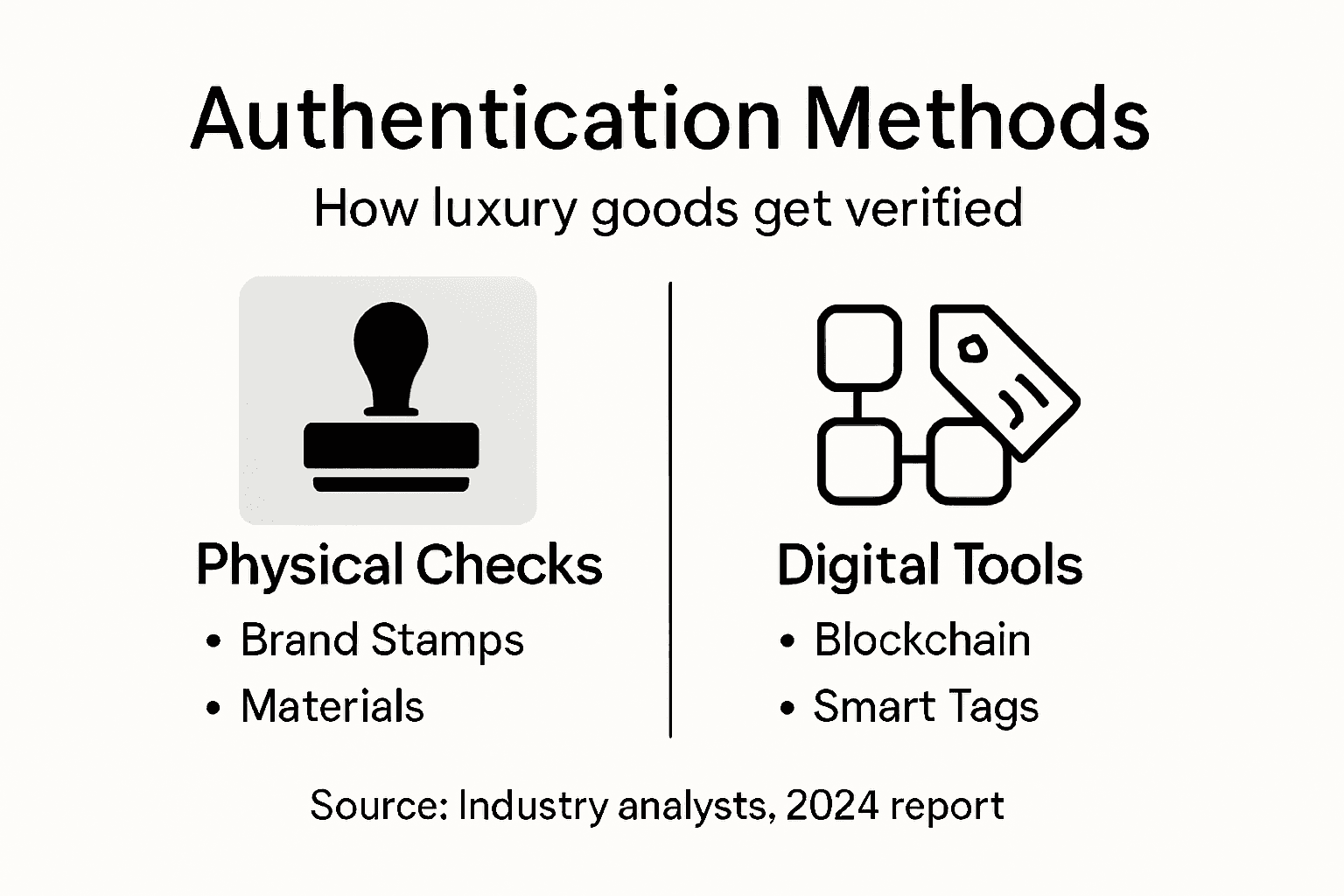
Here’s a comparison of key authentication methods for luxury items and how they impact consumer confidence:
| Authentication Method | Reliability | Accessibility | Impact on Consumer Confidence |
|---|---|---|---|
| Expert Verification | Very High | Limited availability | Ensures trust for high-value pieces |
| Blockchain/Digital Tracking | Extremely High | Increasingly common | Offers transparent product history |
| Serial Number Validation | High | Brand-dependent | Provides fast initial verification |
| AI/Machine Learning Tools | High and growing | Widely accessible | Enables quick, multi-factor checks |
Pro tip: Always request comprehensive documentation and multiple authentication methods when purchasing high-value luxury items to maximize your investment protection.
Key Brand-Specific Authentication Features
Luxury brands have developed sophisticated authentication strategies that go far beyond simple verification. Brand-specific authentication features have become increasingly complex, incorporating multiple layers of security and unique identification methods to protect their products and consumers.
Authentic luxury brands typically employ several key authentication features:
- Serial Number Verification: Unique identifiers traceable through manufacturer databases
- Material Authenticity: Specific material sourcing and quality markers
- Hallmark Patterns: Distinctive design elements unique to each brand
- Packaging Specifics: Specialized packaging with intricate security details
- Provenance Documentation: Comprehensive ownership and manufacturing history tracking
Authenticity markers in luxury brands are deeply rooted in brand heritage, representing more than just physical characteristics. These markers encompass the brand’s historical design consistency, craftsmanship standards, and cultural significance, making them critical in distinguishing genuine luxury items from counterfeits.
Consumers now have access to sophisticated digital tools that enable instant verification. Many luxury brands have developed online platforms, mobile applications, and blockchain-enabled systems that allow buyers to trace a product’s entire lifecycle, providing unprecedented transparency and confidence in their purchase.

Pro tip: Request detailed authentication documentation directly from the brand and cross-reference multiple verification methods before finalizing any luxury item purchase.
Technology’s Role in Luxury Authentication
The luxury authentication landscape has been fundamentally transformed by technological innovations. Digital authentication technologies are revolutionizing how consumers and brands verify product genuineness, providing unprecedented levels of transparency and security in the luxury marketplace.
Key technological approaches to luxury authentication include:
- Blockchain Verification: Immutable ownership and provenance tracking
- Artificial Intelligence: Advanced image and detail recognition
- Computer Vision: Microscopic product analysis invisible to human eyes
- Digital Imaging: High-resolution scanning of product details
- Machine Learning: Continuous improvement of authentication algorithms
Luxury industry digital transformation highlights how emerging technologies are reshaping authentication processes. These digital tools not only protect consumers from counterfeits but also enhance customer engagement by providing seamless, trustworthy verification methods that deliver both security and confidence.
The integration of sophisticated technologies has made authentication more accessible and precise. Consumers can now leverage mobile applications, online platforms, and AI-powered systems that provide instant, comprehensive verification, effectively democratizing the authentication process and protecting luxury investments.
Pro tip: Leverage multiple technological verification methods and always request a comprehensive digital authentication report when purchasing high-value luxury items.
Risks and Costs of Counterfeit Purchases
Counterfeit luxury purchases represent a complex and multifaceted threat that extends far beyond simple financial loss. Counterfeit luxury market dynamics reveal intricate challenges that undermine brand integrity and consumer trust.
The primary risks associated with counterfeit purchases include:
- Financial Loss: Direct monetary damage from inferior product quality
- Brand Reputation Erosion: Undermining luxury brand exclusivity and perceived value
- Legal Consequences: Potential legal risks for unknowing purchasers
- Quality Compromise: Inferior materials and craftsmanship
- Ethical Challenges: Supporting illegal manufacturing networks
Luxury brand sustainability challenges demonstrate that counterfeit goods create systemic problems beyond individual transactions. These fake products distort consumer perceptions, damage brand innovation, and ultimately threaten the entire luxury ecosystem by diluting the unique value proposition of authentic luxury items.
Consumers face significant hidden costs when purchasing counterfeits. Beyond the immediate financial risk, these products often fail quickly, lack warranty protection, and can potentially expose buyers to safety risks associated with unregulated manufacturing processes. The emotional and reputational damage of unknowingly purchasing a fake luxury item can far outweigh any initial cost savings.
This table summarizes the potential consequences of purchasing counterfeit luxury products:
| Risk Area | Short-Term Effect | Long-Term Consequence |
|---|---|---|
| Financial Loss | Immediate wasted funds | Ongoing expenses for replacements |
| Brand Reputation | Diminished exclusivity | Lost brand value over time |
| Legal Exposure | Risk of fines or seizure | Permanent record or legal issues |
| Safety/Quality | Poor product performance | Potential health or safety hazards |
Pro tip: Always purchase from authorized retailers and utilize multiple authentication methods to protect yourself from the substantial risks associated with counterfeit luxury purchases.
Common Mistakes in Authenticity Evaluation
Authenticity evaluation is a complex process fraught with potential errors that can lead consumers astray. Authentication method limitations reveal significant challenges in distinguishing genuine luxury items from sophisticated counterfeits, highlighting the need for comprehensive and nuanced verification strategies.
The most common mistakes in authenticity evaluation include:
- Superficial Logo Checking: Relying exclusively on visible brand markings
- Incomplete Material Assessment: Failing to thoroughly examine product materials and craftsmanship
- Outdated Verification Techniques: Using obsolete authentication methods
- Overreliance on Single Verification Method: Neglecting multiple verification approaches
- Emotional Decision-Making: Allowing desire to override critical evaluation
Consumer perception complexities demonstrate that authenticity evaluation involves intricate psychological processes. Consumers often unconsciously integrate multiple sensory and cognitive cues, making authentication a sophisticated process that extends far beyond simple visual inspection.
Technological advancements have transformed authenticity evaluation, yet many consumers remain unaware of the most effective verification strategies. The most successful approaches combine digital tools, expert knowledge, and comprehensive sensory assessment, creating a multi-layered approach that significantly reduces the risk of purchasing counterfeit luxury items.
Pro tip: Develop a systematic, multi-step authentication process that combines digital verification, expert consultation, and detailed physical examination before finalizing any luxury purchase.
Secure Your Luxury Investment with Confidence
Authenticity is at the heart of every luxury purchase. As detailed in the article, verifying provenance, craftsmanship, and design integrity protects you from counterfeit risks and financial loss. At Naise Shopper, we understand these challenges and offer a seamless solution that guarantees genuine designer products from Gucci, Chanel, Prada, and more. Our expertly curated collections combine deep discounts with full authenticity, ensuring you enjoy the emotional and cultural value that true luxury represents.
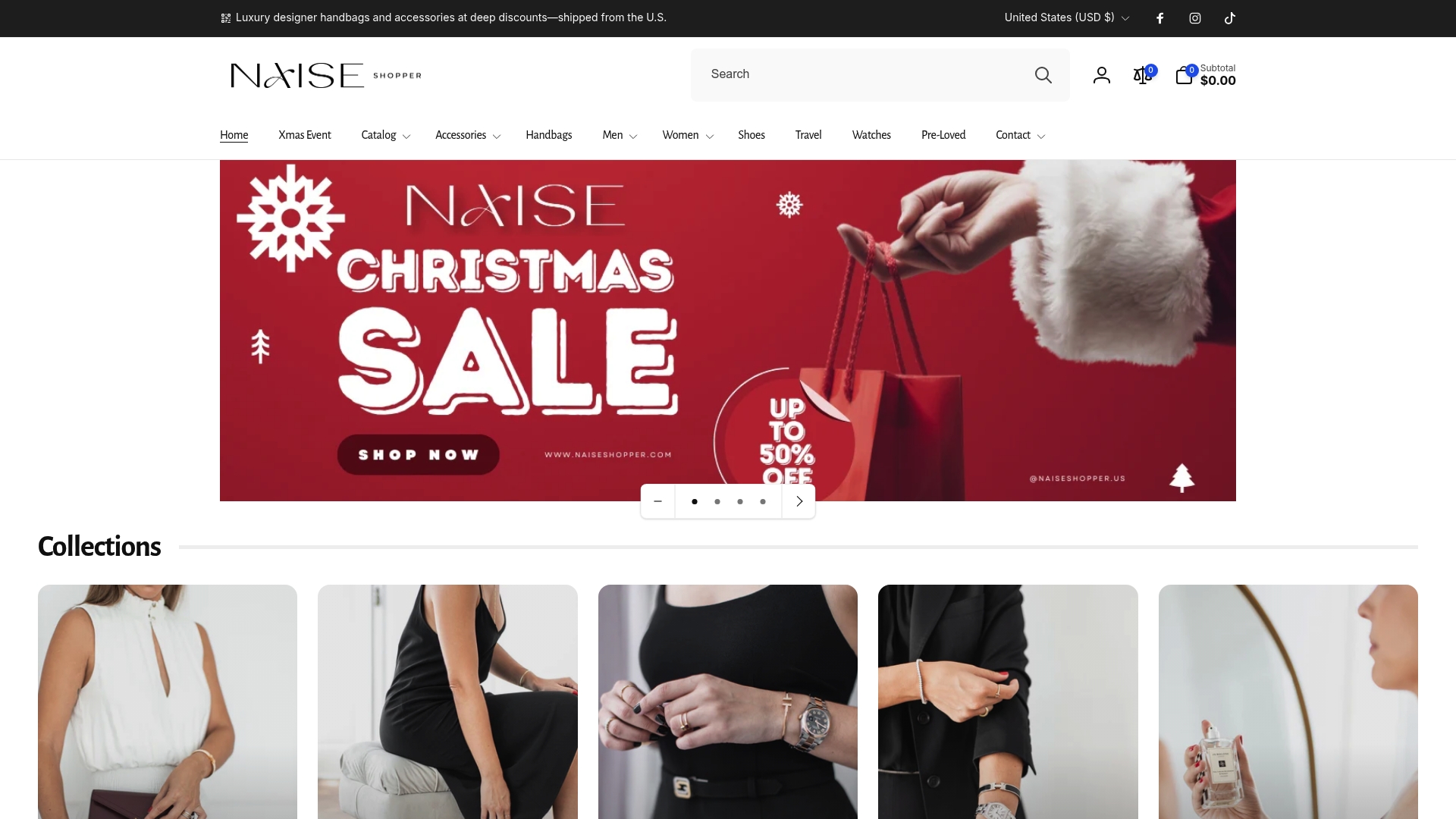
Experience worry-free shopping today by exploring our verified designer handbags, shoes, and accessories at Naise Shopper. Don’t settle for uncertainty when you can shop with confidence backed by our comprehensive authentication methods and dedicated personal shopper assistance. Visit Naise Shopper now to protect your investment and indulge in authentic luxury at exclusive prices.
Frequently Asked Questions
What does luxury item authenticity mean?
Luxury item authenticity involves verifying a product’s origin, craftsmanship, design integrity, and emotional significance, establishing its genuine status beyond material possession.
What are the most common authentication methods for luxury items?
Common authentication methods include expert verification, digital traceability through blockchain, physical inspection of materials and techniques, serial number validation, and advanced technological tools like AI and machine learning systems.
How can consumers protect themselves from counterfeit luxury products?
Consumers can protect themselves by researching authentication markers for the specific brand, utilizing multiple verification methods, and requesting comprehensive documentation when making high-value purchases.
What risks are associated with purchasing counterfeit luxury items?
Purchasing counterfeit luxury items can lead to financial loss, damage to brand reputation, potential legal consequences, compromised quality, and ethical concerns tied to illegal manufacturing networks.