A Louis Vuitton date code shows the factory that made the piece and roughly when production happened, but it does not guarantee authenticity on its own. Since March 2021, many new items carry an embedded NFC chip instead of a stamped code, so a missing code on a recent bag is often normal, not suspicious. Treat the code as one clue among several, never the final word.
TL;DR:
- Newer Louis Vuitton items often lack visible date codes due to embedded NFC chips, making code checks less reliable for authentication.
- Decoding era-specific formats requires knowing whether the code follows month or week-based systems, with common errors arising from format confusion.
- Factory codes indicate the country of production and must match the “Made in” stamp; mismatched codes are a strong red flag.
- Physical inspection of stamp quality, placement, and embossing depth is crucial, as counterfeit codes often show uneven or poorly executed markings.
- Authenticity verification should combine date code checks with other clues like stitching, hardware, and provenance, especially for limited editions or vintage pieces.
Table of Contents
- How Do You Read A Louis Vuitton Date Code?
- Where Do Factory Codes Point, And Do They Match The Stamp?
- Where Is The Date Code Located Inside The Bag?
- What A Date Code Can’t Prove, And What Should Worry You
- How Do You Check For Louis Vuitton’s NFC Chip?
- Real Vs. Fake: What Counterfeit Date Codes Actually Look Like
- Do Limited Editions Follow The Same Date Code Rules?
- What Tools Help You Verify A Date Code Yourself?
- How We Use Date Codes When Sourcing Authenticated Pieces
- Buy Louis Vuitton Pieces Already Authenticated, No Decoding Required
- Where To Verify These Details Further
- Sources
How Do You Read A Louis Vuitton Date Code?
The format changes depending on when the piece was made, and mixing up the eras is the fastest way to misread a perfectly authentic code as fake. Here’s how the decoding rules break down, era by era.
- 1982 to mid-1980s: codes are purely numeric, usually three or four digits. There’s no factory letter yet, just a compressed year and month reading, which makes this the hardest era to verify with confidence.
- Mid-1980s to 1989: two letters appear for the first time, followed by digits. The letters identify the factory; the digits point to the month and year of production.
-
1990 to 2006: the format locks into two letters plus four digits, and the digit order follows a specific rule: the first and third digits give the month, the second and fourth give the year. A code reading
SD1014breaks down to positions 1 and 3 (1 and 0) for month, positions 2 and 4 (0 and 4) for year, meaning October 2004. -
2007 to March 2021: same two-letter, four-digit skeleton, but the digits now encode a production week instead of a month. Using positions the same way,
MI0071would translate to week 07 of 2021.
According to the era-by-era decoding guide from LuxeDetect, this shift from month-based to week-based encoding in 2007 is the single most common source of confusion for people checking their own bags.
Statistic Callout: Guides that walk through this decoding method consistently flag the same mistake: applying week-based math to a pre-2007 code, or month-based math to a post-2007 one, produces a date that looks “wrong” even on a genuine item. Before declaring a code fake, confirm which era’s rule you’re actually using.
Where Do Factory Codes Point, And Do They Match The Stamp?
Every date code from the mid-1980s onward opens with two letters, and those letters are not random. They identify the specific factory where the item was assembled, which in turn ties to a country of origin.
Representative examples collectors reference often:
- France: codes like A0, AA, AN, and MB have appeared on French-made pieces.
- Spain: codes such as CA, GI, and UB point to Spanish production.
- Italy: codes including CE, SA, and RA are associated with Italian factories.
- USA: codes like FC, FH, and OS mark items assembled in the United States.
Several factory letters have been reused or reassigned over decades of production, so a letter pair alone is not a definitive fingerprint. What matters more is consistency: the country implied by the factory code has to match the country printed on the “Made in” stamp inside the item. Multiple authentication guides treat any mismatch here as a serious factory-code and stamp inconsistency, and for good reason: it’s one of the easiest checks a counterfeiter tends to skip.
Where Is The Date Code Located Inside The Bag?
Date codes typically hide in one of a handful of spots: a small leather tab sewn inside a pocket, a heat-stamped seam along an interior lining, or the underside of a pocket flap. Location varies by model and era, so don’t panic if you don’t spot it where you expected.
Use good lighting and a jeweler’s loupe or magnifier before assuming a code is missing. Never pull at seams or force a lining open. On vintage pieces, decades of handling can wear a stamp down to near illegibility, and a past relining job can remove the tab entirely, which is a legitimate reason for absence rather than a red flag by itself.
Pro Tip: Angle a small flashlight across the stamped area rather than straight at it. Raking light catches the embossed grooves of a genuine heat stamp far better than direct overhead light does.
What A Date Code Can’t Prove, And What Should Worry You
A valid, correctly formatted date code is not proof of anything by itself. Counterfeiters copy real codes constantly, so matching the format is the easy part to fake.
The inconsistencies that matter more are the ones that are hard to fake convincingly:
- Timeline mismatch: a seller claims the bag is from 2015 but the code decodes using pre-2007 month logic, or the format doesn’t exist for that year at all.
- Country mismatch: the factory code points to Spain while the “Made in” stamp says Italy. This combination is treated as close to a near-certain red flag by authenticators who see it repeatedly on counterfeits.
- Physical tells: over-deep or blurry embossing, a font that doesn’t match Louis Vuitton’s typical stamping, or a code placed somewhere the model has never used it.
- Production timeline conflict: the decoded date predates when that specific model or material was ever introduced.
A date code that matches the “Made in” country, fits its era’s format, and lines up with when the model actually existed still isn’t a guarantee. It’s a pass on one test, not a certificate.
Run all four checks together before drawing a conclusion. One clean result means little; four clean results still leave room for a professional opinion on high-value pieces.
How Do You Check For Louis Vuitton’s NFC Chip?
Louis Vuitton began embedding RFID/NFC chips into many products starting around March 2021, and that shift changed what “no visible date code” means. On items made after that transition, the chip often replaces the stamped code entirely, tucked under the lining where you’d never see it.
- Hold a modern NFC-capable smartphone near the interior lining or hardware area and check whether your phone’s NFC reader registers a tag.
- A detected tag confirms a chip exists inside the item, but the data on that chip is typically encrypted and not something you can browse on your own phone.
- A visible, stamped date code on a bag someone claims was purchased new after 2021 is itself worth questioning, since that model generation should carry a chip instead.
- A missing chip signal doesn’t automatically mean “fake” either. Metal hardware, phone cases, or a weak NFC antenna in your device can all block a real read.
If your scan comes back inconclusive either way, that’s a cue to move to physical inspection and, if the stakes are high enough, a paid professional opinion.
Real Vs. Fake: What Counterfeit Date Codes Actually Look Like
Authentic date codes share a few consistent traits: clean, even embossing with uniform letter height, a font that matches across the whole stamp, and placement that fits the model’s known construction. Counterfeits tend to slip up in ways that are visible once you know where to look.
One recurring pattern is a date code that decodes to a plausible-looking date but uses the wrong era’s math entirely, something a counterfeiter copying a “real” code off a reference photo without understanding the format shift can easily get wrong. Another is a factory letter pair that simply doesn’t exist in any published mapping, sometimes because it was invented rather than copied.
Stamping depth is a giveaway too. Genuine LV stamps are pressed with consistent pressure, giving every character the same depth and spacing. Fakes often show uneven pressure, letters that are noticeably deeper on one side, or spacing that drifts as the stamp continues. Some counterfeits print the code rather than emboss it, leaving a flat, ink-like mark with no tactile groove at all.
Placement errors show up often on high-volume counterfeit categories like the Neverfull or Speedy, where fakes place the tab in a slightly different pocket or seam than the genuine construction for that specific model year uses. Cross-referencing placement against verified examples of that exact model and era catches this quickly, and it’s a check that matters more than the digits themselves in many cases.

Do Limited Editions Follow The Same Date Code Rules?
Special collaborations, artist series, and limited-run materials generally follow the same era-based date code system as mainstream Louis Vuitton pieces, since they’re produced in the same factories using the same internal tracking. Don’t expect a separate numbering scheme just because the design is unusual.
Where limited editions get tricky is scarcity of reference material. A widely produced Speedy has thousands of verified photos online showing exactly where its code sits and how it should look. A limited collaboration piece from a single season might have almost none, which makes visual comparison far harder.
For these pieces, lean harder on the factory code and “Made in” stamp consistency check, since that rule doesn’t bend for special editions. Also pay attention to whether the release date of the collaboration itself lines up with the decoded production period. A code decoding to a year before the collaboration was announced is disqualifying on its own, regardless of how convincing everything else looks. When reference photos are scarce, a professional authentication process built around physical construction markers matters even more than usual, since the date code alone can’t carry the weight it does on a common model.
What Tools Help You Verify A Date Code Yourself?
A jeweler’s loupe or a 10x magnifier is the single most useful tool for this kind of check, letting you see stamp depth, font consistency, and stitching around the tab far more clearly than the naked eye. Cheap options work fine here; you’re not doing gemology.
A UV flashlight has a narrower but real use: genuine Louis Vuitton leather and certain interior linings react to UV light in specific ways, and some counterfeit materials fluoresce differently than the real thing. It’s a supporting check, not a standalone verdict, since UV reactions vary by material and age.
A raking light source, even just a phone flashlight held at a low angle, reveals embossing depth that overhead light flattens out. Combine that with a simple ruler or caliper to confirm letter height and spacing look uniform across the whole stamp. None of these tools require expertise to use, but they all require comparison against a known-genuine reference to mean anything. A magnifier photo of a suspicious stamp is only useful once you have something authentic to compare it against.

How We Use Date Codes When Sourcing Authenticated Pieces
Date-code checks are one checkpoint among several we run before anything gets listed. We pair the code (or chip scan, where applicable) with hands-on inspection of stitching, hardware, and lining, plus provenance review. Every piece we sell carries a return window, because a code alone was never going to be enough for us either.
— Camila
Buy Louis Vuitton Pieces Already Authenticated, No Decoding Required
If working through date-code math and factory letter charts sounds like more forensic work than you signed up for, The site offers authenticated handbags, accessories, and ready-to-wear pieces that go through an authentication workflow before they are listed.
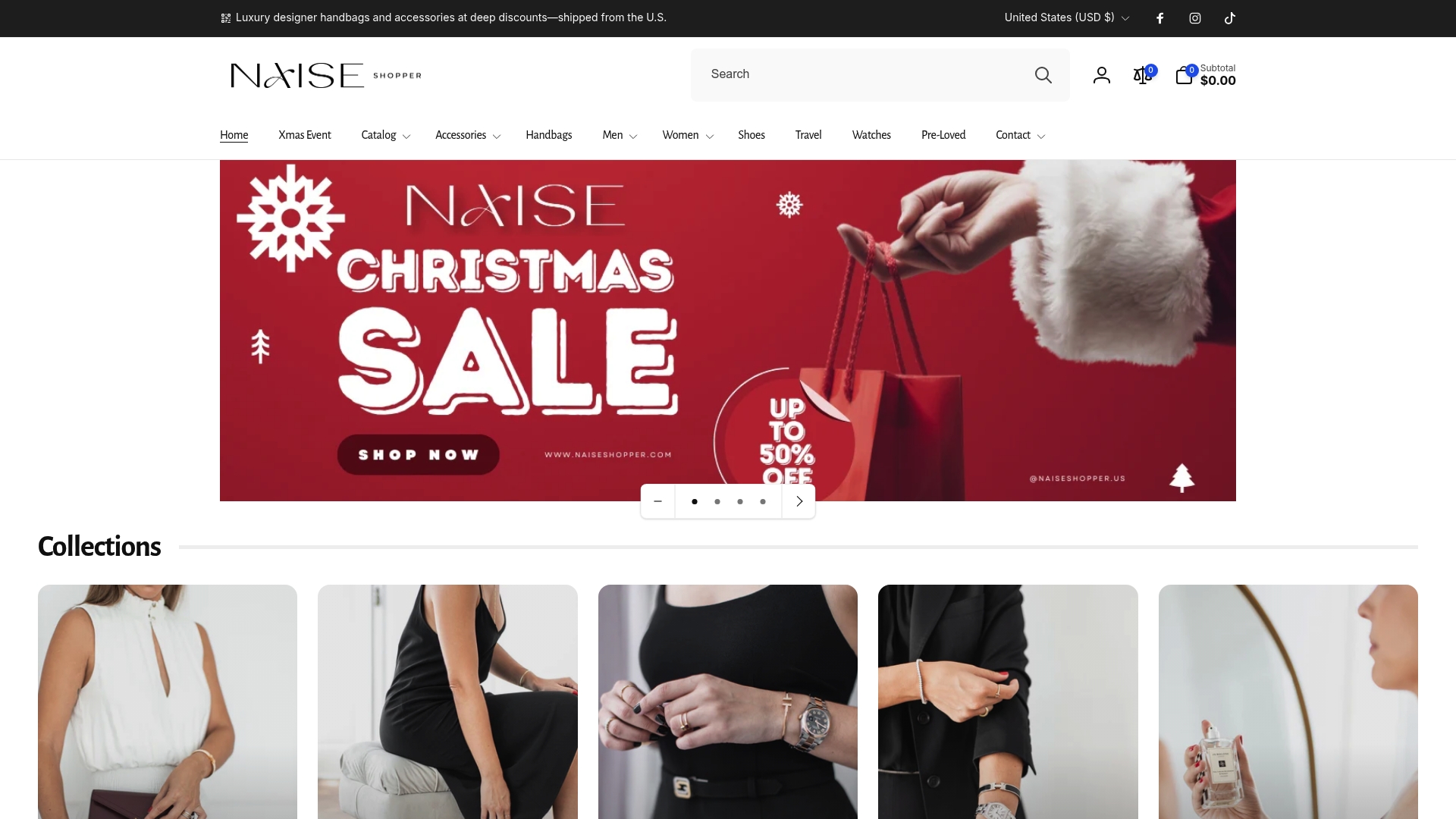
That matters most on the pieces where verification is hardest: limited editions, older vintage lots, and anything without a visible chip or clean date code. Curated designer pieces from brands including Gucci, Chanel, Prada, and Saint Laurent are available with authentication completed, alongside secure international shipping and flexible payment options at checkout. A personal shopper service is available to assist with finding specific pieces. Browse the current authenticated collection and see what’s available before your size or style sells out.
Where To Verify These Details Further
- Louis Vuitton’s own product identifier FAQ for official guidance on locating product information.
- The era-by-era date code guide referenced throughout this article for decoding formats and worked examples.
- An independent breakdown of chips versus stamped codes and what each means for resale buyers.
Sources
- Louis Vuitton Date Codes: 1982–2026 Guide | LuxeDetect
- How to Tell if a LV Bag Is Real | The Chip & Code Check
- How to Authenticate Louis Vuitton: Date Codes, Microchips & Checklist | PawkBroker