Buying a luxury watch demands careful navigation of authenticity, pricing, and purpose across a complex marketplace. Multiple purchasing channels exist, each offering distinct benefits and risks that can significantly impact your investment. This guide equips you with the criteria, market knowledge, and decision-making frameworks needed to confidently select and purchase an authentic luxury timepiece at the best possible value.
Table of Contents
- Key takeaways
- Setting your luxury watch buying criteria
- Exploring your purchase options: authorized dealers, grey market, and pre-owned
- Comparing brand value retention and market trends
- Making your decision: matching criteria, market options, and brand trends
- Discover authentic luxury watches and expert shopping support
- FAQ
Key Takeaways
| Point | Details |
|---|---|
| Buying Criteria Clarity | Define your primary use and essential features to avoid impulse buys and ensure the watch fits your needs. |
| Ideal Size Range | Try models between 36 to 40 mm and test in store to find the sweet spot on comfort and wrist presence. |
| Total Ownership Cost | Budget beyond the purchase price and plan for servicing every 5 to 10 years, which can range from 500 to 2000 dollars. |
| Authorized Dealer Benefits | Authorized dealers provide full factory warranties and guaranteed authenticity, though popular models often have multi year waitlists. |
| Market Tradeoffs | Grey market offers 20 to 50 percent discounts with immediate ownership but cannot provide factory servicing for certain brands, while pre owned markets provide authentication and warranties at lower risk and cost. |
Setting your luxury watch buying criteria
Defining clear purchase criteria prevents impulse decisions and ensures your luxury watch serves your actual needs. Start by identifying your primary purpose: daily wear demands durability and versatility, sports activities require robust water resistance and shock protection, while dress watches prioritize elegance and slim profiles. Each category influences material choices, movement complexity, and acceptable maintenance requirements.
Size matters more than most buyers initially realize. Try models between 36-40mm to find the sweet spot between wrist presence and comfort. Oversized cases create visual imbalance on smaller wrists, while undersized watches disappear on larger frames. Visit boutiques to physically test different diameters before committing to online purchases.
Budget planning must extend beyond initial purchase price. Luxury mechanical watches require servicing every 5-10 years, with costs ranging from $500 for simple movements to $2,000+ for complex complications. Factor these expenses into your total ownership calculation to avoid surprises down the road.
Consider these essential features based on your lifestyle:
- Water resistance ratings matching your activities (50m minimum for daily wear, 200m+ for diving)
- Movement type preferences (automatic for tradition, quartz for accuracy and low maintenance)
- Complications that add genuine utility versus decorative appeal
- Strap versatility for adapting the watch to different occasions
Pro Tip: Create a shortlist of three models that meet your criteria, then wear each for 30 minutes in-store. The right watch feels natural immediately, while poor fits reveal themselves through discomfort or constant awareness of the timepiece on your wrist.
Understanding what makes a watch luxury helps you evaluate whether specific features justify premium pricing or represent unnecessary cost inflation.
Exploring your purchase options: authorized dealers, grey market, and pre-owned
Three distinct channels dominate luxury watch sales, each presenting unique advantages and compromises. Authorized dealers provide full factory warranties and guaranteed authenticity, making them the safest choice for risk-averse buyers. However, popular models from Rolex, Patek Philippe, and Audemars Piguet often require multi-year waitlists, forcing buyers to establish purchase history with smaller pieces before accessing coveted references.
The grey market offers 20-50% discounts with immediate availability, sourcing watches from authorized dealers in different markets or through parallel import channels. These retailers provide dealer warranties but cannot offer factory servicing for certain brands. Rolex explicitly refuses to service grey market watches at authorized service centers, a critical consideration for long-term ownership.
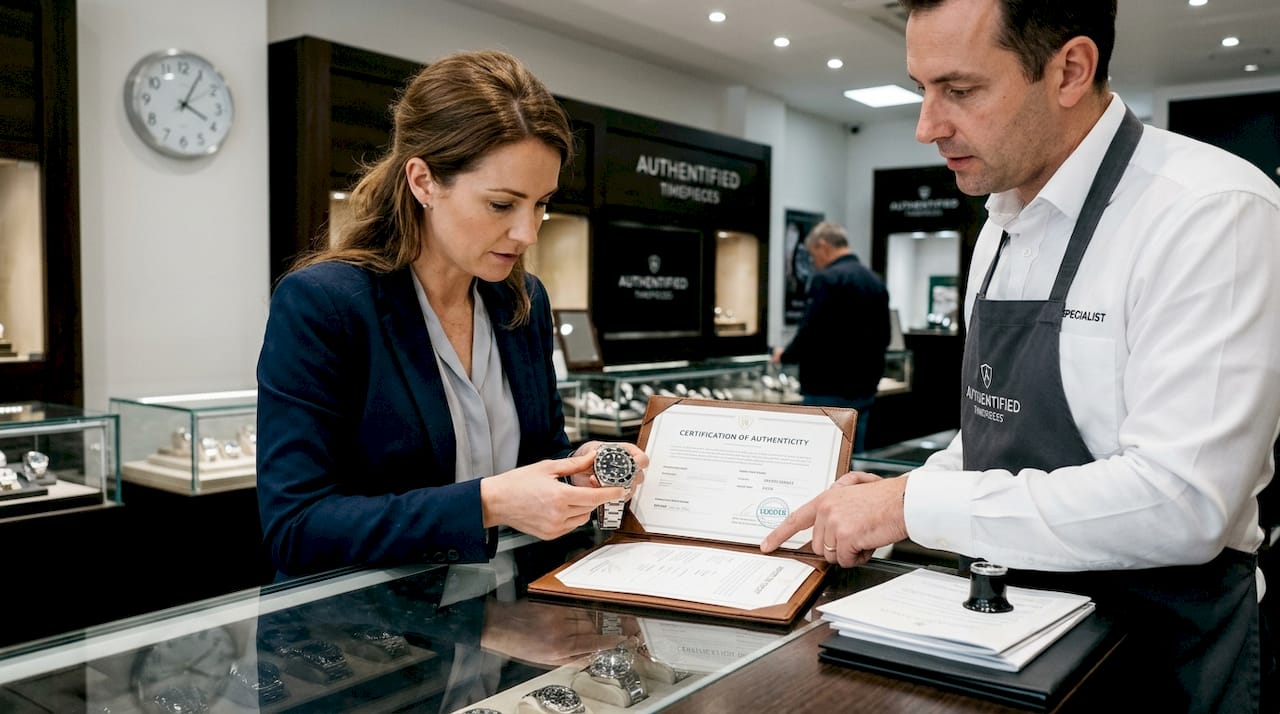
Pre-owned markets balance price and security through authentication services and certified resellers. Established platforms employ expert watchmakers to verify authenticity, assess condition, and provide warranties ranging from six months to two years. Savings typically reach 30-60% off retail, with vintage pieces offering even deeper discounts for buyers willing to accept patina and age-related wear.
Here’s how the channels compare:
| Channel | Price vs. Retail | Warranty | Availability | Key Risk |
|---|---|---|---|---|
| Authorized Dealer | Full retail | Factory (2-5 years) | Waitlists common | Time investment |
| Grey Market | 20-50% discount | Dealer only | Immediate | No factory service |
| Pre-Owned | 30-60% discount | Reseller (6-24 months) | Wide selection | Condition variance |
Pro Tip: Grey market savings make sense for buyers prioritizing immediate ownership and willing to use independent watchmakers for servicing. Choose authorized dealers when factory warranty and service history matter for future resale. Opt for pre-owned when maximizing value on discontinued or vintage references that no longer carry factory support regardless of purchase channel.
The benefits of buying pre-owned extend beyond watches to the broader luxury market, with similar principles applying across product categories. Learning to buy discounted luxury items safely protects your investment regardless of channel selection.
Comparing brand value retention and market trends
Luxury watch brands demonstrate dramatically different value trajectories in 2026, directly impacting your investment return. Rolex and Patek Philippe maintain strong value retention, with certain sport models appreciating above retail despite broader market cooling. These brands benefit from controlled production, consistent demand, and established collector markets that absorb inventory during economic uncertainty.
Conversely, Audemars Piguet experienced a 12.5% correction as speculative buying subsided and production increased. The Royal Oak, once trading at significant premiums, now sells closer to retail through grey channels. This correction creates buying opportunities for enthusiasts while cautioning investors about volatility in hyped segments.
Current market performance by brand:
| Brand | 2025-2026 Change | Value Retention | Investment Grade |
|---|---|---|---|
| Rolex | +3.2% | Excellent | High |
| Patek Philippe | +5.1% | Excellent | Very High |
| Audemars Piguet | -12.5% | Good | Moderate |
| Omega | -2.8% | Fair | Low |
| Cartier | +1.4% | Good | Moderate |
These trends reveal important buying considerations:
- Established heritage brands with limited production resist market downturns most effectively
- Fashion-forward designs experience higher volatility as trends shift
- Independent brands offer aesthetic value but limited resale infrastructure
- Vintage references from any brand trade on condition and rarity rather than current brand strength
“Buy the watch you love, but understand the financial reality. Rolex and Patek Philippe offer the best combination of enjoyment and value preservation, while other brands require acceptance of depreciation as the cost of wearing something unique.” — Industry analyst commentary on 2026 market conditions
The luxury fashion buying process shares similar brand hierarchy dynamics, where established houses maintain value better than trend-driven labels.
Making your decision: matching criteria, market options, and brand trends
Synthesizing your criteria with market realities produces clear purchasing paths. Choose authorized dealers when factory warranty protection justifies retail pricing and you can afford the time investment for waitlisted models. This route suits buyers prioritizing resale value, complete documentation, and peace of mind over immediate gratification or cost savings.
Select grey market channels when immediate acquisition and 20-50% savings align with your budget constraints and you accept limited factory servicing. This option works best for buyers planning long-term ownership who will use independent watchmakers or for brands that service all watches regardless of origin. Verify dealer reputation through community forums and review platforms before purchasing.
Opt for authenticated pre-owned watches to maximize value through deep discounts while maintaining security through certification and warranties. This channel excels for discontinued references, vintage pieces, or situations where initial depreciation has already occurred. Examine condition reports carefully and confirm return policies before finalizing transactions.
Your personal style and usage patterns should drive brand selection more than investment potential alone. Daily wear demands robust construction and service accessibility, favoring mainstream luxury brands with widespread service networks. Dress watches prioritize aesthetics and slimness over durability, opening options across price points. Sports watches require proven water resistance and shock protection, narrowing choices to purpose-built tool watches.
Key decision factors:
- Budget flexibility determines channel viability (retail, grey, or pre-owned)
- Timeline urgency favors grey or pre-owned over authorized waitlists
- Resale importance elevates Rolex and Patek Philippe above other brands
- Service access matters more for complex movements and brand-specific requirements
Pro Tip: Combine brand desirability with channel risk tolerance to identify your highest value option. A grey market Rolex at 30% off may offer better total value than an authorized dealer Omega at retail, even accounting for service limitations. Run the numbers based on your specific priorities.
Exploring pre-owned luxury savings reveals how this strategy applies across luxury categories beyond watches.
Discover authentic luxury watches and expert shopping support
Navigating luxury watch purchases becomes simpler with access to authenticated inventory and expert guidance. Our curated collection includes verified timepieces from prestigious brands, combining the security of authentication with attractive pricing that makes luxury ownership accessible. Each watch undergoes rigorous verification to ensure you receive genuine products backed by our authenticity guarantee.
Explore options like the Gucci G-Timeless Quartz Black Watch 38mm, which delivers Italian design heritage in a versatile size suitable for most wrists. For those preferring smaller profiles, the Gucci G-Timeless Quartz Stainless Steel Watch 27mm offers elegant proportions perfect for dress occasions.
Our team provides personalized shopping support to match your specific criteria with available inventory, leveraging deep product knowledge and market insights developed through years of luxury retail experience. We understand the nuances of sizing, style compatibility, and value optimization that transform good purchases into excellent ones. Browse our complete luxury watch selection to discover timepieces that align with your taste and budget.
FAQ
How do I verify the authenticity of a pre-owned luxury watch?
Authenticate through certified appraisers or reputable dealers offering warranties and original documentation. Examine manufacturer serial numbers, service history records, and original packaging for consistency. Reputable platforms employ expert watchmakers who verify movement authenticity, case construction, and component originality before listing. Understanding the luxury authentication process helps you evaluate dealer credibility and certification standards.
What are the risks of buying from grey market dealers?
Grey market watches lack factory warranties and cannot receive official servicing from manufacturers like Rolex, potentially complicating maintenance and reducing resale value. Buyers without authorized dealer papers may face skepticism from future purchasers who prefer complete documentation. However, substantial savings of 20-50% justify these trade-offs for buyers prioritizing immediate ownership over maximum resale potential. Review our discounted luxury items safety guide to minimize risks when purchasing through alternative channels.
How do I choose the right size luxury watch for my wrist?
Try models between 36-40mm to find optimal fit based on your wrist circumference and personal style preferences. Watches exceeding 42mm overwhelm wrists under 7 inches, while cases below 36mm disappear on larger frames. Visit boutiques to test different sizes under various lighting and clothing combinations before committing. Consider that vintage watches trend smaller than modern pieces, requiring different size expectations. Learn about watch size factors and how they interact with luxury positioning and pricing.
What maintenance costs should I expect with a luxury watch?
Expect servicing every 5-10 years with costs varying from $500 for simple movements to $2,000+ for complex complications requiring specialized expertise. Brands like Rolex and Omega offer relatively accessible service through widespread networks, while independent brands may require factory returns with extended turnaround times. Budgeting for maintenance preserves functionality and protects long-term value by preventing wear-related damage. Factor these costs into total ownership calculations when comparing purchase channels and brand options. Understanding watch maintenance expectations helps you budget accurately for the complete ownership experience.