Yes, you can buy authentic, travel-ready designer bags at a discount online when you verify authenticity, seller transparency, secure payment, and shipping insurance. Those four checks separate a legitimate bargain from a costly mistake. Before you click “buy,” confirm the seller proves authenticity, discloses who they are, accepts protected payment, and offers coverage for high-value shipments.
TL;DR:
- Authentic designer bags require clear serial numbers, detailed close-up photos, and verified authentication guarantees before purchase.
- Verify seller transparency by confirming contact details, return policies, and shipping origin, especially under the INFORM Consumers Act.
- Measure bags fully including handles and hardware to ensure they meet airline size limits for carry-on or personal items.
- Always add shipping insurance and confirm return policies to protect high-value purchases against loss, damage, or disputes.
- Be aware of customs and duty rules, keep purchase receipts handy, and store the bag properly to maintain its condition during travel.
Table of Contents
- Your checklist for evaluating travel-ready designer bag listings
- Authenticity signals and the red flags that mean walk away
- Will it actually fit? Sizing and airline compatibility
- Shipping, returns, and insurance on high-value purchases
- Packing your designer bag so it survives the trip
- Customs and duty rules for high-value bags crossing borders
- Keeping your bag travel-fresh: cleaning and upkeep
- Why this guidance puts buyer protection first
- How Naise Shopper helps you buy travel-ready bags with confidence
- Sources
- FAQ
Your checklist for evaluating travel-ready designer bag listings
Scrolling through a gorgeous weekender bag at half its retail price feels thrilling, but a fast gut check keeps that excitement from turning into buyer’s remorse. Run through this order before you commit.
- Authentication proof: Look for serial numbers, sharp close-up photos of hardware and stitching, and a stated authentication guarantee, whether in-house or third-party.
- Seller transparency: Confirm verified contact information, a clear returns policy, and a stated shipping origin, all of which high-volume sellers must disclose under the INFORM Consumers Act.
- Travel-ready construction: Prioritize lightweight materials, water-resistant finishes, and reinforced hardware that can handle security bins and overhead compartments.
- Dimension check: Measure the bag including handles, feet, and any wheels, then compare that number against your airline’s carry-on or personal item limits.
- Payment protection: Pay with a credit card or another buyer-protected method, and add shipping insurance on anything with real resale value.
- Price sanity check: Search the seller’s name alongside “review” or “scam” and treat prices far below market value as a warning sign rather than a stroke of luck.
Pro Tip: Save every product photo and message thread before you pay. If a dispute comes up later, that paper trail is your fastest route to a resolution.
Once a listing clears all six checks, you’re not just getting a deal, you’re getting a bag built to survive the overhead bin and the return counter. For a deeper walkthrough of the purchase process itself, this step-by-step guide to buying designer bags covers the full transaction from search to delivery.
Authenticity signals and the red flags that mean walk away
A genuine designer bag leaves a paper trail. Expect detailed photos of stitching, hardware stamps, interior tags, and a dated receipt or authentication certificate that names the item specifically, not a generic “guaranteed authentic” badge with no backup.
An unusually low price is a common lure cited by online shoppers who lost money to scams in recent years, according to the FTC’s holiday shopping alert, which also warns that scammers frequently use stolen photos to advertise goods that never arrive. That single data point should reshape how you read a listing that looks too good.
Watch for these red flags:
- Stock photos only, with no close-up of the actual item’s serial number or hardware.
- A price dramatically below comparable listings, with no explanation such as a clearance sale or last season’s color.
- Pressure to pay by wire transfer, gift card, or direct bank deposit instead of a card that preserves your dispute rights.
- No listed contact information or business address, which sellers covered by the INFORM Consumers Act are required to provide.
- Reviews that read as generic or repetitive, since the FTC has flagged fake reviews and inflated star ratings as a widespread problem across online retail.
Before paying, request provenance photos through the site’s chat or email, and keep those messages. If a seller hesitates or stalls, that hesitation is itself useful information. For a full walkthrough of what legitimate proof looks like, see this guide to spotting authentic designer bags.
Will it actually fit? Sizing and airline compatibility
A beautiful bag does you no good if it gets gate-checked and returns with a scuffed corner. Airlines measure carry-on items by their full outer dimensions, hardware included, so a bag that looks compact on a hanger can measure differently once you account for feet, buckles, or a shoulder strap tucked against the side.
- Carry-on maximums commonly sit near 22 x 14 x 9 inches, and FAA guidance notes that many carriers also apply a 45 linear-inch total rule, so check your specific airline before you fly.
- Personal item allowances typically run smaller, around 18 x 14 x 8 inches, and must fit under the seat in front of you, according to carry-on sizing breakdowns.
- Measure the whole bag, height, width, and depth, including handles and any wheels, then add the three numbers together if your airline uses the linear-inch method.
- Structured totes and rigid cases hold their shape beautifully but can be tighter fits in smaller overhead bins, while soft-sided styles flex enough to buy you a little breathing room.
Pro Tip: Screenshot your airline’s exact carry-on dimensions before you shop, then measure any bag you’re eyeing against that number rather than trusting a “fits carry-on” label in the listing.
Shipping, returns, and insurance on high-value purchases
A discounted bag stops being a bargain the moment it arrives damaged or gets lost in transit with no recourse. Before checkout, confirm what protection actually applies to your order.
- Shipping insurance typically covers loss and damage in transit, and it’s worth adding on any purchase where the resale value matters to you.
- Return windows should be clearly stated, including who covers return shipping and whether a restocking fee applies if you change your mind.
- Authentication-on-return policies matter too: some retailers re-verify a returned item before refunding, which protects you if a mix-up ever happens on the seller’s end.
- Localized pricing should show whether duties, VAT, or customs fees are already included, since that gap between listed price and landed cost catches a lot of first-time international buyers off guard.
- Delivery safeguards like signature confirmation and tracking give you a documented record of exactly when and how the bag arrived, which matters if you ever need to open a dispute.
Read these terms before you pay, not after something goes wrong. A seller confident in their product will have this information easy to find, not buried three clicks deep.
Packing your designer bag so it survives the trip
The bag that impressed you on the product page deserves better than getting crushed under a rolling suitcase. Stuff structured bags with soft items like a scarf or an old T-shirt to help them hold their shape in transit, and always store the bag in its dust bag or a protective sleeve before it goes anywhere near a suitcase.

Position it at the top of your luggage, away from anything with sharp edges, zippers, or buckles that could scratch the leather. If you’re checking a bag rather than carrying it on, wrap it in a soft layer like a cardigan for extra cushioning, and avoid packing it against the suitcase wall where pressure concentrates during handling.
For the bag you’re actually wearing or carrying through the airport, keep hardware away from friction points such as seatbelt buckles or the edge of a tray table. Metallics and light-colored leathers show wear fastest, so a light coat of a leather protectant before you travel can help fend off scuffs. Lightweight materials like nylon or coated canvas hold up especially well to the bumps of transit, which is one reason travel-specific designer lines lean on those fabrics rather than delicate suede or unlined leather.
Customs and duty rules for high-value bags crossing borders
Bringing a designer bag across an international border means declaring it if required, and rules vary by destination and by the item’s value, so check your destination country’s customs guidance ahead of time rather than guessing at the airport. Keep your receipt or proof of purchase accessible, since customs officers may ask for it to confirm value and origin.
If you’re traveling with a bag you already own, rather than one you just purchased, some travelers register high-value items with customs before departure so there’s no confusion about whether the piece was acquired abroad. That step is optional but can save time if you’re asked questions on the way back.
Duty exemptions and thresholds differ by country and change periodically, so the safest move is checking your destination’s official customs page before you fly rather than relying on secondhand advice. When you’re buying internationally from a retailer, confirm at checkout whether the listed price already accounts for duties or whether that cost lands on you separately at delivery.

Keeping your bag travel-fresh: cleaning and upkeep
Travel is hard on any bag, and the difference between one that ages gracefully and one that looks tired after a single trip usually comes down to a few habits. Wipe down leather with a soft, dry cloth after each use to lift dust and grime before it settles into the grain, and address any water exposure immediately rather than letting it dry on its own.
Store the bag upright in its dust bag when it’s not in use during your trip, stuffed lightly to help it hold shape rather than collapsing in a suitcase pocket. Avoid direct sunlight and extreme heat, both of which can dry out leather or warp certain adhesives faster than normal wear would.
For hardware, a soft cloth run over clasps and zippers keeps salt air, sunscreen residue, or sand from building up in the crevices. If you want a full breakdown of cleaning products and techniques suited to different leathers and finishes, this luxury bag care tutorial walks through the specifics for keeping a bag pristine well beyond a single trip.
Why this guidance puts buyer protection first
I built this checklist around one belief: the lowest price only matters if the bag, the seller, and the shipping all hold up under scrutiny. Chasing a discount without checking authenticity, seller transparency, or insurance coverage is how good deals turn into disputes.
This approach lines up with that priority. Authenticity guarantees, shipping insurance for high-value orders, and personal shopper assistance can provide support before committing to a purchase.
Always confirm specifics on the product page itself and reach out to customer service with questions. Details vary by item, and a quick message before you buy beats a complicated return after.
— Camila
How Naise Shopper helps you buy travel-ready bags with confidence
Every check in this guide, authenticity proof, seller transparency, secure payment, insured shipping, maps directly to how Naise Shopper structures its purchase process. You’re not left comparing vague promises across a dozen unfamiliar sellers.
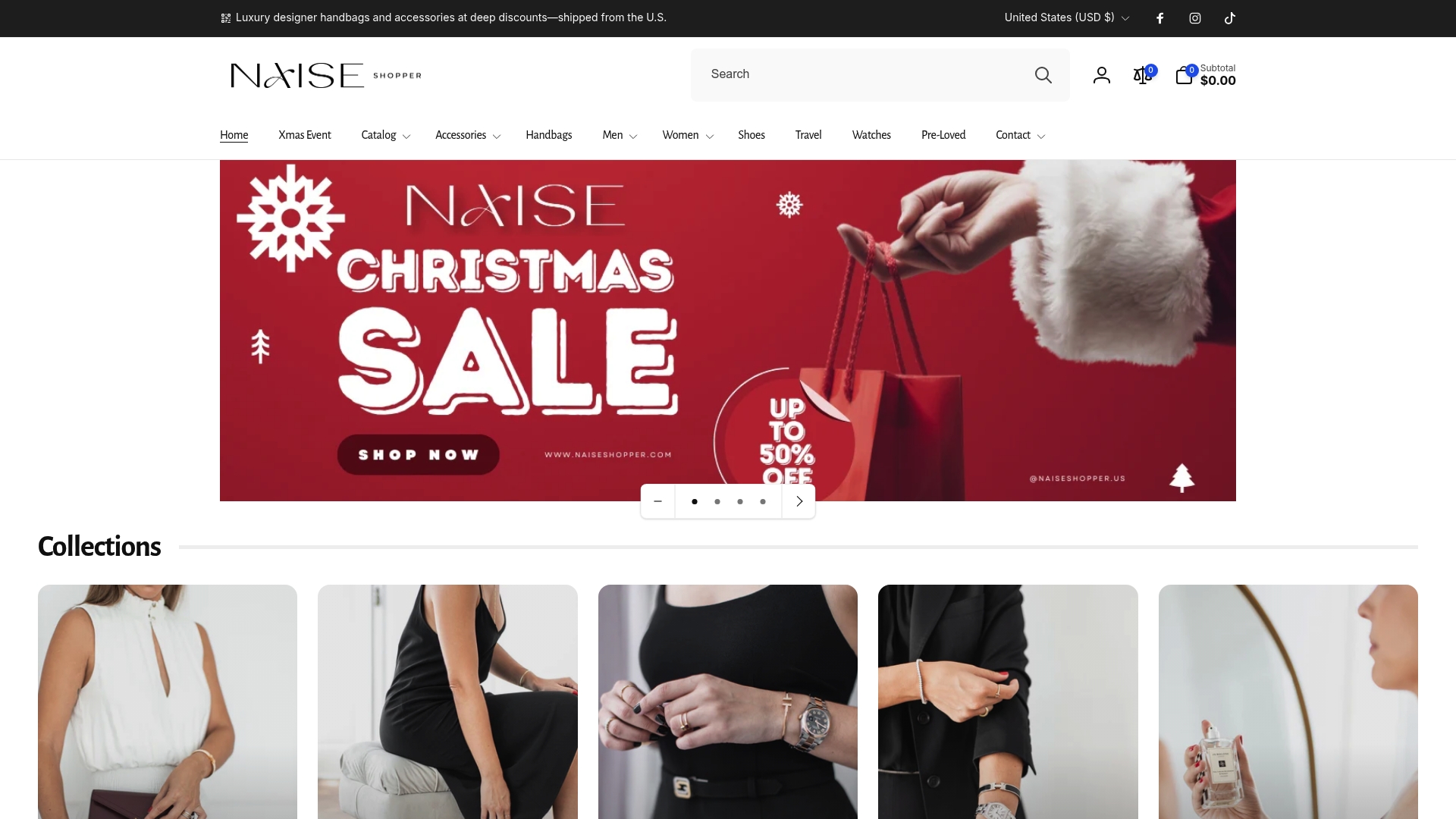
Here’s what that looks like in practice:
- Authentication guarantees on handbags help reduce guesswork.
- Shipping insurance may be available to cover risks for high-value travel bags.
- Personal shopper services can provide assistance before committing to a purchase.
- Localized pricing in multiple countries may clarify total costs before checkout.
Browse the current handbag collection to see travel-ready styles with authentication built in, or reach out to the personal shopper team with questions about a specific piece before you buy.
Sources
- How to avoid an online shopping scam this holiday season | Consumer Advice
- Carry-on baggage tips | Federal Aviation Administration
- What third-party sellers need to know about the INFORM Consumers Act | FTC
- The real rules for carry-on luggage | SmarterTravel
FAQ
Is a price that’s 50% off market value a red flag?
A steep discount alone isn’t automatically a scam, but it should trigger extra scrutiny of the seller’s authentication proof and contact details. The FTC notes that unusually low prices are one of the most common lures scammers use, so pair any steep deal with a full authenticity check before paying.
Will a designer handbag count as a personal item on a flight?
Most airlines treat a handbag as a personal item as long as it fits under the seat in front of you, with typical personal item allowances running around 18 x 14 x 8 inches. Measurements vary by airline, so check your specific carrier’s published dimensions before you pack.
What proof of authenticity should I expect from a seller?
Expect clear close-up photos of serial numbers, hardware stamps, and stitching, along with a stated authentication process, whether in-house or third-party. A missing serial number, blurry stock photos, or a seller who can’t produce provenance details on request are all reasons to ask more questions before buying.
Does shipping insurance actually cover a lost or damaged bag?
Shipping insurance typically covers loss and damage that occurs during transit, which is worth the added cost on any high-value order. Check the specific terms at checkout, since coverage details and claims processes can vary between sellers.
Do I have to pay customs duties on a designer bag I buy internationally?
Duty and customs requirements depend on your destination country and the item’s declared value, so check your destination’s official customs guidance before your order ships. Confirm at checkout whether the listed price already includes duties or whether that cost is billed separately on delivery.