Shopping for luxury fashion can feel like deciphering a foreign language when you encounter terms like “ready-to-wear,” “haute couture,” or “diffusion line” without context. These specialized phrases are not just marketing jargon, they reveal critical details about craftsmanship, exclusivity, and value that separate authentic designer pieces from mass-market imitations. Understanding designer brand terminology empowers you to make confident purchasing decisions, spot genuine luxury items, and appreciate the artistry behind high-end fashion in 2026. This guide breaks down essential luxury fashion vocabulary you need to navigate the world of authenticated designer handbags, shoes, watches, and accessories with expertise.
Table of Contents
- Understanding Core Designer Brand Terms
- Common Terminology In Designer Accessories And Footwear
- How Understanding Terminology Helps You Shop Smarter
- Comparing Designer Brand Tiers And Product Quality
- Explore Authentic Designer Fashion And Accessories
Key takeaways
| Point | Details |
|---|---|
| Terminology reveals authenticity | Designer brand terms help distinguish genuine luxury items from counterfeits and lower-tier products. |
| Understanding tiers matters | Terms like “ready-to-wear” and “haute couture” define exclusivity levels and directly impact pricing. |
| Vocabulary builds confidence | Recognizing specialized fashion language improves your ability to evaluate investment value and resale potential. |
| Application drives smart shopping | Using terminology knowledge helps you compare quality markers and make informed purchasing decisions. |
Understanding core designer brand terms
Mastering foundational luxury fashion vocabulary establishes your ability to navigate designer collections with authority. These core terms appear across product descriptions, runway presentations, and retail environments, serving as your first layer of authentication knowledge.
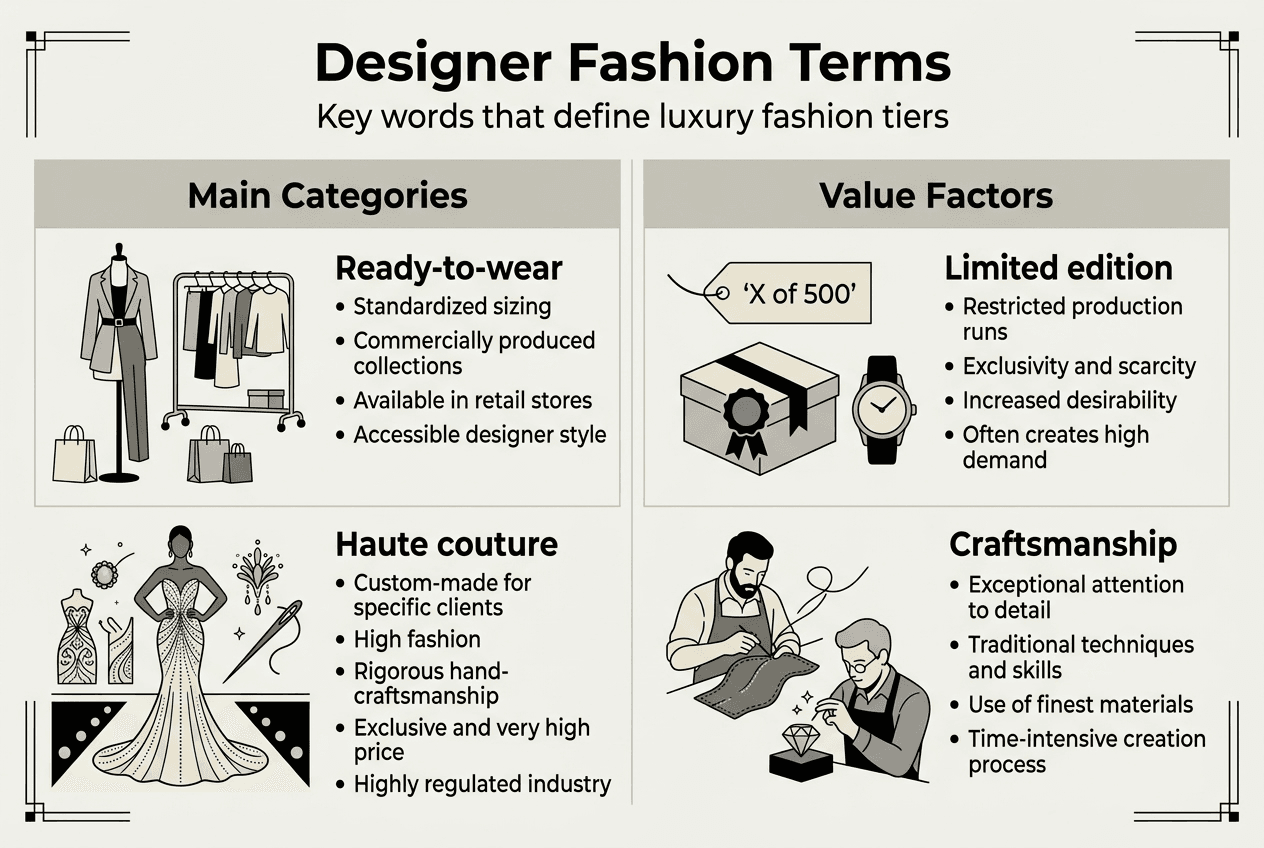
Ready-to-wear refers to high-quality garments produced in standard sizes, unlike bespoke couture. This category represents the majority of designer fashion available for purchase, offering luxury craftsmanship in sizes 0 through 16 or equivalent international measurements. Ready-to-wear collections launch seasonally, typically in spring/summer and fall/winter cycles, and feature the creative vision of design houses translated into wearable pieces. These items maintain high construction standards while being accessible to broader luxury markets compared to custom creations.
Haute couture occupies the pinnacle of fashion exclusivity. This French term literally means “high sewing” and legally applies only to fashion houses meeting strict criteria established by the Chambre Syndicale de la Haute Couture in Paris. Couture garments are handmade for individual clients, requiring multiple fittings and hundreds of hours of skilled craftsmanship. Only about 4,000 clients worldwide purchase haute couture regularly, with single pieces costing anywhere from $50,000 to several hundred thousand dollars.
Limited edition designates products manufactured in restricted quantities to create scarcity and collector appeal. Brands like Gucci, Chanel, and Hermès release limited edition handbags, shoes, and accessories that often appreciate in value over time. These pieces typically feature unique colorways, special materials, or collaborative designs not available in regular collections. The artificial scarcity drives demand and establishes these items as investment pieces rather than simple fashion purchases.
These fundamental terms directly influence pricing structures across luxury markets. A ready-to-wear Valentino dress might retail for $3,500, while a haute couture version of a similar silhouette could exceed $40,000. Limited edition releases command premium pricing, sometimes 30 to 50 percent above standard collection items, due to their collectible status and restricted availability.
Pro Tip: When examining product descriptions online or in boutiques, look for these specific terms on labels and authenticity cards. Genuine luxury items clearly state their collection tier, helping you verify authenticity and understand the piece’s position within the brand hierarchy.
Common terminology in designer accessories and footwear
Luxury accessories and footwear carry specialized vocabulary that reveals condition, authenticity, and style details essential for informed purchasing. Understanding these terms transforms your ability to evaluate handbags, shoes, and watches with professional-level insight.
Pre-loved describes authenticated secondhand luxury items that have been previously owned. This term has replaced “used” or “vintage” in luxury retail, reflecting the growing acceptance and desirability of sustainable luxury shopping. Pre-loved pieces from platforms like Naise Shopper undergo rigorous authentication processes, ensuring you receive genuine designer products at accessible price points. The condition grading for pre-loved items typically ranges from “excellent” (minimal wear) to “good” (visible use but structurally sound).
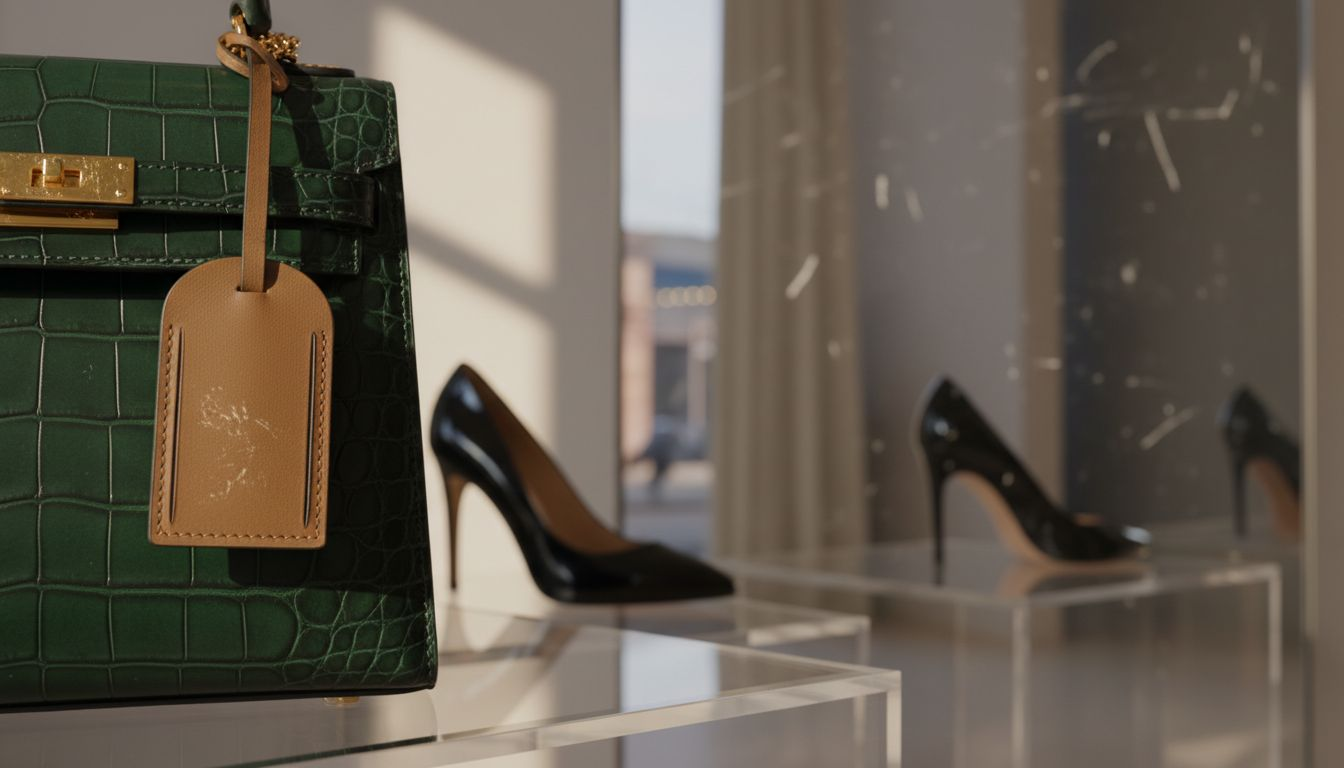
Logo plaque refers to the metal or leather brand insignia attached to luxury accessories. Understanding handbag and accessory terminology helps shoppers evaluate authenticity and desirability. Authentic logo plaques feature precise engraving, proper font styling, and correct brand spelling. Counterfeit items often display blurred lettering, incorrect logo proportions, or cheap metal finishes. Examining the logo plaque provides one of the fastest authentication checks when shopping for designer handbags and small leather goods.
Watch terminology includes model-specific naming conventions that designate size, movement type, and collection. Gucci’s G-Timeless collection, for example, offers watches in 27mm, 38mm, and 40mm case sizes, with each dimension targeting different wrist preferences and style aesthetics. Understanding these measurements helps you select pieces that fit properly and align with current fashion proportions.
| Footwear Term | Definition | Brand Examples |
|---|---|---|
| Pointed toe | Sharp, tapered front silhouette | Jimmy Choo, Prada, Saint Laurent |
| Pumps | Closed-toe heels without straps | Valentino, Bottega Veneta, Gucci |
| Sneakers | Athletic-inspired casual footwear | Balenciaga, Prada, Chanel |
| Kitten heel | Low heel under 2 inches | Chanel, Dior, Miu Miu |
Pro Tip: Familiarizing yourself with these accessory-specific terms enables you to assess item condition accurately and compare pricing across different luxury retailers. When you understand what “pre-loved excellent condition” actually means versus “good condition,” you can evaluate whether a 40 percent discount represents genuine value or reflects significant wear.
How understanding terminology helps you shop smarter
Applying luxury fashion vocabulary directly to your shopping process creates measurable advantages in authentication, pricing evaluation, and investment decisions. Knowledge transforms from theoretical understanding to practical purchasing power.
Follow these steps to leverage terminology for smarter luxury shopping:
-
Cross-reference product descriptions with brand websites. When you see “ready-to-wear” on a listing, verify that the item actually comes from a seasonal collection rather than a diffusion line. Authentic ready-to-wear pieces appear in official brand lookbooks and runway presentations.
-
Use terminology to calculate fair market value. Limited edition items command premium pricing, but understanding the typical markup helps you identify reasonable offers. If a standard Gucci handbag retails for $2,800 and a limited edition version costs $5,500, evaluate whether the exclusivity justifies the 96 percent price increase.
-
Identify special releases for collector value. Terms like “capsule collection,” “collaboration,” or “anniversary edition” signal pieces likely to appreciate over time. Knowing luxury brand terms improves buyers’ confidence and enables better investment decisions. These releases often sell out quickly and appear on resale markets at significant markups within months.
-
Recognize authentication red flags through terminology misuse. Counterfeit sellers often misapply luxury terms, describing mass-produced items as “haute couture” or using incorrect model names. If a listing claims to offer “haute couture Gucci sneakers,” you immediately know it’s fraudulent because Gucci doesn’t produce couture footwear.
-
Understand styling context and trend relevance. Terms like “oversized silhouette,” “structured shoulder,” or “minimalist aesthetic” connect individual pieces to broader fashion movements. This knowledge helps you select items that align with current trends or timeless styles, depending on your wardrobe strategy.
Terminology also impacts resale value significantly. A Chanel Classic Flap Bag maintains stronger resale performance than seasonal styles because buyers recognize the term “Classic” as indicating a permanent collection piece. When you eventually sell luxury items, using correct terminology in your listings attracts serious buyers and commands higher prices.
The authentication benefit alone justifies learning designer vocabulary. Counterfeit operations rarely replicate terminology correctly across product packaging, authenticity cards, and care instructions. Spotting a single terminology error, such as “genuine leather” on a supposedly all-calfskin Hermès bag, can save you thousands of dollars in fraudulent purchases.
Comparing designer brand tiers and product quality
Luxury fashion operates across distinct tiers that determine exclusivity, craftsmanship, and pricing. Understanding these hierarchical distinctions helps you allocate your fashion budget strategically and recognize the value proposition of different designer offerings.
| Brand Tier | Production Method | Availability | Price Range | Quality Markers |
|---|---|---|---|---|
| Haute Couture | Hand-sewn, custom-fitted | Made-to-order for individual clients | $50,000 to $500,000+ per piece | Hundreds of hours of handwork, rare materials, perfect fit |
| Ready-to-Wear | Machine and hand construction | Seasonal collections in boutiques | $800 to $15,000 per piece | High-quality fabrics, designer details, standard sizing |
| Diffusion Lines | Mass production with designer oversight | Widely available in department stores | $200 to $1,500 per piece | Brand aesthetic at accessible prices, synthetic blends common |
Luxury brand value is shaped by craftsmanship, exclusivity, and brand heritage, creating clear distinctions between tiers. Haute couture represents the artistic pinnacle, where fashion houses demonstrate technical mastery without commercial constraints. Each couture piece functions as wearable art, incorporating techniques like hand-embroidery, intricate beading, and fabric manipulation that require specialized artisan skills.
Ready-to-wear balances luxury quality with commercial viability. These collections feature premium materials like Italian leather, silk, and cashmere, combined with construction methods that ensure durability and refined finishing. You’ll find details like hand-stitched linings, reinforced stress points, and quality hardware that distinguish ready-to-wear from lower tiers. The fit and finish meet exacting brand standards, though production scales allow for broader distribution than couture.
Diffusion lines extend designer aesthetics to wider audiences through strategic compromises. Brands like Marc by Marc Jacobs (discontinued but illustrative) or Prada’s Miu Miu offer recognizable design language at reduced price points. These lines typically use less expensive materials, simplified construction, and higher production volumes. While quality remains above fast fashion standards, diffusion pieces lack the longevity and refinement of main collection items.
“True luxury fashion distinguishes itself through material selection, construction integrity, and design innovation that transcends seasonal trends. Understanding these quality markers helps buyers recognize genuine value beyond brand logos.”
Terminology guides your selection of investment-worthy pieces by clarifying what you’re actually purchasing. A $1,200 diffusion line handbag might feature synthetic leather and basic hardware, while a $2,800 ready-to-wear bag from the same brand offers full-grain calfskin and artisan-crafted closures. The terminology signals these differences before you examine the physical product.
Common quality indicators revealed through designer terminology include:
- Full-grain leather versus bonded or corrected leather in product descriptions
- Hand-finished edges indicating artisan involvement rather than machine-only production
- Seasonal collection codes that authenticate items as official releases rather than outlet productions
- Limited production numbers specified in marketing materials for special releases
- Designer signature details like specific stitching patterns or hardware finishes unique to main collections
Recognizing these terminology-based quality signals prevents overpaying for lower-tier items marketed with premium language. Your knowledge creates a filter that separates genuine luxury from aspirational branding, ensuring every purchase delivers the quality and value you expect.
Explore authentic designer fashion and accessories
Now that you understand the language of luxury fashion, put your knowledge into practice with authenticated designer pieces that exemplify quality and style. Naise Shopper curates an exceptional selection of genuine luxury items, from iconic handbags to statement footwear and timepieces, all verified for authenticity and offered at accessible prices.
Apply your newfound terminology expertise while exploring collections featuring ready-to-wear accessories, pre-loved investment pieces, and limited availability designer finds. Whether you’re drawn to classic Jimmy Choo leather flats with pointed-toe silhouettes, sophisticated timepieces like the Gucci G-Timeless watch, or sustainable luxury options such as pre-loved Prada sneakers, each piece demonstrates the quality markers and terminology you’ve learned.
Browse current designer collections with confidence, knowing you can identify authentic luxury, evaluate fair pricing, and select pieces that deliver lasting value. Naise Shopper’s authentication guarantee and expert curation ensure every purchase meets the standards your terminology knowledge now demands.
FAQ
What does ‘ready-to-wear’ mean in designer fashion?
Ready-to-wear describes luxury garments and accessories produced in standard sizes and available for immediate purchase, contrasting with custom-made haute couture. These pieces maintain high-quality construction and designer aesthetics while offering broader accessibility than bespoke creations. Ready-to-wear collections launch seasonally and represent the majority of designer fashion available in boutiques and online luxury retailers.
How can I spot authentic designer accessories using terminology?
Authentic designer pieces use precise terminology consistently across product descriptions, labels, and authenticity documentation. Understanding luxury handbag terminology helps you identify brand-specific features like correct model names, accurate material descriptions, and proper collection designations. Counterfeit items often misuse terms or apply luxury vocabulary incorrectly, creating red flags that reveal fraudulent products before you make a purchase.
What is the difference between haute couture and diffusion lines?
Haute couture represents custom-fitted, handmade garments created for individual clients with hundreds of hours of artisan craftsmanship and rare materials. Diffusion lines offer designer aesthetics at accessible price points through mass production, simplified construction, and less expensive materials. Luxury brand value differs dramatically between these tiers, with couture pieces costing $50,000 to $500,000+ while diffusion items range from $200 to $1,500.
Why does understanding designer terminology matter in 2026?
Mastering luxury fashion vocabulary empowers you to authenticate products, evaluate fair pricing, and make confident investment decisions in today’s complex designer market. Knowledge of designer terms guides your ability to distinguish quality tiers, recognize special releases, and assess resale potential. As counterfeit sophistication increases and luxury markets expand globally, terminology literacy serves as your primary defense against fraud and poor purchasing decisions.
Recommended
- Luxury Handbag Terminology Explained: Expert Insights
- Luxury Fashion Investing Guide for Handbags and Apparel
- What Defines Luxury Fashion – Key Standards and Impact
- Luxury Brand Value: What Sets Premium Fashion Apart
- Parfüm Bestseller erklärt: Alles rund um Duft-Trends – Pure Parfüm