Here’s the shortcut: Italian sizing and European sizing are the same number, French sizing runs about four sizes lower than Italian, and every shoe conversion should trace back to your foot length in centimeters, not the number on the box. That IT = EU rule alone resolves half the confusion shoppers hit when browsing a Gucci or Prada size chart. A woman with a 24 cm foot lands at a US 6.5, but designer lasts vary enough that the number is a starting point, not a guarantee.
Do this before you check out on any designer piece:
- Measure your foot, bust, waist, or hips in both cm and inches.
- Pull up the specific designer’s size chart rather than trusting a generic conversion.
- Request flat garment measurements when a listing doesn’t include them.
Key Takeaways
Accurate designer size conversion depends on matching your own body measurements in cm and inches against brand-specific charts, not on trusting a single size label across every designer house.
| Point | Details |
|---|---|
| IT equals EU | Italian and European clothing sizes share the same number; French runs about four sizes lower. |
| Measure before converting | Foot length, bust, waist, hip, and inseam in cm and inches are more reliable than any label number. |
| Expect brand variability | Italian and French tailoring often runs trimmer, so size up when you’re between two sizes. |
| Request flat measurements | Ask sellers for garment-flat measurements, especially on vintage or plus/petite designer pieces. |
| Shop with Naiseshopper | Naiseshopper’s product pages list measurements and offer personal shopper help to confirm your size before you buy. |
Table of Contents
- What Is Designer Size Conversion and Why Does It Trip Up Shoppers?
- Designer Shoe Size Charts: US, EU, UK, IT, and Japan
- Apparel and Dress Size Conversion Across US, EU, IT, and UK
- How to Measure Yourself for Accurate Size Conversion
- Why Do Designer Brands Fit So Differently From Each Other?
- Quick-Reference Size Charts You Can Screenshot
- How Do Kids and Infant Designer Sizes Convert Across Regions?
- Plus Size and Petite Size Conversion Guidance
- Accessories: Converting Hat, Glove, and Belt Sizes
- Handling Half Sizes and Non-Standard Sizing Variations
- How Fabric Stretch and Fit Style Change Your Size
- Online Shopping Tips for Accurate Size Conversion
- Why I Tell Every Shopper to Measure First, Then Convert
- Get the Right Size on Your Next Designer Purchase
- Sources
What Is Designer Size Conversion and Why Does It Trip Up Shoppers?
Designer size conversion is the process of translating a garment or shoe size from one country’s numbering system (US, EU, UK, IT, JP, FR) into the system you actually shop in, using either standardized charts or direct body measurements. It sounds mechanical, but designer houses complicate it further because each label cuts to its own house standard. A size 40 at one Italian brand can fit like a 38 at another, which is why the standard industry term for this practice, “size conversion,” only gets you halfway there. The real skill is pairing that conversion with a body measurement check, since a chart tells you the label equivalent while a tape measure tells you the actual fit.
Designer Shoe Size Charts: US, EU, UK, IT, and Japan
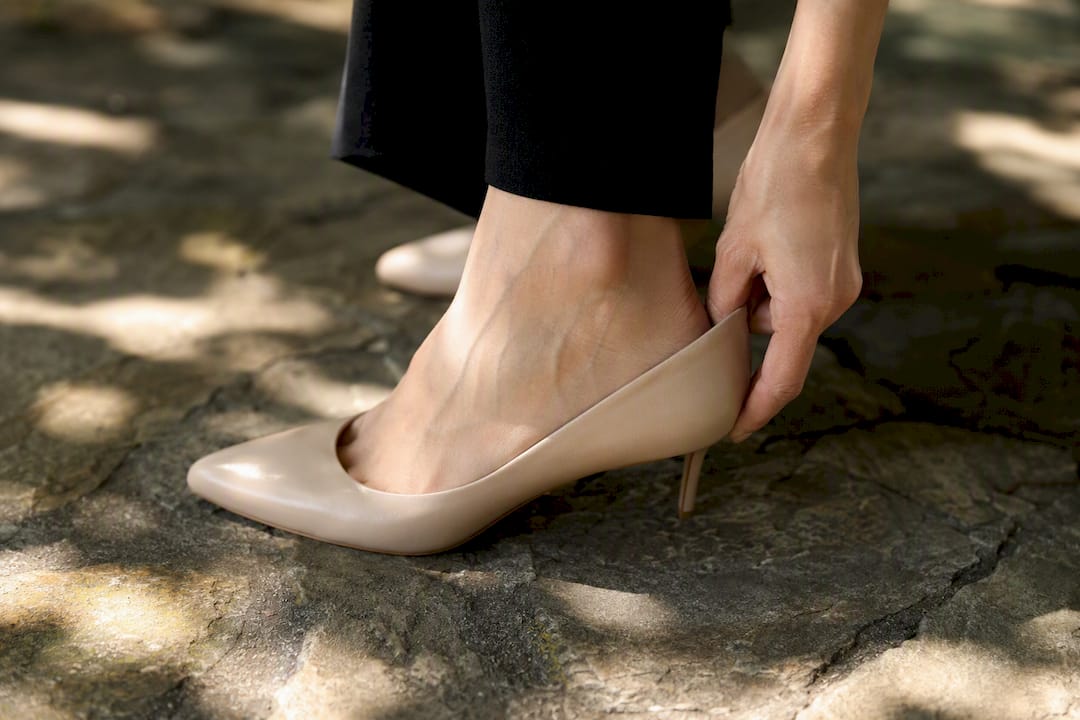
Shoe conversion is the most measurement-dependent category in designer fashion, because half a centimeter of foot length can shift you between sizes. Foot length in centimeters is the most reliable starting point for any shoe conversion, and it matters even more once you’re choosing between a size 38 and a 38.5 in a stiff leather pump.
Women’s shoe conversion chart
Men’s shoe conversion chart
Measure heel to longest toe while standing, then leave 0.5 to 1 cm of toe room in the finished shoe. Many Italian houses cut a narrower last than American brands, so a foot with a wider forefoot may need to size up half a size regardless of what the chart says.
- Standing measurement beats seated, since your foot spreads under weight.
- Half sizes exist for a reason. Round up if you land between two.
- A narrow Italian last plus a wide foot usually means sizing up, not down.
Pro Tip: Measure both feet. Most people have one foot slightly longer than the other, and you should always size to the larger one.
Apparel and Dress Size Conversion Across US, EU, IT, and UK
Clothing conversion runs on a simpler rule than shoes, but the stakes are higher because fit varies more by cut. Italian and European clothing sizes share the same numbering, so IT 40 equals EU 40, and generally corresponds to a US women’s size small. IT 42 typically corresponds to a size medium, and IT 44 aligns with a large size.
Women’s apparel conversion (with measurements)
| US | IT/EU | UK |
|---|---|---|
| Small | 38-40 | 6-8 |
| Medium | 42-44 | 10-12 |
| Large | 46+ | 14+ |
| Body measurements for bust, waist, and hip vary by brand and style; always check garment specifics rather than relying solely on size labels. |
For men’s tailoring, subtract 10 from the IT/EU jacket number to estimate US chest size in inches. An IT 50 jacket is roughly a US 40 chest. Shirt collars typically list the same centimeter measurement across US and EU labels, so that number rarely needs conversion at all.
- Fitted silhouettes punish an inch of error; relaxed cuts forgive it.
- French sizing runs about four sizes below Italian, so an FR 38 is close to an IT 42.
- When a brand offers both a size number and flat measurements, trust the measurements.
How to Measure Yourself for Accurate Size Conversion
Getting this right takes five minutes and a soft measuring tape. Skip it, and even a perfect conversion chart won’t save you from a return.
- Foot length: Stand on a piece of paper, trace your foot, then measure heel to longest toe.
- Bust: Wrap the tape around the fullest part of your chest, keeping it level and snug but not tight.
- Waist: Measure at your natural waistline, usually just above your belly button.
- Hips: Measure around the widest part of your hips and rear.
- Inseam: Measure from the crotch seam to the bottom of the ankle on a well-fitting pair of pants.
Once you have those numbers, match them against the measurement columns in the charts above rather than guessing from a label. Measuring over thick clothing or letting the tape sag are the two most common mistakes, and both throw off your result by an inch or more.
Pro Tip: Have someone else measure your bust and hips if possible. It’s nearly impossible to keep the tape level when you’re reading it yourself in a mirror.
Why Do Designer Brands Fit So Differently From Each Other?
Fit variance between designer houses isn’t random. It reflects house-specific block patterns, regional cutting traditions, and, sometimes, decades-old sizing that never got updated for modern bodies. Italian tailoring tends to run trimmer than US sizing, which is why shoppers moving from American ready-to-wear into Italian labels often size up when they’re between two options. French houses lean the same direction in structured tailoring, even though their numbering sits lower than Italian.
Before you buy, run through this shopping checklist:
- Ask the seller for flat, garment-measured dimensions, not just the size label.
- Check for brand-specific fit notes, especially on shoes where last shape varies.
- Watch for vintage designer pieces, which often run smaller than current-year sizing.
- Factor in heel height and width on shoes, since both shift how a size actually wears.
A size label tells you what a brand calls the garment. A flat measurement tells you whether it fits your body. Only one of those two should decide your purchase.
Quick-Reference Size Charts You Can Screenshot
Keep this table open on your phone while you shop. It condenses the categories that generate the most conversion confusion into one glance.
Screenshot the row that matches your category before you start browsing, and treat the measurement column as your tiebreaker whenever a listing gives you both a size and a body measurement.
How Do Kids and Infant Designer Sizes Convert Across Regions?
Children’s designer sizing swaps numeric adult-style charts for age and height ranges, and the mismatch between US and European labeling is bigger than most parents expect. US kidswear typically sizes by age (2T, 4, 6X), while Italian and French children’s labels size by height in centimeters, so a European “104” refers to a child roughly 104 cm tall, not a specific age.
A rough cross-reference: a US size 4 toddler generally corresponds to a European 104, and a US size 6 lines up closer to European 116. Because growth rates vary so much between children, always check the height-in-cm figure on the label rather than assuming age bands translate directly. Infant sizing adds another layer, since European brands often label by months (3M, 6M, 12M) while US labels mix months with weight ranges.
Designer children’s shoes follow the adult foot-length logic, just at a smaller scale. A European kids’ size 28 corresponds to roughly 17.5 cm of foot length. Measure your child’s foot the same heel-to-toe way you’d measure an adult’s, since kids’ feet vary in width even more than adult feet do, and one house’s “28” can run noticeably narrower than another’s.
If you’re buying a designer piece as a gift or for a growing child, size up rather than down. Children’s designer pieces get worn briefly enough that a slightly loose fit outlasts a snug one, and most European children’s labels build in a little extra room by design.
Plus Size and Petite Size Conversion Guidance
Plus size and petite ranges are where generic conversion charts fail most often, because designer houses don’t extend their standard grading rules evenly across the full size range. A brand’s core sizes might convert cleanly using the IT = EU rule, but its plus range often uses a separate block pattern rather than simply scaling up the same pattern, which changes proportions, not just measurements.
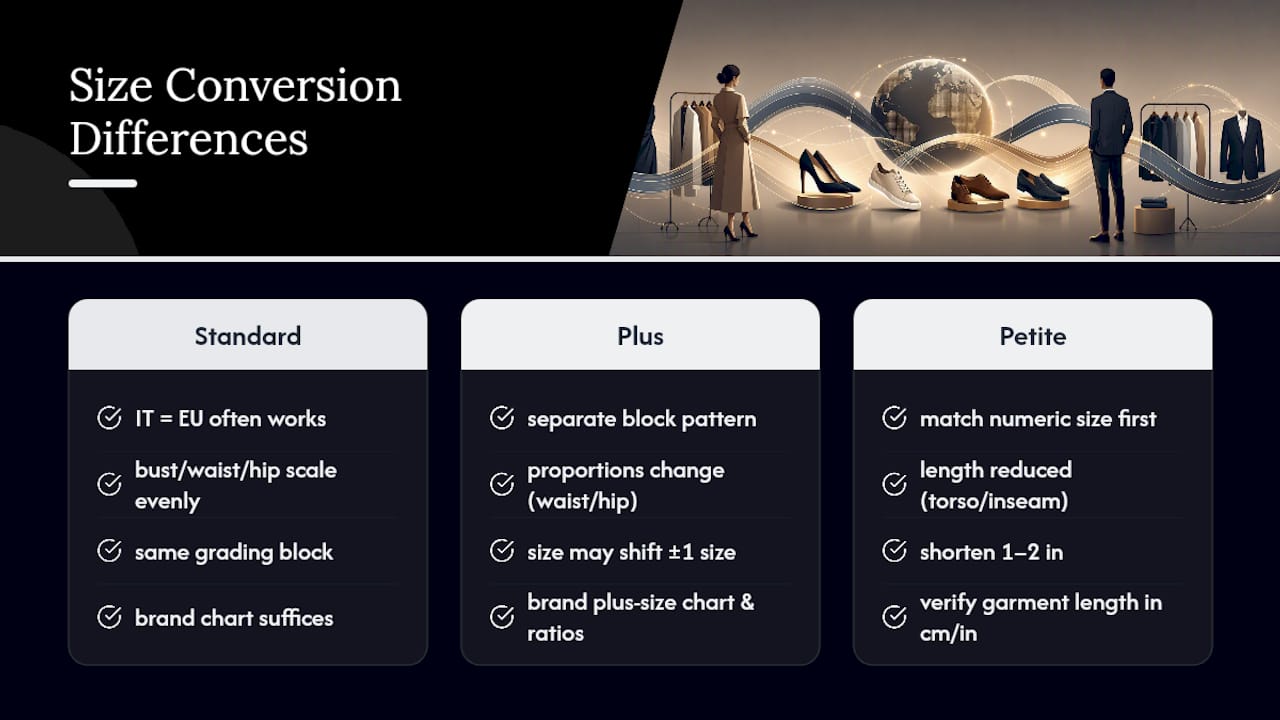
For plus sizing, always check the brand’s specific plus-size chart rather than extrapolating from its standard chart. A US 16 might convert predictably to an IT 48 in one house’s standard line, but a different plus-specific line from the same brand could shift that number by a full size in either direction. Waist-to-hip ratio matters more here than at standard sizes, since plus-size grading rules vary more widely between houses than the core range does.
Petite sizing shifts the conversion problem from width to length. A petite designation (often marked “P” alongside the number) typically shortens the torso and inseam by an inch or two without changing bust, waist, or hip measurements. When you’re converting a petite US size into an EU or UK equivalent, match the numeric size first, then verify the garment’s actual length in inches or centimeters, since petite length adjustments aren’t standardized across countries the way numeric sizing is.
In both cases, the measurement-first rule matters more than usual. A plus or petite chart with only a size label and no bust/waist/hip figures in cm and inches isn’t giving you enough to convert accurately, and that’s exactly when you should message the seller for flat garment measurements before buying.
Accessories: Converting Hat, Glove, and Belt Sizes
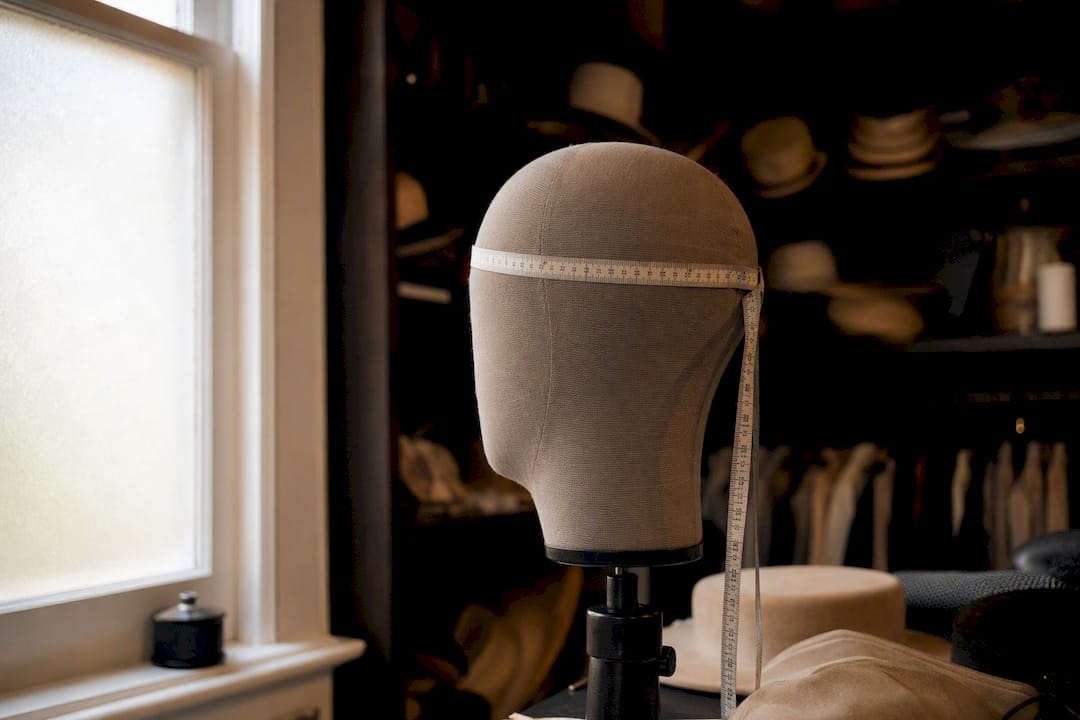
Designer accessories run on their own conversion logic entirely separate from shoes and apparel, and hats are the trickiest of the three. Hat sizing is based on head circumference in centimeters or inches, so a US 7 1/8 hat corresponds to roughly 57 cm, while European sizing often lists the centimeter figure directly on the label. Measure around your head about an inch above your eyebrows to get an accurate circumference before converting.
Gloves use hand circumference in inches as the base unit almost universally, even on European designer labels, which makes glove sizing more consistent across regions than either hats or clothing. A size 7 glove corresponds to a 7 inch hand circumference measured around the palm, excluding the thumb.
Belts convert most reliably through waist measurement rather than pant size, since a belt sized to match your jeans often sits a size too large. European belt sizing in centimeters typically runs about 15 to 18 cm larger than your actual waist measurement in inches converted to cm, to account for the buckle overlap. If you wear a 32 inch pant, a European 80 cm belt is usually your starting point, though you should always check where the buckle prong holes fall relative to the “true to size” mark most designer belts include.
Handling Half Sizes and Non-Standard Sizing Variations
Half sizes exist because a full size increment in shoes covers roughly 0.7 to 0.85 cm of foot length, which is enough room for real fit differences within that range. When a designer brand doesn’t offer your exact half size, the safer move is almost always to size up rather than down, since a slightly loose shoe is more wearable than one that pinches at the toe box.
Non-standard sizing shows up most often in three places: vintage designer pieces, limited runs, and brands that manufacture in a country different from where they’re headquartered. A vintage Chanel jacket labeled a French 40 may fit closer to a modern French 36, since sizing standards have shifted over decades. Limited runs and collaboration pieces sometimes use a simplified size scale (S/M/L) laid over the brand’s normal numeric sizing, and that translation isn’t always published clearly.
When you hit a non-standard size and no chart resolves it, flat garment measurements become your only reliable tool. Ask for shoulder-to-shoulder width, sleeve length, and garment length laid flat, then compare those figures directly against a piece you already own and know fits well. That comparison method works even when the size label gives you nothing useful to convert.
How Fabric Stretch and Fit Style Change Your Size
The same size label can fit two completely different ways depending on what the garment is made of and how it’s cut, which is why size conversion charts are a starting point rather than a guarantee. A stretch fabric with elastane or spandex content typically allows you to size down from what a rigid fabric chart would suggest, since the material moves with your body rather than sitting at a fixed measurement.
Rigid fabrics like structured wool, raw denim, or non-stretch cotton hold you to the chart’s exact measurements, with little forgiveness if your body sits between two sizes. That’s where the “size up when between sizes” advice for Italian tailoring matters most, since structured Italian suiting and jackets rarely have stretch built in.
Fit style adds a second variable on top of fabric. An oversized or relaxed silhouette is designed with intentional extra room, so following the standard measurement chart for that style can leave you swimming in fabric if you don’t account for the designer’s stated fit intention. A slim or fitted cut removes that margin entirely, which means a half-inch measurement error shows up immediately. Always check whether a listing specifies “true to size,” “runs large,” or “oversized fit,” since that note tells you more than the numeric size alone ever will.
Online Shopping Tips for Accurate Size Conversion
Buying designer pieces online removes your ability to try before you buy, so a few habits make the difference between a keeper and a return. Product pages that list flat garment measurements alongside model height and size give you far more to work with than a page showing only a size label, and that standard is becoming common across reputable luxury retail platforms.
Before adding anything to your cart, compare the listing’s measurements against a similar piece already in your closet rather than trusting the size label in isolation. If a listing shows a model wearing a size 4 at 5’9", note that height, since a shorter or taller frame will experience the same garment differently in proportion even if the numeric size matches.
Read the return policy before you buy, not after. Designer resale and discount platforms vary widely on whether sized items are final sale, and knowing that upfront changes how conservatively you should size when you’re uncertain. When in doubt between two sizes, sizing up on structured pieces and sizing true-to-size on stretch pieces is the safer default across nearly every designer category covered here.
Why I Tell Every Shopper to Measure First, Then Convert
Sizing charts are a tool, not a promise, and treating them as gospel is how most designer purchases end up in a return box. The single biggest thing shoppers underestimate is how much a designer’s cut, not the size number, determines fit. I’d rather a shopper spend five minutes with a measuring tape than five minutes squinting at a chart hoping the label tells the whole story. Naise Shopper’s Designer Shoe Fitting Guide exists because of that gap, and our team can walk you through sizing questions directly if a chart still leaves you unsure.
Get the Right Size on Your Next Designer Purchase
Naiseshopper gives you something a generic conversion chart can’t: real product pages with the exact measurements you need to convert your size correctly the first time. Every listing pairs authenticated designer inventory with the specifics that actually matter, so you’re matching your own tape measure numbers against the piece itself, not guessing from a label.
Browse pieces like the Prada Black Leather Floral Heels or the Valentino Garavani stiletto sandals, where sizing details sit right on the product page alongside authentication guarantees. If you’re still unsure which size to pick, Naiseshopper’s personal shopper service can help you cross-check measurements before you check out. Start by browsing the current designer shoe collection and comparing your own measurements against the listed specs before you add anything to your cart.
Sources
- IT to US Size Conversion Chart — Women’s & Men’s, UK & EU (Merino AI)
- Italian Clothing Size Guide: IT to US, UK & EU | ITALICA
- Italian to US Size Converter | Shoes & Clothing Chart - Onlinetoolkit
- Shopify home and best-practice resources