A Gucci serial number is a production and style reference, not a unique public ID card for your bag. It won’t pull up a record online, and Gucci does not run a public lookup tool for it.
The black fabric tag introduced after 2014 can point to a production year group, but the older leather serial tab usually can’t. Your best move is combining the official Gucci app or NFC tag with a hands-on physical inspection.
- Serial numbers identify style and batch, not one individual item.
- The Gucci app/NFC is the only reliable digital check Gucci supports.
- High-value pieces still warrant a professional look.
Pro Tip: Never buy based on a serial number screenshot alone. Ask the seller for close-up photos of stitching, hardware, and the stamp itself before you commit.
TL;DR:
- Serial numbers indicate style and batch, which can be duplicated across genuine bags, so similarity alone does not confirm authenticity.
- The black fabric tag with QR code is the only official digital verification tool supported by Gucci, proven reliable through the Gucci app or NFC scan.
- A genuine Gucci serial consists of two rows: the top for style code, and the bottom for batch or supplier, with a full match across listings often signaling a red flag.
- Third-party QR code decoders and public databases are unreliable, as Gucci’s actual system encrypts data that can only be accessed via the official app.
- Authenticity is confirmed through a combination of serial data, physical inspection, and provenance, not by serial number alone, especially when high-value items are involved.
Table of Contents
- Where Do You Find the Gucci Serial Number and Related Tags?
- What Do the Two Rows of Numbers on a Gucci Serial Mean?
- How Do You Read the Black Fabric Tag’s Year Code?
- How Do You Verify a Gucci Serial With the Official App?
- Why Isn’t a Serial Number Enough on Its Own?
- What’s the Step-by-Step Checklist to Authenticate a Gucci Bag Yourself?
- When Should You Get Professional Authentication?
- Key Takeaways
- Sources
Where Do You Find the Gucci Serial Number and Related Tags?
On most bags, the leather serial tag sits on the reverse side of the interior logo tab, the small rectangular leather flap stitched inside near the lining. Wallets and belts place it a little differently, sometimes stamped directly into an interior leather panel instead of a separate tab.
Since roughly 2014, Gucci has paired that tag with a black fabric label, silk-like to the touch, usually stitched near a seam or interior pocket. It carries a printed alphanumeric code and a QR pattern rather than a stamped number.
You may also find a small paper “controllato” card tucked into a pocket or dust bag. It signals the item passed an internal quality check at the factory. It is not a certificate of authenticity, and treating it as one is a mistake plenty of buyers make.
- Leather serial tab: reverse of the interior logo flap.
- Black fabric tag: printed code plus QR, near a seam.
- Controllato card: quality control note, not proof of authenticity.
What Do the Two Rows of Numbers on a Gucci Serial Mean?
Modern Gucci serials typically run in two rows. The top row identifies the style or model code, the exact configuration, size, and design of that bag. The bottom row references a supplier or production batch, which is why it can repeat across many completely genuine bags made in the same run.
This trips up a lot of buyers doing side-by-side comparisons online.
- Top row = style/model code, unique to that design.
- Bottom row = supplier or batch code, often shared across units.
- Identical top rows across two listings is completely normal.
- An identical full sequence, both rows matching exactly, on two different listings is a red flag worth investigating.
Genuine mass production means duplication is expected in part of the code. What should never repeat exactly is the whole number paired with photos that don’t otherwise match.
How Do You Read the Black Fabric Tag’s Year Code?
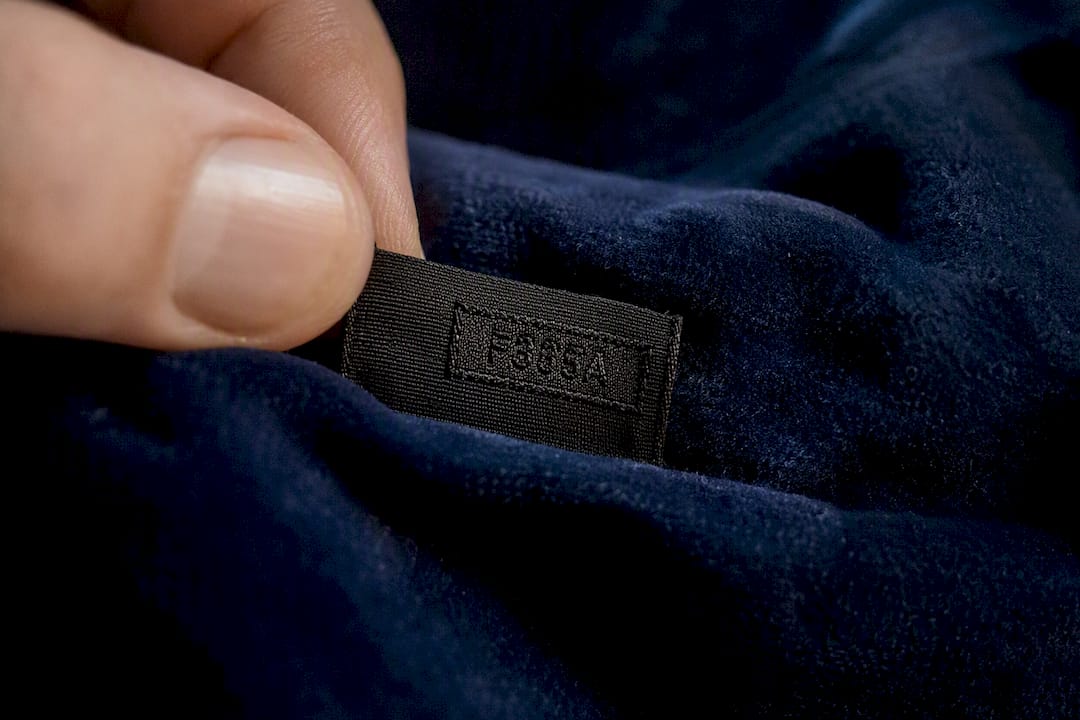
The black fabric tag follows a fairly consistent format: one leading letter followed by three digits. Gucci uses that three-digit block internally to group production years, so two bags from the same era often share the same digit cluster even if nothing else matches.
Here’s how to approach reading it:
- Locate the tag near an interior seam or pocket edge.
- Note the leading letter and the three-digit group that follows.
- Cross-reference the format only as a rough year-group indicator, not an exact date.
- Confirm anything meaningful with the Gucci app rather than a public chart.
The QR code and NFC chip on that tag are encrypted for Gucci’s own systems. A random phone QR scanner usually returns nothing useful, or worse, a generic web redirect that has nothing to do with your bag. Third-party “decoder” sites that promise instant year and factory results are working from reverse-engineered guesses, not Gucci’s actual database, and their accuracy varies a lot from one code era to the next.
How Do You Verify a Gucci Serial With the Official App?
Gucci built the Gucci Tag experience specifically so customers could self-check items without guesswork. Here’s the process:
- Download and open the official Gucci app.
- Go to My Gucci, then select Gucci Tag.
- Hold your phone near the NFC chip location on the black fabric tag, or follow the in-app prompt to scan the QR code instead.
- Review the returned product information and care details.
A successful read confirms the product identity Gucci associates with that specific tag and gives you care instructions. It does not publish factory production logs or ownership history, and it won’t tell you who bought it before you. If the tag doesn’t respond, check that NFC is enabled in your phone settings, try a second device, and contact Gucci’s customer service directly rather than assuming the bag is fake.
Pro Tip: Take a screen recording of the app scan in progress. If something goes wrong or the read looks unusual, that footage is far more useful to a professional authenticator than your memory of what happened.
Why Isn’t a Serial Number Enough on Its Own?
There is no public Gucci serial-number lookup database. Any website promising instant verification just by typing in a number is not an authorized Gucci tool, and counterfeiters know this. Fakes routinely copy real serial sequences taken straight from Gucci’s own marketing photos or from legitimate bags sold online.
Watch for these signs alongside the number itself:
- Printed rather than heat-stamped digits (should feel embossed, slightly recessed).
- A font that isn’t cleanly serifed, or spacing that looks uneven letter to letter.
- A shallow, faint stamp instead of a crisp, deep impression.
- A style number that doesn’t match the bag’s actual shape or hardware in seller photos.
- The exact same full serial sequence appearing on multiple unrelated listings.
Authentication only works when you treat the serial as one data point among several, following best practices outlined in how to verify beauty device authenticity. Stitch count and consistency, hardware weight and finish, and logo alignment matter just as much, and expert reviewers consistently flag serial-only checks as the most common authentication mistake buyers make.
What’s the Step-by-Step Checklist to Authenticate a Gucci Bag Yourself?
Work through this in order before you buy, sell, or worry about an item you already own:
- Photograph both sides of the leather serial tab under good light.
- Photograph the black fabric tag, the controllato card, and every logo placement, front and back.
- Photograph hardware close up, along with interior lining and any exterior pattern alignment (especially on monogram canvas).
- Count visible stitches per inch where you can and check for consistency, no skipped or uneven stitches.
- Test hardware weight in your hand; genuine hardware feels substantial, not hollow or light.
- Check stamp depth and confirm the digits use a clean, consistent serifed font.
- Run the Gucci app/NFC check and record exactly what it returns, including any errors.
- Gather the style number, supplier code, seller provenance, and any receipts into one file.
- Decide between an in-person check at a Gucci boutique or submission to a reputable professional authenticator.
Pro Tip: Save every photo in one folder named with the seller’s listing date. If a dispute comes up later, having a timestamped, organized record speaks louder than a memory of “it looked fine to me.”
This checklist works whether you’re buying secondhand from a private seller or double-checking something already in your closet. Naiseshopper’s own handbag authentication checklist follows the same logic, serial plus construction plus provenance, because no single check tells the whole story.
When Should You Get Professional Authentication?
Send an item for professional review when the purchase price is high, when details don’t line up (style number versus actual bag features), or when you spot an identical full serial on another listing. Those are the moments where a DIY check isn’t enough.

Give the authenticator or Gucci boutique everything you gathered: high-resolution photos, the full serial and style codes, receipts, provenance notes, and your app/NFC read results. A thorough physical inspection of stitching and hardware matters just as much as the paperwork. Most professional reports cover stitching, hardware, materials, and stamp analysis, and turnaround typically runs from a few days to about two weeks depending on the service.
How Naiseshopper Approaches Gucci Authentication
Every Gucci piece Naiseshopper lists goes through this same layered process before it reaches a buyer, serial and style codes checked against physical construction, not treated as proof on their own. That’s why we back listings with an authenticity guarantee, offer personal shopper assistance for US buyers hunting a specific piece, and add shipping insurance for peace of mind in transit. Questions about a listing? Our customer service team can walk through the details with you directly.
— Camila
Ready to Shop Authenticated Gucci With Confidence?
Skip the guesswork of decoding serial tabs on a secondhand marketplace listing. Naiseshopper vets every designer piece against the same checklist covered here, serial format, stamp depth, hardware weight, and stitching, before it ever gets listed for sale. That means the inspection work this article just walked you through has already been done for you.
Beyond Gucci, the same authentication rigor applies across our curated collections from Chanel, Prada, Valentino, Bottega Veneta, Saint Laurent, and Balenciaga, all backed by an authenticity guarantee, shipping insurance, and flexible payment options. If you’re specifically hunting a Gucci watch, the Gucci G-Timeless Quartz Black Watch is a solid example of an authenticated listing done right, verified down to the details this guide covers. Browse current Gucci inventory or reach out to our support team if you want a second set of eyes on a specific item before you buy.
Key Takeaways
A Gucci serial number identifies style and batch information, and real authentication always pairs it with the Gucci app/NFC check plus a physical inspection.
| Point | Details |
|---|---|
| Serial isn’t a unique ID | It marks style and batch, not one specific item, so duplication across genuine bags is normal. |
| Two tags, two purposes | The leather serial tab and the post-2014 black fabric tag with QR serve different verification roles. |
| App beats guesswork | The Gucci app’s NFC/QR read is the only officially supported digital verification method. |
| Physical checks matter most | Stitching, stamp depth, font, and hardware weight catch what a serial number alone cannot. |
| Naiseshopper vets before listing | Every Gucci item goes through this same layered authentication process before sale. |
Sources
- GUCCI Serial Number Check: Decode, Verify & Avoid Counterfeits | Leather Advice
- Real vs Fake Gucci Bag: How to Tell by Serial Number Check | Luggage Inspector