If your belt-line measures around 34 inches, order a size slightly larger belt, measuring from the buckle fold to the center hole. That “add 2 inches” rule is a common guideline for designer labels, and converting to EU centimeters or letter sizing follows the general principle that 1 inch equals 2.54 cm. Brands tweak the details, so use the chart below, then double-check against the brand’s own notes before you check out.
TL;DR:
- Measure your current belt from the buckle fold to the hole you use and add two inches for comfort; convert measurements carefully to the relevant sizing system.
- Round measured inches up to the next even number and centimeters to the nearest five for EU sizes, since brands rarely sell odd or uneven sizes.
- Follow each brand’s specific measuring instructions, as some measure from different points, which significantly impacts the sizing you should select.
- When in doubt between two sizes, choose the larger one because leather belts stretch only slightly, and smaller ones may be less adjustable.
- Ensure your measurement is accurate, avoid measuring over thick clothing, and leave two fingers of clearance to get the best belt fit.
Table of Contents
- Designer Belt Size Conversion Chart: US, EU, and Letter Sizes
- How to Measure Your Belt Size Accurately
- Why Designer Brands List Different Belt Measurements
- Fit Rules, Rounding, and Special Belt Types
- Worked Examples: Converting Real Measurements to Designer Sizes
- How Naise Shopper Helps You Get Designer Belt Sizing Right
- What Most Belt Sizing Guides Get Wrong
- Sources
Designer Belt Size Conversion Chart: US, EU, and Letter Sizes
Every belt size system is really just describing the same measurement in different units. The US system counts inches from the buckle fold to the center hole, the EU (often called Italian) system counts centimeters using that same fold-to-hole measurement, and letter sizes group several inch or centimeter sizes into one loose bucket like S or L.
Here’s how those three systems line up for the sizes you’ll see most often on Saint Laurent, Gucci, Prada, and other designer belt pages:
A couple of rounding habits keep this chart usable in the real world:
- Round your measured belt-line up to the next even US number, since designer belts are almost never sold in odd sizes.
- Convert inches to centimeters, then round to the nearest 5 cm mark, because EU labels move in 5 cm increments, not single centimeters.
- Treat letter sizes as a rough checkpoint rather than a precise fit. They’re the least standardized of the three systems, and one brand’s Medium can sit closer to another brand’s Small.
- Remember that every number in this table assumes the same measuring point: buckle fold to center hole, not tip to tip.
That last point trips up more shoppers than anything else. Measure the wrong section of the belt, and every conversion downstream will be off by an inch or more.
How to Measure Your Belt Size Accurately
Getting an accurate designer belt size conversion starts with a good raw measurement, and you have three reliable ways to get one depending on what’s in front of you.
- Measure an existing belt. Lay it flat, then measure from the fold where the leather wraps around the buckle to the center hole you actually use, not the belt’s overall length. This is widely considered the most accurate method because it reflects a fit you’ve already tested against real clothing, not a theoretical waistline.
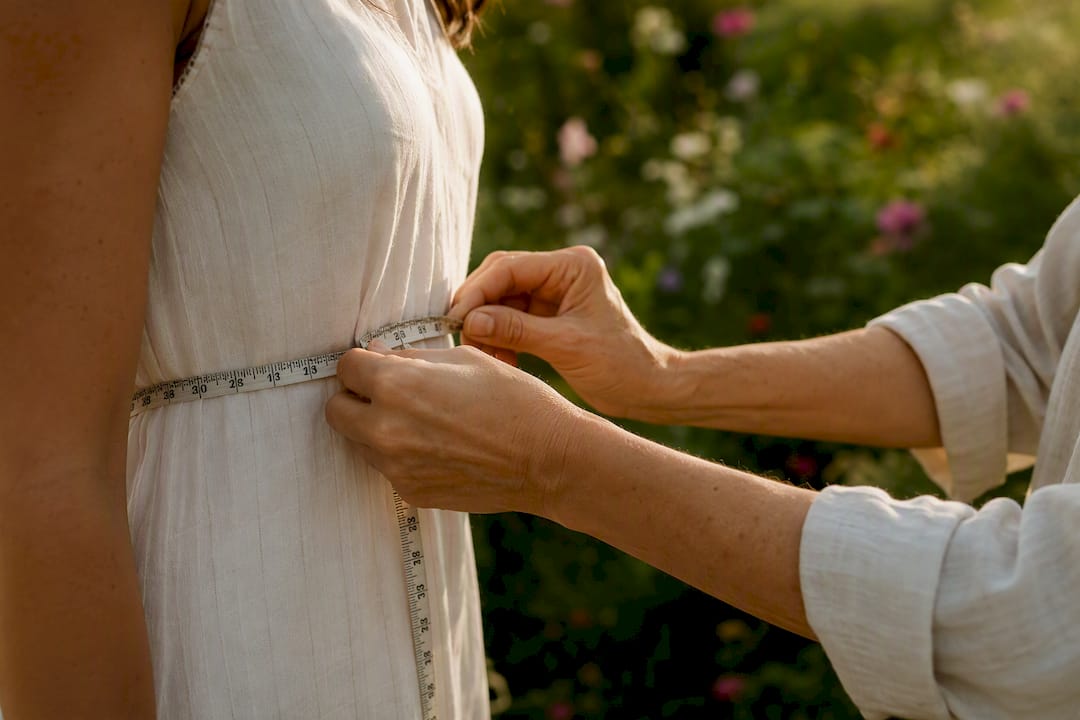
- Measure your waist at belt-line height. Wrap a soft tape where your pants actually sit, not at your navel, and note the number without pulling it tight. Add 1 to 2 inches for comfortable movement, then round up to the next even size.
- Use the string method. No tape measure? Wrap a piece of string or cord around your belt line, mark where it overlaps, then lay it flat against a ruler. It’s slightly less precise than a tape, but far more accurate than guessing from a pants size.
A few things throw this process off. Measuring over thick jeans or a coat adds false bulk, so measure over the clothing you’ll actually wear the belt with. Slouching changes your natural waistline by half an inch or more, so stand naturally, not at attention. And if you’re measuring an old belt, check that the hole you’re using is really the one that fit you well, not just the most worn one.
Pro Tip: Leave two fingers of clearance when you check any measurement against your body. If you can’t slide two fingers comfortably under the tape or string, size up rather than down.
Why Designer Brands List Different Belt Measurements
Not every brand measures the same way, and that’s where a lot of designer belt size conversion confusion comes from.
- Some labels measure to the center hole, but others measure to a different point entirely. Gucci, for instance, instructs shoppers to measure from the outer edge of the buckle to the third hole on certain Double G styles, not the center hole most brands default to.
- EU sizing is almost always centimeters measured to that brand’s chosen hole, sold in clean 5 cm steps like 85, 90, or 95. When you’re converting from inches, multiply by 2.54 and round to the nearest 5 to land on a real, purchasable size.
- When a brand publishes its own measuring instructions, follow those instructions first, get your number, then slot that number into the conversion chart above rather than assuming every belt uses the same anchor point.
This is the single biggest reason two belts labeled “36” from different houses can fit noticeably differently. The number is standardized in name only.
Fit Rules, Rounding, and Special Belt Types
The goal is a belt where your usual hole sits at the middle of the strap, not the last one. Here’s how to lock in a smart final choice:
- Aim for the middle hole, roughly hole 3 of 5, to be your go-to fastening point. That gives you room to size in either direction as weight or layering shifts.
- Round US sizes up to the next even number, and round EU conversions to the nearest 5 cm, exactly as the standard sizing formula recommends.
- Ratchet belts work differently: you buy a size roughly matching your waist, then trim the strap at the buckle end following the manufacturer’s steps, and the micro-adjustment mechanism handles small fit changes after that.
- When you’re stuck between two sizes, choose the larger one. Leather stretches only slightly with wear, so a belt that’s too small stays too small, while a slightly larger one still has adjustment room.
Pro Tip: Never trim a leather belt yourself unless the brand explicitly designs it for trimming, like most ratchet styles. Cutting a traditional buckle belt voids any resale value and usually ruins the fit permanently.
Worked Examples: Converting Real Measurements to Designer Sizes
Numbers make more sense with real scenarios attached. Here’s how the math plays out for the situations shoppers hit most often:
- Belt-line measures 34 inches. Add 2 inches for the standard offset, landing on a recommended order size of 36. Converting 36 inches to centimeters gives roughly 91 to 92 cm, so you’d choose the closest brand label, either 90 or 95 cm, depending on whether that house rounds up or down.
- Waist measures 86 cm. Divide by 2.54 to get about 34 inches, add the standard 2 inch offset, and round up to a US 36, matching the EU 90 to 95 range from example one.
- An existing, well-fitting belt measures 91 cm from fold to center hole. That converts to roughly 35.8 inches, which rounds up to a US 36, again landing comfortably in the same fit range.
- Quick checklist for any measurement: measure accurately, add the 2 inch offset if you measured your waist rather than an existing belt, round to the nearest valid size in your target system, verify against the specific brand’s chart, then buy.
Notice how all three examples converge on the same size range. That’s the conversion working as intended, not a coincidence.
How Naise Shopper Helps You Get Designer Belt Sizing Right
Naiseshopper lists most belt sizes in the same centimeter format the brands use, so a Valentino Garavani VLogo Signature belt in size 70 or a Gucci GG Thin Reversible belt in size 80 shows its true measured size right on the product page, not a guessed equivalent. Every belt on the site ships with an authenticity guarantee, and our secure international shipping means the size you calculate is the size that arrives.
For a deeper brand-specific breakdown, our Gucci belt size guide walks through that house’s third-hole measuring quirk in detail, and our designer size conversion guide extends this same logic to shoes and ready-to-wear.
What Most Belt Sizing Guides Get Wrong
Most sizing guides treat the plus-2-inches rule like it’s gospel, and mostly, it holds up. What gets underweighted is how much brand-specific measuring points matter once you’re past that first calculation. A shopper who nails the math but measures their old belt tip-to-tip instead of fold-to-hole will still order the wrong size, confidently.
The conventional advice also leans too hard on letter sizes for reassurance. An “M” feels like a safe, familiar bet, but it’s the least precise system of the three, and it papers over real inch-level differences between houses. If you only have one number to trust, trust the centimeter or inch figure, not the letter.
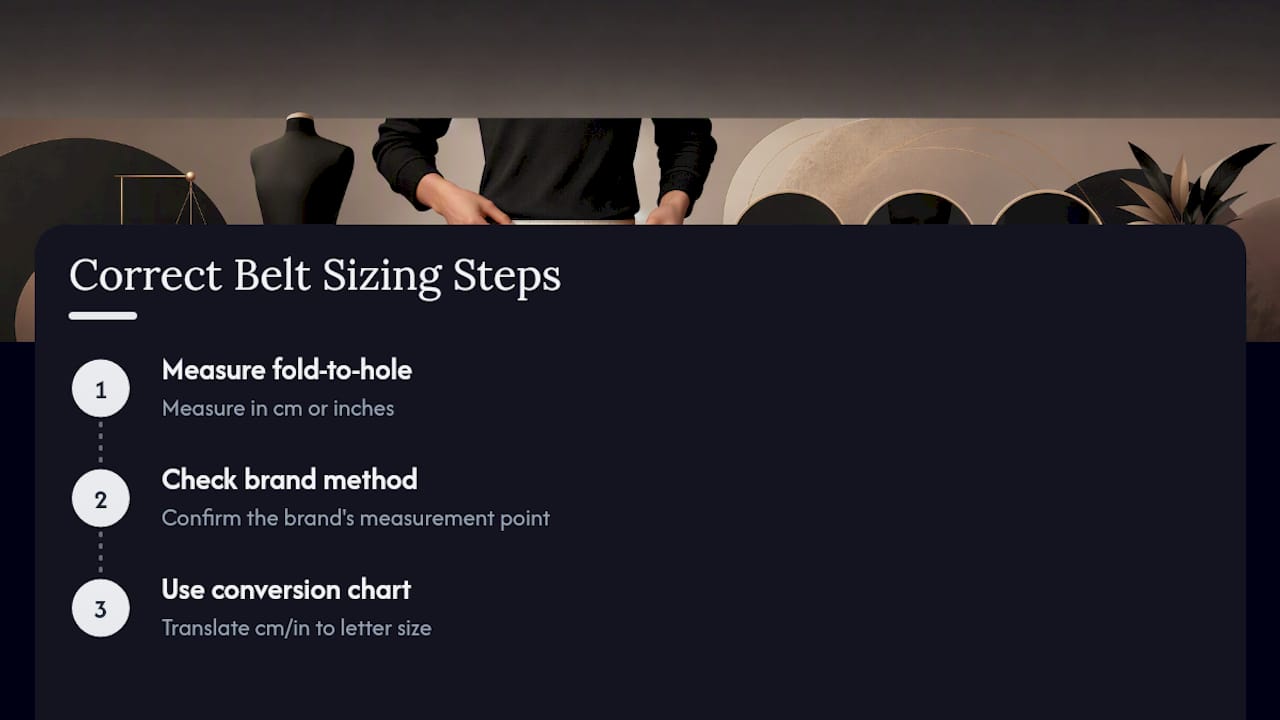
What actually matters, in order: get an honest fold-to-hole measurement first, check whether the specific brand you’re buying measures differently, then use the conversion chart to translate. Skip step two, and the chart won’t save you. Do all three, and you’ll rarely need to return a belt for size again.
— Camila
Sources
For a fast double-check beyond this guide, a few external tools are worth bookmarking:
- How to Measure Belt Size: the 3-Step Method | Holdform
- Belt size calculator — LumoCalculator
- How to Measure for Your Belt Size — The Right Way
- Belt Size Calculator — Devutl