TL;DR:
- Proper cleaning and storage techniques can significantly extend the lifespan of designer accessories.
- Regular inspections help detect early damage and maintain item’s resale value.
- Using the right products and avoiding common mistakes are essential for preserving luxury items.
Imagine pulling your favorite Chanel flap bag from storage only to find the leather cracked, the hardware tarnished, and the lining stained beyond repair. It’s a gut-punch moment that’s entirely preventable. Designer accessories are serious investments, and a single care misstep can cost you hundreds or even thousands in restoration fees or lost resale value. The good news? With the right approach, you can keep your Gucci, Prada, and Bottega Veneta pieces looking runway-fresh for years. This guide gives you expert-approved, practical steps to clean, maintain, store, and inspect your designer accessories like a true luxury insider.
Table of Contents
- Gathering your care essentials
- Step-by-step cleaning and maintenance routines
- Storage strategies for long-lasting beauty
- Regular inspection and when to seek professional help
- Common mistakes and how to avoid them
- Our perspective: Why careful maintenance is a luxury mindset
- Next steps: Elevate your designer accessory care
- Frequently asked questions
Key Takeaways
| Point | Details |
|---|---|
| Essentials matter | Using the right tools and products tailored to your accessory’s material is crucial for safe care. |
| Routine is key | Consistent, gentle cleaning and rotation significantly extend your designer items’ lifespan. |
| Store smart | Proper storage—dust bags, structure preservation, and climate control—protects against damage. |
| Know your limits | Seek professional help for tough stains or complicated materials to avoid irreversible harm. |
| Mind common mistakes | Avoid over-cleaning, using strong chemicals, or poor storage practices to preserve value and beauty. |
Gathering your care essentials
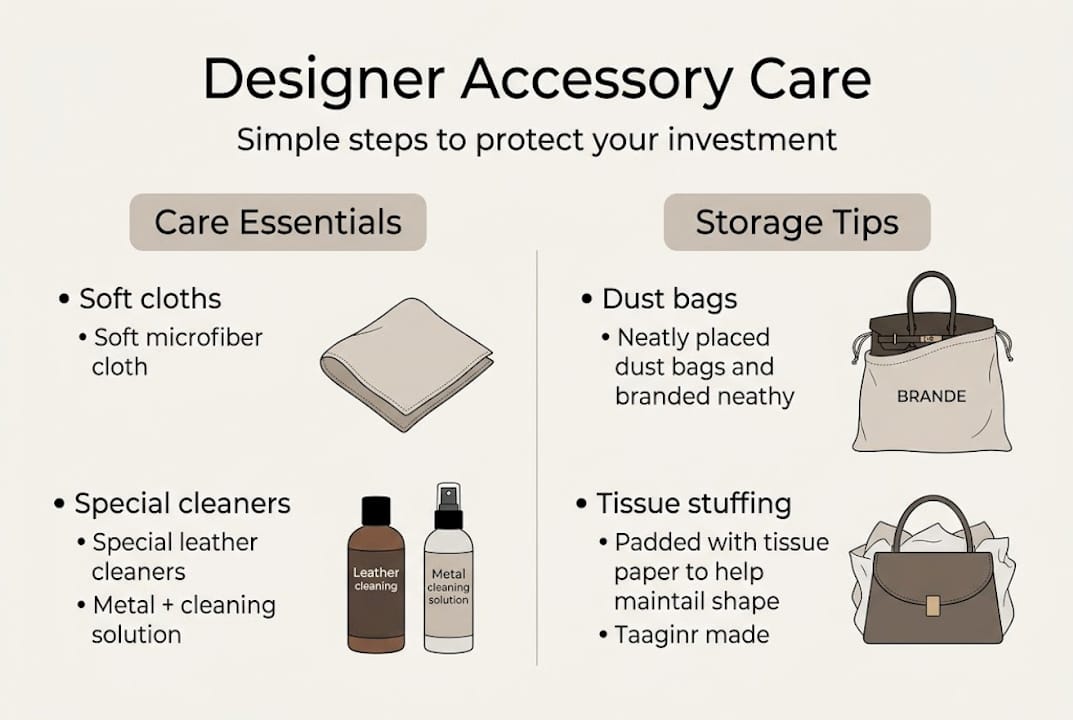
Before you touch any designer piece, you need the right toolkit. Using the wrong product on a Prada nylon bag or a Saint Laurent leather tote can cause irreversible damage. Think of your care station as a mini luxury spa for your accessories. It doesn’t need to be elaborate, but it does need to be intentional.
Here’s what to stock for different material types:
| Material | Cleaning tool | Conditioning product | Storage essential |
|---|---|---|---|
| Smooth leather | Soft microfiber cloth | Leather conditioner | Dust bag + tissue paper |
| Suede or nubuck | Suede brush | Suede protector spray | Acid-free tissue |
| Fabric or canvas | Soft bristle brush | Mild fabric cleaner | Breathable cotton bag |
| Metal hardware | Dry polishing cloth | Metal polish (brand-safe) | Anti-tarnish strip |
| Patent leather | Damp lint-free cloth | Patent leather cream | Padded storage box |
For everyday essentials, keep these on hand:
- pH-neutral leather cleaner
- Soft microfiber cloths (multiple)
- A natural bristle brush for fabric and suede
- Leather conditioner or cream
- Protective spray appropriate for your material
- Dust bags (use the originals your pieces came with)
- Acid-free tissue paper for stuffing and shape retention
Setting up a dedicated care corner in your closet makes consistency easy. A small drawer or shelf with labeled compartments keeps everything accessible. As rotation, protectors, and regular inspection confirm, these preparation steps are non-negotiable for serious collectors.
For a deeper look at what works best for different bag styles, check out these luxury bag care tools and resources on storing handbags properly. You’ll also find detailed expert cleaning advice worth bookmarking.
Pro Tip: Always test any new cleaning solution on a hidden area first, like the interior base or inside a pocket flap, before applying it to visible surfaces.
Step-by-step cleaning and maintenance routines
Once equipped with the right tools, it’s time to put a cleaning strategy into practice. Consistency is everything. A quick wipe-down after each use prevents buildup that becomes much harder to remove later.
For smooth leather bags:
- Wipe the exterior gently with a dry microfiber cloth after every use.
- Apply a small amount of pH-neutral leather cleaner to a cloth (never directly on the bag).
- Work in small circular motions, section by section.
- Follow with a leather conditioner, buffing lightly to restore moisture and sheen.
- Allow the bag to air dry fully before storing.
For fabric and canvas pieces:
- Brush off surface dust with a soft bristle brush.
- Dampen a cloth with a mild fabric cleaner and blot (never scrub) any marks.
- Let air dry completely away from direct heat or sunlight.
For metal hardware:
- Use a dry polishing cloth to buff away fingerprints and light tarnish.
- For stubborn spots, apply a tiny amount of brand-safe metal polish.
- Wipe clean and dry immediately.
“Rotate your accessories regularly and apply protective sprays before first use. These two habits alone dramatically reduce wear and the risk of preventing color transfer between stored pieces.”
For ongoing care, follow handbag care best practices and explore handbag collector tips for material-specific guidance.
Pro Tip: Professional cleaning is recommended for mixed-material pieces or stubborn stains. Attempting to DIY these situations risks oxidation, fiber breakdown, or irreversible discoloration.
Storage strategies for long-lasting beauty
With regular maintenance covered, long-term protection is about how and where you store your pieces. Even a perfectly cleaned bag can deteriorate fast if stored incorrectly. Heat, humidity, and compression are the three biggest enemies of designer accessories.
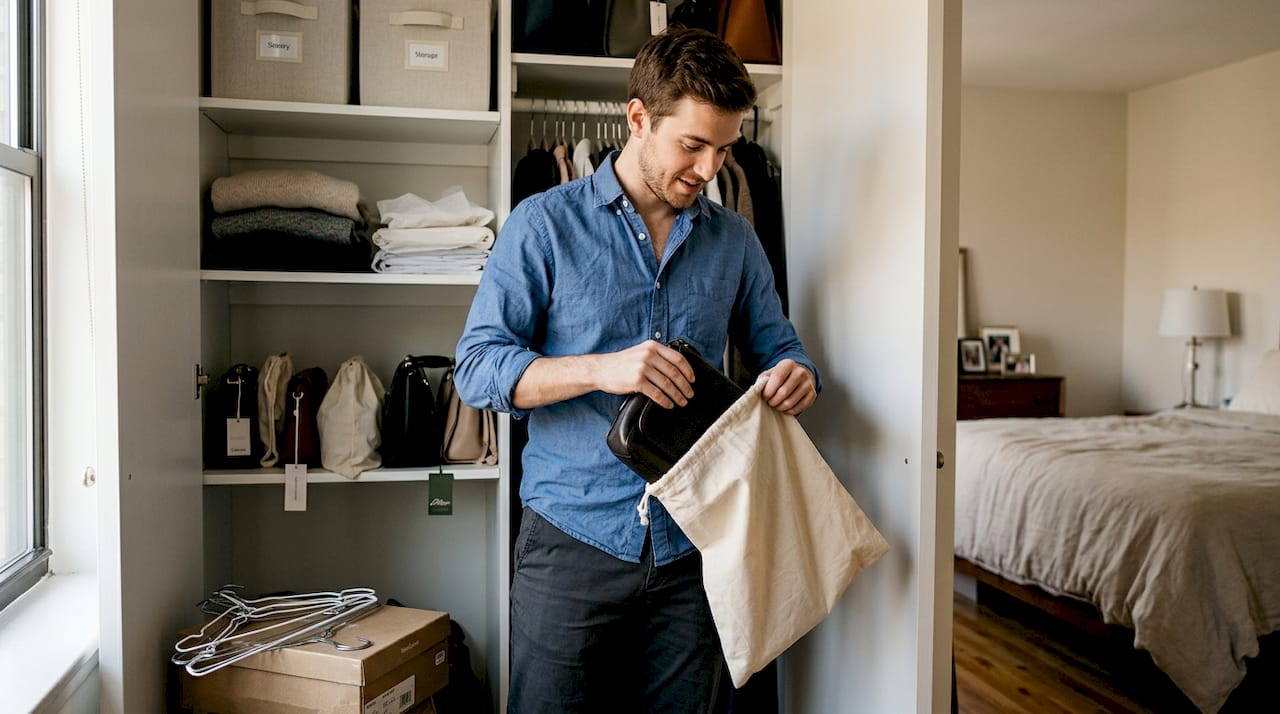
Rotation is your first line of defense. Carrying the same bag daily accelerates wear on handles, corners, and hardware. Rotating between pieces gives each one time to recover and breathe. As rotation prevents excessive wear while correct storage wards off color transfer and deformation, this habit alone can significantly extend a bag’s lifespan.
Here’s a quick comparison of storage approaches by material:
| Material | Ideal storage | Avoid |
|---|---|---|
| Leather | Dust bag, stuffed with tissue, upright | Plastic bags, direct sunlight |
| Suede | Breathable cotton bag, away from moisture | Humid spaces, stacking |
| Metal accessories | Anti-tarnish pouch, dry environment | Rubber bands, moisture |
| Fabric or canvas | Upright in dust bag, cool dry space | Folding, overstuffed shelves |
Additional storage essentials:
- Keep accessories in a climate-controlled space. Aim for 40-50% relative humidity.
- Avoid storing near exterior walls, which can fluctuate in temperature.
- Never stack bags directly on top of each other. This causes shape loss and hardware impressions.
- Use silica gel packets inside storage areas to absorb excess moisture.
- Keep pieces away from colored fabrics or materials that can bleed onto light-colored leather.
For a full breakdown of best storage setups, explore luxury handbag storage methods and expert longevity tips from industry professionals.
Regular inspection and when to seek professional help
Even with best efforts, ongoing attention and awareness will set your accessories apart. Catching problems early is always cheaper and less stressful than dealing with advanced damage.
Here’s a simple monthly inspection routine:
- Check stitching. Look for loose or fraying threads, especially along handles and seams.
- Examine hardware. Look for tarnish, scratches, or loosening of clasps and zippers.
- Inspect the lining. Stains, tears, or adhesive separation inside the bag need prompt attention.
- Feel the leather. Dryness, cracking, or stiffness signals the need for conditioning.
- Look at corners and base. These high-contact areas show wear first.
Stat: Proper care can triple the usable lifespan of luxury goods, according to expert consensus in the luxury care industry.
Early detection matters enormously for resale value too. A Balenciaga bag in excellent condition can command significantly more on the secondary market than one with visible wear. Use an inspection checklist for collectors and review these bag investment inspection steps before buying or selling.
When should you call in a professional? If you notice deep stains, hardware corrosion, lining detachment, or any damage to mixed materials, stop home care immediately. Attempting repairs without expertise risks making damage permanent. Trusted professional repair guidance can help you find the right specialist for your specific piece.
Common mistakes and how to avoid them
Finally, learning from others’ mistakes lets you sidestep unnecessary risks. Many well-intentioned owners actually accelerate damage through over-cleaning or using the wrong products.
The most common care mistakes include:
- Using baby wipes or alcohol-based cleaners on leather. These strip natural oils and cause dryness.
- Overstuffing bags during storage, which distorts shape and stresses seams.
- Leaving accessories in direct sunlight, which fades color and dries out leather rapidly.
- Storing in plastic bags or airtight containers, which traps moisture and causes mold.
- Applying too much conditioner at once, which can darken leather or clog pores.
- Ignoring hardware and focusing only on the exterior fabric or leather.
- Skipping protective spray on new pieces before first use.
As improper products or moisture exposure can irreversibly damage designer goods, the stakes of these mistakes are real. Prevention always beats correction.
The mindset shift here is significant. Think of care as a regular, gentle ritual rather than an occasional deep-clean emergency. Wiping down a bag after each use takes 30 seconds. Restoring a neglected piece can take weeks and cost hundreds.
When shopping for new pieces, understanding authenticity helps you invest wisely from the start. Explore tips on choosing authentic accessories and browse designer styling tips to get the most from every piece in your wardrobe.
Pro Tip: Less is more. Gentle, consistent care always outperforms infrequent, aggressive cleaning. When in doubt, do less and consult a professional.
Our perspective: Why careful maintenance is a luxury mindset
Here’s something the fashion world doesn’t say enough: how you care for your accessories says as much about your style as what you choose to wear. Ownership is easy. Stewardship is the real skill.
We believe that treating your Valentino clutch or your Gucci loafers with consistent attention is a form of respect, for the craftsmanship behind the piece, for your own investment, and for the story you’re building with your wardrobe over time. Luxury isn’t just about acquiring beautiful things. It’s about keeping them beautiful.
Most people underestimate how much regular attention enhances personal satisfaction. A well-maintained bag feels better to carry. It photographs better. It holds its designer resale value far longer than a neglected one. The collectors and stylists who truly understand luxury aren’t just buying more. They’re taking better care of what they already have. That’s the mindset worth adopting.
Next steps: Elevate your designer accessory care
You now have the knowledge to protect every piece in your collection, from your first Prada bag to your most treasured Chanel find. Ready to take it further?
At NaiSeShopper luxury accessory guides, we’ve built a library of expert resources covering care tutorials, authentication checklists, storage guides, and styling advice, all in one place. Whether you’re a first-time luxury buyer or a seasoned collector, our curated content and authenticated inventory make it easier to shop smart and care confidently. Explore our guides, discover authenticated pieces at exceptional prices, and give your wardrobe the expert-level attention it deserves.
Frequently asked questions
How often should I clean my designer accessories?
Light cleaning after each use is ideal, with a deeper clean every 1 to 2 months depending on how frequently you use the piece and what material it’s made from.
Can I use regular household cleaners on luxury bags?
No. Household cleaners cause oxidation or fiber breakdown in luxury materials. Always use products specifically formulated for the material, or consult a professional.
What is the best way to store designer accessories to prevent damage?
Use the original dust bags, stuff pieces with acid-free tissue to retain shape, and keep them in a climate-controlled space away from sunlight, moisture, and colored fabrics.
When should I seek professional repair?
For severe stains, hardware corrosion, lining separation, or mixed-material damage, stop home care and consult a specialist immediately to prevent permanent damage.