TL;DR:
- Choosing the right luxury shoes first helps define the formality and color palette of an outfit. Matching shoes to occasion and coordinating accessories ensures a polished look that emphasizes harmony and proportion. Prioritizing shoe selection allows for versatile styling and prevents fashion mistakes like mismatched formality levels.
Luxury shoes are the focal point of any well-built outfit, and knowing how to style luxury shoes correctly separates a polished look from a forgettable one. The principle is simple: choose standout shoes first by color, style, and formality, then build the rest of the outfit around them. Whether you are working with Gucci loafers, Prada Oxfords, or Saint Laurent sneakers, the same rules apply. Formality, proportion, and color harmony are the three pillars that make designer footwear work at every level, from boardroom to weekend brunch.
How to style luxury shoes for the right occasion
The single biggest styling mistake is wearing the wrong shoe type for the setting. Shoe formality should match the occasion: formal events call for Oxfords and Monk straps, smart-casual settings suit loafers, Derbies, and brogues, and casual luxe looks work best with suede loafers or minimal leather sneakers. Getting this hierarchy right is the foundation of styling designer footwear with confidence.
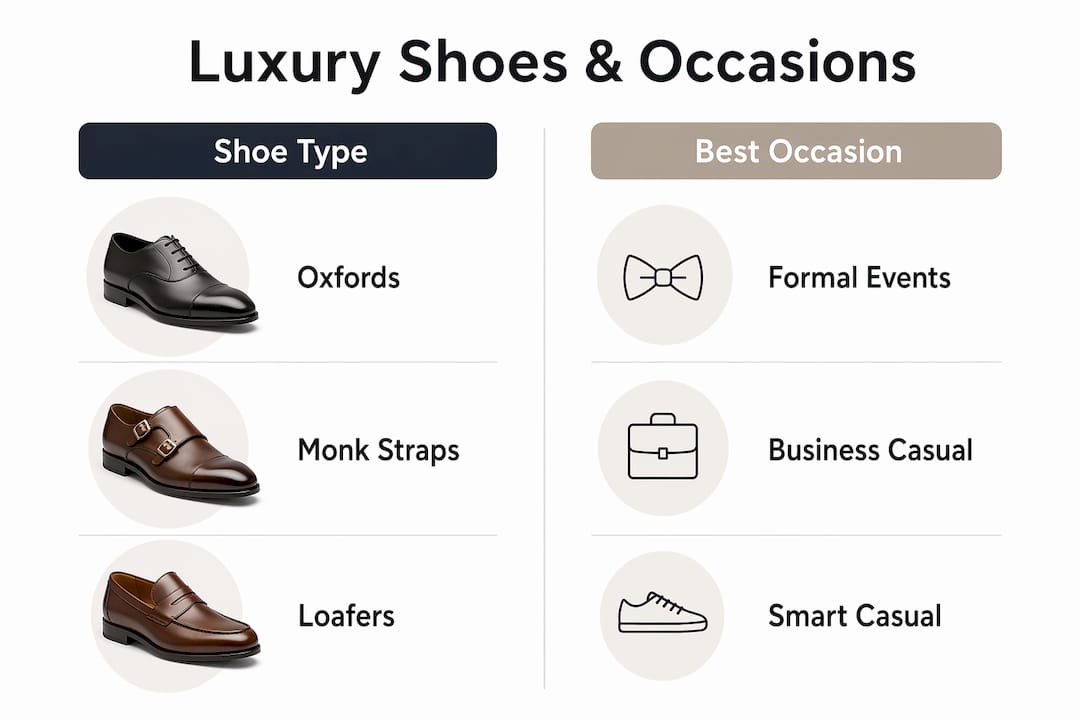
The table below maps the most common luxury shoe types to their ideal occasions.
| Shoe type | Best occasion | Key styling note |
|---|---|---|
| Oxford (cap-toe, plain) | Black-tie, formal business | Pair with dark suits; match belt leather exactly |
| Monk strap | Business formal, cocktail | Works with slim trousers and structured blazers |
| Loafer (leather) | Smart-casual, office | Pairs with chinos, tailored trousers, or midi skirts |
| Suede loafer | Casual luxe, weekend | Keep the rest of the outfit clean and minimal |
| Luxury leather sneaker | Casual, street-to-luxe | Pair with slim trousers and crisp tops |
| Pointed-toe flat | Day-to-evening, smart-casual | Versatile with dresses, trousers, and tailored skirts |
Versatility is the smartest investment you can make in luxury footwear. A top luxury shoes comparison shows that neutral-toned loafers and clean leather sneakers deliver the widest range of outfit pairings across seasons. If you are building a luxury shoe wardrobe from scratch, start with one formal dress shoe in black or dark brown and one clean leather sneaker in white or cream.
Pro Tip: Buy shoes before you buy the outfit. Selecting the shoe first locks in your formality level and color palette, making every other styling decision faster and more consistent.
How do you coordinate luxury shoes with outfits?
Outfit coordination with luxury shoes starts with color. Black shoes pair with formal dark suits; brown shoes complement warmer or less formal contexts. The rule extends beyond suits: a caramel loafer reads beautifully against cream linen trousers, while a white leather sneaker grounds a monochrome gray outfit without competing with it.
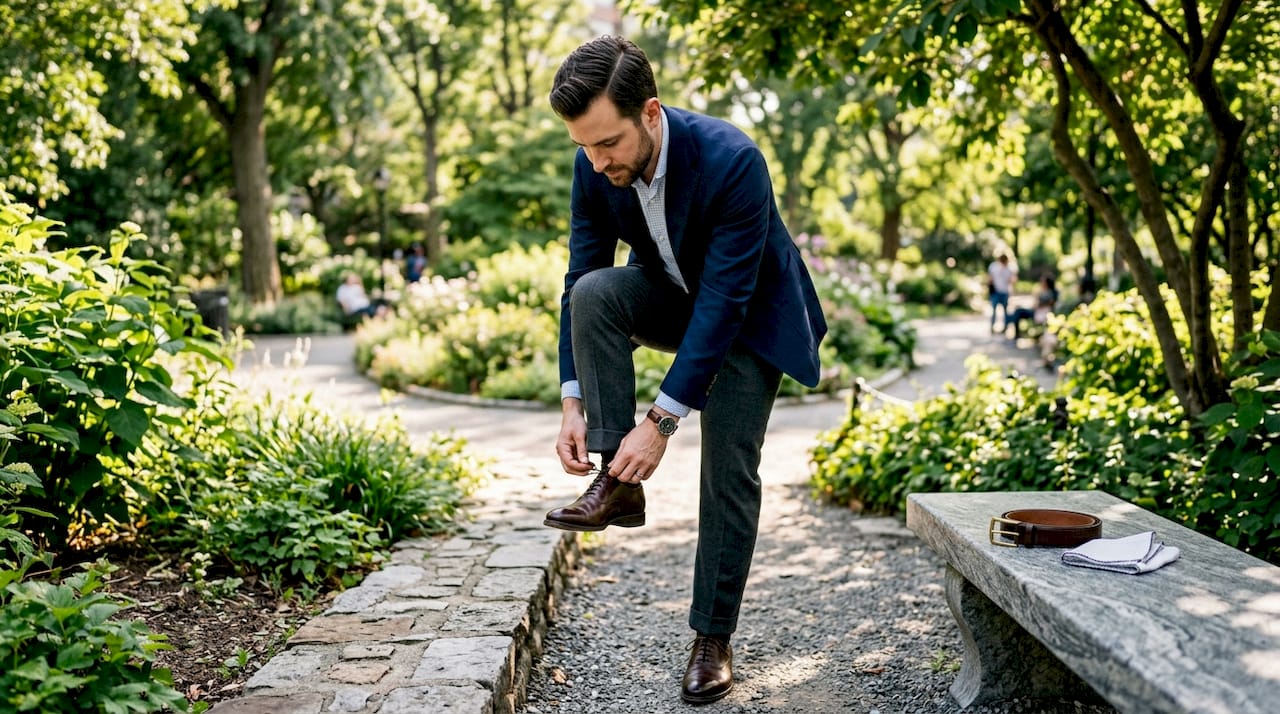
The second layer of coordination is accessory harmony. Matching shoe and belt leather families and complementing hardware colors creates visual line continuity from head to toe. A polished black Oxford paired with a matte black belt and a structured tote reads as intentional. The same shoe worn with a tan belt and silver hardware reads as careless, regardless of how expensive the individual pieces are.
Here are the core rules for coordinating luxury shoes with any outfit:
- Match leather families, not just colors. A cognac loafer pairs with a tan or caramel belt, not a chocolate brown one. The undertones must align.
- Balance bold shoes with neutral clothing. A statement shoe in red, cobalt, or metallic needs a quiet backdrop. Stick to black, white, gray, or navy in the rest of the outfit.
- Keep accessories minimal. When the shoe is the focal point, one bag and one jewelry piece is enough. Stacking accessories pulls attention away from the footwear.
- Match texture to occasion. Patent leather reads formal. Suede reads relaxed. Mixing a suede loafer with a sharp wool suit creates intentional contrast; mixing it with athleisure creates confusion.
- Use proportion to your advantage. A chunky platform shoe needs slim, tapered trousers to balance the visual weight. A delicate kitten heel pairs better with a full midi skirt than with wide-leg trousers.
Pro Tip: When in doubt, pull one color from your shoe into a small accessory, like a bag or scarf. This creates a visual echo that ties the whole outfit together without looking matchy-matchy.
Luxury shoe styling prioritizes harmony in formality and proportion over rigid color matching. The goal is intentional balance, not exact replication. You can wear a bold Valentino pump with a neutral outfit and let the shoe carry the look entirely.
How to wear luxury sneakers in polished, high-end looks
Luxury sneakers are no longer a casual concession. Brands like Saint Laurent, Balenciaga, Brunello Cucinelli, and Versace have made sneakers a legitimate part of high-end dressing. The key is treating sneaker styling as a tailoring challenge: slim-fit bottoms and crisp, fitted tops elevate casual shoes to a genuinely luxe status.
Follow these steps to style luxury sneakers with sophistication:
- Start with slim trousers or tailored chinos. Avoid wide-leg or overly relaxed pants. The sneaker needs a clean, tapered silhouette to read as intentional rather than accidental.
- Add a structured layer. A fitted blazer or a crisp button-down shirt signals that the sneaker is a deliberate choice, not a default. This is the single most effective way to shift a sneaker from casual to polished.
- Choose neutral or minimal colorways. Neutral, minimal sneakers blend best with tailored overlays. White, cream, black, and gray sneakers offer the most flexibility. A pair like the Brunello Cucinelli cream leather sneakers or the Saint Laurent black low-top leather sneakers work across seasons precisely because the color does not compete with the outfit.
- Carry a structured bag. A tote or structured shoulder bag reinforces the polished intent of the look. Avoid backpacks or gym bags, which undercut the luxury signal.
- Keep logos minimal. Smooth textures, minimal logos, and tailored silhouettes communicate refinement more effectively than overt branding. A clean leather sneaker with subtle branding reads more luxe than a logo-heavy design in most contexts.
For seasonal variation, white leather sneakers work from spring through early fall. In winter, a dark leather sneaker in black or deep navy pairs well with wool trousers and a cashmere coat for a street-to-luxe look that feels considered and current.
How do heel height and hem length affect formal shoe styling?
Pairing luxury heels with formalwear is a precision exercise. Hem length should be about 1/4 to 1/2 inch from the floor when wearing open heels, which shows the shoe without creating bulk or drag. Getting this wrong is one of the most common visual failures in formal dressing.
Heel height and dress length must correspond to maintain flattering proportions:
- Mini dresses pair best with 2–3 inch heels. A taller heel with a mini creates an unbalanced silhouette that shortens the leg line rather than lengthening it.
- Midi dresses work with 3–4 inch heels. The extra height creates the visual leg extension that a midi length can otherwise suppress.
- Maxi dresses and gowns call for approximately 4 inch heels to maintain a flattering leg line and prevent the hem from dragging.
- Pointed-toe heels add visual length to the leg regardless of heel height. A Jimmy Choo pointed-toe flat achieves a similar elongating effect without the height, making it a strong choice for day-to-evening events.
- Gown fabric matters. Heavy fabrics like velvet and brocade need a heel with enough height to prevent the dress from swallowing the shoe entirely. Lightweight chiffon or silk can work with a lower heel because the fabric moves and reveals the shoe naturally.
Pro Tip: Always select your shoes before your final dress fitting. Tailoring hems based on shoes is the professional standard. Changing heel height after hemming creates improper dress length and forces a costly re-alteration.
Key takeaways
Styling luxury shoes well means choosing the shoe first, matching formality to occasion, and building the outfit around the footwear rather than adding shoes as an afterthought.
| Point | Details |
|---|---|
| Shoe first, outfit second | Select shoes by color, formality, and style before building the rest of the look. |
| Match formality to occasion | Oxfords for formal events, loafers for smart-casual, leather sneakers for casual luxe. |
| Coordinate leather accessories | Match shoe and belt leather families and hardware tones for a polished finish. |
| Tailor hems to heel height | Always finalize dress hems after selecting shoes to avoid dragging or obscuring footwear. |
| Slim silhouettes elevate sneakers | Tailored trousers and structured layers turn luxury sneakers into a high-end statement. |
Why I think most people style luxury shoes backwards
Most people buy the outfit first and then search for shoes that fit. That approach almost always produces a compromise. The shoe ends up being an afterthought rather than the anchor of the look, and the result is a polished outfit with forgettable footwear.
The approach that actually works is the reverse. You pick the shoe first, lock in the formality level and color palette, and let every other decision follow from there. I have seen this play out repeatedly: a single great pair of Prada loafers or a clean Saint Laurent sneaker can generate five or six distinct outfits without the shoe ever feeling overworked. The shoe does the heavy lifting; the outfit just needs to stay out of its way.
The other mistake I see constantly is over-accessorizing around a statement shoe. If the shoe is bold, the rest of the outfit should be quiet. One bag, one piece of jewelry, and a neutral color palette. That restraint is what separates a fashion-forward look from a cluttered one.
Luxury sneaker styling is where I see the most confusion. Readers often assume that a high-end sneaker automatically reads as luxe. It does not. Without slim trousers, a structured layer, and a minimal bag, even a $900 sneaker can look like an afterthought. The tailoring principle is non-negotiable. Treat the sneaker like a dress shoe and style the outfit accordingly. The result is always stronger.
— Camila
Naiseshopper’s curated luxury shoe collections
Ready to put these principles into practice? Naiseshopper carries authenticated luxury footwear from Gucci, Saint Laurent, Versace, Brunello Cucinelli, Jimmy Choo, and more, all at discounted prices with guaranteed authenticity.
Whether you are looking for a sleek leather sneaker to pair with tailored trousers or an elegant pointed-toe flat for a formal event, Naiseshopper’s luxury shoe collections offer curated options across every style and occasion. The platform also offers personal shopper assistance for readers who want expert guidance on building a cohesive luxury footwear wardrobe. New arrivals and seasonal promotions are updated regularly, so there is always something worth adding to your rotation.
FAQ
What shoes work best for formal events?
Oxfords and Monk straps are the strongest choices for formal events. Black cap-toe Oxfords pair with dark suits and black-tie dress codes; brown Monk straps work well for cocktail attire and business formal settings.
How do I match luxury shoes to my belt?
Match your shoe and belt within the same leather color family and finish. Black shoes pair with black belts; tan or cognac shoes pair with caramel or tan belts. Mismatched leather tones undermine an otherwise polished look.
Can luxury sneakers work in formal or office settings?
Luxury sneakers work in smart-casual and creative office environments when paired with slim trousers, a structured blazer, and a minimal bag. They are not appropriate for black-tie or traditional formal settings.
What heel height should I wear with a midi dress?
A 3–4 inch heel pairs best with a midi dress. This height creates the visual leg extension that a midi length can suppress, maintaining balanced and flattering proportions.
Should I tailor my dress before or after buying shoes?
Always buy shoes first, then tailor the dress hem to match the heel height. Finalizing the hem before selecting shoes leads to improper dress length and often requires a costly second alteration.