TL;DR:
- A luxury accessories styling guide emphasizes coordinating color, metal, and material choices to create purposeful outfits. It advocates using the 2:1:1 jewelry rule and matching accessory boldness to occasion for balanced, polished looks. Trends for 2026 favor textured, proportionate, and statement pieces that enhance classic designs with intent.
A styling guide for luxury accessories is defined as a structured framework for selecting, coordinating, and layering premium pieces to enhance any outfit with intention and polish. Luxury accessories, think Gucci watches, Prada handbags, and layered fine jewelry, are not just finishing touches. They communicate your personal identity before you say a word. The difference between looking put-together and looking overdone almost always comes down to proportion, coordination, and occasion awareness. This guide covers every principle you need to master accessorizing in 2026, from color theory to the latest trend shifts.
How to build your styling guide for luxury accessories
Choosing the right luxury accessories starts with color and material coordination. Warm outfit tones pair with gold-toned accents, while cool tones call for silver. This principle applies across every piece you wear simultaneously, from your belt hardware to your watch case to your bag’s chain strap. Keeping the metal family consistent is the single fastest way to look like you dressed with purpose.
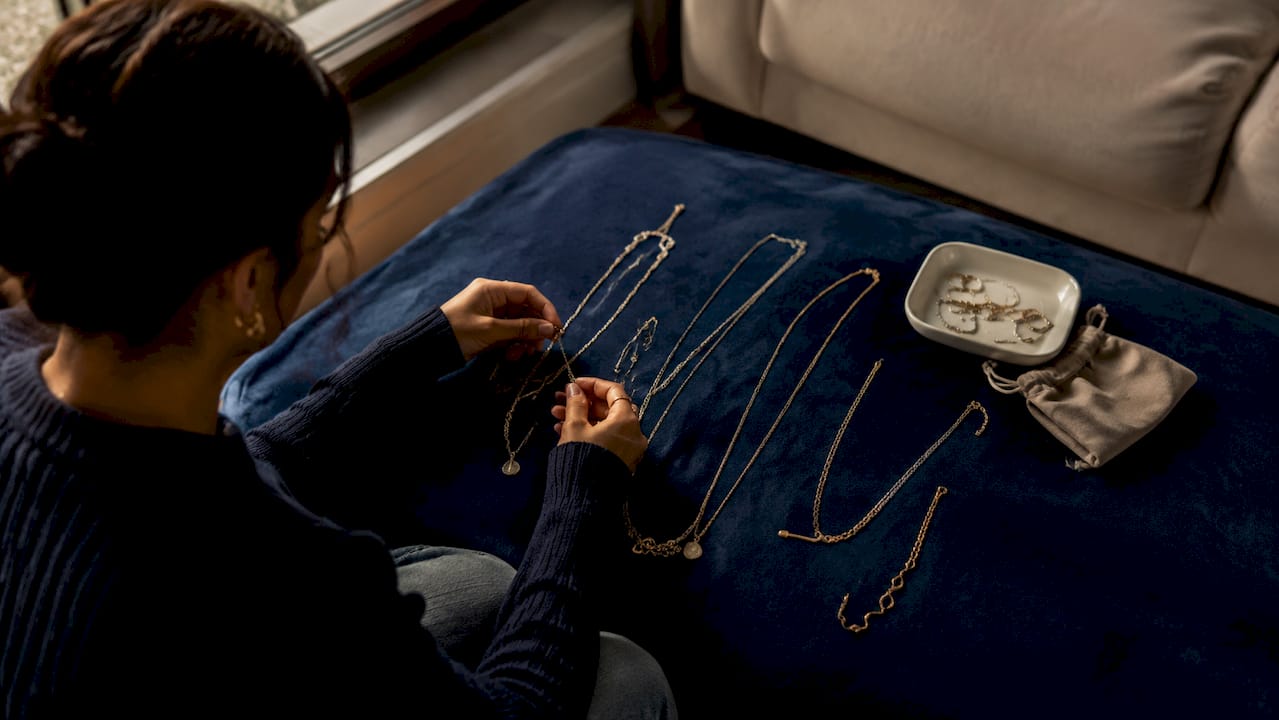
Material harmony matters just as much as color. A structured Prada leather tote reads differently against a silk blouse than against a chunky knit. The goal is to create texture dialogue, not texture conflict. Smooth leather pairs naturally with tailored fabrics. Woven or suede finishes work well with softer, more relaxed textures like linen or cashmere.
Here is a quick coordination checklist to run through before you leave the house:
- Metals: Are all metal tones in your look from the same family (gold, silver, or rose gold)?
- Leather finishes: Does your bag’s finish (glossy, matte, or textured) complement your shoes or belt?
- Color palette: Are your accessories pulling from the same warm or cool palette as your outfit?
- Hardware echoes: Does your bag’s hardware match your jewelry metal tone?
- Fabric weight: Are your accessories proportional in visual weight to your clothing’s fabric?
Pro Tip: If you wear a Bottega Veneta intrecciato woven bag, pair it with a relaxed, textured outfit rather than a sleek satin dress. The woven texture needs a fabric partner that can hold its own visually.
What layering rules actually improve jewelry styling?
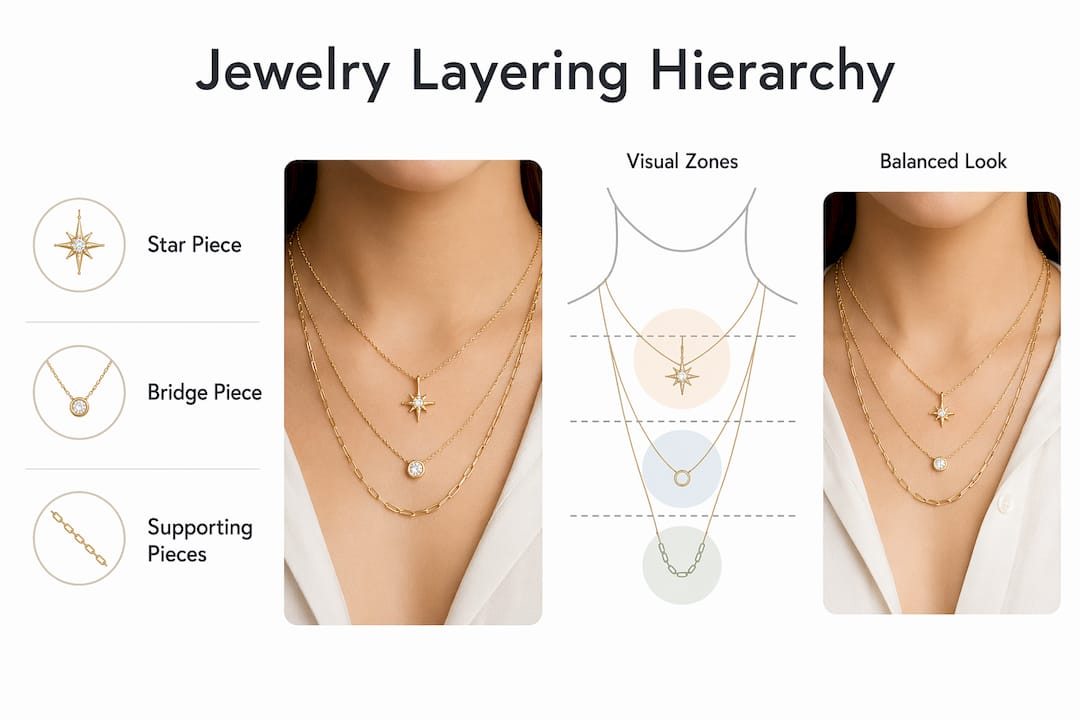
Layering luxury jewelry is one of the most rewarding accessory styling ideas, and one of the easiest to get wrong. The key is spacing and visual hierarchy, not just stacking pieces together.
Start with necklace lengths. Layering a 14-inch choker, an 18-inch second necklace, and a 24–25 inch third layer creates a harmonious cascade that draws the eye downward without crowding any single piece. Each layer needs breathing room to read as intentional rather than accidental. A personalized layered necklace set built around these spacing principles makes the process much simpler.
The 2:1:1 rule is the most practical framework for balanced jewelry styling. It works like this:
- One star piece: Your statement item, a bold necklace, an oversized cocktail ring, or a sculptural cuff.
- One bridge piece: A medium-weight item that connects the star to the rest of your look, like a delicate pendant or a simple chain bracelet.
- Two supporting pieces: Subtle, quiet items that add presence without competing, like small stud earrings or a thin gold layering bracelet.
This hierarchy removes the guesswork and prevents the visual overload that makes even expensive jewelry look chaotic.
| Jewelry Zone | Role in the Look | Example Piece |
|---|---|---|
| Neck (choker) | Star or bridge piece | Bold chain or delicate pendant |
| Neck (mid-length) | Bridge or supporting | Simple gold chain |
| Neck (long) | Supporting or accent | Lariat or layered strand |
| Wrist | Supporting piece | Thin bangle or chain bracelet |
| Ears | Supporting piece | Small studs or subtle hoops |
Over-layering in one visual zone is the most common styling failure. Stacking five necklaces while leaving your wrists and ears bare creates imbalance. Distribute visual interest across your ears, neck, and wrists for a look that feels considered rather than crowded.
Pro Tip: When you layer luxury jewelry, check your look in a full-length mirror from three feet away. If one zone immediately dominates and the rest disappears, redistribute one piece to another area.
How should you dress accessories for different occasions?
Occasion awareness is the foundation of smart accessory styling. The same Chanel earrings that work perfectly at a gallery opening can feel out of place at a Sunday brunch. Matching accessory boldness to the setting is a core luxury styling technique.
Here is how to map your pieces to the occasion:
- Daytime and casual: Refined, minimal pieces. A simple gold chain, a quality leather tote, and clean sneakers or loafers. The goal is understated polish, not flash.
- Business and professional: Structured, subtle choices work best. A classic Saint Laurent tote, a slim watch, and small earrings signal authority without distraction.
- Evening and cocktail: Statement accents are appropriate and expected. A bold necklace, strappy heels, and a small embellished clutch can carry an entire look.
- Formal and black tie: This is where the hero piece approach delivers maximum style. Choose one standout item and let everything else recede.
The hero piece approach deserves its own explanation. When wearing an embellished or heavily embroidered dress, your outfit is already the statement. Adding bold jewelry on top creates visual noise. Instead, choose one quiet accessory that complements the dress without competing with it. A slim bracelet, simple heels, and a small clutch let the garment speak.
“The most common formal styling mistake is treating accessories as additions rather than subtractions. When the dress is loud, your job is to edit, not add.”
For designer accessory styling tips that cover occasion dressing in more depth, Naiseshopper’s editorial team has put together a dedicated resource worth bookmarking.
What are the biggest luxury accessory trends for 2026?
The 2026 shift in luxury accessory trends moves away from purely quiet investment dressing toward accessories that start conversations. Texture, proportion, and unexpected details are the defining elements of the moment. This does not mean abandoning classic pieces. It means pairing them with something that has a point of view.
The most relevant 2026 luxury accessory trends to incorporate now include:
- Oversized hardware and bold chains: Chunky gold chains worn over tailored blazers or minimal knitwear create the kind of bold proportion play that defines the current season.
- Textured bags with sculptural shapes: Bottega Veneta’s intrecciato weave and Balenciaga’s structured silhouettes are leading a shift toward bags that function as art objects.
- Mixed material jewelry: Combining fine metals with resin, enamel, or semi-precious stones adds unexpected detail without sacrificing luxury.
- Statement watches as centerpieces: A Gucci G-Timeless watch worn with a clean, minimal outfit lets the timepiece carry the entire accessory story.
- Quiet color in accessories: Cream, sand, and warm beige tones in bags and shoes are replacing all-black as the neutral of choice for aspirational dressers.
For a broader view of how these shifts connect to luxury fashion trends in 2026, the full trend breakdown covers ready-to-wear alongside accessories.
The smartest approach to trend adoption is building around versatile capsule pieces. Early luxury purchases should prioritize neutral tones and classic shapes that work across multiple outfits. Add trend-driven pieces as accents, not foundations.
What styling mistakes should you avoid with luxury accessories?
The most common errors in luxury accessory styling are predictable, and entirely avoidable once you know what to look for.
- Visual overload: Wearing a statement necklace, bold earrings, stacked bracelets, and a logo bag simultaneously creates competition, not coordination. Pick your hero piece and edit the rest down.
- Clashing metals: Mixing gold and silver without intention reads as an oversight rather than a style choice. If you want to mix metals, do it deliberately with one piece that bridges both tones.
- Ignoring proportion: Correct scaling improves both aesthetics and wearability, preventing jewelry from shifting or pulling during wear. A delicate necklace disappears against a heavy winter coat. A chunky chain overwhelms a fine silk blouse.
- Over-investing in niche pieces early: A bag in a very specific color or an extremely trend-driven silhouette limits how often you can wear it. Build your collection with repeatable pieces first.
- Ignoring the shoes: Footwear is an accessory. A Valentino stiletto sandal or a pair of Prada floral heels can anchor an entire look. Treating shoes as an afterthought undermines everything else you have styled.
Pro Tip: Before finalizing any look, remove one accessory. If the outfit still works, the piece you removed was probably competing rather than contributing.
For a deeper dive into layering luxury fashion without visual clutter, Naiseshopper’s layering guide covers both jewelry and clothing in practical detail.
Key takeaways
The most effective approach to styling luxury accessories combines color coordination, the 2:1:1 jewelry hierarchy, occasion-matched boldness, and a capsule-first collection strategy.
| Point | Details |
|---|---|
| Coordinate metals and colors | Match warm tones with gold accents and cool tones with silver for a cohesive look. |
| Use the 2:1:1 jewelry rule | One star piece, one bridge piece, and two supporting pieces prevent visual overload. |
| Match boldness to occasion | Daytime calls for minimal pieces; evenings and events support statement accents. |
| Adopt the hero piece approach | For formal or embellished looks, let one accessory lead and keep the rest quiet. |
| Build a capsule collection first | Prioritize neutral, versatile pieces before adding trend-driven or niche items. |
Why i think most people overcomplicate luxury accessory styling
I have spent years watching people buy extraordinary pieces and then second-guess themselves into wearing nothing. The fear of “too much” leads to “not enough,” and the result is a Chanel bag sitting in a dust bag while someone wears a canvas tote.
The conventional wisdom says luxury accessories should whisper, not shout. I think that framing is outdated. The 2026 direction is clear: bold proportion play and textured statement pieces are exactly what the best-dressed people are reaching for. The key is not restraint for its own sake. The key is intentional restraint. Know which piece you want to lead, then build around it.
What I have found actually works is treating every look as a single composition. You are not adding accessories to an outfit. You are completing a visual idea. When you approach it that way, the 2:1:1 rule stops feeling like a constraint and starts feeling like creative direction.
Classic principles do not expire. Gold with warm tones, silver with cool tones, one hero piece for formal occasions. These rules exist because they work across every decade and every trend cycle. The 2026 shift toward expressive accessories does not replace these foundations. It builds on top of them. Start with the principles, then push the proportions.
— Camila
Shop authenticated luxury accessories at Naiseshopper
Naiseshopper curates authenticated pieces from Gucci, Prada, Valentino, and more, all at discounted prices with guaranteed authenticity. Whether you are building a capsule collection or searching for a statement piece to anchor your next formal look, the selection covers every occasion and styling need.
From the iconic Gucci G-Timeless watch that works as a refined hero piece to the Prada floral stiletto heels that transform an evening look, Naiseshopper stocks the pieces worth investing in. The Valentino beige leather sandals are a perfect example of a versatile capsule piece that pairs with both minimal and statement accessory looks. Explore the full collection at Naiseshopper and find your next signature piece.
FAQ
What is the 2:1:1 rule for jewelry styling?
The 2:1:1 rule means one star statement piece, one medium bridge piece, and two subtle supporting pieces. This hierarchy creates a balanced, polished look without visual overload.
How do you match metals across luxury accessories?
Keep all metal tones in the same family: gold with warm outfit tones and silver with cool tones. Your bag hardware, watch case, and jewelry should all echo the same metal family.
What accessories work best for formal occasions?
The hero piece approach works best for formal looks. Choose one standout accessory and keep everything else minimal, especially when wearing embellished or heavily embroidered garments.
How do you layer necklaces without overdoing it?
Layer at 14 inches, 18 inches, and 24–25 inches for a harmonious cascade. Each length needs clear spacing to read as intentional rather than crowded.
What luxury accessories should you buy first?
Start with neutral-toned, classic-shaped pieces that work across multiple outfits. Versatile items like a structured bag, a slim watch, and simple gold jewelry deliver the most styling flexibility before you add trend-driven pieces.