TL;DR:
- Luxury brands now openly disclose detailed cost components behind high-end prices to justify value beyond just a price tag. This includes materials, craftsmanship, exclusivity, and brand heritage, which shoppers can request and understand at purchase. Transparency boosts consumer confidence and trust, influencing purchase decisions and legal compliance, especially in limited-edition luxury markets.
Luxury price transparency is defined as the practice of brands openly disclosing and justifying the detailed cost components behind their high-end prices. This goes far beyond a price tag. It means explaining what drives the number: the grade of Italian leather, the hours of hand-stitching, the rarity of a limited run, the weight of a house’s heritage. Luxury buyers now request detailed price breakdowns covering materials, labor, rarity, marketing, and brand history. That shift signals a new standard in high-end retail, one where understanding luxury pricing is as important as the purchase itself.
What is luxury price transparency and what does it include?
Luxury price transparency is the industry term for structured, explanatory pricing disclosure. It differs sharply from mass-market pricing, where a $40 sneaker needs no justification. A $1,200 Prada pump or a $4,500 Gucci watch carries a price built from multiple layers, and today’s shoppers want each layer named.
The core components brands disclose typically fall into these categories:
- Materials and sourcing. The grade of calfskin, the origin of hardware, or the quality of gemstones all carry real costs. Brands like Bottega Veneta and Valentino source specific leathers that command premium prices at the raw material stage.
- Craftsmanship and labor. Hand-stitching, artisan finishing, and quality control by skilled workers in Italy or France add significant labor costs. A single Chanel jacket can require dozens of hours of atelier work.
- Design rarity and exclusivity. Limited production runs, seasonal exclusives, and signature silhouettes carry a scarcity premium. That premium is part of the price, and transparent brands say so.
- Brand heritage and marketing. Decades of runway presence, celebrity association, and global advertising campaigns are embedded in the price of a Saint Laurent bag. These are real costs, not abstract ones.
- Point-of-sale disclosure. Leading retailers now provide written or digital breakdowns at the moment of purchase, not just in brand storytelling. This is the front line of understanding luxury pricing in practice.
Pro Tip: When shopping for a luxury item, ask the sales associate to walk you through the price components. Brands with strong transparency training will answer confidently and specifically, not vaguely.
The difference between luxury and mass-market pricing disclosure is not just detail. It is purpose. Mass-market pricing justifies value through comparison. Luxury pricing justifies value through explanation. That distinction shapes every conversation between a brand and its customer.

How does price transparency affect purchase decisions in luxury markets?
Luxury consumers use transparency as justification for value rather than as a tool for price comparison. This is a critical distinction. A shopper comparing two $800 handbags is doing one thing. A shopper asking why a single Balenciaga bag costs $1,500 is doing something entirely different. They want a story that holds up.
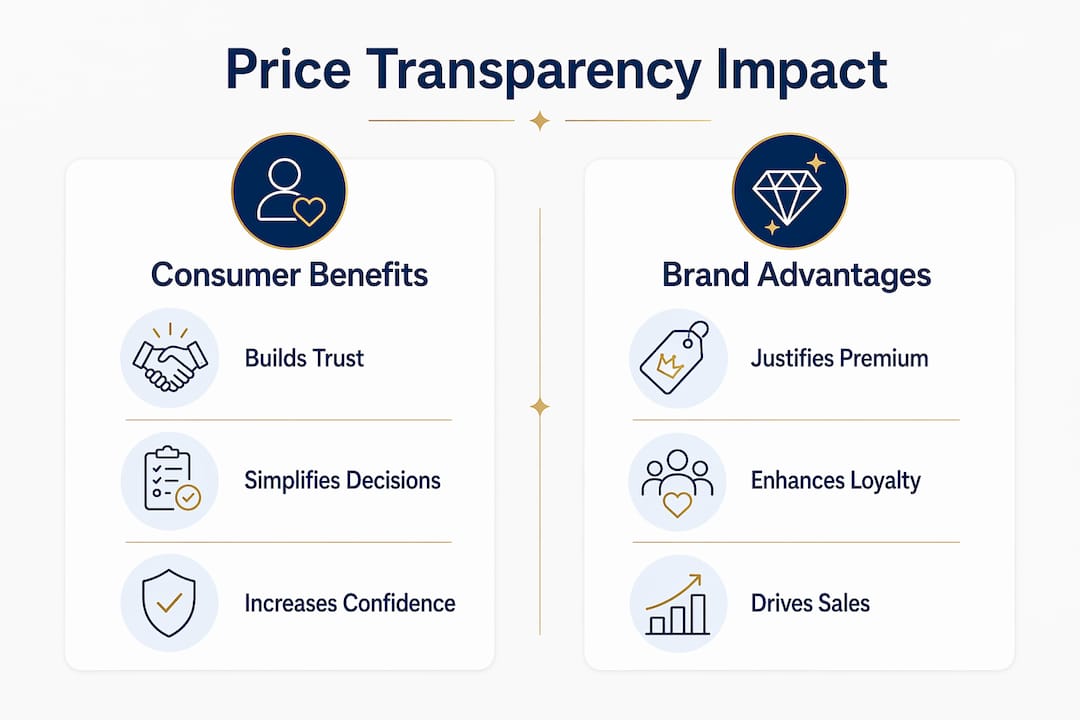
The psychology behind this involves what researchers call heuristic processing. High price transparency reduces the effort required to evaluate a purchase, which activates faster, more confident buying decisions. When a brand explains its pricing clearly, the shopper does not have to work hard to justify the spend. The decision feels earned, not impulsive.
Here is how transparency moves through the purchase decision process:
- Exposure to price. The shopper sees the number and forms an initial reaction based on their reference point.
- Explanation received. The brand provides a breakdown: materials, labor, exclusivity, heritage.
- Heuristic activation. The shopper processes the explanation quickly, matching it against their sense of what quality costs.
- Trust formation. A clear, credible explanation builds confidence. Vague or absent explanations create doubt.
- Purchase decision. Shoppers who receive structured explanations are more likely to complete the purchase and return.
“Consumers want structured explanatory transparency aligning with luxury decision-making rather than just open numeric prices.” — Research on price transparency and consumer behavior
The EU Omnibus Directive adds another layer to this picture. Mandating disclosure of lower previous prices reduces the psychological inflation of current prices, which can dampen purchase intent. For luxury brands, this means that reference price anchors, once a quiet tool of premium positioning, now face regulatory scrutiny. Transparency cuts both ways: it builds trust, but it also removes the fog that inflated anchors rely on.
Active price disclosure empowers consumers more effectively than passive disclosure. Posting a price breakdown on a website is passive. Training a sales associate to walk a customer through each cost component is active. The difference in consumer confidence between those two approaches is significant.
What legal factors shape price transparency for limited editions?
Scarcity is one of the most powerful tools in luxury branding. A Gucci limited-edition release or a Prada capsule collection sells partly because of its rarity. That rarity, however, carries legal weight.
Luxury brands marketing limited editions must clearly disclose product scarcity as essential commercial information under EU and Spanish consumer protection law. Production caps, unit limits, and availability windows must be communicated precisely. Vague language like “exclusive” or “rare” without specific disclosure does not meet the legal standard.
| Approach | Legal standing | Consumer impact |
|---|---|---|
| Specific unit count disclosed | Compliant | Builds urgency and trust |
| Vague “limited” language only | Non-compliant risk | Creates skepticism |
| Availability window stated clearly | Compliant | Supports informed decisions |
| No scarcity disclosure | Non-compliant | Potential regulatory action |
Regulators treat scarcity disclosures as essential to commercial offers where they shape product desirability and urgency. This means a brand cannot use scarcity as a marketing lever while hiding the specifics of that scarcity. The law treats the two as inseparable.
For shoppers, this is good news. When a brand tells you a shoe is limited to 200 pairs globally, that statement is now a legal commitment in many markets, not just a marketing line. Brands that comply with these standards, like those operating under EU consumer protection frameworks, give you a firmer foundation for your purchase decision.
Pro Tip: Before buying a limited-edition luxury item, ask for the specific production number in writing. Reputable brands will provide it. That detail is also your protection if the item’s claimed exclusivity is ever disputed.
Balancing luxury allure with legal compliance is not a contradiction. Brands that do it well, like those with strong authenticity and trust practices, find that transparency around scarcity actually increases desirability. Knowing exactly how rare something is makes it more compelling, not less.
How is luxury price transparency evolving in digital retail?
Digital retail has accelerated the pace of pricing disclosure in luxury fashion. Shoppers arrive at product pages already informed, having researched materials, compared prices across markets, and read brand histories. The bar for what counts as adequate transparency has risen sharply.
Key shifts shaping the price transparency in luxury market right now include:
- Detailed digital product pages. Brands and platforms now list leather grades, hardware origins, lining materials, and production country on individual product listings. This was rare five years ago.
- Brand storytelling integrated with pricing. Rather than separating “about the brand” from “product details,” leading retailers weave craftsmanship narratives directly into the purchase flow.
- Flexible payment options as a transparency signal. Offering installment plans, localized currency pricing, and clear shipping costs signals that a brand respects the shopper’s need for full financial clarity. Naiseshopper provides localized pricing for numerous countries alongside flexible payment methods, making the total cost of ownership visible before checkout.
- Sales associate training. The role of the in-store or online personal shopper has shifted. They are now expected to explain price components, not just describe aesthetics. This requires deeper product knowledge and consistent brand messaging.
- Consumer confidence and repeat business. Shoppers who receive clear pricing explanations are more likely to return. Transparency is not just an ethical practice. It is a retention strategy.
The luxury shopping experience is evolving from mystique-driven to confidence-driven. The brands winning in 2026 are those that make a shopper feel informed, not overwhelmed. That shift is permanent.
Key Takeaways
Luxury price transparency is the single most effective tool brands have for converting informed, skeptical shoppers into confident, loyal buyers.
| Point | Details |
|---|---|
| Transparency goes beyond price tags | Brands must explain materials, labor, heritage, and scarcity to meet modern shopper expectations. |
| Psychology drives purchase decisions | Clear price breakdowns activate faster, more confident buying by reducing the mental effort of justification. |
| Legal compliance is mandatory | EU and Spanish law require specific scarcity disclosures for limited-edition luxury products. |
| Active disclosure outperforms passive | Training staff to explain pricing builds more consumer confidence than posting breakdowns online alone. |
| Digital retail raises the standard | Shoppers now expect detailed product-level transparency before they reach checkout. |
Why I think luxury mystique and transparency are not opposites
I have watched the luxury market shift from treating price as a sacred secret to treating it as a selling point. The brands that resisted this shift lost ground. The ones that leaned into it, explaining exactly why a pair of Valentino heels costs what it does, built deeper loyalty.
The counterintuitive truth is that transparency does not kill luxury allure. It reinforces it. When a brand tells you that a specific grade of nappa leather was sourced from a single tannery in Tuscany, the price stops feeling arbitrary. It starts feeling inevitable. That is a more powerful emotional position than mystery ever was.
What I have also noticed is that brands with strong transparency practices attract buyers who spend more over time. They are not bargain hunters. They are people who want to understand what they are investing in. Giving them that understanding is not a concession. It is a competitive advantage.
The challenge for brands is consistency. A beautifully transparent product page loses its impact if the sales associate cannot answer a follow-up question. Transparency requires training, not just copywriting. The brands that get this right are the ones building the most durable customer relationships in luxury right now.
— Camila
Luxury craftsmanship you can see in every detail
Understanding what drives luxury prices makes the shopping experience richer. When you can see the craftsmanship behind a piece, the price makes sense in a way it never did before.
Naiseshopper carries authenticated pieces that embody exactly the quality factors discussed here. The Prada Black Leather Floral Heels showcase the kind of artisan detail that justifies every dollar of their price. The Valentino Garavani Beige Leather Sandals reflect the brand’s signature craftsmanship in every stitch. For those drawn to bold brand identity, the Versace Black Logo Plaque Pumps and the Gucci G-Timeless Watch offer a clear picture of what heritage pricing looks like in practice. All items are authenticated and available at Naiseshopper with localized pricing and secure international shipping.
FAQ
What is luxury price transparency in simple terms?
Luxury price transparency is the practice of brands explaining the detailed cost components behind their high-end prices, including materials, labor, exclusivity, and brand heritage. It goes beyond showing a price tag to justifying why the price is what it is.
Why is price transparency important for luxury shoppers?
Clear pricing explanations build trust and make purchase decisions easier by reducing the mental effort required to justify a high spend. Shoppers who understand what they are paying for are more confident and more likely to buy again.
Are luxury brands legally required to disclose limited-edition scarcity?
Under EU and Spanish consumer protection law, brands must disclose scarcity as essential commercial information when marketing limited-edition products. Vague claims of exclusivity without specific details do not meet the legal standard.
Does price transparency reduce the appeal of luxury goods?
No. Research shows that structured pricing explanations reinforce perceived value rather than diminishing it. Knowing exactly what drives a price makes the product feel more worth its cost, not less.
How does the EU Omnibus Directive affect luxury pricing?
The EU Omnibus Directive requires brands to disclose lower previous prices alongside current prices, which reduces inflated reference-price anchors and gives shoppers a more accurate picture of pricing history.