TL;DR:
- A personal shopper sources, curates, and manages purchases to offer tailored, expert style guidance and save time. Success depends on detailed briefs covering goals, budget, preferences, and honest feedback throughout a structured process. Engaged clients who communicate clearly and participate actively maximize their luxury shopping experience.
A personal shopper is defined as a professional who sources, curates, and manages purchases on your behalf, saving you time while delivering expert style guidance tailored to your exact preferences. In luxury fashion, this role goes far beyond grabbing items off a rack. Services from platforms like Naiseshopper, ElsaB Styling, and TJ Divine Image give you access to rare designer pieces, wardrobe strategy, and post-purchase support that standard retail simply cannot match. Knowing how to use a personal shopper correctly is the difference between a one-off convenience and a genuinely transformative shopping experience.
How to use a personal shopper: what to prepare first
The quality of your personal shopping experience depends almost entirely on what you bring to the first conversation. A vague brief produces vague results. A detailed one produces a curated edit that feels like it was made for you.

Start by defining your goal. Are you building a capsule wardrobe, preparing for a specific event, or refreshing your entire closet? Each goal requires a different approach from your shopper. A gala wardrobe calls for statement pieces from Valentino or Bottega Veneta, while a capsule wardrobe demands versatile staples from Saint Laurent or Prada.
Before your first session, gather the following:
- Budget range: Give a floor and a ceiling, not a single number. This lets your shopper prioritize without guessing.
- Lifestyle context: How you dress for work, travel, and weekends shapes every recommendation.
- Brand preferences and dislikes: Name the houses you love and the ones you avoid. Chanel and Gucci sit in very different aesthetic worlds.
- Fit issues: Note any recurring problems, such as jackets that pull across the shoulders or trousers that need hemming.
- Style references: Save images from Instagram, runway coverage, or editorial shoots to share as visual anchors.
A detailed intake questionnaire collecting style preferences, sizes, and brand likes enables personalized and efficient appointments. This preparation is not optional. It is the single biggest lever for better recommendations.
Pro Tip: Create a private Pinterest board or a shared Google Doc with reference images before your first consultation. Visual references communicate style faster and more accurately than words alone.
Many services, including those described in the luxury shopper services guide at Naiseshopper, use structured intake forms to capture this information systematically. Fill them out completely, not partially.
What does a personal shopper do, step by step?
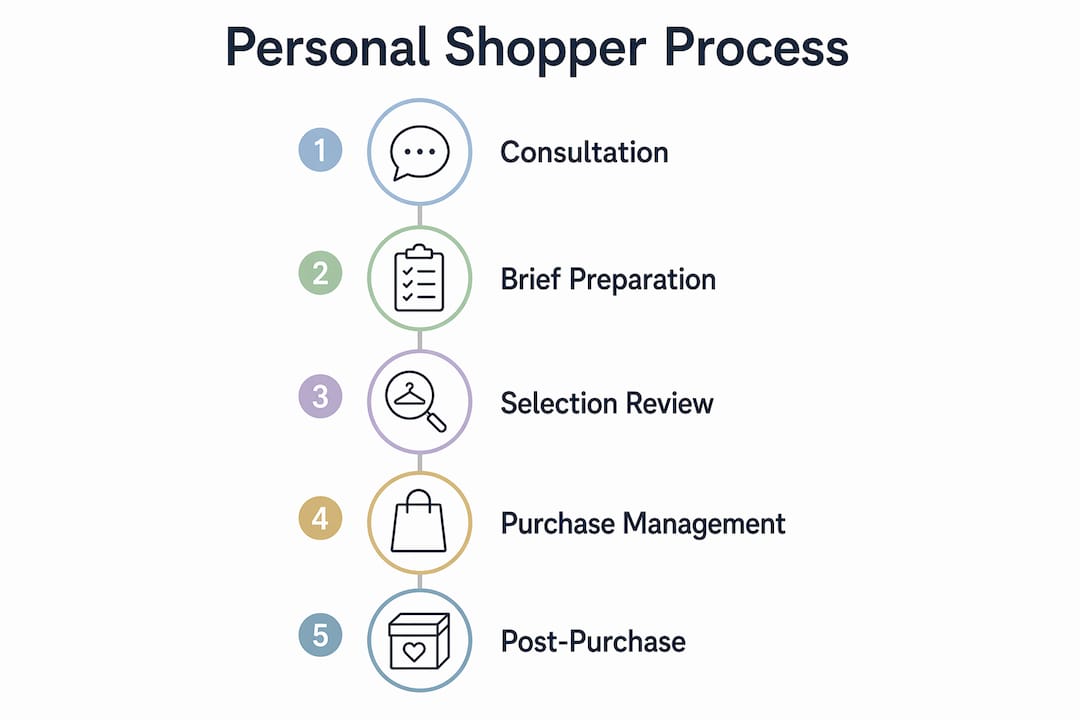
Understanding the full workflow helps you engage at each stage with confidence. The process follows a clear sequence, and knowing what comes next keeps the collaboration moving.
-
Initial consultation and discovery. Your shopper asks questions about your lifestyle, goals, and aesthetic. TJ Divine Image recommends an initial consultation and trial session to align goals before any long-term commitment. This is your chance to test chemistry and communication style.
-
Wardrobe assessment. For full-service clients, the shopper reviews your existing wardrobe, either in person or via photos. ElsaB Styling advises focusing on wardrobe gaps rather than brand lists. This prevents duplication and ensures new purchases integrate with what you already own.
-
Sourcing and curation. Your shopper taps their network to find pieces that match your brief. Personal shoppers leverage worldwide contacts to find limited editions and hard-to-find pieces outside typical retail channels. This is where the real value of the role shows up.
-
Selection review and feedback. You receive a curated edit, typically presented as a lookbook, a shared folder, or a virtual fitting session. Review each item and give honest feedback. Approve, reject, or request alternatives. This loop is where your shopper learns your eye.
-
Purchase and delivery. Once you approve selections, your shopper handles the transaction, shipping logistics, and any customs coordination for international orders. Naiseshopper, for example, offers international secure shipping and flexible payment methods across multiple countries.
-
Post-purchase management. The service does not end at delivery. Naiseshopper, Luxurious Hype, and ElsaB Styling all detail post-purchase management as part of their luxury personal shopper services, including returns, exchanges, and tailoring coordination.
Here is a quick reference for what each phase delivers:
| Phase | What Happens | Your Role |
|---|---|---|
| Consultation | Goals and budget are set | Share your brief clearly |
| Wardrobe review | Gaps are identified | Provide access to existing wardrobe |
| Sourcing | Curated edit is assembled | Wait and trust the process |
| Selection review | You approve or reject items | Give specific, honest feedback |
| Delivery | Items arrive | Try on and assess fit |
| Post-purchase | Returns and alterations handled | Flag issues immediately |
Pro Tip: Treat the selection review like an edit session, not a shopping cart. Rejecting items with a reason (“too casual for my office” or “I already own this silhouette”) trains your shopper faster than simply saying no.
How to maximize the benefits of hiring a personal shopper
Getting the most from a personal shopping relationship requires active participation, not passive waiting. The role of personal shopper guidance is most effective when the client shows up prepared and engaged.
These practices consistently produce better outcomes:
- Be specific about budget. Saying “I want something nice” is not a brief. Saying “I want a structured bag under $2,500 in a neutral tone” is.
- Give timely feedback. Delayed responses slow the sourcing cycle and can cause you to miss limited pieces.
- Communicate your lifestyle honestly. A shopper who knows you travel 15 days a month will prioritize wrinkle-resistant fabrics and carry-on-friendly silhouettes.
- Book a trial session first. TJ Divine Image recommends trial sessions as a practical step before committing to ongoing services. One session reveals whether the shopper’s aesthetic instincts align with yours.
- Ask about global sourcing. Top-tier shoppers maintain contacts across Paris, Milan, Tokyo, and New York. This network is your access point to pieces that never appear on public-facing e-commerce sites.
Here is how a detailed brief compares to a vague one in practice:
| Brief Type | Example | Likely Outcome |
|---|---|---|
| Vague | “I need something for a dinner” | Generic, safe selections |
| Detailed | “Black-tie dinner in Milan, prefer Valentino or Bottega Veneta, size 6, no sequins” | Targeted, on-brand curation |
| Lifestyle-rich | “Frequent traveler, capsule wardrobe, neutral palette, Prada and Saint Laurent preferred” | Long-term wardrobe strategy |
Filtering based on detailed client information yields the best curated results. This is not an opinion. It is how the service is designed to work.
Common challenges when using personal shopping services
Even well-run personal shopping engagements hit friction points. Knowing what to expect helps you resolve issues without derailing the relationship.
Style misalignment is the most common early challenge. Your shopper may interpret “classic” as conservative when you mean timeless. Solve this by sharing three to five reference images that represent your ideal outcome before the first sourcing round.
Delivery delays happen, especially with international orders or rare pieces sourced from boutiques in other countries. Build a two-week buffer into any deadline-sensitive purchase, such as a piece needed for a specific event.
Availability gaps are real. Limited-edition Balenciaga or Chanel pieces sell out fast. If your shopper cannot source a specific item, ask for two or three alternatives in the same spirit rather than waiting indefinitely.
- Give constructive feedback. Say “this reads too casual for my lifestyle” rather than “I don’t like it.” Specific feedback produces specific improvements.
- Know when to switch. If three rounds of selections miss the mark, request a different shopper within the same service or try a different platform entirely.
- Use post-purchase support. Returns, exchanges, and tailoring coordination are part of the service. Do not hesitate to flag fit issues immediately after delivery.
Pro Tip: After your first delivery, send a written summary of what worked and what did not. A one-paragraph note is more useful to your shopper than a five-minute phone call because it creates a reference they can revisit.
Key takeaways
A personal shopper delivers maximum value when you arrive with a detailed brief, give honest feedback at every stage, and treat the relationship as a long-term collaboration rather than a single transaction.
| Point | Details |
|---|---|
| Prepare a detailed brief | Include budget range, lifestyle context, brand preferences, and fit issues before your first session. |
| Follow the six-phase process | Move from consultation through wardrobe review, sourcing, selection, delivery, and post-purchase support. |
| Specificity drives results | Detailed briefs consistently produce better curated selections than open-ended requests. |
| Use trial sessions | Book one session before committing to an ongoing relationship to test shopper compatibility. |
| Leverage post-purchase services | Returns, exchanges, and tailoring are part of the service. Use them without hesitation. |
Why most people underuse their personal shopper
By Camila
The biggest mistake I see is treating a personal shopper like a search engine. People send a name and a size and expect magic. The shoppers I have seen deliver genuinely life-changing wardrobes are working with clients who send them a story: where they are going, who they want to feel like, what they are tired of wearing.
There is also a misconception that personal shoppers are only for people who hate shopping. The most engaged clients I know love fashion deeply. They use a shopper because they want access to pieces that are not sitting on a website waiting to be found. The global sourcing network a great shopper brings is genuinely irreplaceable.
My honest advice: invest 30 minutes writing a real brief before your first session. Include the three pieces you wish you owned, the three you regret buying, and the one occasion you never feel dressed right for. That brief will do more for your wardrobe than any amount of browsing. A personal shopper is not a shortcut. They are a multiplier, and what they multiply is whatever you give them to work with.
— Camila
Discover naiseshopper’s curated luxury selection
Naiseshopper brings together authenticated designer pieces from Gucci, Chanel, Prada, Valentino, Bottega Veneta, Saint Laurent, and Balenciaga, all at prices that make luxury genuinely accessible. Whether you are building a capsule wardrobe or sourcing one statement piece, the platform’s personal shopper service handles everything from initial curation to delivery and returns.
Right now, the collection includes standout pieces like the Dior Black Leather Oxfords and the Alexander McQueen Gray Leather Boots, both authenticated and ready to ship internationally. Explore the full curated luxury collections at Naiseshopper and let the personal shopping service do the work for you.
FAQ
What does a personal shopper do for luxury clients?
A personal shopper sources, curates, and manages purchases on your behalf, including wardrobe assessments, global sourcing of rare pieces, and post-purchase support like returns and tailoring coordination.
How do i find a personal shopper for luxury fashion?
Start with platforms that specialize in authenticated luxury, such as Naiseshopper, which offers personal shopper services alongside a curated designer inventory. Look for services that offer an initial trial session before a long-term commitment.
How specific should my brief be when using a personal shopper?
As specific as possible. Detailed client information, including budget range, lifestyle needs, brand preferences, and fit issues, consistently produces better curated results than open-ended requests.
Can a personal shopper handle returns and alterations?
Yes. Post-purchase management, including returns, exchanges, and tailoring coordination, is a standard part of high-end personal shopping services offered by providers like Naiseshopper and ElsaB Styling.
How many sessions does it take to get great results?
Most clients see a significant improvement after the second or third session, once the shopper has processed feedback from the first round. Active communication of requirements and timely feedback accelerates this learning curve considerably.