TL;DR:
- Curated collections are carefully selected by experts based on strict standards, ensuring authenticity and quality. They save time, reduce risks of counterfeits, and offer access to exclusive, verified luxury pieces. However, consumers should scrutinize transparency and authentication processes to avoid misleading marketing claims.
Scrolling through hundreds of designer handbags, only to wonder if that Gucci tote is even real, is exhausting. Luxury shopping online promises glamour but often delivers anxiety. That’s exactly where curated collections come in, claiming to filter the noise and deliver only the best. But what does “curated” actually mean, and how do you know when it’s a genuine promise versus a polished marketing spin? This guide unpacks every layer of that question so you can shop smarter, spend better, and walk away with pieces you’ll treasure forever.
Table of Contents
- What is a curated collection?
- Why do curated collections matter for luxury shoppers?
- How curated collections are created: behind the scenes
- Red flags and how to shop smarter with curated collections
- Why true curation is about standards, not just style
- Discover transparent curated luxury collections you can trust
- Frequently asked questions
Key Takeaways
| Point | Details |
|---|---|
| True curation defined | A real curated collection involves expert, transparent selection using strict standards. |
| Authenticity matters | Trust only collections that openly prove and document their authentication process. |
| Shop smart | Watch for red flags like vague criteria and always verify before purchase. |
| Value beyond style | Genuine curation provides not just style but also trust, value, and peace of mind. |
What is a curated collection?
Now that we recognize the confusion surrounding the term, let’s clarify exactly what a curated collection means in today’s luxury market.
At its core, a curated collection is a group of products hand-selected by experts to meet specific criteria. Those criteria can include quality thresholds, seasonal relevance, stylistic coherence, brand heritage, or exclusivity. The word “curated” implies deliberate intention. Nothing lands in the collection by accident. Every Prada bag, every Balenciaga sneaker, every Bottega Veneta clutch belongs there because it passed a defined standard.
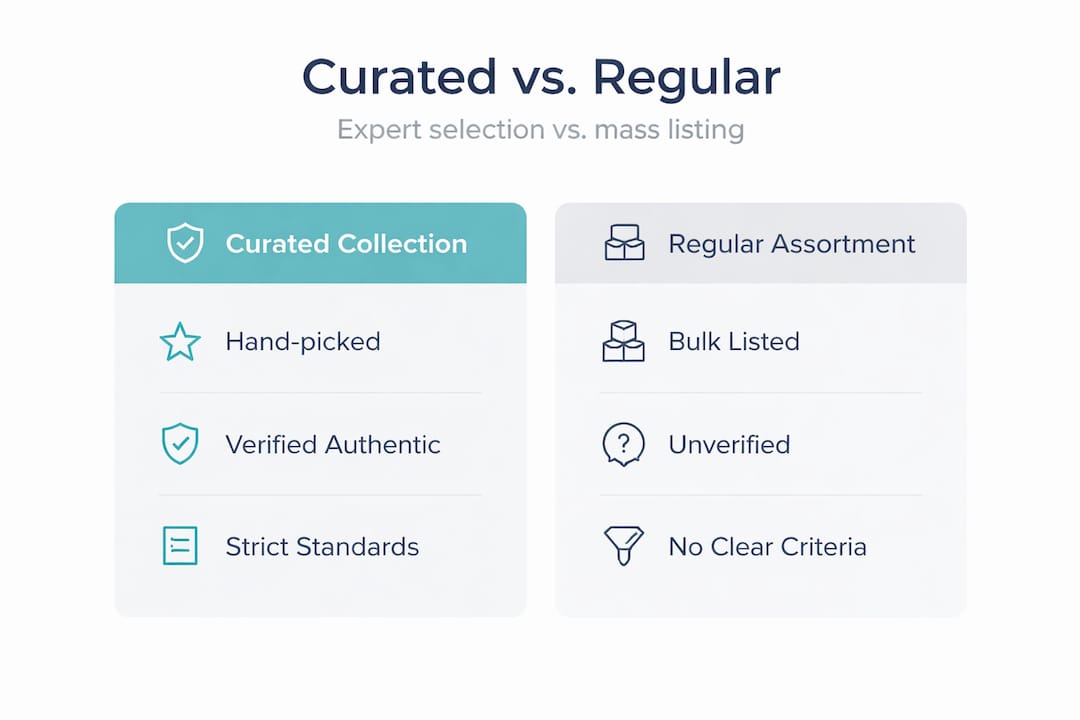
Understanding curated fashion basics helps you see the difference between a retailer simply listing inventory and one actively editing it on your behalf. The editing part is what creates real value.
Key features of a genuine curated collection include:
- Intentional selection: Every item was chosen for a reason, not just added to bulk up inventory.
- Expert oversight: A knowledgeable buyer, stylist, or authentication specialist makes the call.
- Transparent criteria: The platform communicates what makes an item eligible.
- Consistent quality: Items reflect a maintained standard, not a random assortment.
- Authenticity verification: Each piece has been checked before it reaches the collection.
The misconception worth addressing is this: the word “curated” has become overused. Retailers sometimes apply it to any grouped product page without backing it up with real standards. As one pointed analysis notes, when “curated” lacks transparency, it can feel like inflated pricing rather than genuine editorial value. That skepticism is healthy.
Here’s a quick comparison to make the distinction crystal clear:
| Feature | Curated collection | Regular assortment |
|---|---|---|
| Selection method | Expert-vetted, criteria-driven | Bulk sourced or auto-listed |
| Authentication process | Documented, third-party verified | Variable or unverified |
| Stylistic coherence | Seasonal or thematic focus | Mixed, no editorial lens |
| Transparency | Standards published or available | Rarely disclosed |
| Item count | Intentionally limited | Often broad and unfocused |
This table shows why curated collections, when done right, genuinely earn their label. When they don’t show up with these features, you’re right to ask harder questions.
Why do curated collections matter for luxury shoppers?
With a clear definition in place, let’s explore why these collections are especially important for luxury shoppers like you.
Time is the hidden luxury in fashion. Browsing hundreds of unvetted listings to find one authentic Saint Laurent bag is frustrating and risky. A properly curated collection compresses that process dramatically. You’re not starting from zero. You’re starting from a pre-filtered shortlist where quality is already assumed.
But there’s more than convenience at stake. Authenticity is the central concern for anyone shopping designer goods online. Counterfeit luxury items are a real problem across global e-commerce. Returns driven by authenticity concerns represent a significant portion of luxury purchase regrets, making the trust factor absolutely essential before you commit to any transaction.
Strong trust in luxury shopping is the foundation that allows curated collections to work. Without it, even the most beautiful editorial layout is meaningless. And protecting that trust is exactly what rigorous curation standards are designed to do.
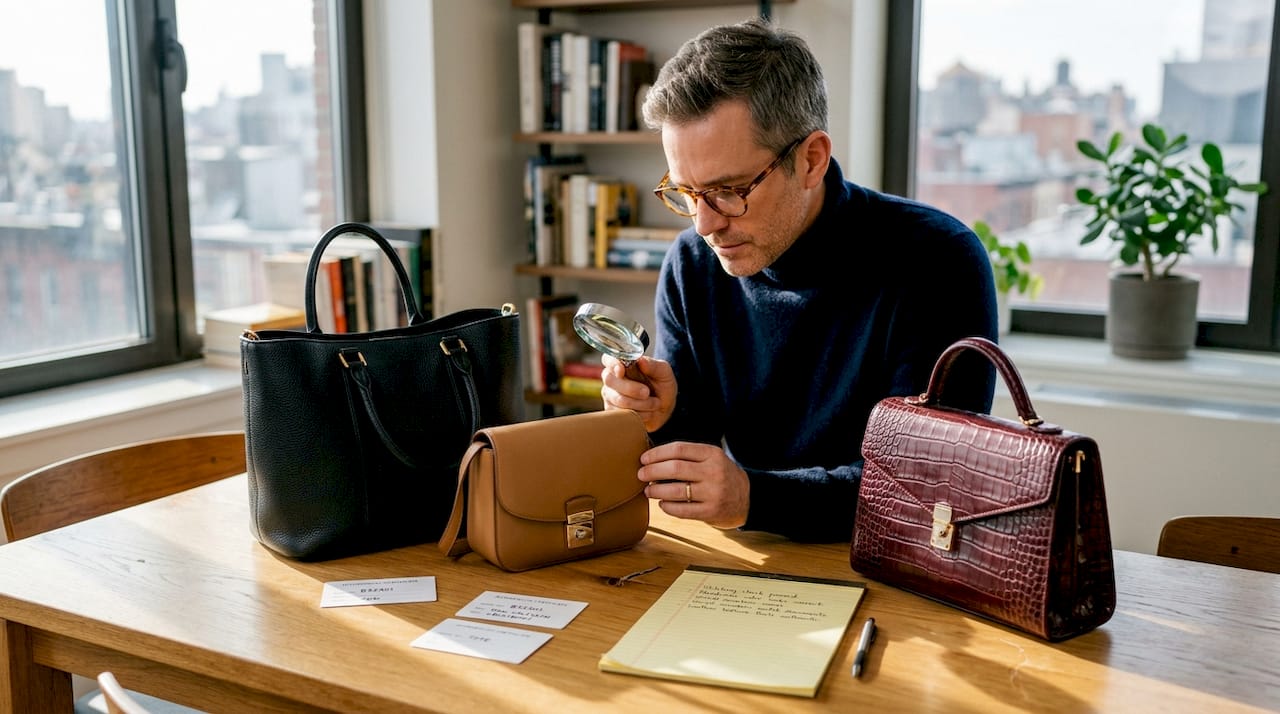
Authenticity in luxury retail goes beyond just checking a label. It means tracing provenance, verifying hardware, stitching details, serial numbers, and in many cases, consulting brand-specific authentication specialists before a piece ever appears in a collection.
Key benefits of shopping curated luxury collections:
- Time savings: Pre-vetted selections mean less browsing and more confident buying.
- Peace of mind: Authentication processes reduce the risk of receiving a counterfeit item.
- Access to exclusives: The best curated platforms often surface rare pieces not found on mass marketplaces.
- Better value alignment: You know what you’re getting and why it’s priced the way it is.
- Heightened trust: Transparent curation standards create accountability between buyer and seller.
These luxury fashion advantages extend beyond the purchase itself. When you trust your source, you wear your Chanel flap or your Valentino pumps with a confidence that amplifies the whole experience. That’s what luxury is supposed to feel like.
However, the flip side is worth noting. As explored in research on consumer skepticism, curation without authenticity backing can feel like a marketing overreach, which is exactly why knowing how to evaluate collections matters just as much as knowing what they are.
Pro Tip: Before you trust any platform’s “curated” label, ask one direct question: “What are your selection and authentication standards?” A legitimate platform will answer clearly. A vague response is your first warning sign.
How curated collections are created: behind the scenes
Understanding why curation matters, it’s essential to see what goes into selecting and guaranteeing every item in a curated collection.
Genuine curation is a multi-step process. It’s not someone browsing stock and adding items that look nice. It involves expertise, time, and often multiple review layers before a single piece reaches your screen. Knowing this process helps you evaluate whether a platform’s claims hold up.
How a piece moves from discovery to collection inclusion:
- Sourcing: Buyers identify potential inventory from authenticated wholesale networks, consignment partners, boutique liquidations, or directly from verified sellers who submit items for review.
- Initial screening: Items are checked against basic eligibility criteria including brand, condition grade, and style relevance for the current seasonal focus.
- Authentication: This is the most critical step. Specialists examine hardware, stitching, date codes, serial numbers, dust bags, and cards. For watches and high-value accessories, independent authentication firms may be engaged.
- Condition grading: Each item receives a condition grade (new, like new, excellent, good) so buyers know exactly what they’re purchasing.
- Editorial selection: A buyer or stylist evaluates whether the piece fits the collection’s theme, pricing tier, and brand mix before final approval.
- Photography and presentation: Items are photographed to accurately represent condition, detailing, and color.
- Collection placement: The piece is listed within the curated collection with full details about its authentication journey available to the buyer.
You can see detailed examples of curated collections to understand how this process translates into real product presentations.
This is also a good moment to align your expectations with reality. A luxury shopping workflow guide helps you understand what questions to ask at each stage of your purchase journey, from browsing to checkout.
Here’s how a genuine curated collection stacks up against a generic assortment at the platform level:
| Evaluation point | Authentic curated collection | Generic product assortment |
|---|---|---|
| Authentication documentation | Available on request or published | Absent or vague |
| Selection criteria | Clearly defined | Undefined |
| Buyer expertise | Named or described | Anonymous |
| Condition transparency | Graded and detailed | Often missing |
| Returns policy clarity | Tied to authentication standards | Generic |
As research confirms, evaluating a curated claim means assessing evidence of standards, not just accepting the label at face value. Use this table as your personal checklist.
Red flags of a fake “curated” claim:
- No mention of how authentication is performed.
- Collections that include thousands of items with no clear editorial focus.
- Inconsistent condition descriptions across listings.
- No way to request documentation or ask questions before purchasing.
Pro Tip: Always ask for documentation on the authentication process before finalizing a high-value purchase. A reputable platform will have this information readily available. If they can’t provide it, walk away.
Red flags and how to shop smarter with curated collections
With the process clear, shoppers still need practical tips to distinguish genuine curation from clever branding. Let’s make sure you know what to look out for.
The luxury fashion world is not immune to overpromising. A visually stunning website with gorgeous editorial photography can mask weak or nonexistent authentication standards. Your eye for style won’t protect you here. You need a practical filter.
“Some consumers argue that ‘curated’ claims are best evaluated against standards, not just taken at face value.” This skepticism is your most valuable shopping tool.
Start by identifying the warning signs. Vague selection criteria is the most common one. If a platform describes its collection as “the best of the best” without explaining how that was determined, that’s a hollow promise. Similarly, suspiciously broad assortments, collections featuring thousands of wildly varied items across every category and price point simultaneously, suggest bulk sourcing rather than editorial curation.
Lack of transparency about authentication is even more concerning. A platform serious about curation names its authentication process. It describes who does the checking, what gets checked, and what happens if an item fails. If none of that information is accessible, you’re essentially shopping blind.
Here’s how to protect yourself and get real value from curated collections:
- Ask specific questions before buying: Request information about how the specific item you’re considering was authenticated. “What authentication process did this Chanel bag go through?” is a completely reasonable question.
- Check for third-party authentication: Some platforms partner with independent authentication services. This adds a credible layer of accountability that self-certification cannot match.
- Look for credible testimonials and reviews: Not just star ratings. Look for detailed buyer experiences that mention authenticity, condition accuracy, and customer service quality.
- Verify return policies before committing: A strong return policy linked to authentication standards signals confidence in the product. A rigid no-return policy on expensive items without explanation is a concern.
- Compare pricing context: If a price seems too dramatically discounted with zero explanation, research market values for that specific piece before purchasing.
Reviewing top luxury platforms gives you a benchmark for how legitimate platforms present their standards, making it easier to spot the ones cutting corners.
The goal isn’t to approach every curated collection with suspicion. It’s to approach them with intelligence. The platforms doing this right welcome the scrutiny.
Why true curation is about standards, not just style
Here’s an uncomfortable truth about the luxury resale and discount market: most platforms that use the word “curated” are leading with aesthetics, not accountability. Beautiful flat-lays and elegant typography create the feeling of curation without delivering the substance.
Style curation alone, choosing items that photograph well or trend well, does not guarantee authenticity or fair value. Anyone can group a selection of Gucci and Prada pieces under a seasonal theme and call it a curated drop. That’s marketing. Real curation is harder to execute and harder to fake once you know what to look for.
What actually sets the best collections apart is a commitment to documentable, testable standards. Not “our experts love these pieces” but rather “here is our authentication checklist, here is our sourcing policy, and here is how you can verify any item before purchasing.” That level of transparency is rare. And that’s exactly why it’s worth seeking out.
The consumer’s role in this is more powerful than most people realize. When you demand clear standards, smart luxury fashion shopping becomes something you actively create rather than passively receive. Your willingness to ask tough questions before purchasing pushes platforms to maintain higher standards.
As the evidence consistently shows, ‘curation’ claims are best evaluated against evidence of standards and authenticity, not against how convincing the brand voice sounds. That principle should guide every luxury purchase you make online.
Don’t be afraid to challenge vague claims. The platforms with nothing to hide will respect you for it. The ones that don’t respond well are telling you something important.
Discover transparent curated luxury collections you can trust
Armed with everything you now know, the next step is putting it into practice with a platform that genuinely earns the “curated” label.
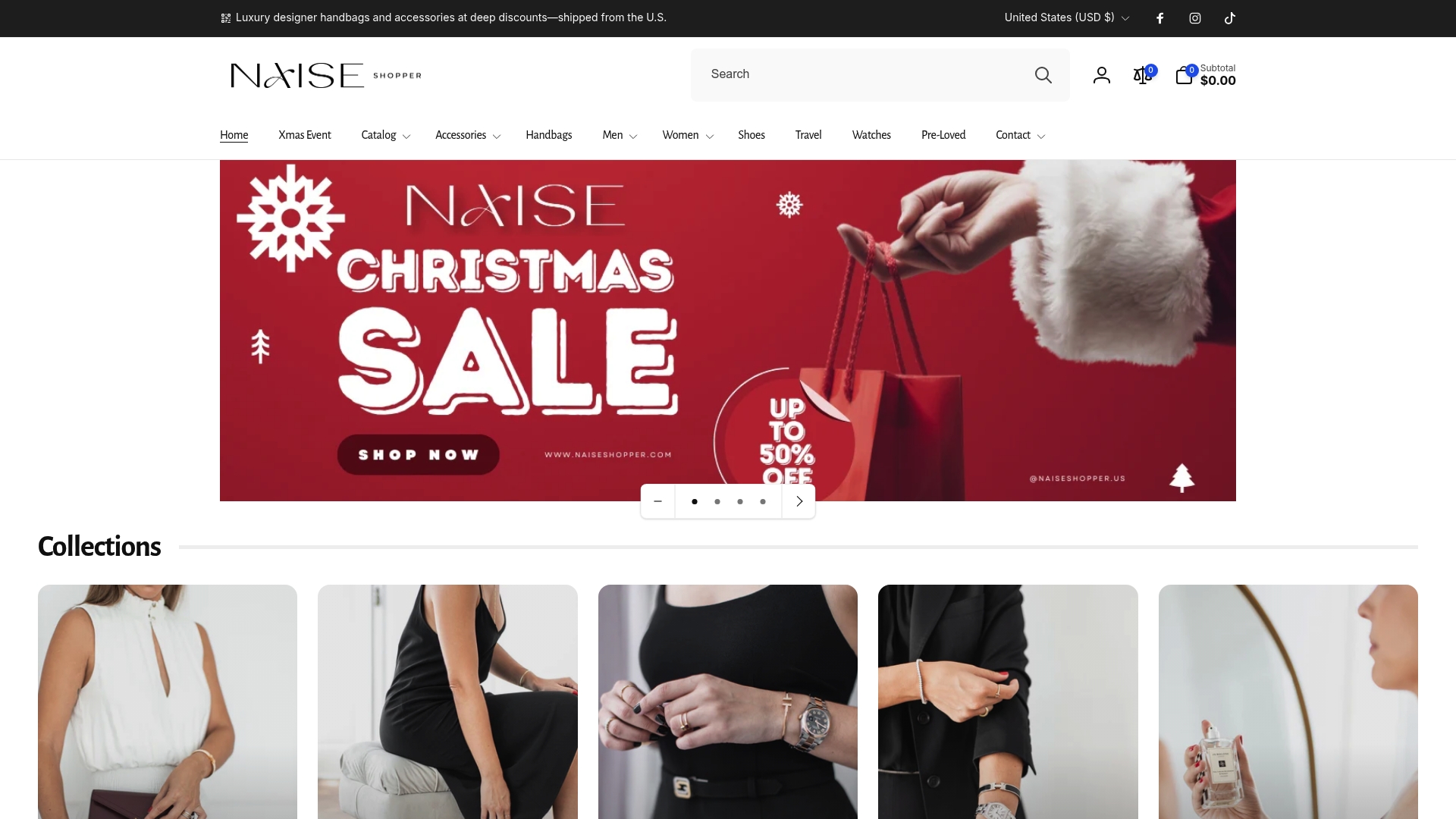
At Naise Shopper, every collection is built around transparent authentication, intentional selection, and real value. From Chanel and Gucci to Valentino and Bottega Veneta, each piece is vetted before it reaches you. Our standards aren’t hidden in fine print. They’re the foundation of every collection we offer, so you can browse with confidence and buy with absolute peace of mind.
We specialize in deep discounts on authenticated designer handbags, shoes, ready-to-wear apparel, watches, and accessories. Localized pricing, secure international shipping, personal shopper services, and shipping insurance make the entire experience as seamless as it is exciting. Explore our collections at naiseshopper.com and discover luxury that’s as transparent as it is stylish.
Frequently asked questions
How do I know if a collection is truly curated?
Look for detailed selection criteria, transparency about authentication, and third-party verification whenever possible. As research confirms, evaluating a curated claim means assessing evidence of real standards, not just accepting the label at face value.
Can curated collections save me money on designer fashion?
Yes, many curated collections offer authenticated items at meaningful discounts, especially during exclusive sales, seasonal events, or off-season promotions available on specialized platforms.
Are curated collections always authentic?
No. Only trust collections backed by transparent authentication processes and clear documentation. As the evidence shows, some curation claims are best evaluated against provable standards, not marketing language.
What questions should I ask before buying from a curated collection?
Request details on how items are sourced, how authenticity is verified, and whether published standards are available. When curation isn’t backed by clear authenticity processes, it risks becoming an expensive marketing claim rather than genuine value.