TL;DR:
- Luxury shopper services provide high-net-worth individuals with discreet, personalized sourcing and management of designer fashion, bypassing traditional boutique visits. They leverage global networks to access exclusive, sold-out, or regional items while ensuring authenticity and privacy. These services prioritize outcome quality and efficiency over cost savings, acting as operational procurement specialists tailored to clients’ lifestyle needs.
Most people assume luxury fashion is about walking into a flagship boutique, enduring the silent judgment of a sales associate, and paying full retail price. That perception keeps a lot of affluent shoppers from discovering what’s really available to them. Luxury shopper services quietly dismantle every part of that experience. They replace the friction with discretion, the guesswork with curation, and the boutique visit with a seamless end-to-end process tailored entirely to your wardrobe and lifestyle. This guide breaks down exactly how these services work, who they serve best, and why they represent the smartest way to shop for designer fashion in 2026.
Table of Contents
- What are luxury shopper services?
- How do luxury shopper services work?
- What makes luxury shopping services unique?
- Beyond apparel: The evolving scope of luxury concierge
- What most people miss about luxury shopper services
- Ready to experience bespoke luxury shopping?
- Frequently asked questions
Key Takeaways
| Point | Details |
|---|---|
| What luxury shopper services do | They discreetly procure, curate, and deliver premium fashion items tailored to your exact taste and lifestyle. |
| Unique insider access | A luxury shopper service uses direct relationships and global reach to secure rare or trending pieces on demand. |
| Workflow streamlines your experience | Clients enjoy a seamless, step-by-step process—from initial briefing to white-glove delivery and aftercare. |
| Broader lifestyle value | Leading services extend far beyond clothing, covering gifting, event support, and even home management. |
What are luxury shopper services?
Let’s get precise. Luxury personal shopping services for high-net-worth individuals are “private, curated services where a specialist sources, filters, and manages luxury wardrobe purchases on a client’s behalf.” That covers everything from a single Chanel bag acquisition to a complete seasonal wardrobe build across Prada, Bottega Veneta, and Saint Laurent.
The term gets used a few different ways. You may hear “personal shopping,” “shopping concierge,” or “luxury procurement service.” They all describe the same core model, though the scope varies by provider. What they share are three foundational pillars: personalization, discretion, and access.
Personalization means nothing is off-the-shelf. Every recommendation is filtered through your specific style preferences, size profile, budget range, and lifestyle needs. Discretion means your shopping activity stays private, your identity is protected during sourcing, and your purchases are handled with zero fanfare. Access means the shopper taps a network that reaches far beyond what’s available to the public in any given market.
These services are specifically built for certain types of clients. Understanding the personal shopper roles behind these services helps clarify who they serve best:
- Celebrities and public figures who need to shop without drawing attention
- High-net-worth individuals (HNWIs) with limited time and high standards
- Busy executives who want a polished, curated wardrobe but can’t devote hours to sourcing
- International clients who want access to items that aren’t available in their home market
- Fashion enthusiasts seeking rare, limited-edition, or sold-out pieces from top designers
“The best luxury shoppers don’t just find things. They eliminate everything that doesn’t belong, then present you with a tightly edited selection that feels like it was made for you.”
This is the key distinction between a luxury shopper service and simply hiring a stylist or walking into a high-end boutique. A stylist shapes your overall image. A boutique sells what’s on the floor. A luxury shopper service solves a procurement problem with precision and privacy.
How do luxury shopper services work?
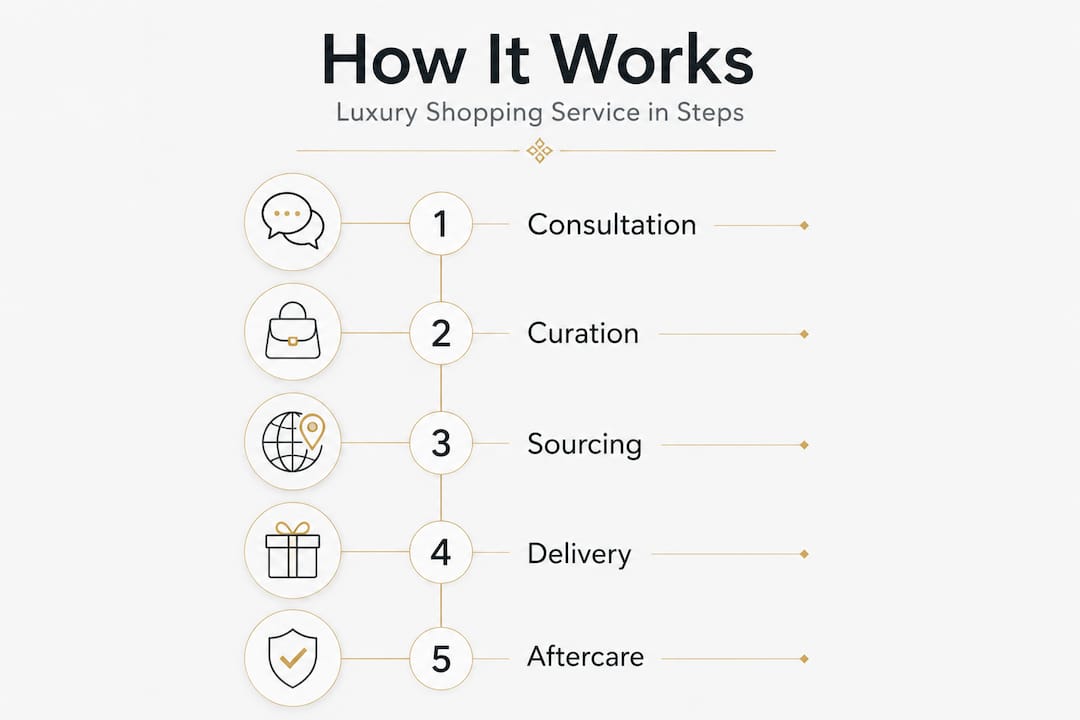
The process is more structured than most clients expect. The brief to sourcing workflow is a core methodology: it moves from an initial brief through sourcing and editing, then into client approvals and logistics, with full end-to-end handling of returns and alterations included.
Here’s how a typical engagement unfolds:
- Initial consultation. The shopper meets with you, remotely or in person, to understand your preferences, lifestyle, budget, and any specific items on your wish list. The more specific your brief, the better the result.
- Sourcing and editing. The shopper taps their network to locate suitable pieces. They filter aggressively, so you never have to review 40 options to find the right one.
- Client presentation. A curated selection is presented with context: sizing notes, condition descriptions, styling suggestions, and pricing breakdowns.
- Approval and purchase. You approve what you want, and the shopper handles the purchase, authentication, and payment logistics on your behalf.
- Delivery and support. Items are shipped securely to your location. The shopper manages any follow-up, including returns or alterations if needed.
The luxury shopping workflow guide covers each phase in detail if you want to go deeper on any step. You can also explore a guide to authentic designer deals for more context on how authentication fits into the process.
Traditional shopping vs. luxury shopper service
| Factor | Traditional shopping | Luxury shopper service |
|---|---|---|
| Decision burden | High, client filters everything | Low, shopper pre-edits selection |
| Store visits required | Yes, multiple | No, handled remotely |
| Personalization | Minimal, sales-driven | High, brief-driven |
| Return handling | Client manages | Shopper manages |
| Access to rare items | Limited to in-store stock | Global network sourcing |
| Privacy | Low to moderate | High, identity protected |
| Time investment | Significant | Minimal |
The contrast speaks for itself. Traditional shopping asks you to do most of the work. A luxury shopper service reverses that entirely.
Pro Tip: When you go into your first consultation, come prepared with three to five reference images and a list of any brands you want to prioritize. The clearer your brief, the more targeted the sourcing and the faster you’ll see results that match your taste.
What makes luxury shopping services unique?
The value of these services isn’t just convenience. It’s access. Luxury personal shoppers function as specialized intermediaries who both recommend specific items and source difficult-to-find pieces using insider relationships and a global network of contacts.
Think about what that means in practice. When a limited Gucci release sells out in the United States within hours, a shopper with connections in Milan or Tokyo may still be able to locate a piece. When Balenciaga drops an exclusive colorway that never hits the US market publicly, a well-networked shopper knows exactly where to look. That kind of brand sourcing for authenticity requires relationships built over years, not a quick Google search.
What makes the service genuinely stand out:
- Access to limited and exclusive lines that aren’t available in regional markets
- Priority sourcing from trusted networks before items disappear entirely
- Discreet handling of high-value purchases with no public record of the transaction
- Global market reach spanning Europe, Asia, and the Americas simultaneously
- Authenticated sourcing that eliminates the risk of counterfeit goods
- Negotiation capability with established retail partners and showrooms
- Styling integration so pieces arrive with clear context for how they work in your wardrobe
For clients interested in luxury fashion investing, this access dimension is especially valuable. Investment-grade Chanel flap bags, vintage Hermès pieces, and limited-run Bottega Veneta items all carry stronger resale potential than standard retail stock. A luxury shopper who understands rarity and demand trends can help you build a wardrobe that holds or increases its value over time.
Success rates when sourcing in-demand pieces
| Item type | Standard retail availability | Via luxury shopper network |
|---|---|---|
| Limited edition drops | Less than 20% accessible | Up to 75% retrievable |
| Sold-out seasonal classics | Typically unavailable | Frequently located internationally |
| Exclusive regional releases | Not available outside market | Accessible through global contacts |
| Pre-release and showroom pieces | Not publicly available | Accessible via insider connections |
These numbers reflect why so many affluent clients stop browsing retail sites entirely and simply hand their wish lists to a trusted shopper. The sourcing capability alone justifies the service.
Beyond apparel: The evolving scope of luxury concierge
The most sophisticated luxury shopping services have moved well beyond fashion. Many luxury concierge offerings now extend into broader lifestyle support, including household management, gifting coordination, and other premium concierge tasks depending on the provider.
This makes sense when you think about the client profile. Someone who relies on a luxury shopper for their wardrobe is also the kind of person managing a full schedule of events, travel obligations, and gift-giving responsibilities across multiple relationships. Consolidating those tasks with one trusted provider is simply more efficient.
The service expansion also deepens the shopper’s understanding of the client. When your shopper knows your lifestyle context, your upcoming travel schedule, and your social calendar, they can recommend pieces that work perfectly for specific occasions rather than just filling wardrobe gaps generically.
Common add-on lifestyle services in 2026 include:
- Corporate and personal gifting with full sourcing, packaging, and delivery management
- Private event styling for galas, film premieres, and high-profile social gatherings
- Home interior sourcing for luxury home goods and objets d’art from top designers
- Travel wardrobe curation with packing advice and destination-appropriate selections
- Seasonal wardrobe audits to identify gaps, archive past-season pieces, and plan new acquisitions
- Family wardrobe management covering spouses, children, and even household staff uniforms
You can learn more about what a fully integrated lifestyle approach looks like through aspirational luxury shopping principles and the complete safe luxury buying process that governs each transaction.
Pro Tip: When evaluating a luxury concierge provider for the first time, ask three specific questions: How do you verify authenticity on every sourced item? What’s your sourcing timeline for in-demand or sold-out pieces? And how do you handle returns or condition disputes? The quality of their answers tells you exactly what the relationship will look like in practice.
What most people miss about luxury shopper services
Here’s the part that most articles gloss over. Clients often approach these services with a discount mindset, believing the primary benefit is price reduction. That framing misses most of what’s actually on offer.
The real value, as any seasoned user of these services knows, is curation and outcome quality. The service is best understood as a private procurement and curation operation: “the ‘discount’ (if any) is usually secondary to outcome quality (fit, authenticity, rarity, timing) and to minimizing client time and exposure.”
Price matters, of course. But consider what you’re actually buying. You’re buying certainty. When a piece arrives, it’s the right size, from an authenticated source, aligned with your taste, and appropriate for the context you had in mind. That level of outcome consistency has a value that’s hard to put a number on, but every client who has experienced it understands exactly what it’s worth.
There’s also a frequent confusion between luxury shopper services and personal stylists. Stylists are image professionals. They think about the coherence of your wardrobe as a visual identity. That’s valuable work. But a shopper service is a procurement professional. They think about sourcing, acquisition, authentication, and logistics. The shopping workflow online that underlies these services is fundamentally operational, not aesthetic.
For high-net-worth individuals evaluating whether to engage these services, the right question isn’t “will I save money?” It’s “will I get better outcomes, faster, with less exposure?” For the right client, the answer is almost always yes. The most effective way to engage a luxury shopper service is to treat it like hiring a trusted advisor: be specific about your goals, communicate your constraints, and give the shopper room to bring their expertise to bear. That relationship pays dividends quickly.
Ready to experience bespoke luxury shopping?
If this guide has clarified what’s possible with luxury shopper services, the next step is putting that knowledge to work. At Naise Shopper, we offer authenticated designer pieces from Gucci, Chanel, Prada, Valentino, Bottega Veneta, Saint Laurent, and Balenciaga, all at genuine discounts and with complete authenticity guarantees.
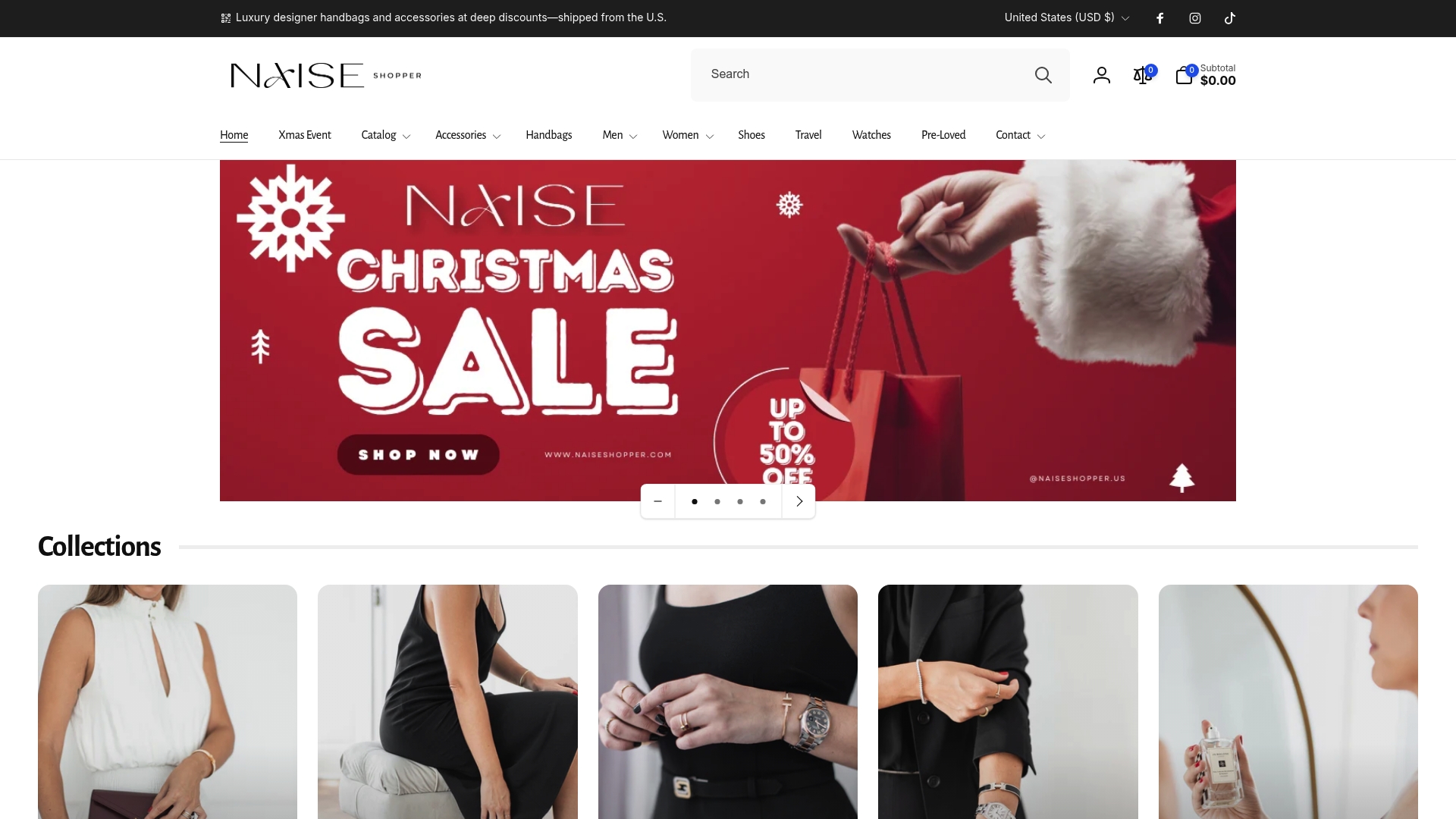
Whether you’re looking for a statement pair of designer shoes, a precision-crafted luxury watch, or a personalized shopping experience through our US-based personal shopper service, Naise Shopper is built for clients who expect exactly what they asked for. Explore our curated collections today and let us handle the sourcing, authentication, and delivery from start to finish.
Frequently asked questions
How do luxury shopping services ensure item authenticity?
Luxury shopping services rely on trusted retail networks and established supplier relationships to guarantee only genuine designer goods are sourced. As specialized intermediaries, they use insider relationships and global contacts to verify provenance at every step.
Can I use a luxury personal shopper if I want items from specific designers only?
Yes. Clients set clear preferences including favored designers, and services curate selections that match those exact requirements. Shoppers begin by understanding your lifestyle and preferences, then source through trusted luxury retailers and present an edited selection.
What happens if an item I want is not available in my country?
In-demand or sold-out items are frequently sourced globally through the shopper’s international network. Limited regional stock is addressed by sourcing inventory from markets where it remains available.
What extra services might a luxury shopping concierge provide?
In addition to apparel, luxury concierge services frequently extend into gifting, home sourcing, travel wardrobe curation, and broader lifestyle management depending on the provider.
How does a luxury shopper service differ from using a personal stylist?
Personal stylists focus on overall image and wardrobe coherence, while shopper services specialize in sourcing, acquisition, and discreet purchase management. Stylists and shopper services serve complementary but distinct roles in a client’s fashion team.