TL;DR:
- The top luxury brands in 2026 are led by Hermès, with a brand value of over $113 billion, emphasizing scarcity and craftsmanship. Heritage brands outperform trend-driven houses by maintaining consistent storytelling, craftsmanship, and controlled production. Ownership structure influences exclusivity and resale value, with independent brands offering tighter control than conglomerate-owned ones.
International luxury brands are defined as fashion houses, watchmakers, and accessory labels that command premium pricing through heritage, craftsmanship, and controlled scarcity. The global list of international luxury brands in 2026 is led by Hermès, Louis Vuitton, and Chanel, three names that have shaped what luxury means for over a century. The top 10 luxury brands combined hold a total brand value of $321.194 billion, even after an 8% annual contraction driven by economic uncertainty. That contraction tells you something important: the luxury market is recalibrating, and knowing which brands hold their value matters more than ever.
1. List of international luxury brands: the top 10 by value
The Kantar BrandZ 2026 report gives us the clearest picture of which high-end brands lead the global market right now. Brand value reflects consumer desire, pricing power, and long-term relevance. Here are the top 10 international designer brands ranked by 2026 brand value:

| Brand | Country | 2026 Brand Value | Key Strength |
|---|---|---|---|
| Hermès | France | $113.136 billion | Scarcity, craftsmanship, heritage |
| Louis Vuitton | France | ~$67 billion | Monogram legacy, global reach |
| Chanel | France | $53.127 billion | Couture authority, pricing power |
| Gucci | Italy | $11.4 billion | Creative direction, streetwear crossover |
| Cartier | France | Top 10, +18% growth | Fine jewelry, watch prestige |
| Rolex | Switzerland | $10.155 billion | Exclusivity, resale strength |
| Dior | France | Top 10 | Ready-to-wear, accessories |
| Saint Laurent | France | Top 10 | Parisian cool, leather goods |
| Coach | United States | Top 10 | Accessible luxury, North American base |
| Tiffany & Co. | United States | Top 10 | Iconic jewelry, LVMH backing |
Hermès holds the top spot with a $113.136 billion valuation, making it the single most valuable luxury brand on the planet. That figure is not just a number. It reflects decades of refusing to mass-produce, keeping Birkin and Kelly bags on waitlists that stretch years. French brands dominate six of the top 10 positions globally, confirming Paris as the undisputed capital of luxury fashion. The two American entries, Coach and Tiffany & Co., show that the luxury brands around the globe conversation extends well beyond Europe.
2. What differentiates heritage luxury brands from trend-driven designer houses?
Not every name on a high-end brands list plays the same game. Heritage brands and trend-driven houses operate on fundamentally different strategies, and knowing the difference shapes smarter buying decisions.
Heritage brands like Hermès and Chanel build value on:
- Consistent craftsmanship standards maintained across decades
- Controlled production volumes that protect scarcity
- Storytelling rooted in founding history and artisan tradition
- Pricing that moves upward regardless of fashion cycles
Trend-driven houses like Gucci and Balenciaga rely on:
- Creative directors who reset the brand’s aesthetic every few years
- Seasonal collections that generate cultural buzz
- Collaborations and streetwear crossovers to attract younger buyers
- Higher volatility in resale values tied to a director’s tenure
Chanel surged 45% in brand value year-on-year in 2025, overtaking Louis Vuitton in fashion sector rankings. That growth came from a deliberate high-price strategy, not a viral moment. By contrast, Gucci declined 24% to $11.4 billion over the same period, a direct result of creative transition uncertainty. The gap between these two trajectories is the clearest evidence that heritage and scarcity outperform trend dependency over time.
Luxury consumers increasingly value heritage and rarity, tipping the market toward brands with consistent storytelling and craftsmanship. This shift is not temporary. It reflects a generation of buyers who have watched trend-chasing brands lose resale value and are now prioritizing pieces that hold or grow in worth.
Pro Tip: When building a luxury wardrobe, anchor it with one or two heritage pieces from Hermès, Chanel, or Louis Vuitton before adding trend-driven items. Heritage pieces retain value; trend pieces deliver the seasonal excitement.
3. How brand ownership and creative leadership shape your experience
Who owns a luxury brand and who designs for it directly affects what you pay, how easy it is to buy, and what happens to resale value years later.
The ownership divide in luxury falls into two clear camps:
- Independent houses like Chanel and Hermès control their own production, retail footprint, and pricing without pressure from a parent company’s quarterly earnings report
- Conglomerate-owned brands like Gucci (Kering) and Dior (LVMH) benefit from massive distribution networks and shared resources, but face pressure to scale volume
Independent luxury houses prioritize tighter control of production and retail experience, which directly boosts exclusivity and resale value compared to conglomerate holdings. Hermès, for example, limits the number of Birkin bags any single customer can purchase per year. That policy is only possible because no parent company is pushing for higher unit sales.
Creative direction adds another layer. Creative directors significantly impact brand power by renewing market relevance and fashion authority. When Alessandro Michele left Gucci in 2022, the brand’s cultural momentum shifted almost immediately. Sabato De Sarno’s appointment brought a quieter, more minimal aesthetic that divided the brand’s fanbase. For buyers, a creative director change at a trend-driven house is a signal to reassess resale projections on current pieces.
Tiffany & Co. offers a useful case study in conglomerate impact. After LVMH acquired the brand in 2021, the “About Love” campaign with Beyoncé and Jay-Z repositioned Tiffany for a younger, more diverse audience. Prices rose, store interiors were redesigned, and the brand’s cultural relevance climbed. Ownership structure is not just a business detail. It shapes every touchpoint you have with a brand.
4. Rolex, Cartier, and Patek Philippe: luxury beyond fashion
The famous luxury fashion houses get most of the attention, but watches and jewelry represent some of the strongest investment categories in the entire luxury market. These are the pieces that hold value through recessions, trend cycles, and decades of wear.
Key names to know in this category:
- Rolex: The most recognized luxury watch brand globally, with a brand value of $10.155 billion and a resale market that frequently exceeds retail price on models like the Submariner and Daytona
- Patek Philippe: The Geneva-based manufacture whose pieces regularly set auction records; the Nautilus and Calatrava are considered generational assets
- Cartier: A French jewelry house that grew 18% in brand value in 2026, driven by demand for its Love bracelet and Santos watch as prestige safe-haven assets
- Tiffany & Co.: The American jewelry icon now backed by LVMH, known for its blue box and diamond engagement rings that carry strong sentimental and resale value
Luxury watches and iconic leather goods maintain liquidity and value retention better than most fashion collections. Industry insiders treat certain Rolex references and Cartier pieces the same way collectors treat fine art. You wear them, and they still appreciate.
Pro Tip: If you are buying a luxury watch as an investment, prioritize steel sport models from Rolex (Submariner, GMT-Master II) or Cartier’s Santos line. These have the deepest secondary markets and the most consistent price appreciation.
5. Prada, Valentino, and Bottega Veneta: the Italian powerhouses
Italian luxury brands bring a distinct design philosophy to the global stage. Where French houses often lead with heritage and brand mythology, Italian labels compete on material mastery and architectural design.
Prada built its reputation on intellectual fashion, using nylon, resin, and unexpected textures to challenge what luxury materials could be. The brand’s Re-Nylon collection turned recycled ocean plastic into a luxury statement, proving that Prada’s design language evolves without losing its identity. Valentino’s Rockstud hardware became one of the most recognizable design signatures of the past two decades, appearing on everything from pumps to handbags and generating a loyal global following. Bottega Veneta’s intrecciato weave is so distinctive that the brand famously ran years without a visible logo, letting the craftsmanship speak entirely for itself.
These three brands represent what the luxury fashion trends conversation looks like when Italian ateliers are at their best. Each one offers a different entry point into Italian luxury, from Prada’s cerebral cool to Valentino’s bold glamour to Bottega’s quiet confidence.
6. Balenciaga and Saint Laurent: the new guard of Parisian luxury
Paris produces more than heritage. Balenciaga and Saint Laurent represent the city’s ability to generate cultural heat alongside its historic prestige.
Balenciaga under Demna Gvasalia redefined what a luxury brand could look like. Oversized silhouettes, deconstructed tailoring, and deliberate ugliness as aesthetic choice pulled in a generation of buyers who found traditional luxury too conservative. The brand’s Triple S sneaker became a collector’s item and a streetwear crossover that no heritage house could have produced. Saint Laurent, by contrast, refined its identity around a very specific Parisian archetype: the sharp-shouldered blazer, the high-heeled boot, the leather jacket cut with precision. Creative director Anthony Vaccarello has kept the brand’s visual language consistent while pushing it forward each season.
Both brands sit within the Kering conglomerate, which means their distribution, pricing strategy, and global retail footprint are managed at scale. For buyers tracking luxury brand rankings in 2026, Saint Laurent has maintained stronger resale values than Balenciaga, largely because its aesthetic is less tied to a single creative moment.
7. Coach and Tiffany & Co.: American luxury on the global stage
American luxury brands have earned their place in any serious luxury brand directory. Coach and Tiffany & Co. prove that the United States produces more than accessible fashion.
Coach’s Tabby bag became one of the most searched luxury handbags of 2023 and 2024, driven by a younger demographic discovering the brand through social media. The brand’s leather quality and craftsmanship rival European competitors at a price point that makes entry into genuine luxury more accessible. Tiffany & Co. carries 188 years of American jewelry history. The blue box is one of the most recognized luxury symbols in the world, and LVMH’s ownership has pushed the brand into a higher price tier while expanding its cultural reach through major campaign investments.
For consumers building a luxury fashion wishlist that balances prestige with value, American luxury brands offer strong options. Coach leather goods age beautifully, and Tiffany’s core silver and diamond pieces hold sentimental and market value across generations.
Key takeaways
The most valuable international luxury brands in 2026 are defined by heritage, scarcity, and consistent craftsmanship, with Hermès leading at $113.136 billion in brand value.
| Point | Details |
|---|---|
| Hermès leads all luxury brands | A $113.136 billion valuation confirms scarcity and craftsmanship as the strongest value drivers. |
| French brands dominate the top 10 | Six of the top 10 luxury brands globally are French, led by Hermès, Chanel, and Louis Vuitton. |
| Heritage outperforms trend-driven brands | Chanel grew 45% while Gucci fell 24%, showing that consistent storytelling beats fashion cycles. |
| Watches and jewelry offer investment value | Rolex and Cartier saw 36% and 18% brand value growth, making them strong safe-haven purchases. |
| Ownership structure affects your experience | Independent houses like Hermès control scarcity more tightly than conglomerate-owned brands. |
Why I think most shoppers underestimate brand ownership
Most buyers focus on the logo and the price tag. I think that is the wrong starting point. After years of tracking the luxury market, the single most predictive factor for long-term satisfaction with a luxury purchase is understanding who owns the brand and what their incentives are.
When you buy from Hermès or Chanel, you are buying from a house that answers to no outside shareholders. Every decision about production volume, store experience, and pricing reflects the brand’s own long-term vision. When you buy from a Kering or LVMH brand, you are buying into a portfolio strategy. That is not inherently bad. LVMH’s backing transformed Tiffany & Co. into a more exciting brand. But it does mean that the brand’s direction can shift with corporate priorities.
The luxury market recalibration toward heritage and rarity is not a trend. It is buyers getting smarter. They have watched trend-driven pieces lose 30–40% of resale value within two years and decided that a classic Chanel flap or a Rolex Submariner is a better use of their money. I agree with that instinct completely. Buy the piece with the longest story, not the loudest season.
— Camila
Shop authenticated luxury brands at Naiseshopper
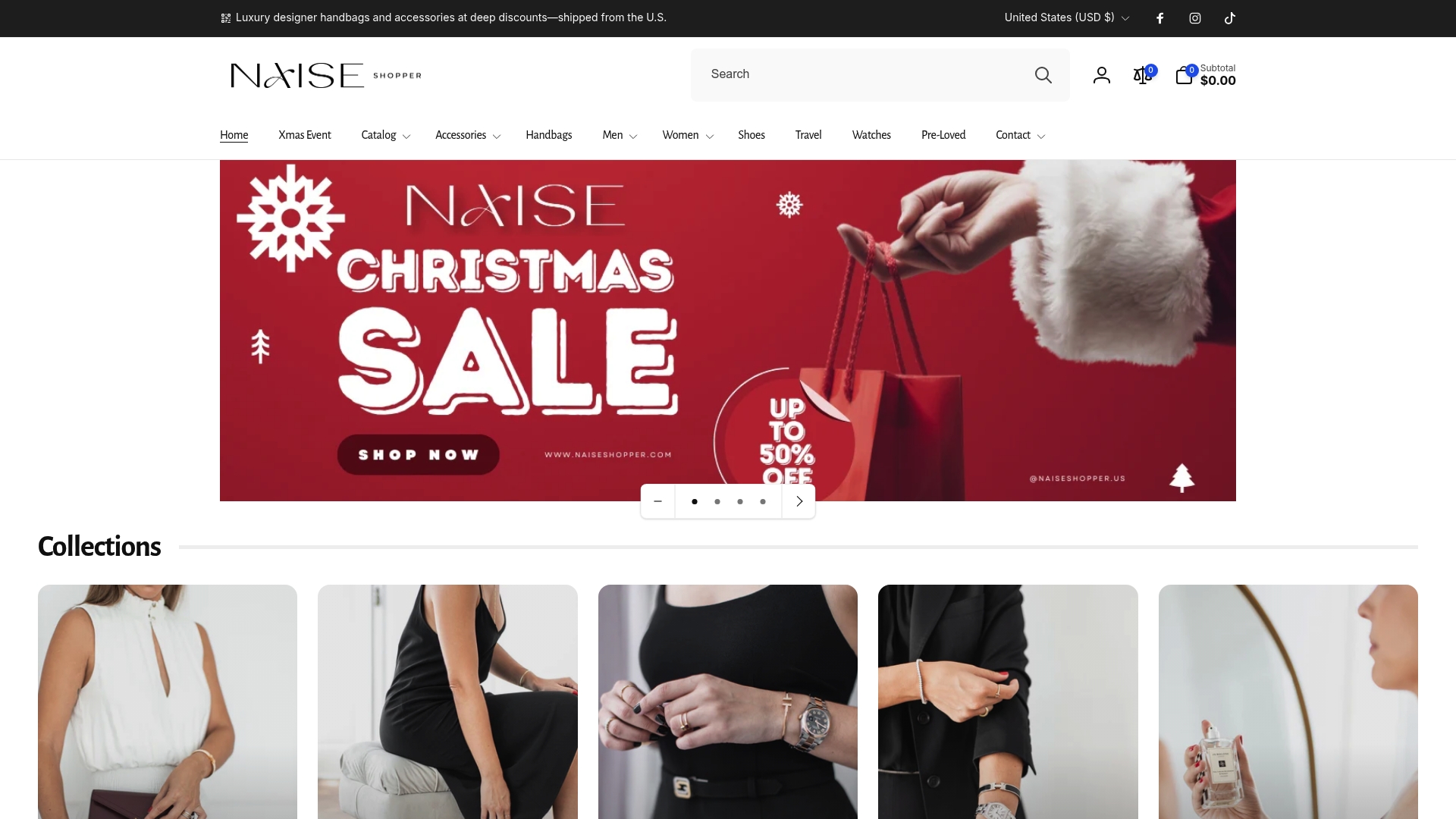
Naiseshopper carries authenticated pieces from the world’s top international designer brands, including Gucci, Chanel, Prada, Valentino, Bottega Veneta, Saint Laurent, and Balenciaga. Every item is verified for authenticity, and the platform offers localized pricing, international shipping, and flexible payment options so you can shop from anywhere. Whether you are building a heritage wardrobe or chasing the season’s standout piece, Naiseshopper makes it accessible. Visit Naiseshopper to browse the full curated collection and find your next luxury investment at a price that makes sense.
FAQ
What is the most valuable luxury brand in 2026?
Hermès is the most valuable luxury brand globally in 2026, with a brand value of $113.136 billion according to the Kantar BrandZ 2026 report.
Which countries produce the most top luxury brands?
France leads with six of the top 10 luxury brands globally, including Hermès, Chanel, Louis Vuitton, Dior, Cartier, and Saint Laurent. Switzerland and Italy are also major luxury brand origins.
Are luxury watches a good investment?
Rolex and Cartier are widely recognized as strong investment assets, with Rolex growing 36% and Cartier growing 18% in brand value in 2026. Steel sport models from Rolex consistently trade above retail on the secondary market.
What is the difference between heritage and trend-driven luxury brands?
Heritage brands like Hermès and Chanel build value through consistent craftsmanship and controlled scarcity, while trend-driven brands like Gucci rely on creative directors and fashion cycles, which creates more resale volatility.
How does brand ownership affect luxury purchases?
Independent houses like Hermès and Chanel control production volumes and retail experience more tightly than conglomerate-owned brands under LVMH or Kering, which generally results in stronger exclusivity and resale value.