TL;DR:
- Most consumers discover luxury brands through resale channels before visiting boutiques, reshaping initial brand perceptions. Brand sourcing involves verifying the authenticity and provenance of designer items, ensuring trust and value for buyers. Transparent, rigorous sourcing practices are essential for protecting against counterfeits, maintaining exclusivity, and supporting long-term resale value.
When 66% of consumers first discover a luxury brand through resale or secondary channels rather than a flagship boutique, it flips everything you thought you knew about how people enter the world of high-end fashion. That single fact should change the way every luxury shopper thinks about where their Prada bag or Saint Laurent wallet actually comes from. Brand sourcing, the process of selecting, verifying, and tracing designer pieces before they reach you, is the invisible engine behind every great luxury find. This article breaks down exactly how it works, why it matters, and how you can use it to shop smarter.
Table of Contents
- What is brand sourcing in luxury fashion?
- How sourcing drives authenticity and trust
- Comparing sourcing strategies: Ethical, global, and curated
- How luxury shoppers benefit from thoughtful brand sourcing
- What most guides miss about brand sourcing in luxury shopping
- Explore curated designer collections with guaranteed authenticity
- Frequently asked questions
Key Takeaways
| Point | Details |
|---|---|
| Sourcing builds trust | Transparent and ethical brand sourcing is essential for authentic luxury shopping experiences. |
| Authentication prevents counterfeits | Strict verification protocols from curated sources protect buyers from risking fake designer items. |
| Curated collections offer exclusivity | Curated sourcing delivers rare, stylish pieces tailored to discerning buyers’ preferences. |
| Ethics influence value and prestige | Responsible sourcing raises the status and confidence buyers feel when purchasing designer goods. |
| Smart sourcing unlocks deals | Affluent shoppers access genuine designer items at discounted prices through thoughtful sourcing strategies. |
What is brand sourcing in luxury fashion?
Brand sourcing in luxury fashion means far more than just “finding products to sell.” It is the deliberate, structured process of identifying genuine designer pieces, verifying their origins, and confirming they meet the standards of authenticity that discerning shoppers expect. When a platform sources a Chanel flap bag or a Bottega Veneta intrecciato tote, sourcing covers everything from where the item originated to how it was authenticated before it appeared in a curated collection.
For luxury shoppers, luxury authenticity and trust depend entirely on the integrity of this process. A sourced piece is not just a product. It carries a verifiable story.
Effective brand sourcing in luxury fashion typically involves:
- Supplier verification: Confirming that pieces come from credible, documented origins, whether authorized retailers, estate collections, or authenticated resale partners.
- Authentication protocols: Physical and digital checks that verify hardware, stitching, serial numbers, date codes, and materials against brand standards.
- Ethical supply chain review: Ensuring sourced pieces have not passed through fraudulent networks or gray market channels that compromise their integrity.
- Documentation and provenance tracking: Maintaining records that prove a piece’s history, including original purchase receipts, certificates, and brand tags.
“Transparency and ethical sourcing build trust for affluent luxury shoppers, turning accountability into brand strength amid counterfeit risks.” This is especially true as luxury provenance and value become primary drivers of purchase decisions in a market increasingly aware of counterfeits.
The concept of ethical supply chains is now shifting from a “nice to have” to an outright expectation among affluent buyers. Shoppers investing in a Gucci Dionysus or a Valentino Rockstud pump want to know the piece they’re buying is the real thing, backed by a sourcing process that left no room for doubt.
Exclusivity in luxury is no longer just about price. It’s about knowing that your piece is rare, real, and responsibly sourced. That’s what separates a curated luxury platform from a generic marketplace.
How sourcing drives authenticity and trust
Understanding sourcing is one thing. Seeing how it actively protects you as a buyer is another. The luxury market is unfortunately full of sophisticated counterfeits, and the risk of purchasing a fake Balenciaga or a counterfeit Prada is very real, even on polished-looking platforms. Rigorous sourcing practices are the primary defense against this.
Here’s how platforms with strong sourcing protocols protect luxury shopping trust at every step:
-
Pre-acquisition screening: Before a designer piece enters inventory, it is screened against known counterfeit patterns. This includes checking serial formats, logo placement tolerances, hardware weight, and material composition specific to each brand.
-
Expert authentication review: Dedicated authentication specialists examine pieces in detail. For bags like a Chanel Classic Flap, this means checking quilting consistency, chain drop length, hologram sticker positioning, and authenticity cards against brand records.
-
Cross-referencing with brand databases: Some platforms maintain relationships with brand networks or use third-party authentication services that cross-check items against original production records.
-
Post-purchase verification options: Top-tier sourcing platforms often allow buyers to request additional documentation or independent verification after purchase, reinforcing confidence long after the transaction.
-
Ongoing supplier audits: Reputable luxury retailers continuously audit their sourcing partners to ensure standards remain consistent as collections evolve and new inventory enters the pipeline.
Pro Tip: When shopping for designer goods online, always ask whether the platform offers a traceable authentication certificate. If they can’t point you to authenticating luxe goods documentation, consider it a red flag.
Research confirms that 66% of consumers first encounter luxury brands through resale or secondary market channels. This means a significant portion of first impressions in luxury happen outside of traditional boutiques, making the sourcing and authentication standards of non-traditional platforms critically important. The stakes are high. Your first luxury purchase sets your expectations for the brand itself.
The practical outcome of strong sourcing is straightforward. You shop with confidence. You receive a piece that holds its beauty and value. And you never have to second-guess whether that Gucci logo is real.
Comparing sourcing strategies: Ethical, global, and curated
Not all sourcing is created equal. The luxury market draws on several distinct sourcing models, each with its own strengths and trade-offs. Understanding the differences helps you choose where to invest your money and trust.
| Sourcing type | Key strength | Potential trade-off |
|---|---|---|
| Ethical sourcing | High prestige, strong accountability | May increase retail cost |
| Global sourcing | Wide variety, diverse inventory | Can dilute exclusivity |
| Curated sourcing | Tailored selections, high trust factor | Smaller inventory range |
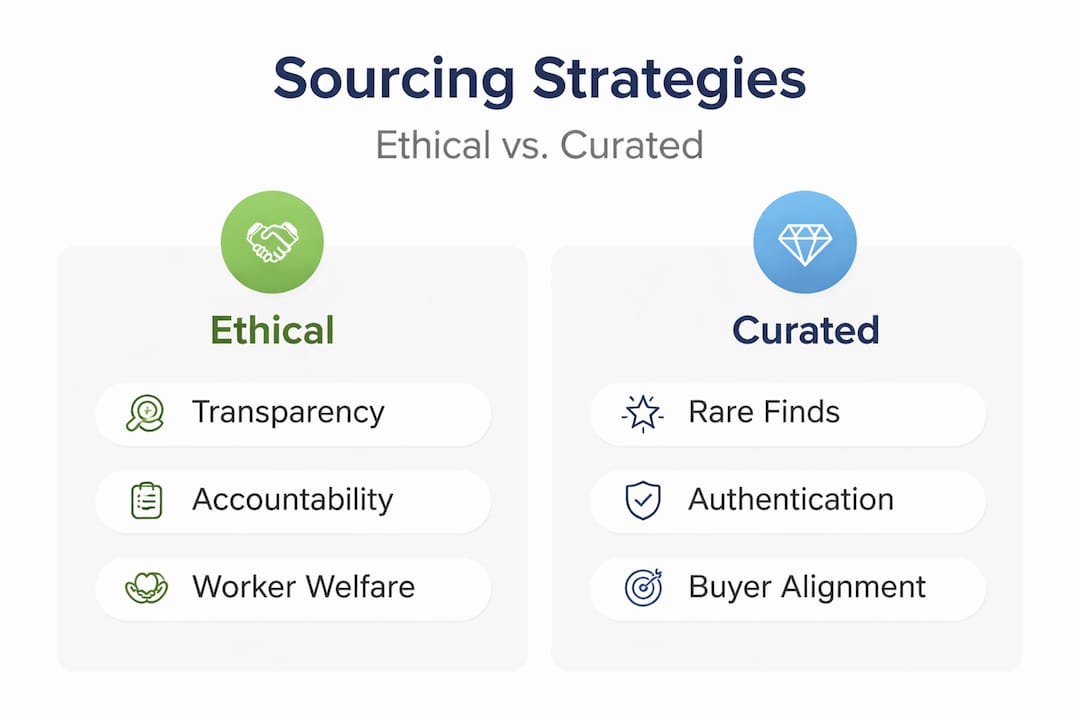
Ethical sourcing prioritizes responsible supply chains, worker welfare, and transparent production practices. In the luxury space, ethical sourcing elevates brand prestige and creates a stronger emotional connection between buyer and product. The trade-off is real: ethical practices often increase costs, and those costs can appear in final pricing. But for a buyer who values provenance, that premium is justified.
Global sourcing opens the door to a broad range of designer pieces from international markets. A platform that sources globally can offer variety across Dior, Alexander McQueen, Emporio Armani, and dozens of other houses simultaneously. The challenge is that luxury e-commerce value built on global sourcing requires rigorous authentication controls to prevent quality inconsistencies or exclusivity dilution.
Curated sourcing is where the real magic happens for affluent shoppers. Instead of casting a wide net, a curated model handpicks pieces based on quality, style relevance, buyer preferences, and season. This model delivers collections that feel intentional rather than random. You’re not scrolling through thousands of items. You’re discovering pieces selected specifically because they’re worth your attention.
“Responsible sourcing elevates prestige but may increase costs; global sourcing broadens quality yet risks diluting exclusivity.” The savviest buyers learn to identify which model their preferred platform uses, and they shop accordingly.
Here’s what to look for when evaluating a platform’s sourcing model:
- Published authentication policies: Is the platform transparent about how they verify items? Vague claims aren’t enough.
- Provenance documentation: Can they trace the item’s origin? Look for receipts, authentication cards, and documented history.
- Curation criteria: Does the platform explain how items are selected? A truly curated collection has a visible philosophy.
- Return and dispute policies: Platforms with strong sourcing confidence back their selections with clear, fair return policies.
For smart luxury shopping, the curated model paired with rigorous authentication is the gold standard. It delivers rare, verified pieces with the style intelligence that affluent shoppers expect from a high-end fashion experience.
How luxury shoppers benefit from thoughtful brand sourcing
The benefits of strong sourcing practices land directly in your hands as a shopper. This isn’t abstract supply chain theory. It translates into tangible advantages every time you add a designer piece to your wardrobe.
| Shopper benefit | How sourcing delivers it |
|---|---|
| Authentic designer pieces | Authentication protocols eliminate counterfeits before items reach you |
| Discounted prices | Secondary market sourcing unlocks genuine luxury at reduced retail prices |
| Rare and limited-edition finds | Broad sourcing networks surface pieces unavailable in traditional retail |
| Personalized collections | Curated sourcing aligns inventory with your specific style preferences |
| Resale value retention | Verified provenance sustains long-term value of your purchases |
Strong sourcing creates access. The pre-owned luxury benefits model allows platforms to offer authenticated Chanel, Prada, and Valentino pieces at prices significantly below original retail, without any compromise on genuineness. This is not a race to the bottom. It’s smart market intelligence applied to fashion.
Pro Tip: When evaluating luxury pieces for long-term value, prioritize items with full provenance documentation. A Saint Laurent Loulou bag or a Gucci Marmont with original receipts, authentication cards, and traceable sourcing history consistently holds designer items for value better than undocumented pieces.
The secondary market is also one of the most exciting places to discover limited editions and discontinued styles. A global sourcing network surfaces pieces that never appear in current boutique windows. Think a discontinued Prada tessuto backpack, a rare Bottega Veneta knot clutch from a previous season, or an early Balenciaga motorcycle bag with verifiable provenance. These finds are only possible because the sourcing reach extends beyond standard retail channels.
Research shows that 66% of consumers first discover luxury brands through secondary channels, meaning the sourced market is actively shaping taste and brand affinity for a new generation of affluent buyers. The sourced market is not a lesser version of luxury. It is, increasingly, where luxury begins.
The cumulative effect for you as a shopper is powerful. You gain access to authentic pieces that would otherwise be unavailable or out of reach, at prices that reflect smart sourcing rather than inflated boutique markups, backed by documentation that protects your investment over time.
What most guides miss about brand sourcing in luxury shopping
Most articles about luxury sourcing stop at “make sure it’s authenticated.” That’s table stakes. The real conversation in 2026 is about traceability and what accountability actually looks like in practice.
Here’s the uncomfortable truth: the word “authentic” has been diluted. Platforms slap authentication claims on everything without showing their work. Savvy shoppers need to push past the label and ask harder questions. Where did this specific piece originate? Who verified it? What’s the documented chain from source to your door? These aren’t paranoid questions. They’re the natural expectations of someone investing real money in a luxury purchase.
The market is evolving fast. The most forward-thinking platforms now treat sourcing transparency as a brand differentiator, not just a compliance checkbox. They’re sharing sourcing philosophies publicly, publishing authentication processes, and offering buyers real provenance documentation. This is what separates a trustworthy platform from one that only sounds trustworthy.
There’s also a deeper shift happening in buyer psychology. Shoppers who care about luxury fashion investing understand that provenance is directly tied to long-term value. A bag with a clean, traceable sourcing history appreciates differently than one purchased from an opaque channel. The documentation you receive today affects the price you can command in five years.
Our perspective at Naise Shopper is that curated sourcing, done with genuine rigor, is the single most important service a luxury platform can offer. It’s not glamorous. It happens behind the scenes, far from the beautiful product photography and seasonal lookbooks. But it’s the reason you can shop a Dior saddle bag or an Alexander McQueen skull clutch online and feel genuinely confident about what you’re receiving.
The buyers who get the most from luxury fashion are the ones who demand full accountability. Not just a guarantee, but a story. Not just “authentic,” but proven.
Explore curated designer collections with guaranteed authenticity
The best way to experience what thoughtful brand sourcing really feels like is to shop a collection built on it.
At Naise Shopper, every item in our catalog has been sourced with full authentication protocols and provenance documentation. Our curated collections include pieces from Dior, Alexander McQueen, Emporio Armani, Gucci, Chanel, Prada, Valentino, and more, all available at discounted prices that reflect smart sourcing rather than compromised quality. We offer localized pricing across numerous countries, international secure shipping, and personal shopper assistance to make your experience seamless from discovery to delivery. Browse our curated designer catalog and discover authenticated luxury that’s sourced, verified, and ready to wear.
Frequently asked questions
How does brand sourcing affect authenticity for luxury goods?
Brand sourcing involves selecting designer items with transparent supply chains and authentication, ensuring genuine products reach buyers. As ethical supply chains become industry standard, platforms that source responsibly are better equipped to eliminate counterfeits and build long-term buyer trust.
Can ethical sourcing impact luxury product prices?
Ethical sourcing can raise production and verification costs, and those are often reflected in the final price, but the tradeoff is significantly higher prestige and buyer confidence. According to ethical sourcing research, the premium buyers pay for responsibly sourced luxury is consistently justified by stronger brand integrity and resale value.
What makes a curated collection different from global sourcing?
Curated collections are hand-selected for style consistency, authentication strength, and alignment with buyer preferences, while global sourcing prioritizes inventory breadth and variety. The distinction matters because curation adds a layer of editorial intelligence that global sourcing models typically sacrifice for scale.
How do luxury buyers find authentic, discounted designer goods?
Thoughtful brand sourcing and rigorous authentication protocols allow platforms to offer genuine designer pieces at secondary market prices, without the counterfeit risk. As BCG research confirms, the majority of luxury brand discovery now happens through authenticated secondary channels, making sourcing quality the most critical factor in this market.