Return shipping insurance covers the cost of mailing an item back, not the value of the item itself. Buy it when a return label would sting on its own, on cross-border orders, or when a merchant’s return window is strict.
TL;DR:
- Return shipping insurance covers the cost of the return label and handling, not the item’s purchase price, and is most useful for high-value or cross-border returns.
- It typically includes reimbursement if the return package is lost or damaged in transit but excludes oversized items, exchanges, international returns, and unapproved carriers.
- The cost is usually about 1% of the declared value for domestic shipments, making it worthwhile when the label cost approaches or exceeds the insurance fee.
- To use it effectively, confirm eligibility at checkout, use approved labels, document the package, and file claims within the specified window with proper proof.
- Claims are often rejected due to missing paperwork or late filing, so keeping all documentation organized and following insurer rules is essential for successful reimbursement.
Table of Contents
- What Does Return Shipping Insurance Actually Cover?
- How Is This Different From Carrier Liability or Card Protection?
- What Does Return Shipping Insurance Cost, and Is It Worth It?
- How Do You Buy and Use Return Shipping Insurance?
- How Do You File a Claim Without Getting Denied?
- How Does Naiseshopper Handle Return Shipping Insurance?
- When Should You Actually Buy This Coverage?
- Naiseshopper’s Checkout Insurance for Designer Returns
- Where to Verify Return Shipping Insurance Policy Details
- Sources
What Does Return Shipping Insurance Actually Cover?
Return shipping insurance reimburses the label cost and related handling if your return package gets lost or damaged on its way back to the seller. It does not reimburse the price you paid for the item, which is a common misunderstanding among shoppers who assume “insurance” covers the entire purchase.
Coverage typically includes a prepaid return label, reimbursement if that package disappears in transit, and sometimes a reship fee if the merchant needs to resend a replacement. What it usually excludes matters just as much:
- Oversized or unusually heavy items, which most policies cap at standard package dimensions and weight.
- Straight exchanges rather than refunds, since many policies only trigger on a completed return.
- International returns, which some merchant policies quietly carve out or price differently.
- Claims filed after the order was canceled or routed through a shipping method the merchant never approved.
That last point trips up more shoppers than any other. Return shipping insurance is tied to the merchant’s own approved return process. Ship the item back through a different carrier or skip the provided label, and coverage can void before you ever need it.
How Is This Different From Carrier Liability or Card Protection?
Three separate protections get confused constantly, and each one covers a different slice of risk.
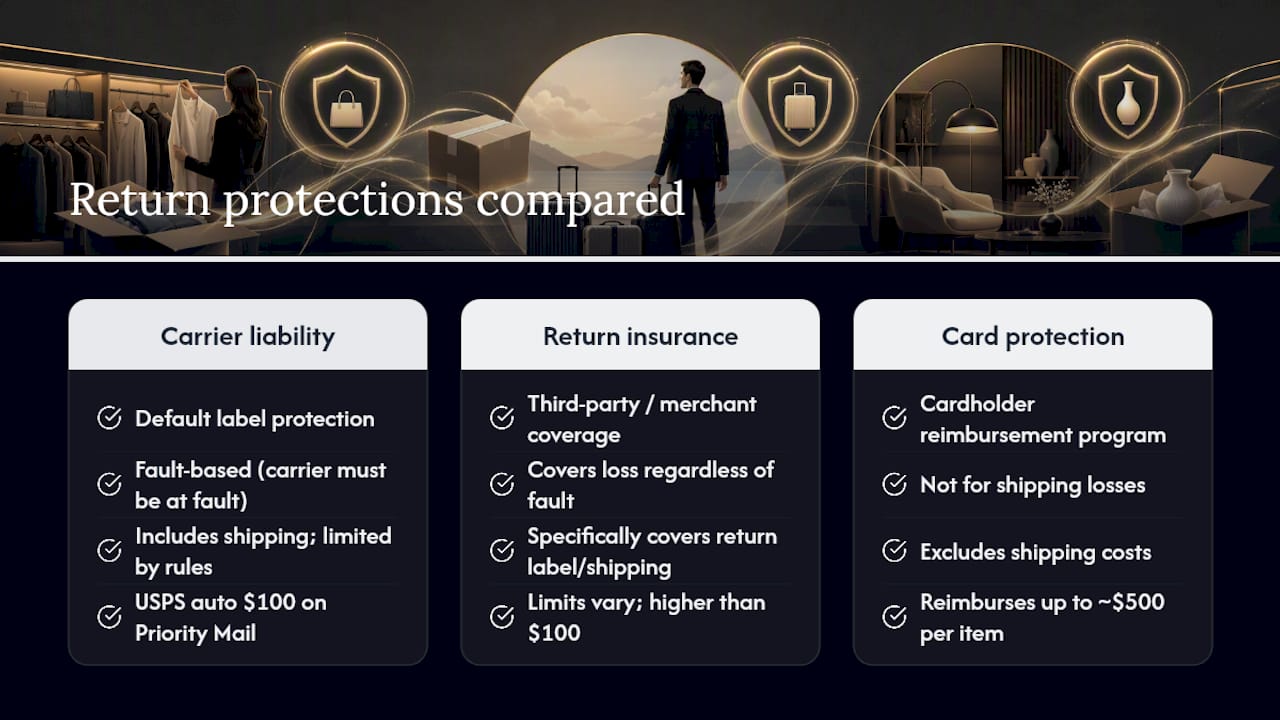
Carrier liability is the default protection built into a shipping label, and it is limited and fault-based. USPS includes up to $100 automatically with Priority Mail Express and Priority Mail, with additional coverage available up to a specified maximum with fees based on declared value. Miss the fine print, and you’re covering a $180 shoe box return with $100 of automatic protection.
Third-party or merchant return shipping insurance is broader by design. It typically covers the label regardless of whose fault the loss was, which is the entire point of buying it separately.
Credit-card return protection is a different animal entirely. Chase’s Return Protection program, for example, reimburses up to limits such as $500 per item, depending on the card and program terms when a merchant refuses a return, but it excludes shipping costs from that reimbursement. It solves the “the store won’t take it back” problem, not the “the return package got lost” problem.
Quick fact: USPS’s automatic $100 coverage on Priority Mail Express and Priority Mail rarely covers a full designer handbag or watch return, which is exactly the gap dedicated return shipping insurance is built to close.
What Does Return Shipping Insurance Cost, and Is It Worth It?
Pricing splits into two models. Merchants who build insurance into checkout often charge a small flat fee, while third-party insurers price coverage as a percentage of declared value, commonly around 1% for domestic shipments. International returns, oversized packaging, and fragile items all push that percentage higher because carriers price risk into the label itself.
Here’s a simple way to decide if it’s worth adding at checkout:
- Estimate what the return label would cost if you had to buy it yourself, factoring in the item’s weight and destination.
- Compare that number to the insurance fee offered at checkout.
- If the label cost is a small fraction of the insurance fee, skip it. If the label cost approaches or exceeds the fee, buy it.
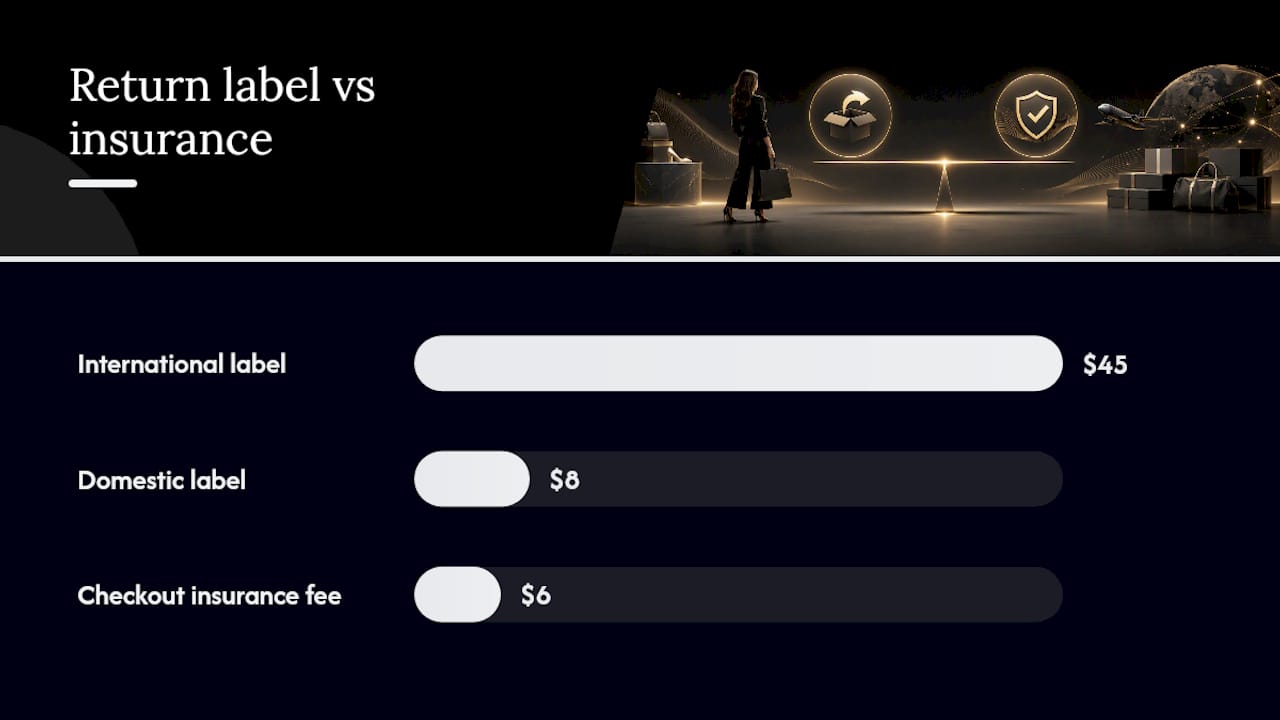
Say a pair of designer heels ships internationally and the return label alone would run $45. A flat $6 insurance add-on at checkout is an easy yes. On a domestic return where the label costs $8, paying a $6 fee barely makes sense.
Pro Tip: Run this math before checkout, not after you’ve already paid for insurance you didn’t need. Cross-border and oversized-item returns are where the fee earns its keep.
How Do You Buy and Use Return Shipping Insurance?
Buying coverage takes seconds, but protecting your claim rights takes a little more discipline.
- Confirm eligibility at checkout. Look for the insurance opt-in before you finalize payment, and save the confirmation email. Some merchant FAQs, like Seel’s merchant insurance page, spell out exactly which items and order types qualify.
- Use the approved return label. When it’s time to send an item back, use the label the insurer or merchant provides, and hold onto every tracking number the moment you drop the package off.
- Document the package. Photograph the item and its packaging before sealing the box. If something goes wrong, this becomes your evidence.
- File within the claim window. Submit your claim with the receipt, tracking number, and photos before the insurer’s or carrier’s deadline closes.
Naiseshopper buyers researching luxury shipping insurance best practices will recognize this same sequence applied to designer handbags and watches, where a lost return label carries far more weight than it does on a $30 t-shirt.
How Do You File a Claim Without Getting Denied?
Claim denials almost always trace back to missing paperwork or a blown deadline, not the actual loss itself.
- Keep the original order confirmation, the insurance confirmation, every tracking number, and the return receipt in one place.
- File within the insurer’s stated window. USPS recommends filing within an advised window, generally no later than about 60 days from the mailing date for lost items, and most third-party policies run on similarly tight timelines.
- Avoid switching carriers or return methods mid-process. That’s the single most common reason a valid-looking claim gets rejected.
Quick fact: Some third-party insurers, including InsureShield, advertise claims portals that resolve cases in days rather than weeks, though exact timelines still vary by provider and the completeness of your documentation.
Resolution speed depends heavily on how clean your paperwork is on day one. A claim filed with tracking numbers, photos, and receipts already attached moves faster than one filed with gaps the insurer has to chase down.
How Does Naiseshopper Handle Return Shipping Insurance?
Some merchants surface insurance as an opt-in at checkout, with confirmation arriving by email alongside your order details so you have a record from day one. Eligibility follows the same logic outlined above, applied to authenticated designer goods:
- Coverage applies to items returned through an approved authentication-return workflow, not alternate shipping methods.
- High-value pieces, like fine watches and structured handbags, are categories where a lost return label can create significant financial exposure.
- Shoppers can review how shipping insurance protects luxury fashion buyers for a breakdown of how carrier liability and broader coverage interact.
When Should You Actually Buy This Coverage?
If you’re deciding in the moment, three situations settle it: an expensive return label, a return crossing an international border, or a merchant with a strict, unforgiving return window. In every other case, the math usually favors skipping it. Read the merchant’s insurance terms before you click “add,” and save every confirmation email the moment you get it. That habit costs nothing and saves you an argument later.
— Camila
Naiseshopper’s Checkout Insurance for Designer Returns
Buying a $2,000 pair of heels or a designer watch means the return label alone can run into real money, especially on a cross-border order. A merchant’s checkout insurance option can cover the return postage cost directly, so a lost or damaged return package doesn’t turn into an unplanned expense on top of the purchase itself.
Adding coverage can be done during checkout, and confirmation is sent by email alongside your order details. If you ever need to file a claim, you’ll need that confirmation email, your tracking number, and photos of the item before it ships back, the same documentation any insurer requires. Some merchants provide guides to shopping insurance for luxury purchases that walk through the process in more detail.
Browse pieces like the Prada black leather floral heels or the Gucci G-Timeless watch, and check the insurance option at checkout before you complete your order.
Where to Verify Return Shipping Insurance Policy Details
- USPS Shipping Insurance and Extra Services: official coverage limits, pricing, and the 60-day claims window.
- GoShippo’s cost-benefit breakdown: independent pricing analysis on third-party insurance rates.
- Chase Return Protection details: card-based return reimbursement terms and exclusions.
- Shipware’s guide to USPS shipping insurance: merchant-side breakdown of free versus paid insurance models.
Sources
- Is shipping insurance worth it? A cost-benefit analysis | GoShippo
- Shipping Insurance and Extra Services | USPS
- Chase Return Protection: How It Works | Chase