Yes, you can ship designer bags internationally when the retailer offers authenticated inventory and secure logistics, and Naiseshopper is one of them. The real question isn’t whether it’s possible. It’s whether the checkout price is your final number or a teaser. Before you pay, confirm whether that price is a true landed cost or whether customs duties and brokerage fees will arrive as a surprise bill at your door.
TL;DR:
- Confirm whether the quoted price includes all duties, taxes, and brokerage fees to avoid unexpected expenses upon delivery.
- Choose a shipping method carefully, considering transit time, customs handling, insurance, signature requirements, and who bears customs brokerage costs.
- Request detailed documentation upfront, including HS codes, authentication proof, and customs paperwork, to facilitate smoother clearance and dispute resolution.
- Be aware that shipments over $2,500 typically require formal customs entry, which involves more paperwork and potential delays compared to informal clearance for lower-value packages.
- Verify that the retailer provides clear information on authentication procedures, return windows, and dispute processes to ensure protection if the item is not as described.
Table of Contents
- What To Confirm Before You Checkout on a Designer Bag
- Which International Shipping Method Fits a Designer Bag?
- How Do You Calculate the Real Landed Cost of a Bag?
- What Makes a Designer Bag “Authenticated” and How Do Returns Work?
- Packing a Designer Bag So It Survives the Trip
- Are There Restrictions on Shipping Designer Handbags Abroad?
- How Do You Pick a Reliable International Shipper for Luxury Goods?
- Why Landed-Cost Transparency Beats Cheap Shipping Quotes
- Buy With Naiseshopper’s International Shipping Support
- Sources
What To Confirm Before You Checkout on a Designer Bag
The gap between a smooth international purchase and a frustrating one almost always comes down to what you asked before you paid, not what happened after. Treat this like pre-flight checks, not fine print.
Here’s the order that actually protects you:
- Ask if the price is landed cost or billed-on-delivery. Get a written estimate of duties, taxes, and brokerage so nothing shows up unannounced when the courier knocks.
- Confirm the shipping method. Postal service, courier/express, or freight each carry different transit times and different customs handling, so ask which one applies to your order.
- Request documentation upfront. You want a commercial invoice, the HS code, country of origin, and authentication paperwork tied to your specific bag.
- Verify the return and dispute window. Ask who authenticates the item, how many days you have to open a case, and what proof (photos, serial codes) you’ll need to supply.
- Require insured shipping with signature confirmation. A four-figure handbag should never travel without both.
- Pay through a method that preserves your leverage. Credit cards and platform escrow keep a chargeback option open; wire transfers generally do not.
Pro Tip: Save the retailer’s written landed-cost estimate and your order confirmation in the same email folder. If a dispute ever comes up, having the numbers and the promise side by side saves you days of back-and-forth.
Which International Shipping Method Fits a Designer Bag?
Retailers move luxury handbags through three channels, and each one changes your cost, your wait, and how much paperwork lands on your desk.
International postal service is the path most retailers use for lower-value shipments. Customs and Border Protection generally processes these through informal entry when the shipment’s value sits under $2,500, though CBP notes exceptions apply depending on the item and its origin. Postal shipping tends to be the slowest option but usually the cheapest, and tracking can be less granular than what a courier offers.
Courier and express services (think DHL, FedEx, UPS) move faster and typically handle customs clearance through their own brokers. The catch: unless the seller prepays duties, the courier’s broker will bill you separately, and that brokerage fee is distinct from any government duty you owe.
Freight shipping comes into play for higher-value or bulk orders, and it can trigger formal entry requirements, which may mean more paperwork or even a customs bond depending on the declared value.
A few things matter across all three methods:
- Insurance and signature confirmation cut theft and misdelivery risk substantially on parcels this expensive.
- Tracking numbers should update at every major checkpoint, not just at origin and destination.
- Ask whether delivery is door-to-door or whether you’ll need to pick the package up at a port or airport facility, since that changes both cost and how much legwork falls on you.
The method the retailer defaults to isn’t always the one that fits your situation. If you’re ordering a five-figure crocodile Birkin and a $400 canvas tote, the calculus on insurance and courier choice should look different.
How Do You Calculate the Real Landed Cost of a Bag?
Landed cost is the full price of getting a bag into your hands: the item price, international shipping, duties and taxes, and any brokerage fees the carrier tacks on. CBP defines this bundle clearly, and the gap between a seller’s quoted shipping cost and your actual landed cost is where most buyer complaints originate.
Duty amounts get determined by the declared value, the item’s HS code, its material composition, and country of origin. Retailers can estimate, but only CBP can make the final duty determination, so treat any seller’s number as a well-informed guess, not a guarantee.
A key threshold to know: shipments valued under $2,500 usually clear through informal entry, a simpler process with less paperwork. Above that threshold, expect formal entry procedures, which can mean more documentation and processing time. CBP’s own customs duty guidance also outlines the unaccompanied purchase procedure, including forms like CBP Form 255, and how personal exemptions can factor into mailed purchases.
Here’s what trips up first-time international buyers most:
- Confusing courier brokerage fees with government duty. They’re separate charges, and brokerage is often the higher of the two.
- Assuming the seller’s shipping quote already includes duties when it doesn’t.
- Not asking for the HS code in advance, which can delay clearance or trigger formal entry unnecessarily.
To avoid the surprise invoice, ask the seller three things before you pay: the HS code for your item, whether they prepay duties or you’ll owe them on delivery, and their brokerage policy if a courier is involved. A retailer that hands you these answers without hedging is one worth trusting with a five-figure handbag.
What Makes a Designer Bag “Authenticated” and How Do Returns Work?
“Authenticated” means different things at different retailers, and that variation is exactly why you should ask before you buy, not after a bag arrives. Industry guidance recommends asking who authenticated the item, whether the check was AI-assisted or reviewed by a human specialist, and what exactly that review covered. A step-by-step authentication guide can help you understand what a thorough check should include, from stitching patterns to hardware stamps.
Return and dispute mechanics matter just as much as the authentication claim itself. Find out when the inspection clock starts (often the moment you sign for delivery), how many days you have to file a dispute, and what evidence you’ll need. Most reputable sellers want sealed-parcel photos taken before you open the box, plus close-up shots of serial numbers and date codes once you do.
Here’s the sequence that protects you if something’s wrong:
- Photograph the sealed package before opening it, showing any tape or security seals intact.
- Photograph the bag from multiple angles immediately after opening, including hardware, lining, and any date codes.
- Compare what arrived against the listing and any authentication documentation provided.
- Contact the seller within the stated dispute window, not after it closes.
- Keep your insurance claim number and tracking history in the same file as your photos.
Retail Insider’s reporting on buying luxury handbags safely points out that reputable retailers back these claims with provenance documentation, insurance, and signature confirmation as standard, not as an upsell. Paying by credit card or through platform escrow also matters here: both preserve a chargeback path that a direct bank transfer simply doesn’t offer.
Pro Tip: Take your unboxing photos before you’ve even removed the dust bag from the shipping box. Sellers and insurers both weigh “first-opening” evidence more heavily than photos taken an hour later.
Packing a Designer Bag So It Survives the Trip
A $3,000 shoulder bag can be ruined by bad packaging just as easily as by a customs delay. The materials matter as much as the method.
Structured bags (think a boxy Chanel flap or a Bottega Veneta top handle) need internal stuffing, usually acid-free tissue paper, to hold their shape during transit. Soft-structure totes and hobos need less internal support but more protection against crushing from other packages stacked on top.
Every bag should travel inside its dust bag first, then wrapped in a layer of bubble wrap or foam, then boxed in a rigid outer carton with enough padding that the bag can’t shift. Hardware (buckles, chain straps, metal feet) should get individually wrapped so it doesn’t scratch the leather during movement. Retailers shipping high-value leather goods internationally should also account for humidity and temperature swings during transit, particularly on longer freight routes crossing multiple climates.
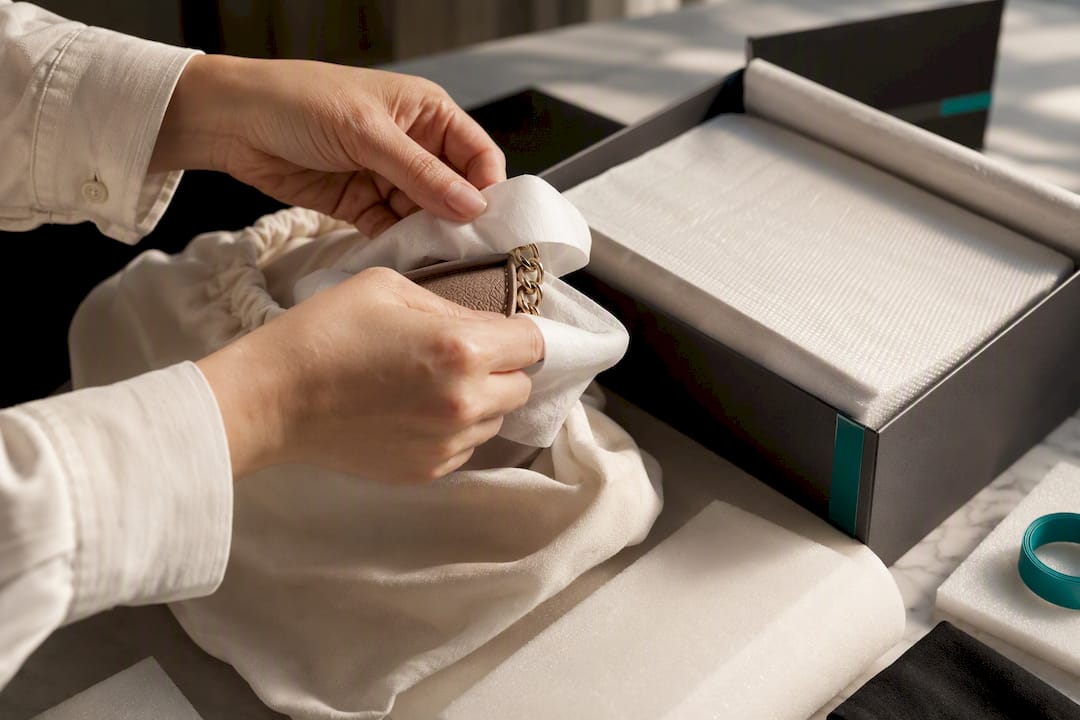
The outer box matters too. Look for double-walled corrugated cardboard, tamper-evident tape, and a shipping label that doesn’t reveal the contents (a plain box beats one stamped with a luxury brand logo, for obvious theft-deterrence reasons). If your retailer can’t describe their packaging process when you ask, that’s a signal worth noting before you commit to a purchase.
Are There Restrictions on Shipping Designer Handbags Abroad?
Most authenticated designer handbags face no special import restrictions beyond standard customs declarations and applicable duties. The regulatory friction shows up around specific materials, not the bags themselves.
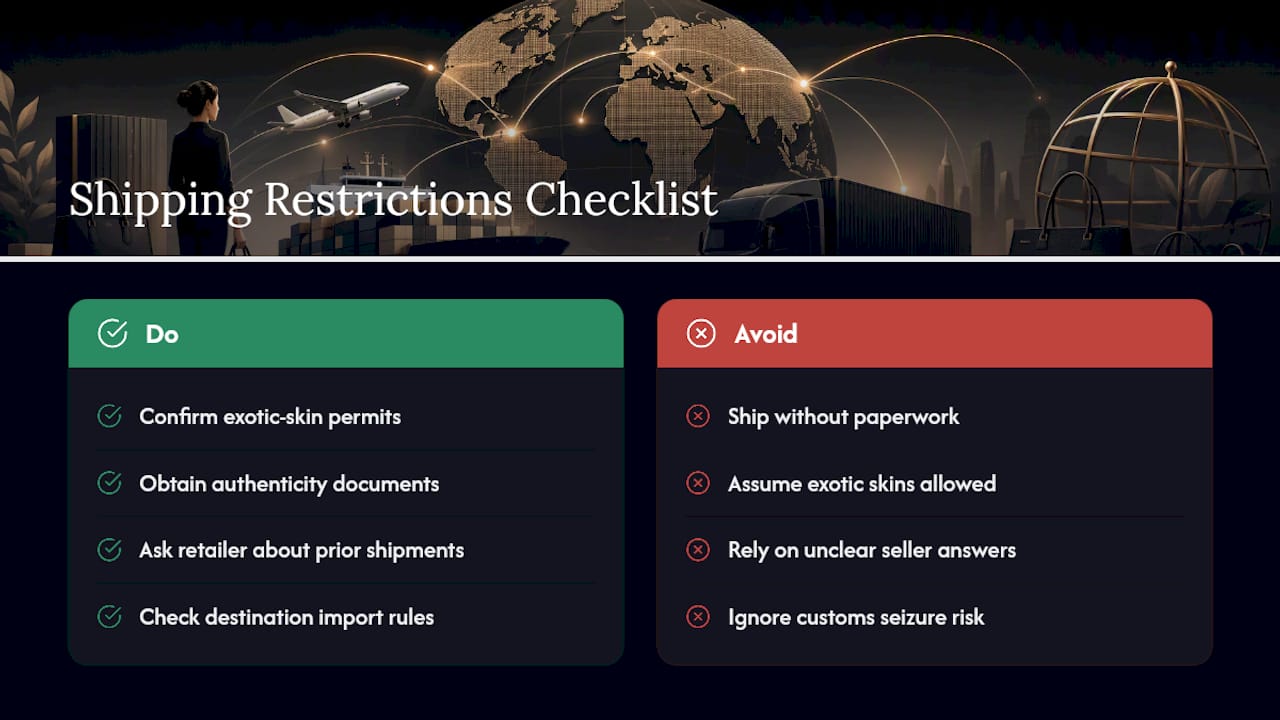
Exotic leathers are the main flag to watch. Bags made with crocodile, python, alligator, or certain lizard skins fall under international wildlife trade rules, and shipping them across borders can require additional permits or documentation proving legal sourcing. If you’re eyeing an exotic-skin piece, ask the retailer directly whether the necessary paperwork travels with the shipment.
Counterfeit goods are the other major restriction category, and this one cuts in your favor as a buyer of authenticated items: customs agencies actively screen for and seize suspected counterfeits, which is precisely why documentation proving authenticity and legitimate sourcing matters at the border, not just for your own peace of mind. A designer bag provenance guide covers why paper trails matter well beyond the return window.
Country-specific import bans are rare for handbags generally but worth a quick check if you’re shipping to a market with unusually strict luxury-goods import policy. When in doubt, ask your retailer whether they’ve shipped that brand and material combination to your country before. A seller who’s done it repeatedly will have a clear answer.
How Do You Pick a Reliable International Shipper for Luxury Goods?
The shipping service matters almost as much as the retailer, because a mishandled parcel undoes every authentication check that came before it.
Look for a carrier or retailer partnership that offers full tracking visibility, not just origin and destination scans. Ask specifically whether signature confirmation is mandatory on delivery, not optional, for parcels above a certain value. Insurance coverage should match the bag’s actual value, not a flat low-value default that leaves you underinsured on a five-figure item.
Transparency on brokerage is another tell. A shipping service that clearly states its brokerage fee structure upfront, rather than surprising you at delivery, is one that’s used to handling high-value luxury freight responsibly. And a retailer that offers a clear step-by-step buying process tends to extend that same clarity to shipping, since the two are rarely separate operations internally.
Finally, check how the seller handles delays. Customs holds happen, even with perfect paperwork. A reliable shipping partner communicates proactively when a parcel is stuck in clearance instead of leaving you guessing for a week.
Why Landed-Cost Transparency Beats Cheap Shipping Quotes
The biggest mistake international buyers make isn’t picking the wrong carrier. It’s anchoring on the shipping quote instead of the landed cost. A $45 courier quote looks fantastic until a $310 brokerage bill shows up at delivery, and by then you’ve already paid for the bag.
Retailers that document provenance and offer insured, tracked international shipping aren’t just checking a compliance box. They’re reducing the number of ways your purchase can go sideways between checkout and your doorstep. That’s worth more than a marginally cheaper shipping line item.
Prepaying duties or using local warehousing makes sense mainly for buyers ordering above the $2,500 informal entry threshold, or those in countries with historically slow customs processing. Below that threshold, the informal entry process is usually straightforward enough that prepayment adds convenience without dramatically changing your total cost.
Personal shopper assistance is underrated here. A knowledgeable intermediary who understands HS codes and landed-cost math can flag issues before they become delivery-day surprises, particularly for buyers new to importing luxury goods. That’s less about hand-holding and more about having someone who’s navigated the paperwork before.
— Camila
Buy With Naiseshopper’s International Shipping Support
Naiseshopper gives you what a landed-cost conversation actually requires: authenticated designer inventory, paired with localized pricing so you see costs in terms you recognize before you commit.
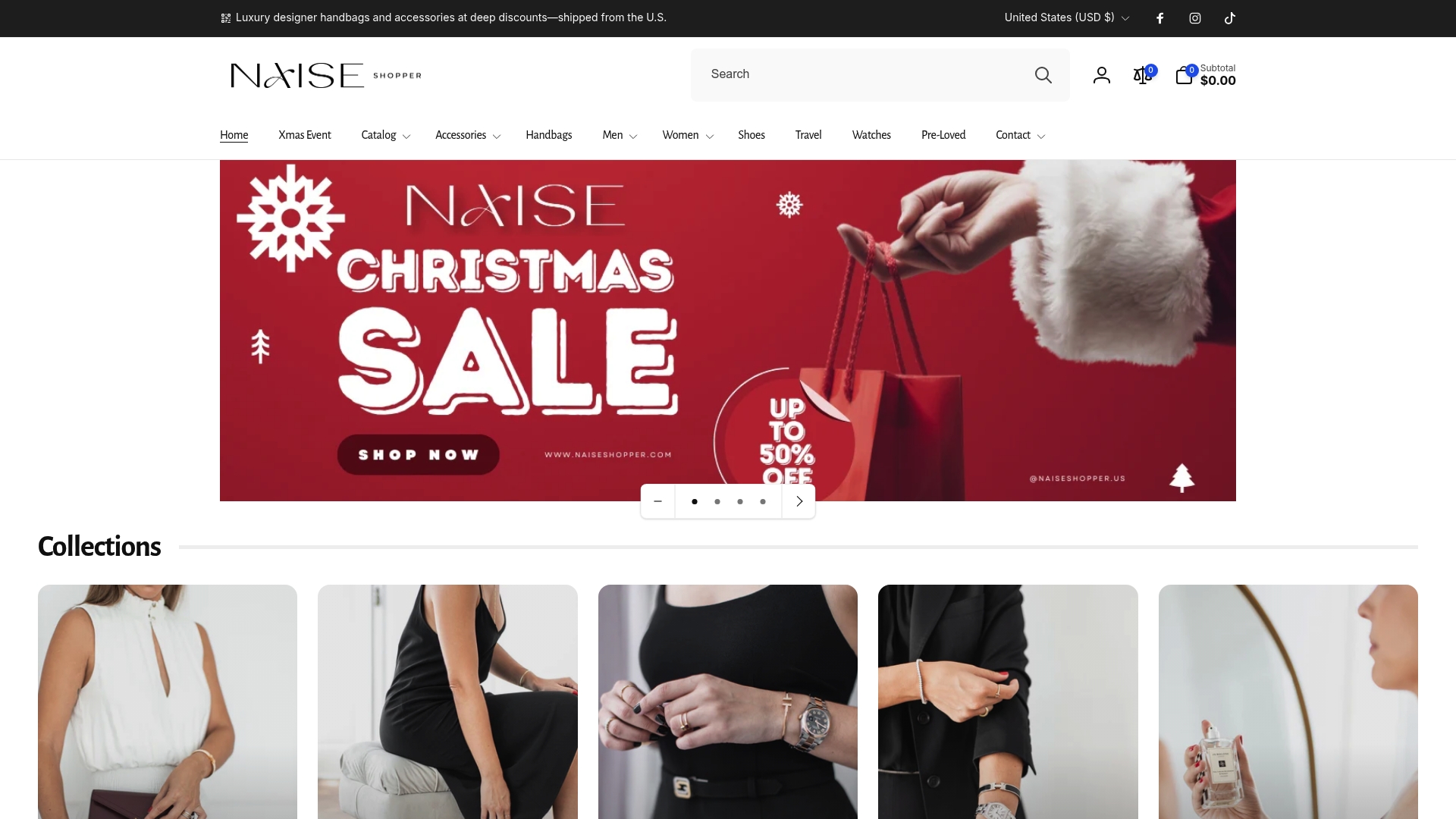
International secure shipping comes with insurance built into the process, and flexible payment options. If you’re weighing a purchase, ask your Naiseshopper contact for a landed-cost estimate, the HS code for your specific bag, and a clear read on the return policy before you check out. Personal shopper assistance is available for buyers who want help navigating customs paperwork or comparing shipping methods for a specific destination. Browse the current designer handbag collection and request a landed-cost quote before you commit. That single question, asked early, is the difference between a smooth delivery and a surprise invoice at your door.
This article is general information, not a substitute for advice from a qualified financial advisor. Consult a qualified financial professional about your own circumstances before acting on anything here.
Sources
- Internet Purchases | U.S. Customs and Border Protection
- How to buy authentic luxury handbags safely online | Retail Insider
- Authenticated resale handbag questions before you buy | DailyGenius