The strongest alternatives to unique-bargain-shoppers.com are well-established US discount chains, trusted online marketplaces, and curated resale platforms that deliver real savings on quality goods. Whether you shop in-store or online, these options cover every budget and product category:
- TJ Maxx and Marshalls: brand-name apparel, footwear, and home goods at off-price discounts
- Ross and Burlington: deep discounts on fashion brands and home furnishings
- Costco: bulk buying with warehouse pricing on groceries, electronics, and clothing
- HomeGoods and HomeSense: curated home décor and kitchenware at reduced prices
- Ollie’s Bargain Outlet: closeout merchandise up to 70% off retail
- Amazon Outlet: overstock and clearance deals across nearly every product category
- Old Navy, J.Crew Factory, and Loft: affordable and outlet-priced apparel
- Big Lots: furniture, groceries, and seasonal goods at discount prices
- The Dollar Tree: household basics at fixed low prices
- Consignment Stores and Tradesy: pre-owned and designer resale with curated inventory
- Bealls, Burkes Outlet, Gabe’s, and Roses: regional discount chains with broad product ranges
- Bargain Hunt and Ollie’s: liquidation and closeout specialists
Each of these brings something distinct to the table. The right pick depends on what you’re shopping for, how you prefer to shop, and how much trust you need from a platform before handing over your card.

What are the best discount stores for bargain shoppers in the US?
The major US discount chains are the backbone of bargain shopping, and each one has a sweet spot worth knowing before you walk through the door.
TJ Maxx is the go-to for brand-name clothing, shoes, and home accessories at prices well below department store retail. Inventory turns over constantly, so frequent visits reward you with fresh finds. Marshalls, its sister chain, runs a nearly identical model but tends to stock a slightly broader mix of home goods and beauty products alongside apparel.
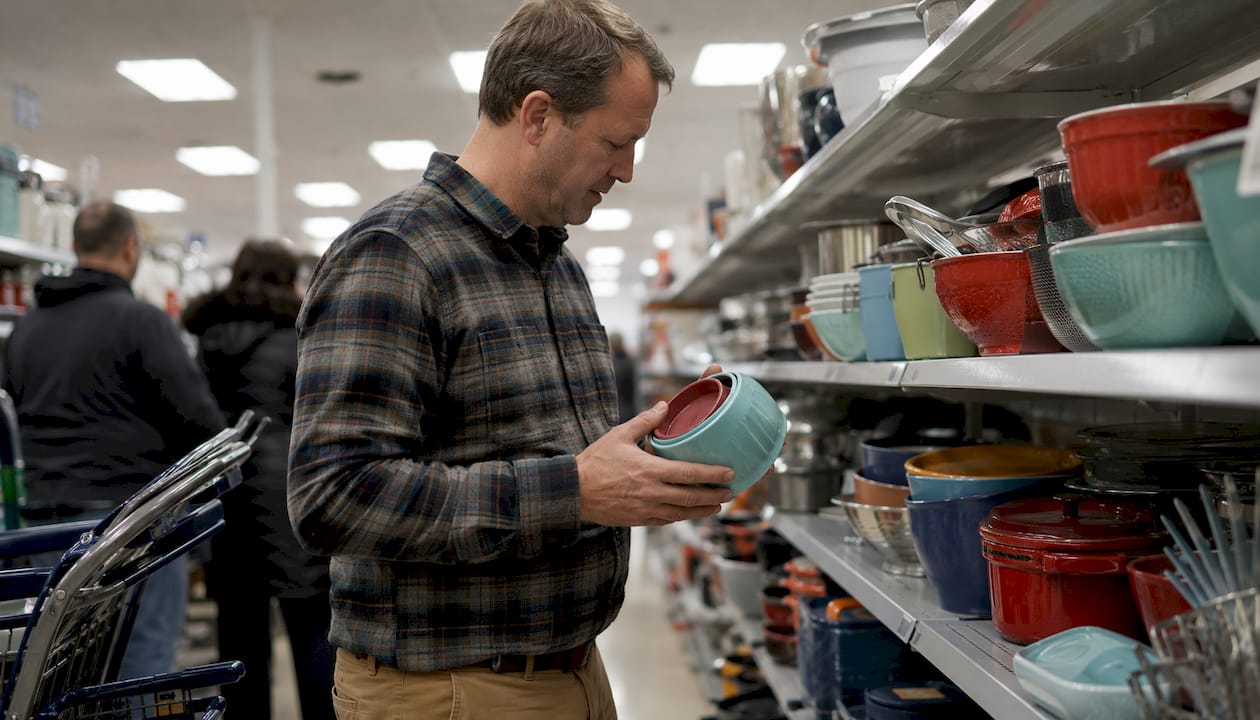
Ross and Burlington operate on the same off-price principle, sourcing overstock and end-of-season merchandise from major brands. Ross leans heavily into fashion and home furnishings, while Burlington has expanded its home and baby categories aggressively in recent years. Both chains have wide geographic footprints across the US.
Costco plays a different game entirely. The membership warehouse model means you pay upfront for access, but the bulk pricing on groceries, electronics, clothing, and seasonal items can deliver genuine savings for households that buy in volume. Seasonal deals on apparel and electronics are a particular draw.
HomeGoods and its upscale sibling HomeSense focus almost exclusively on home décor, kitchenware, furniture, and bedding. The inventory is curated and rotates frequently, which creates a treasure-hunt feel that keeps shoppers coming back. At Home takes a superstore approach to the same category, with a broader and often more seasonal selection.
Ollie’s Bargain Outlet is America’s largest retailer of closeout merchandise and excess inventory, selling real brands at up to 70% off regular retail. The product mix changes constantly because it’s built on whatever closeout deals Ollie’s can source, covering everything from housewares and books to snacks and apparel.
Big Lots covers furniture, groceries, and seasonal merchandise under one roof, with frequent markdowns and a loyalty program that adds extra savings. Bealls and Burkes Outlet serve similar discount department store roles, with Bealls holding a particularly strong presence in southeastern states.
Bargain Hunt and Gabe’s round out the regional discount landscape. Bargain Hunt specializes in liquidation and closeout merchandise with rotating local store events, while Gabe’s offers a wide range of apparel, footwear, and home goods at consistently low prices across its growing footprint.
For apparel specifically, Old Navy delivers value-priced casual clothing with regular promotions and clearance sales that can cut prices dramatically. J.Crew Factory and Loft outlet stores offer a more polished aesthetic at outlet pricing, ideal for shoppers who want classic or contemporary styles without paying full retail.
The Dollar Tree occupies its own category: fixed pricing on household basics, party supplies, and consumables. It’s not a place for brand-name fashion, but for everyday essentials, the value is hard to beat. Roses serves a similar everyday-needs audience with a broader product mix that includes apparel, footwear, and garden supplies, particularly in rural and suburban markets.
What types of discount stores exist, and which one fits your needs?
Discount retail in the US breaks into several distinct formats, and knowing the difference helps you shop smarter.
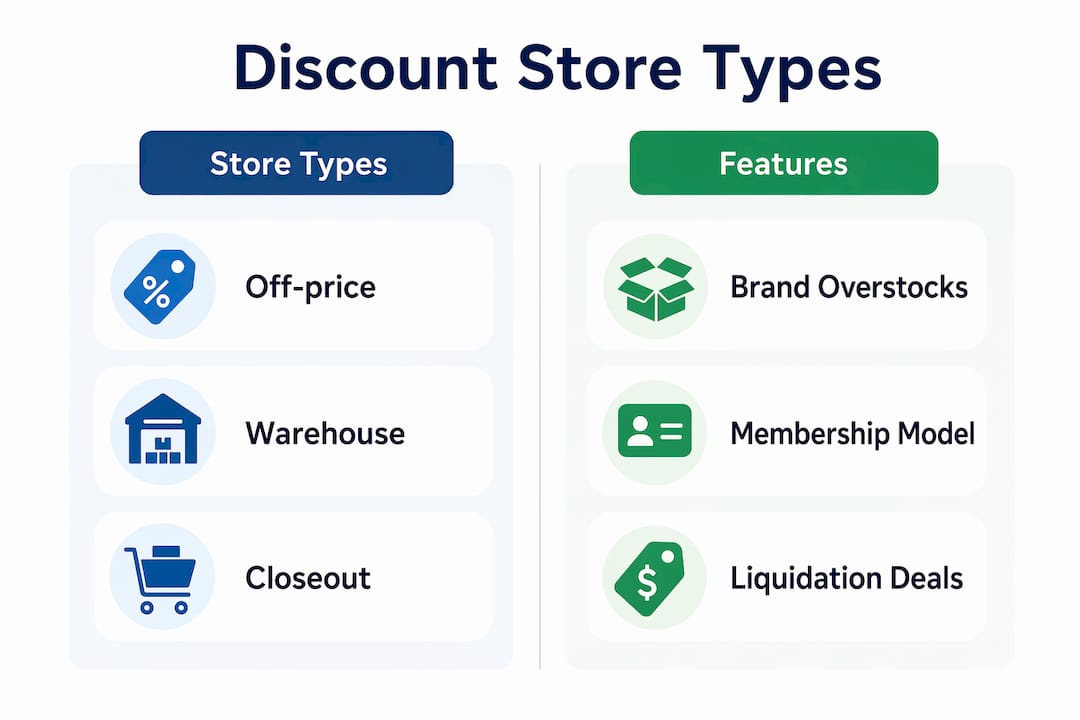
Off-price department stores like TJ Maxx, Marshalls, Ross, and Burlington buy excess inventory, overstock, and end-of-season merchandise from brands and manufacturers, then sell it at a fraction of the original retail price. You’ll find genuine brand-name goods here, but selection varies by location and visit.
Warehouse clubs like Costco require a paid membership but offset that cost with bulk pricing and exclusive deals. They work best for households that can use larger quantities and want consistent access to quality groceries, electronics, and seasonal clothing.
Closeout and liquidation stores like Ollie’s Bargain Outlet and Bargain Hunt source merchandise that retailers couldn’t sell, then pass the savings to shoppers. The inventory is unpredictable by design, which is part of the appeal for deal hunters who enjoy the hunt.
Dollar stores like The Dollar Tree operate on a fixed-price model, selling household basics, cleaning supplies, snacks, and seasonal items at very low price points. They’re not a source for apparel or electronics, but they’re hard to beat for consumables and everyday household needs.
Outlet stores like J.Crew Factory, Loft, and Burkes Outlet sell merchandise from specific brands at reduced prices, either through dedicated outlet malls or standalone locations. The quality and style consistency is higher than a typical closeout store, but the discounts are usually more modest.
Consignment stores sell pre-owned items on behalf of the original owner, with the store taking a percentage of the sale. The inventory is curated and often includes quality clothing, accessories, and specialty items you won’t find at a chain retailer. Tradesy brings this model online, with a focus on authenticated secondhand fashion and designer pieces, backed by buyer protections.
Online marketplaces like Amazon give you access to overstock deals, third-party sellers, and the Amazon Outlet section, all with user reviews and buyer protections built in. Ocean State Job Lot and Old Time Pottery blend the physical closeout model with regional community focus, the former strong in New England and the latter specializing in pottery, home décor, and kitchenware at bargain prices.
Home Centric rounds out the home-focused discount category, concentrating on seasonal and lifestyle home products at reduced prices.
| Store | Store type | Best product categories | Price range | Availability |
|---|---|---|---|---|
| TJ Maxx | Off-price department | Apparel, home goods, accessories | $$ | Online + physical |
| Marshalls | Off-price department | Apparel, beauty, home goods | $$ | Online + physical |
| Ross | Off-price department | Fashion, home furnishings | $ | Physical only |
| Burlington | Off-price department | Clothing, home, baby | $ | Physical only |
| Costco | Warehouse club | Bulk groceries, electronics, clothing | $$ | Online + physical |
| HomeGoods | Home décor discount | Décor, kitchenware, bedding | $$ | Physical only |
| HomeSense | Home décor discount | Upscale furnishings, décor | $$ | Physical only |
| At Home | Home décor superstore | Seasonal décor, furniture | $$ | Physical only |
| Ollie’s Bargain Outlet | Closeout/liquidation | Housewares, apparel, snacks | $ | Physical only |
| Bargain Hunt | Closeout/liquidation | Mixed closeout merchandise | $ | Physical only |
| Big Lots | Discount department | Furniture, grocery, seasonal | $$ | Online + physical |
| Amazon | Online marketplace | Electronics, household, clothing | $ to $$$ | Online |
| Old Navy | Affordable fashion | Casual apparel, accessories | $ | Online + physical |
| J.Crew Factory | Outlet apparel | Classic clothing, accessories | $$ | Online + physical |
| Loft | Outlet apparel | Women’s casual and workwear | $$ | Online + physical |
| The Dollar Tree | Dollar store | Household basics, consumables | $ | Online + physical |
| Tradesy | Online resale | Pre-owned designer fashion | $$ to $$$ | Online |
| Consignment Stores | Consignment | Pre-owned apparel, specialty items | $$ | Physical |
| Bealls | Discount department | Apparel, home accessories | $$ | Online + physical |
| Burkes Outlet | Outlet | Apparel, footwear, homeware | $ | Physical only |
| Roses | Discount department | Apparel, footwear, home essentials | $ | Physical only |
| Ocean State Job Lot | Regional closeout | Seasonal goods, home, clothing | $ | Physical only |
| Old Time Pottery | Home décor discount | Pottery, home décor, kitchenware | $ | Physical only |
| Home Centric | Home décor discount | Seasonal, lifestyle home products | $$ | Physical only |
| Gabe’s | Regional discount | Apparel, footwear, home goods | $ | Physical only |
How to choose the right bargain shopping alternative for you
Picking the right discount store or platform comes down to a few criteria that separate a genuine bargain from a frustrating purchase.
Reputation and trust signals matter most. Established chains like TJ Maxx, Costco, and Ross have decades of consumer trust behind them. For online platforms, look for buyer protection policies, clear return windows, and verifiable authenticity guarantees, especially for secondhand or designer goods.
Return policies vary widely across discount retailers. TJ Maxx and Marshalls offer 30-day returns on most items. Amazon’s return policy is among the most generous in retail. Consignment stores and liquidation outlets often sell items as-is, so read the fine print before buying.
Total cost, not just sticker price, is the real measure of a bargain. Shipping fees, platform buyer fees, and sales tax can push an apparently cheap online listing well above what you’d pay in-store. Tools like Patnd search across eBay, Vinted, Depop, Amazon, Gumtree, and StockX simultaneously, ranking every listing by total price including shipping and buyer fees, so the cheapest result is genuinely the cheapest.
Pro Tip: Before buying anything secondhand online, run the item through a multi-marketplace search tool. You’ll often find the same product listed at meaningfully different total costs across platforms, and the difference is rarely visible until you add fees.
Loyalty programs add real value at the right stores. Costco’s membership structure is itself a loyalty mechanism, while Big Lots’ BIG Rewards program and Old Navy’s Navyist Rewards both offer points, early access to sales, and member-only discounts. If you shop a store regularly, enrolling in its loyalty program is one of the easiest ways to compound your savings.
Product authenticity is a non-negotiable concern on resale platforms. Tradesy addresses this directly with authentication guarantees on designer items. For luxury goods specifically, always prioritize platforms that verify items before listing them.
What trends are shaping bargain shopping in the US right now?
The bargain shopping landscape is shifting in ways that create real opportunities for savvy shoppers.
The clearest trend is a move toward curated, ethical marketplaces as alternatives to generic discount sites. Shoppers increasingly want vetted products from transparent sources, not just the lowest price on an unverified listing. Platforms that carefully select inventory and stand behind what they sell are gaining ground over sprawling, anything-goes marketplaces.
Real-time deal alerts are becoming a serious tool for competitive bargain hunters. DealHunter monitors seven marketplaces simultaneously, with AI-powered search that translates plain-English queries into tuned searches with price caps and marketplace filters. The urgency is real: a hot deal typically lasts only 30–60 minutes online before inventory is gone, which makes real-time alerts a genuine advantage over manual browsing.
Wholesale and liquidation platforms are opening up to individual shoppers in ways that were previously reserved for professional resellers. Boutique by the Box supplies premium brand-name apparel in bulk, while OFFPRICE offers branded products below wholesale prices at events and online. These aren’t traditional consumer retail channels, but for shoppers willing to buy in slightly larger quantities, the savings can be dramatic.
Multi-marketplace search tools are also changing how people shop secondhand. Patnd covers eBay, Vinted, Depop, Amazon, Gumtree, and StockX in a single search, benchmarking every result against StockX resale prices so you can see at a glance whether a listing is actually a deal. That kind of price transparency is pushing individual sellers to price more competitively.
Mobile apps and loyalty programs worth using at these alternatives
Most of the major discount chains have invested in mobile apps that add real value beyond a digital storefront.
TJ Maxx and Marshalls both operate under the TJX Companies umbrella, and the TJX Rewards credit card earns points redeemable across both chains plus HomeGoods and HomeSense. The Maxx app lets you browse new arrivals, manage your rewards, and locate stores, though inventory is not fully listed online since the in-store treasure-hunt model is central to the brand.
Costco’s app is genuinely useful for warehouse members. It shows current warehouse deals, digital coupons, and the Costco Travel section, and it integrates with your membership card so you can pay and track purchases without carrying the physical card.
Old Navy, J.Crew Factory, and Loft all run loyalty programs tied to their apps. Old Navy’s Navyist Rewards program offers points on every purchase, birthday bonuses, and early access to sales. J.Crew’s loyalty program rewards frequent shoppers with points that convert to reward certificates. Loft’s app surfaces personalized sale alerts and outlet-specific promotions.
Big Lots runs BIG Rewards, a points-based program that also offers a co-branded credit card with additional cashback. The app tracks your points balance and surfaces weekly deals and digital coupons.
Amazon’s app is the most feature-rich of any retailer on this list, with price tracking, deal alerts, and the Amazon Outlet section accessible directly. For secondhand and resale shopping, the fashion resale marketplace space has also developed dedicated apps, with Tradesy offering a mobile-first experience for authenticated designer resale.
Ollie’s Ollie’s Army loyalty program is free to join and offers members exclusive coupons, early access to sales, and a birthday discount. The app also includes a store locator and digital circular, which is useful given how frequently Ollie’s inventory changes.
For shoppers who want to track deals across multiple platforms at once, DealHunter offers free and paid plans with push and email alerts, seller ratings, and listing history built into every notification.
Naiseshopper: the luxury bargain alternative worth knowing about
If your bargain hunting extends into designer territory, the options above don’t fully cover the category. Tradesy handles pre-owned luxury, but for shoppers who want authenticated new or near-new designer pieces at genuinely discounted prices, Naiseshopper occupies a different space entirely.
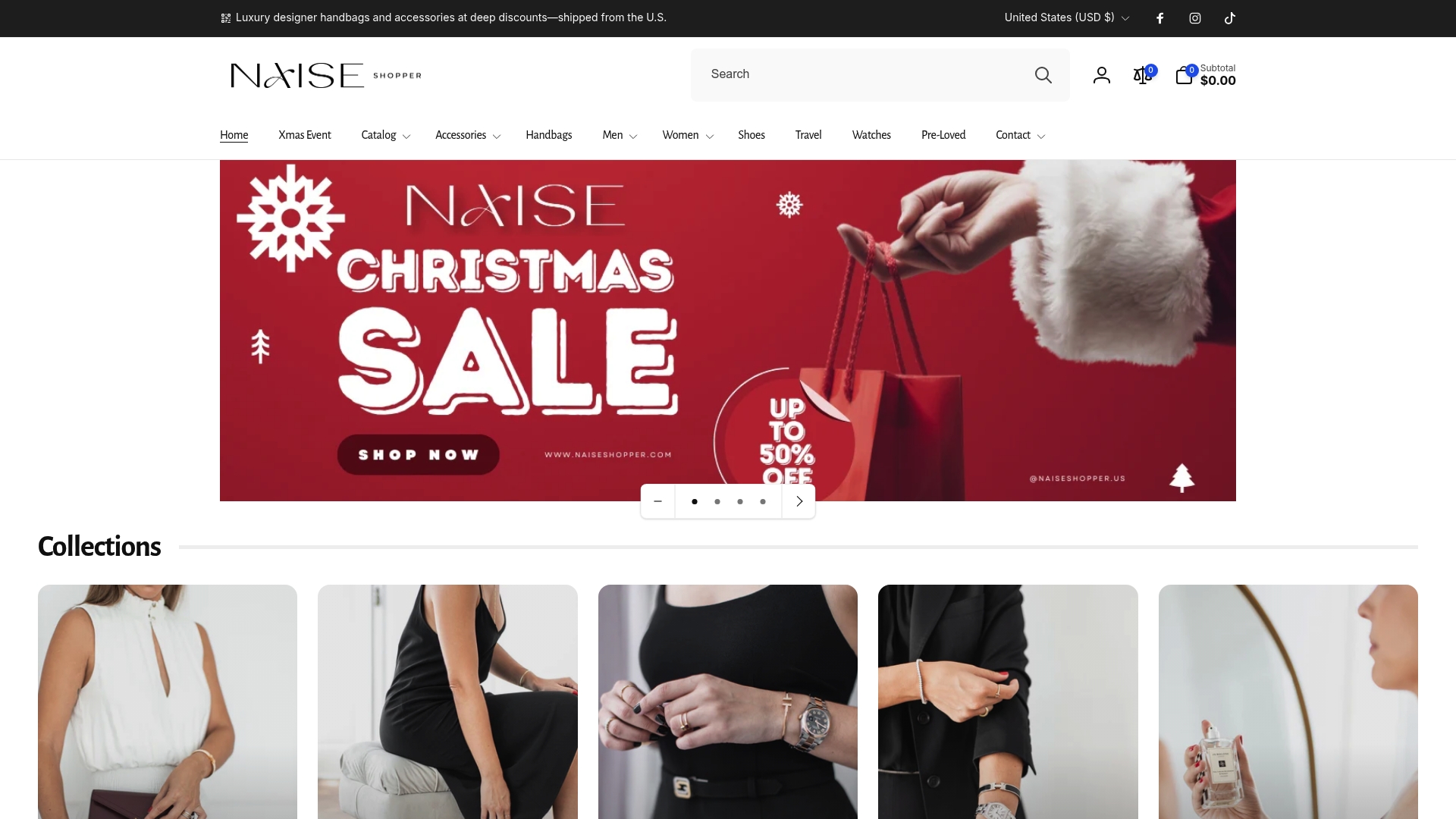
Naiseshopper is a curated luxury fashion platform specializing in authenticated designer handbags, shoes, ready-to-wear apparel, watches, and accessories from Gucci, Chanel, Prada, Valentino, Bottega Veneta, Saint Laurent, and Balenciaga. Every item carries an authenticity guarantee, and the platform offers international secure shipping, flexible payment methods, and personal shopper assistance for buyers who want guidance navigating the collection. If you’ve been eyeing Prada sneakers or Versace pumps but assumed designer pricing was out of reach, Naiseshopper’s deep discounts on curated collections make it worth a look. For shoppers who want authentic luxury deals without the uncertainty of unverified resale listings, it’s a genuinely different kind of bargain platform.
Key takeaways
The best alternatives to unique-bargain-shoppers.com are established US discount chains, curated resale platforms, and emerging multi-marketplace tools that together cover every budget and product category.
| Point | Details |
|---|---|
| Top discount chains | TJ Maxx, Marshalls, Ross, Burlington, and Ollie’s are the most trusted physical alternatives for brand-name bargains. |
| Know your store type | Off-price, closeout, dollar, outlet, and consignment stores each serve different shopping needs and price expectations. |
| Total cost matters | Shipping, taxes, and buyer fees can erase apparent savings; use tools like Patnd to compare true total costs. |
| Real-time alerts help | Hot deals online last only 30–60 minutes, making real-time alert tools a practical advantage for competitive shoppers. |
| Naiseshopper for luxury | Shoppers seeking authenticated designer bargains from Gucci, Prada, or Chanel will find Naiseshopper a curated, trustworthy option. |
The bargain shopping landscape is more interesting than it looks
There’s a version of this conversation that ends with “just go to TJ Maxx.” And honestly, for most shoppers, that’s not wrong. The off-price chains are genuinely good at what they do, and their scale means consistent inventory across thousands of locations. But the more interesting story is what’s happening at the edges of the discount retail world.
The shift toward curated and ethical marketplaces isn’t just a trend piece talking point. It reflects something real: shoppers are getting tired of scrolling through thousands of unvetted listings to find one item worth buying. The platforms gaining traction right now are the ones that do the filtering for you, whether that’s Ollie’s curating closeout deals, Tradesy authenticating designer resale, or Naiseshopper hand-selecting luxury pieces with a guarantee attached.
The multi-marketplace search tools are also underrated. Most bargain shoppers still open six browser tabs and compare prices manually. Tools that aggregate listings and rank by true total cost, fees included, are a straightforward upgrade that most people haven’t adopted yet. The gap between what a listing appears to cost and what you actually pay at checkout is where a lot of “bargains” quietly disappear.
What I find genuinely compelling about this moment in discount retail is that quality and price are no longer in opposition the way they used to be. Authenticated luxury at real discounts, vetted ethical goods at accessible prices, brand-name closeouts at 70% off: the options for a budget-conscious shopper who cares about what they’re buying have never been better. The challenge is knowing where to look.