Managing global shipping in fashion retail means coordinating production timelines, customs compliance, carrier networks, and real-time inventory visibility across dozens of markets simultaneously. For US fashion retailers, the stakes are higher than ever. Tariff volatility, shifting trade agreements, and rising customer expectations for fast, transparent delivery have made international logistics a genuine competitive differentiator, not just an operational checkbox.
Here is what every US fashion retail decision-maker needs to have locked down:
- Supply chain structure: Understand every handoff from manufacturer to end customer, including freight forwarders, customs brokers, and third-party logistics providers (3PLs).
- Shipping modes: Build a multi-modal network combining air, ocean, and road freight to balance speed against cost.
- Customs and compliance: Master documentation, duties, and the difference between Delivered Duty Paid (DDP) and Delivered Duty Unpaid (DDU) terms before your customers feel the pain.
- Technology integration: Connect your commerce platform to logistics software for real-time visibility and automated compliance.
- Reverse logistics: Treat returns infrastructure as seriously as outbound shipping, especially in the luxury segment.
- Seasonal planning: Align production calendars with shipping schedules to protect critical selling windows.
How the global fashion supply chain actually works for US retailers
The fashion supply chain runs through at least five distinct stages: raw material sourcing, manufacturing, quality control, warehousing, and last-mile delivery. US retailers importing from production hubs in Vietnam, Bangladesh, Italy, or Portugal must coordinate across time zones, currencies, and regulatory regimes before a single garment reaches a domestic distribution center.
Three types of logistics partners carry most of the operational weight:
- Freight forwarders manage the booking, documentation, and movement of cargo across international borders, acting as the retailer’s agent with carriers and port authorities.
- Customs brokers handle tariff classification, duty payment, and regulatory filings with US Customs and Border Protection (CBP), a role that becomes critical when Harmonized Tariff Schedule (HTS) codes are misapplied.
- 3PLs provide warehousing, pick-and-pack, and last-mile distribution, often operating regional fulfillment hubs that reduce transit times to end customers.
Shipping modes shape both cost and speed. Air freight moves high-value, time-sensitive pieces, think a Valentino capsule collection ahead of a seasonal launch, while ocean freight handles bulk replenishment at a fraction of the cost. Road and rail fill the gaps in regional distribution, particularly for European or Asian markets served from a central hub. Multi-modal networks that combine all three give fashion brands the flexibility to react to seasonal demand shifts without locking into a single carrier or mode.
Operational challenges specific to US imports include port congestion at Los Angeles and Long Beach, CBP examination holds, and the complexity of managing multiple country-of-origin requirements under trade agreements like the US-Mexico-Canada Agreement (USMCA).
Customs, duties, and regulatory compliance for US fashion imports
Customs clearance is where most international shipping delays originate, and fashion retail is particularly exposed. Every shipment entering the US requires a commercial invoice, packing list, bill of lading or airway bill, and a CBP entry filing. High-value luxury goods often trigger additional scrutiny, including requests for certificates of authenticity or country-of-origin documentation.
Key compliance requirements for US fashion imports include:
- HTS classification: Incorrect tariff codes trigger duty underpayments, CBP penalties, and shipment holds that can run days or weeks.
- Section 301 tariffs: Goods manufactured in China remain subject to additional tariffs under Section 301, with rates that have shifted repeatedly since 2018 and continue to evolve in 2026.
- Lacey Act and CITES: Exotic leather goods, certain feathers, and wildlife-derived materials require specific permits and declarations.
- Customs-Trade Partnership Against Terrorism (C-TPAT): Certified importers receive expedited processing, a meaningful advantage during peak shipping seasons.
The choice between DDP and DDU shipping terms has a direct impact on customer experience. DDP shipping means the retailer absorbs and pre-pays all duties and taxes, so the customer receives their Gucci or Balenciaga purchase with no surprise fees at the door. DDU pushes those costs to the recipient, which frequently results in package abandonment and brand damage. For luxury fashion, DDP is the only defensible choice.
Compliance callout: Data silos between commerce platforms and logistics providers are a leading cause of customs errors and shipment delays in international fashion expansion, according to Passport Global. Real-time data integration between systems is the fix.
Recent regulatory changes US retailers must track include updated de minimis thresholds, evolving forced-labor import bans under the Uyghur Forced Labor Prevention Act (UFLPA), and new country-of-origin marking requirements for textile and apparel products.
Technology and strategic approaches to optimize global shipping logistics
The retailers winning at cross-border shipping in 2026 are not the ones with the biggest carrier contracts. They are the ones whose systems talk to each other. Integrated platforms that connect shopping cart, compliance engine, and carrier selection in a single workflow reduce manual errors and cut shipping delays by automating what used to require three separate teams.
Key technology capabilities that move the needle:
- Landed-cost checkout: Calculating and displaying duties, taxes, and shipping fees at checkout removes the single biggest friction point in international conversion. Localized pricing with duties at checkout is a proven lever for reducing cart abandonment in luxury ecommerce.
- AI-driven route optimization: Machine learning tools analyze carrier performance, transit times, and cost data to recommend the best shipping mode for each order, automatically.
- Real-time shipment visibility: Platforms that surface live tracking data across all carriers give operations teams the ability to intervene before a delay becomes a missed launch window.
- Automated compliance screening: Software that flags restricted materials, checks HTS codes, and generates customs documents at order creation prevents the errors that cause CBP holds.
Multi-modal network strategy is the operational backbone behind all of this. Moving away from reactive, single-mode shipping toward a planned combination of air and ocean freight, calibrated to each product’s margin and shelf-life, is what separates agile fashion logistics from expensive firefighting.
Pro Tip: When deciding between air and ocean for a given shipment, factor in the product’s markdown risk, not just transit time. A trend-driven piece with a six-week selling window almost always justifies air freight. A core replenishment SKU with a twelve-month shelf life rarely does.

Managing returns and reverse logistics in global fashion retail
Returns in fashion retail are not an edge case. They are a core operational reality, and in the luxury segment, they carry outsized brand implications. A customer who returns a Prada bag and receives a confusing, expensive, or slow process is unlikely to purchase again. Efficient global return systems are as operationally critical as outbound delivery infrastructure.
Building a functional international returns program requires:
- Regional return hubs: Consolidating returns in-market before shipping back to a central facility cuts costs and speeds up refund processing.
- Pre-paid return labels: Especially for luxury purchases, providing a pre-paid label removes friction and signals confidence in the product.
- Returns management software: Platforms that automate return authorization, carrier selection, and refund triggers reduce manual handling and processing time.
- Customs documentation for returns: International returns require their own paperwork, including proof that duties were previously paid, to avoid double-charging on re-import.
For a deeper look at how to structure the returns process for luxury purchases, Naiseshopper’s luxury fashion return guide walks through each step in practical detail. The integration between outbound and inbound logistics systems matters here: when your warehouse management system knows a return is in transit, it can reserve inventory, trigger quality inspection workflows, and update available stock in real time.
Seasonal planning and inventory management in global fashion shipping
Fashion runs on a calendar that does not forgive late shipments. A Spring/Summer collection that arrives at a US distribution center two weeks after the planned floor date loses its full-price selling window, often permanently. Coordinated transportation, warehousing, and visibility tools are what keep seasonal launches on schedule across global markets.
Effective seasonal planning involves several interlocking decisions:
- Production-to-ship alignment: Lock shipping bookings at the same time production orders are confirmed, not after goods are ready. Ocean freight capacity, especially for peak seasons like holiday, books out months in advance.
- Multi-node fulfillment: Holding stock in regional hubs near key markets reduces customs friction, shortens last-mile transit, and lets you respond to regional demand spikes without air-freighting emergency replenishment.
- Demand-driven inventory positioning: Use sales velocity data from prior seasons to pre-position inventory in the markets where it will sell fastest, rather than shipping everything from a single central warehouse.
- Shipment visibility for launch coordination: Real-time tracking data lets merchandising and marketing teams adjust launch timing if a shipment is delayed, protecting the customer experience and the promotional investment.
Peak seasons, particularly the fourth quarter, compress shipping timelines and inflate carrier rates simultaneously. Fashion retailers who have not pre-booked capacity by late summer typically pay a premium or accept delays they cannot afford.
Packaging and documentation: getting the details right
Packaging in global fashion shipping does two jobs at once: it protects the product and it communicates brand value. For luxury goods, the unboxing experience is part of the product. A Chanel jacket arriving in a crushed box with a generic poly mailer inside is a brand failure, regardless of whether the garment itself is perfect.

Practical packaging requirements for international fashion shipments include accurate weight and dimension data (carriers charge dimensional weight, and discrepancies trigger billing adjustments), tamper-evident seals for high-value items, and country-specific labeling requirements such as fiber content declarations and care instruction languages mandated by the destination market.
Documentation is equally unforgiving. A missing or inaccurate commercial invoice is the most common cause of customs clearance delays. Every international shipment needs a commercial invoice with accurate item descriptions, declared values in the correct currency, country of origin, and HTS codes. For luxury goods, certificates of authenticity and brand authorization letters add another layer that customs authorities increasingly request. Sustainable packaging choices, like those outlined in eco-friendly luxury wrapping, are also gaining traction as both a brand differentiator and a response to growing regulatory pressure on packaging waste in the EU and UK markets.
Sustainability practices in global fashion shipping
Sustainability in fashion logistics has moved from a marketing talking point to an operational priority, driven by both consumer pressure and incoming regulation. The EU’s Corporate Sustainability Reporting Directive (CSRD) and similar frameworks are pushing global fashion brands to measure and disclose the carbon footprint of their supply chains, including transportation.
The most impactful shift available to most retailers is modal: moving shipments from air to ocean freight wherever the timeline allows. Air freight generates roughly 50 times more CO2 per ton-kilometer than ocean shipping, so even a partial shift meaningfully reduces a brand’s transport emissions. Fashion logistics providers are increasingly helping brands maximize container loads and identify air-to-ocean conversion opportunities without sacrificing delivery speed.
Other sustainability levers gaining traction in 2026 include:
- Consolidation shipping: Combining smaller shipments into full container loads reduces per-unit emissions and often cuts costs.
- Sustainable packaging materials: Recycled and FSC-certified packaging reduces waste and satisfies retailer sustainability commitments.
- Carbon offset programs: Several major freight forwarders now offer verified carbon offset options tied to specific shipments, giving brands a credible way to address residual emissions.
- Nearshoring: Shifting some production closer to the US market, particularly to Mexico or Central America under USMCA, shortens supply chains and reduces total transport emissions.
Risk management and mitigation strategies for fashion logistics
Fashion supply chains are exposed to a wide range of disruptions: port strikes, carrier bankruptcies, factory fires, and extreme weather events have all caused major shipping failures in recent years. The retailers who recovered fastest shared one characteristic: they had mapped their risks before the disruption hit.
A practical risk management framework for fashion logistics covers four areas:
- Supplier diversification: Sourcing from multiple countries and factories reduces single-point-of-failure exposure. A retailer with 80% of production in one country is one tariff change or factory closure away from a serious inventory crisis.
- Carrier diversification: Relying on a single freight carrier for international lanes creates vulnerability. Maintaining relationships with two or three carriers per major trade lane gives you negotiating leverage and backup capacity.
- Cargo insurance: Luxury fashion shipments should carry cargo insurance that covers the full declared value, including duties. Standard carrier liability limits are far below the replacement cost of high-value designer goods.
- Contingency routing: Pre-identify alternative ports, carriers, and routing options for your most critical lanes so that when a disruption hits, the decision is already made.
Business continuity planning should also address cybersecurity risks in logistics systems. Ransomware attacks on freight management platforms have caused real shipping disruptions for major retailers, and the interconnected nature of modern logistics software makes this a genuine operational threat.
How geopolitical shifts and trade wars are reshaping fashion logistics
The US-China trade relationship remains the single biggest geopolitical variable in fashion logistics. Section 301 tariffs on Chinese-made goods have pushed many brands to diversify production to Vietnam, Cambodia, Bangladesh, and India, but those shifts take years to execute and introduce their own compliance complexity. In 2026, ongoing tariff negotiations and the possibility of additional trade actions mean that fashion retailers need to monitor policy developments as closely as they monitor carrier rates.
Beyond China, several geopolitical dynamics are actively reshaping cross-border shipping solutions for US fashion brands:
- Red Sea disruptions: Ongoing security concerns in the Red Sea have rerouted significant ocean freight volumes around the Cape of Good Hope, adding transit time and cost to Europe-to-US and Asia-to-Europe lanes.
- US-EU trade tensions: Periodic disputes over digital services taxes and agricultural subsidies have threatened retaliatory tariffs on luxury goods, which would directly affect brands like Gucci and Saint Laurent imported from Italy and France.
- Nearshoring acceleration: Trade uncertainty is accelerating investment in Western Hemisphere production, with Mexico emerging as a significant apparel manufacturing hub for US-bound goods.
- De minimis reform: Proposed changes to the US de minimis threshold, which currently allows imports under $800 to enter duty-free, could significantly increase landed costs for direct-to-consumer international shipments if enacted.
Fashion retailers need a government affairs or trade compliance function, whether in-house or outsourced, that tracks these developments and translates them into operational decisions before they become crises.
Tracking and visibility solutions that actually work
Real-time shipment visibility is no longer a premium feature. Customers expect to know where their order is at every stage, and operations teams need the same data to manage exceptions before they escalate. The gap between what most retailers promise and what their systems can actually deliver is where customer trust gets lost.
Effective tracking and visibility in international fashion logistics requires three layers working together. First, carrier-level tracking data must be aggregated across all carriers into a single platform, because a customer should not need to visit four different carrier websites to follow one order. Second, that data must be normalized, since different carriers use different event codes and milestone labels, and a unified view requires translation. Third, exception alerts must be automated so that when a shipment misses a checkpoint, the relevant team member is notified immediately rather than discovering the delay after a customer complaint.
Platforms like project44 and FourKites specialize in multi-carrier visibility for enterprise shippers, while several freight forwarders now offer embedded tracking portals as part of their service. For luxury fashion specifically, proactive communication at each milestone, including a notification when a shipment clears customs, builds the kind of confidence that turns a first-time buyer into a repeat customer. Naiseshopper’s international shipping guide covers the specific visibility standards that luxury shoppers expect from a global delivery experience.
Naiseshopper brings authenticated luxury fashion to your door, globally
Navigating the complexity of global fashion logistics is exactly what Naiseshopper has built its platform around. While fashion retailers wrestle with customs compliance, carrier selection, and landed-cost pricing, Naiseshopper handles all of it on behalf of its customers, delivering authenticated pieces from Gucci, Prada, Chanel, Bottega Veneta, and more to shoppers worldwide.
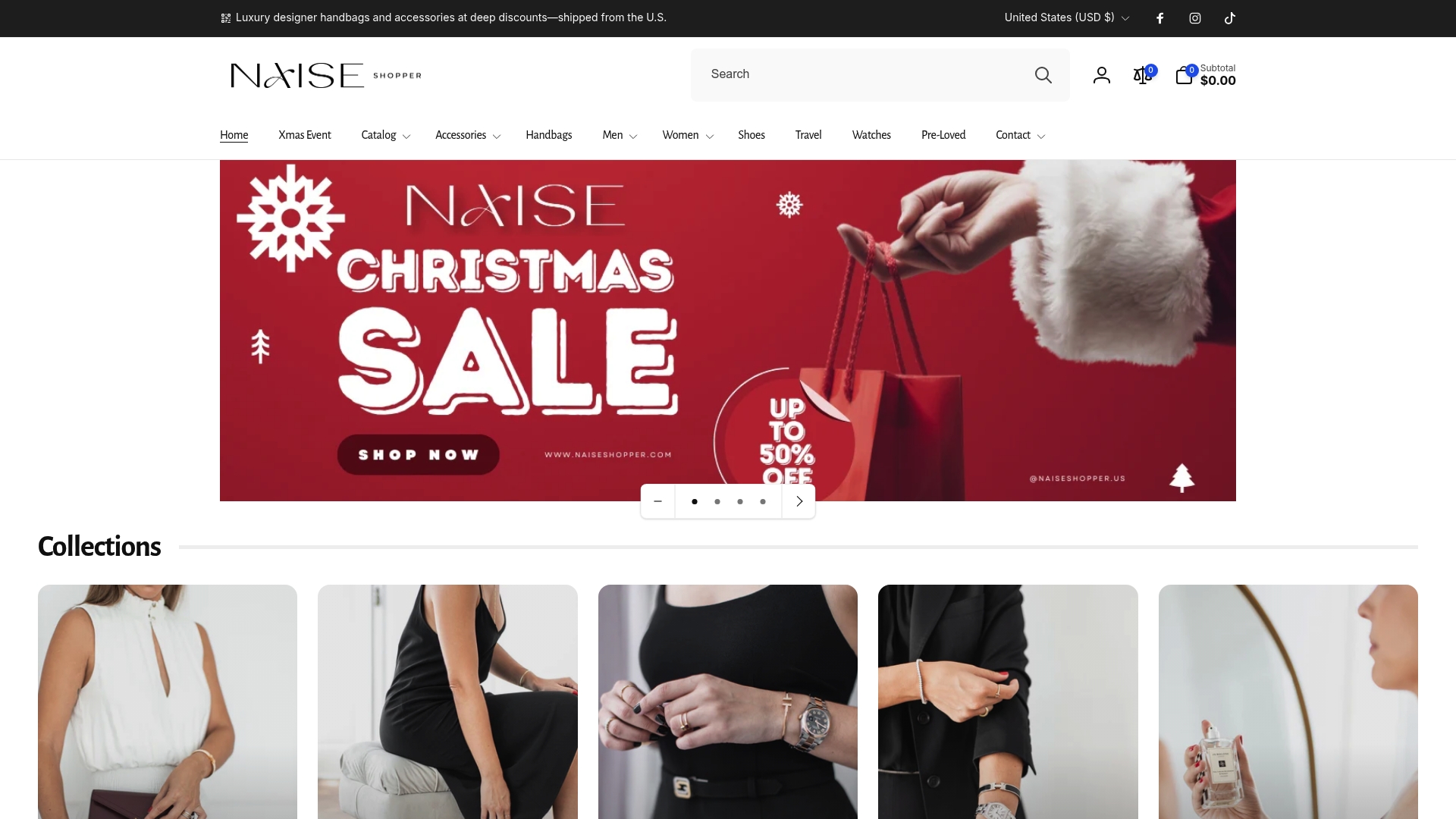
Every purchase on Naiseshopper comes with guaranteed authenticity, shipping insurance, and transparent pricing that includes duties and taxes upfront, so there are no surprise fees at delivery. The platform’s personal shopper service adds another layer of convenience, whether you are purchasing directly or sourcing through Naiseshopper’s US shopping network. Flexible payment options and localized pricing for dozens of countries make the experience genuinely global. For shoppers who want the confidence of a fully managed international delivery, the Gucci G-Timeless Watch is a perfect example of what authenticated luxury, delivered securely across borders, looks like in practice.
Key Takeaways
Effective global shipping in fashion retail requires multi-modal logistics, real-time data integration, and DDP pricing to protect both margins and customer experience across international markets.
| Point | Details |
|---|---|
| Multi-modal networks win | Combining air and ocean freight, calibrated to product shelf-life, cuts costs without sacrificing speed. |
| DDP terms protect the customer | Pre-paying duties at checkout eliminates surprise fees and prevents package abandonment in luxury segments. |
| Reverse logistics drives loyalty | Efficient international return systems are as critical as outbound delivery for retaining high-value fashion customers. |
| Seasonal visibility prevents losses | Real-time shipment tracking lets teams adjust launch timing before a delay costs a full-price selling window. |
| Naiseshopper delivers it end-to-end | Authenticated luxury fashion with shipping insurance, landed-cost pricing, and personal shopper support across global markets. |