In the world of luxury fashion, the line between authentic and counterfeit has become dangerously thin. Today’s superfakes replicate even the finest details of designer goods, from stitching patterns to hardware finishes, making visual inspection alone insufficient for verification. For affluent buyers investing thousands in a single handbag or accessory, authentication is no longer optional but essential to protect value, reputation, and ethical standards. This guide explores why authentication matters, the challenges posed by sophisticated counterfeits, and how proper verification safeguards your luxury purchases.
Table of Contents
- Key takeaways
- Why authentication matters for luxury buyers
- Challenges posed by sophisticated counterfeit goods
- Authentication methods and industry best practices
- How authentication enhances luxury resale and consumer trust
- Explore authentic luxury designer goods
- Frequently asked questions about authenticating designer goods
Key Takeaways
| Point | Details |
|---|---|
| Authentication matters | Authenticating luxury goods protects investment, reputation, and ethical standards by ensuring pieces meet genuine criteria. |
| Superfakes fool experts | Even highly authentic looking items can slip past casual checks, making forensic verification essential. |
| Verification methods vary | A mix of visual checks and advanced forensic tools is often required to confirm authenticity. |
| Documentation supports resale | Proof of authentication and credible certificates preserve value and create a trusted chain of custody for buyers. |
Why authentication matters for luxury buyers
For affluent consumers, purchasing designer goods represents more than acquiring beautiful objects. These items signal taste, status, and discernment within social circles where authenticity carries weight. When you carry a counterfeit Chanel bag to a charity gala or business meeting, the reputational damage extends beyond personal embarrassment to questions about your judgment and values. Authentication protects this social capital by ensuring every piece in your collection meets genuine standards.
The financial stakes are equally significant. For affluent buyers, authentication safeguards reputation, investment returns, and ethical standing against organized crime and labor exploitation in counterfeits. Counterfeit operations often fund criminal networks and rely on exploitative labor conditions that contradict the values many luxury consumers hold. By insisting on authenticated goods, you actively support legitimate artisanship and fair manufacturing practices that define true luxury.
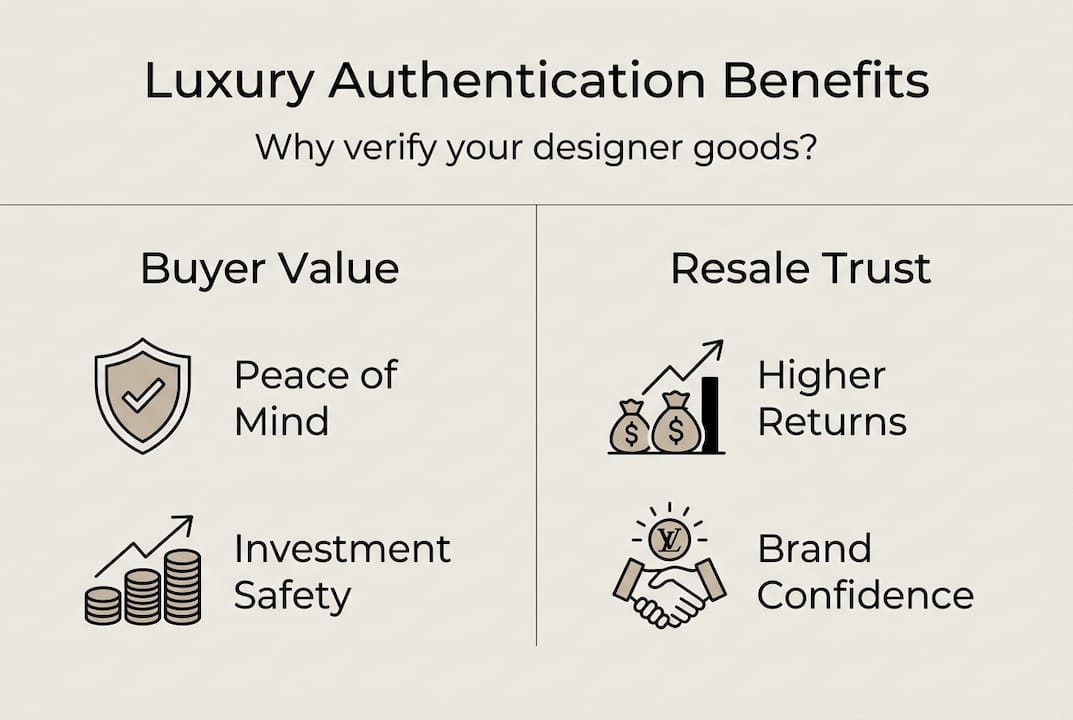
Resale value depends entirely on provable authenticity. A Hermès Birkin authenticated by recognized experts can command 80% to 120% of retail price in secondary markets, while an unverified piece struggles to attract serious buyers regardless of actual legitimacy. The role of trust in luxury shopping becomes paramount when you consider that authentication documentation travels with the item, creating a verifiable chain of custody that future buyers will demand.
Pro Tip: Always request authentication certificates from multiple independent services for purchases exceeding $5,000. This redundancy provides additional security and strengthens documentation for insurance and resale purposes.
Authentication also offers psychological peace of mind that transforms the ownership experience. Knowing your Gucci loafers or Prada wallet passed rigorous verification allows you to enjoy these pieces without nagging doubts. This confidence enhances the emotional value that makes luxury purchases meaningful beyond their monetary cost.
Challenges posed by sophisticated counterfeit goods
The counterfeit industry has evolved dramatically, with manufacturers now producing superfakes that replicate authentic items at microscopic levels. Superfakes replicate materials and hardware even from same suppliers, fool experts and brands, with challenges from GWP and VIP gifts lacking documentation, and personalized items reducing resale value by 40 to 60%. These advanced counterfeits source identical leather, hardware, and even packaging from the same suppliers used by luxury houses, making visual detection nearly impossible.
| Counterfeit Category | Authentication Challenge | Impact on Buyers |
|---|---|---|
| Superfakes | Identical materials and construction | Requires forensic tools for detection |
| GWP/VIP Gifts | Missing original documentation | Authenticity doubts reduce market value |
| Personalized Items | Custom elements complicate verification | 40 to 60% resale value loss |
| Vintage Pieces | Manufacturing variations over decades | Historical knowledge required |
| Online Purchases | Poor quality photos mask defects | Higher risk of undetected fakes |
Personalized luxury items present unique authentication obstacles. When a bag features custom monogramming or special hardware modifications, standard reference materials become less useful. Buyers hesitate to pay premium prices for personalized pieces because verification becomes more complex and subjective. This uncertainty directly impacts resale value, with personalized items typically selling for 40% to 60% less than comparable non-personalized versions even when authenticated.
Gift with purchase items and VIP gifts from luxury brands create another verification challenge. These pieces often lack the standard documentation, serial numbers, or packaging that authenticators rely on for verification. A Chanel compact received as a VIP gift may be entirely genuine but struggle to find buyers willing to pay appropriate prices without traditional proof of purchase. Understanding the step by step guide to spotting fake handbags helps, but documentation gaps remain problematic.
Vintage luxury goods add complexity through legitimate manufacturing variations. A 1980s Louis Vuitton bag may feature construction details that differ from current production methods, making authentication dependent on historical knowledge that few possess. Counterfeiters exploit this confusion by creating fakes that mimic older styles, knowing that reference materials are scarce and expert opinions may vary.
Online marketplace photos compound these challenges. Low resolution images, poor lighting, and strategic angles can hide telltale signs of counterfeits. Even experienced buyers struggle to assess authenticity from photos alone, yet online platforms dominate luxury resale markets. This reality makes professional authentication essential for any significant online purchase.
Authentication methods and industry best practices
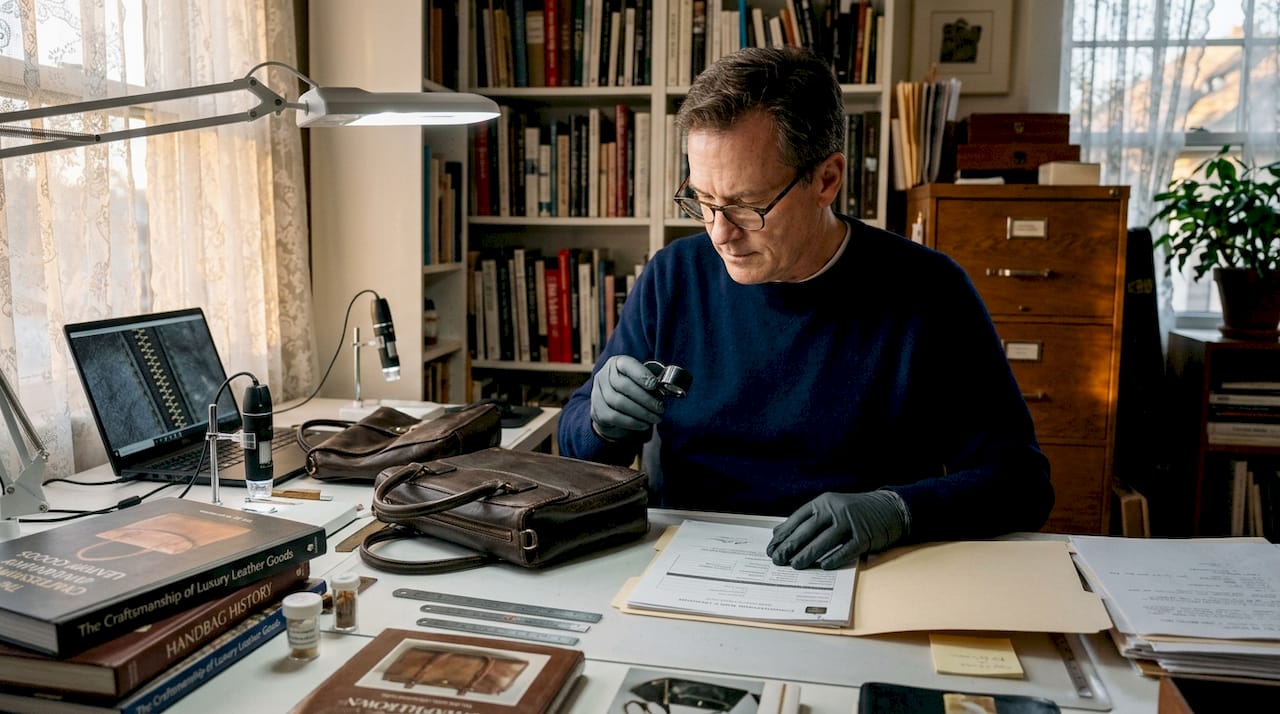
Effective authentication employs multiple verification layers rather than relying on single tests. Defense in depth approaches using multiple convergent checks rather than single tests, with superfakes demanding forensic tools like X-ray, UV light, and spectroscopy beyond visual inspection represent the current industry standard. This comprehensive approach recognizes that superfakes can pass individual tests while failing when multiple methods converge on the same conclusion.
Professional authenticators follow systematic processes:
- Initial visual assessment examining overall construction quality, proportion, and materials
- Detailed inspection of stitching patterns, thread type, and stitch density using magnification
- Hardware analysis including weight, finish quality, engravings, and mechanical function
- Material verification through touch, smell, flexibility testing, and grain pattern analysis
- Serial number and date code validation against manufacturer databases and formatting rules
- Forensic examination using UV light to reveal hidden markings and adhesive traces
- Advanced spectroscopy or X-ray analysis for items requiring molecular-level verification
- Documentation review including receipts, certificates, and packaging authenticity
Forensic tools have become essential as counterfeits improve. UV light reveals adhesives, alterations, and hidden authentication marks invisible to the naked eye. X-ray imaging shows internal construction and hardware attachment methods that differ between authentic and counterfeit pieces. Spectroscopy analyzes material composition at the molecular level, detecting synthetic materials or incorrect dye formulations that visual inspection misses.
| Authentication Method | Accuracy Level | Typical Cost Range | Best For |
|---|---|---|---|
| Visual Inspection Only | 70 to 85% | $20 to $50 | Lower value items under $500 |
| Visual Plus Documentation | 85 to 95% | $50 to $150 | Mid-range designer pieces |
| Forensic Multi-Method | 99 to 99.9% | $150 to $500 | High-value items over $2,000 |
Leading authentication platforms claim accuracy rates up to 99.9% when combining multiple verification methods. This precision comes at modest cost relative to item values. A $300 authentication fee represents just 3% of a $10,000 handbag purchase, providing substantial protection against complete loss from counterfeit acquisition.
Pro Tip: Choose authenticators who specialize in specific brands rather than generalists. A Hermès specialist understands subtle details that generic luxury authenticators might miss, particularly for vintage or limited edition pieces.
The authenticity checklist for bags provides consumers with preliminary verification steps, while the luxury handbag authentication process details what professional services examine. Understanding these processes helps buyers recognize when authentication is thorough versus superficial.
How authentication enhances luxury resale and consumer trust
The secondhand luxury market demonstrates authentication’s commercial impact. The secondhand luxury market is growing to $360 billion by 2030, with authentication becoming the gold standard that enables this expansion. Without trusted verification systems, this market would collapse under the weight of counterfeit concerns and buyer skepticism.
Authenticated luxury goods command significant price premiums in resale markets:
- Authenticated Chanel Classic Flaps sell for 15% to 25% more than identical unverified pieces
- Hermès bags with authentication certificates attract buyers willing to pay full market value
- Rolex watches authenticated by recognized services sell 30% faster than unverified timepieces
- Designer shoes with verification documentation receive 20% more offers from serious buyers
Buyer confidence transforms when authentication removes uncertainty from transactions. Consumers who might hesitate to spend $8,000 on an unverified Bottega Veneta bag readily invest that amount when professional authentication provides assurance. This confidence extends beyond individual transactions to build trust in entire platforms and sellers who prioritize verification.
“Authentication has become the cornerstone of luxury resale, transforming what was once a risky proposition into a trusted marketplace where consumers confidently invest in pre-owned designer goods knowing their purchases are genuine.”
Brand reputation benefits from robust authentication ecosystems. Luxury houses initially resisted resale markets, fearing brand dilution and counterfeit association. However, as authentication services became sophisticated, brands recognized that verified secondary markets actually protect brand value by ensuring only genuine items circulate under their names. This shift has led some luxury houses to partner with authentication services or develop proprietary verification systems.
The emotional value of verified authenticity cannot be overstated. Luxury consumers invest in designer goods partly for the story and heritage behind each piece. Knowing your Valentino gown or Saint Laurent jacket is genuinely crafted by the house’s artisans enhances the ownership experience and deepens brand connection. Understanding luxury item authenticity explained and learning how to spot authentic luxury bags empowers consumers to make confident purchasing decisions.
Authentication also mitigates fraud risk for sellers. When you decide to sell a luxury item from your collection, authentication documentation streamlines the process and protects you from buyer disputes. Verified authenticity reduces return requests, chargeback claims, and negative feedback that can damage seller reputations on marketplace platforms.
Explore authentic luxury designer goods
Now that you understand why authentication matters and how it protects your luxury investments, you can shop with confidence knowing every purchase is verified for authenticity. NaiseShopper specializes in authenticated designer goods, offering curated collections from prestigious houses like Gucci, Chanel, Prada, and Valentino. Each item undergoes rigorous verification to ensure you receive genuine luxury at exceptional value.
Explore exclusive offerings like Versace black leather pumps shoes and Versace brown leather pumps shoes, where authentication guarantees meet sophisticated style. Whether you’re building your designer collection or seeking that perfect statement piece, NaiseShopper provides the trust and transparency that luxury shopping demands.
Frequently asked questions about authenticating designer goods
What are the top signs to spot a fake designer item?
Authentic designer items feature consistent stitching with even tension and spacing, high-quality materials that feel substantial, precisely engraved or embossed logos, and hardware with proper weight and finish. Counterfeits often show irregular stitching, cheap-feeling materials, blurry or misaligned logos, and lightweight hollow hardware. However, superfakes now replicate these details convincingly, making professional authentication essential for valuable pieces.
How much does professional authentication typically cost?
Authentication fees range from $20 for basic visual inspection of lower-value items to $500 for comprehensive forensic analysis of high-value pieces like Hermès bags or Rolex watches. Most mid-range designer handbags cost $100 to $200 to authenticate. This represents a small percentage of item value and provides substantial protection against counterfeit purchases that could result in total financial loss.
Can authenticated items guarantee resale value?
Authentication significantly enhances resale value but cannot guarantee specific prices, as market demand, condition, and trends also influence what buyers will pay. However, authenticated items consistently sell for 15% to 30% more than identical unverified pieces and attract buyers faster. Authentication documentation creates buyer confidence that directly translates to stronger offers and smoother transactions in secondary markets.
Why do some personalized items lose value in resale?
Personalized luxury items like monogrammed bags or custom-engraved watches appeal to specific tastes, limiting the buyer pool compared to standard versions. Additionally, personalization complicates authentication since custom elements fall outside standard reference materials, creating verification uncertainty. This combination typically reduces resale value by 40% to 60% even when items are authenticated, as buyers prefer versatile pieces without previous owner personalization.
Is authentication linked to supporting ethical fashion practices?
Yes, authentication directly supports ethical fashion by ensuring your purchases fund legitimate luxury houses rather than counterfeit operations. Counterfeit manufacturing typically involves exploitative labor conditions, environmental violations, and funding for organized crime networks. By insisting on authenticated goods, you support fair wages, quality craftsmanship, and sustainable practices that define responsible luxury consumption. Learn more about making informed choices in the luxury fashion investing guide.