Finding a genuine investment opportunity in the luxury fashion world can feel elusive when trends shift and counterfeits flood the market. For affluent collectors across Europe and North America, the true value lies in acquiring vintage designer bags renowned for their authenticity, rarity, and consistent appreciation. With select Hermès Birkin bags showing average annual value increases of 14.2 percent, understanding what drives long-term growth and resale potential empowers collectors to build a portfolio that merges style with smart financial strategy.
Table of Contents
- Defining Vintage Bag Investment Value
- Types of Vintage Bags and Top Brands
- Authentication, Condition, and Market Trends
- Financial Benefits and Real-World Returns
- Risks, Costs, and Common Investment Mistakes
Key Takeaways
| Point | Details |
|---|---|
| Investment Value Factors | Vintage bag investment value is driven by rarity, craftsmanship, brand legacy, condition, and provenance. Focus on timeless designs from established luxury houses to ensure appreciation. |
| Market Trends and Authenticity | Monitor market trends and prioritize authenticated bags to protect your investment from counterfeits. Conduct thorough research on brand recognition and historical significance before purchasing. |
| Financial Potential | Vintage designer bags can offer substantial returns, often outperforming traditional investments. Consider the total transaction costs involved to project realistic returns. |
| Diversification and Risks | Build a diversified collection to mitigate risks associated with individual piece investments. Avoid emotional buying decisions and prioritize pieces with proven appreciation history. |
Defining Vintage Bag Investment Value
When you’re evaluating a vintage designer bag as a potential investment, you’re not simply buying a fashion accessory—you’re acquiring an asset with measurable financial potential. The investment value of vintage bags stems from specific, quantifiable factors that separate a worthwhile purchase from a fashionable impulse. Understanding what drives this value helps you identify pieces that will appreciate rather than depreciate over time.
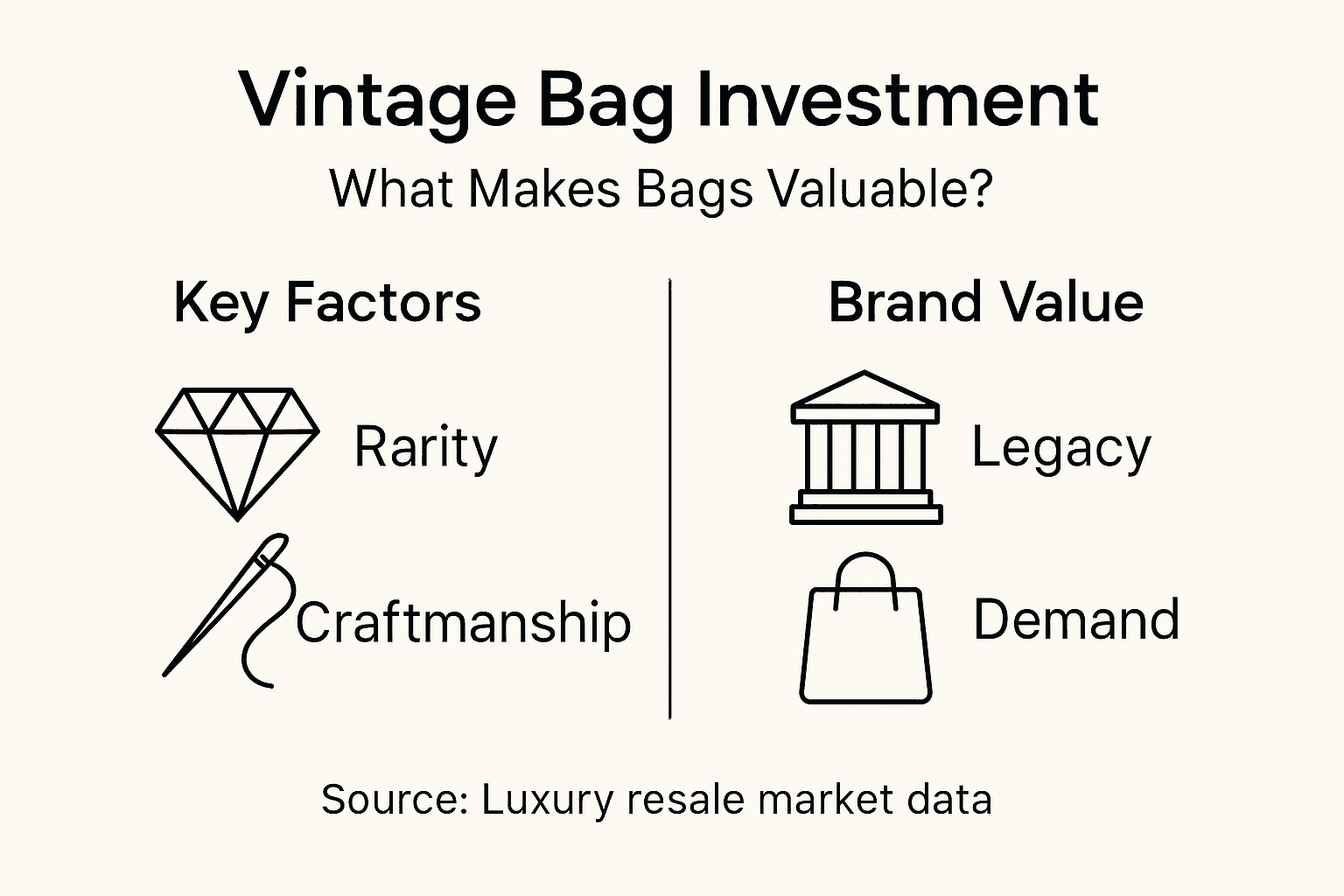
Vintage bag value rests on rarity, craftsmanship, and historical significance, combined with the superior materials and construction methods that characterized production decades ago. A Chanel 2.55 from the 1980s commands higher prices today not because it’s old, but because Chanel produced limited quantities using hand-selected leathers and meticulous stitching techniques that the brand no longer employs at the same scale. Limited production runs create natural scarcity, which directly impacts price appreciation. When fewer pieces exist in the marketplace, collectors and fashion enthusiasts compete more aggressively to secure them, driving valuations upward.
Brand legacy and the designer’s historical position in luxury fashion also determine investment potential. Bags from houses with strong archival significance—think Hermès, Prada, Saint Laurent, or Gucci during its golden eras—tend to appreciate more consistently than pieces from lesser-known designers or contemporary brands. The secondary market recognizes these names as safe investments. Additionally, certain silhouettes transcend trends. A structured leather tote or a classic shoulder bag maintains relevance across decades because it solves an enduring functional need. Conversely, trend-driven shapes struggle to retain value once fashion cycles move forward.
Condition and provenance complete the investment equation. A well-preserved bag with original hardware, intact linings, and minimal wear commands premiums of 30 to 50 percent above similarly authenticated pieces showing signs of heavy use. Authentication itself becomes crucial—you’re paying premium prices, so proof of genuine production is non-negotiable. When evaluating potential purchases through platforms offering authenticated luxury goods, verify that authentication comes from verified experts, not dealer assurances alone.
Pro tip: Focus on timeless silhouettes in neutral colors from established luxury houses with proven secondary market demand; these pieces appreciate more reliably than trend-dependent designs regardless of current fashion cycles.
Types of Vintage Bags and Top Brands
Not all vintage bags are created equal. The category encompasses everything from structured leather satchels to soft suede clutches, each serving different functional needs and attracting different collector profiles. Understanding the primary types helps you align your investment strategy with your lifestyle and financial goals. The most sought-after categories include shoulder bags, tote bags, crossbody bags, and structured handheld styles—each commanding different price points based on rarity and brand positioning.
When it comes to vintage bag investment, certain brands consistently outperform others in the secondary market. Top vintage bag brands include Hermès, Chanel, and Louis Vuitton, all recognized for their enduring craftsmanship and historical significance. Hermès represents perhaps the most stable investment vehicle—their leather goods appreciate predictably because the brand maintains exceptional quality standards and deliberately limits production. A vintage Hermès Birkin or Kelly bag from the 1990s or early 2000s typically sells for significantly more today than its original retail price. Chanel’s classic 2.55 and Flap bags function similarly, with quilted leather construction and iconic hardware that transcend seasonal trends. Louis Vuitton’s monogram canvas pieces, while more accessible on the secondary market, still appreciate steadily due to brand recognition and consistent design language.
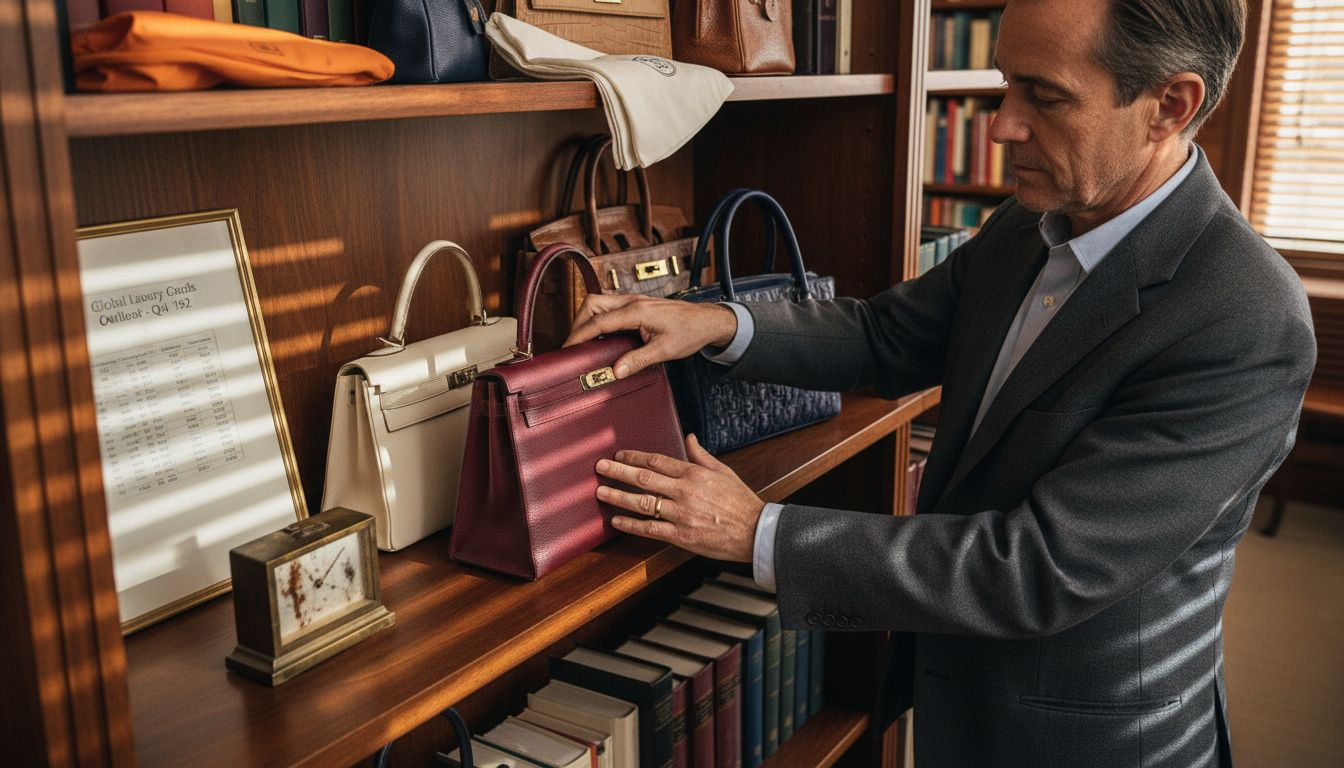
Beyond the holy trinity, other established houses merit serious consideration. Saint Laurent’s structured leather bags from the Tom Ford era command premium prices among European and North American collectors. Prada’s Saffiano leather styles and nylon backpacks maintain strong resale value. Valentino’s oversized leather totes appeal to collectors seeking statement pieces with proven longevity. Bottega Veneta’s intrecciato woven leather bags attract minimalist collectors who value understated luxury. When evaluating these brands, focus on pieces produced during their most celebrated design periods—typically five to fifteen years after a designer’s appointment or during particularly influential creative directions.
Here’s a concise comparison of top vintage bag brands and their investment profiles:
| Brand | Signature Styles | Typical Annual Appreciation | Collector Appeal |
|---|---|---|---|
| Hermès | Birkin, Kelly | 10–14% | Extremely high; most coveted |
| Chanel | 2.55, Classic Flap | 8–12% | Consistent, broad appeal |
| Louis Vuitton | Monogram totes, Speedy Bags | 7–10% | Strong, accessible entry |
| Saint Laurent | Structured Totes, Satchels | 6–9% | Niche, design-focused |
| Prada | Saffiano, Nylon Backpacks | 5–8% | Durable, fashion-forward |
| Bottega Veneta | Intrecciato Leather Bags | 6–9% | Minimalist collectors |
The distinction between genuine investment pieces and fashionable vintage finds comes down to recognizing which specific silhouettes and collections transcend trends. Investment-grade luxury bags remain timeless design statements across decades, whereas trend-dependent shapes struggle to maintain value once fashion cycles shift. A structured top-handle bag in black or cognac leather from an established house will outperform a colorful exotic skin piece from a contemporary brand, regardless of initial purchase price. Collectors purchasing through authenticated vintage platforms should prioritize bags from these established houses, particularly pieces showing clear evidence of original production craftsmanship through hardware quality, stitching patterns, and material consistency.
Pro tip: Prioritize bags from the heritage categories—saddle bags, totes, and structured shoulder styles—from recognized luxury houses, as these functional silhouettes transcend trends and appreciate more reliably than seasonal design experiments.
Authentication, Condition, and Market Trends
Authentication serves as the foundation of any serious vintage bag investment. Without verified proof of authenticity, you own nothing more than a fashion item with uncertain resale potential. The secondary market for luxury goods demands documentation that confirms original production by the claimed designer. Counterfeits flood the marketplace, and distinguishing fakes from genuine pieces requires understanding specific markers that vary by brand and production era. Professional authenticators examine hardware quality, stitching patterns, leather composition, interior labeling, and construction techniques that counterfeiters struggle to replicate convincingly. When purchasing vintage bags, prioritize sellers offering third-party authentication or purchasing through platforms with established authentication protocols. The premium you pay for authenticated pieces protects your investment far more effectively than the discount you might gain from unverified sources.
Condition directly determines resale value and appreciation potential. A mint-condition vintage Chanel bag commands premiums of 40 to 60 percent above identical pieces showing moderate wear. Collectors evaluate condition through specific criteria: original hardware presence and functionality, lining integrity and color, leather patina versus damage, structural soundness, and overall cleanliness. Minor surface scratches on hardware actually enhance value by demonstrating authenticity and age. However, water damage, stains that resist professional cleaning, broken zippers, or cracked leather significantly diminish investment returns. Professional restoration exists but costs escalate quickly, sometimes consuming 20 to 30 percent of a bag’s market value. Purchase condition-appropriate pieces aligned with your maintenance commitment. A well-maintained bag improves with age as leather develops character and patina, while neglected pieces deteriorate rapidly.
Market trends shape vintage bag valuations based on seasonal demand and collector preferences. Certain silhouettes experience cyclical appreciation as fashion cycles resurrect forgotten designs. Maximalist styles gain traction when contemporary runways embrace oversized proportions, while minimalist pieces appreciate during periods favoring understated elegance. Geographic markets influence prices significantly. European collectors pay premiums for American vintage sources, while North American buyers seek European heritage pieces. Current market trends show accelerating demand for pre-owned luxury goods, with authenticated vintage designer bags appreciating 8 to 12 percent annually across established houses. This outpaces traditional investments in many categories. Monitor auction results and resale platform pricing to identify undervalued pieces with strong appreciation potential. Bags currently trading below historical averages from stable brands represent compelling acquisition opportunities before broader market recognition drives prices higher.
Pro tip: Purchase authenticated bags in excellent condition from established luxury houses during market dips or seasonal lulls when demand temporarily softens, allowing you to secure pieces at lower entry points before predictable appreciation cycles resume.
Financial Benefits and Real-World Returns
Vintage bag investing offers tangible financial returns that challenge conventional wisdom about luxury purchases. Unlike most consumer goods that depreciate immediately upon acquisition, authenticated vintage designer bags from established houses appreciate measurably over time. The financial case for vintage bag investment rests on concrete performance data rather than speculation. Certain luxury designer handbags demonstrate annual value increases of 14.2 percent, notably outperforming benchmark indices like the S&P 500. Consider this perspective: a Hermès Birkin purchased for $8,000 in 2015 commands $15,000 to $18,000 in today’s authenticated secondary market. That represents returns between 88 and 125 percent over roughly nine years, translating to average annual appreciation of 8 to 12 percent. Compare this trajectory to traditional stock market returns averaging 10 percent annually, and vintage designer bags occupy a surprisingly competitive position within diversified investment portfolios.
The financial advantage intensifies when you factor in the dual benefit of ownership utility. You cannot wear a stock certificate or derive daily satisfaction from dividend payments, but you deploy your investment through regular use. A vintage Chanel bag worn twice weekly for five years appreciates while simultaneously providing authentic luxury experiences unavailable through traditional financial instruments. This hybrid return mechanism transforms vintage bag investing from pure speculation into practical wealth building. Transaction costs matter significantly, however. Resale platforms typically charge 15 to 20 percent commissions, shipping insurance costs 2 to 5 percent of valuations, and professional authentication runs 50 to 200 dollars depending on bag complexity. Calculate these expenses into your return projections. A bag appreciating 8 percent annually but incurring 22 percent total transaction costs requires holding periods exceeding three years to achieve positive returns. This timeline favors collectors with patience and genuine interest in vintage fashion rather than day traders seeking quick profits.
Real-world returns vary dramatically based on acquisition strategy and piece selection. Bags purchased at full retail through boutiques require significantly longer holding periods to achieve positive returns than those acquired through discounted secondary market purchases. Buying authenticated vintage pieces already trading 30 to 40 percent below original retail prices dramatically improves return potential. An affluent collector purchasing a pre-owned Prada Saffiano tote for $1,200 that originally retailed for $2,100 achieves positive returns much faster than someone purchasing at full price. Geographic arbitrage presents additional opportunities. European collectors can acquire American vintage sources at prices significantly below European secondary market valuations, creating immediate equity appreciation before resale. This strategy requires international shipping expertise and currency exchange awareness but rewards diligent collectors substantially.
Building a diversified vintage collection outperforms concentrating capital in single pieces. A portfolio approach spreads risk across multiple brands, styles, and production eras. One underperforming acquisition becomes negligible within a ten-piece collection where eight pieces appreciate strongly. Professional wealth managers increasingly recognize vintage designer bags as legitimate portfolio diversification tools for affluent clients seeking non-correlated assets outside traditional markets. Storage, insurance, and maintenance costs emerge as ongoing considerations. Budget 1 to 2 percent of collection value annually for climate-controlled storage and specialized insurance. Professional bag conditioning costs 100 to 400 dollars depending on treatment complexity. Account for these expenses when projecting net returns.
Pro tip: Acquire authenticated vintage pieces trading 25 to 40 percent below authenticated retail comparables from established houses, hold minimum three years, and plan exit strategies before purchase to ensure realistic return calculations that account for all transaction costs and ownership expenses.
Risks, Costs, and Common Investment Mistakes
Vintage bag investing carries real financial risks that enthusiastic collectors frequently underestimate. Market volatility affects even premium brands unpredictably. A sudden shift in fashion preferences can tank valuations for entire style categories. Maximalist structured bags dominated collector demand in 2022, but minimalist slouchy silhouettes surged by 2024, leaving previous darlings struggling to maintain value. Trend reversals happen faster than you anticipate, particularly in fashion-driven markets. Additionally, authentication fraud continues evolving. Sophisticated counterfeiters now replicate subtle details that fool casual observers, sometimes even deceiving experienced collectors. Purchasing from unverified sellers or unfamiliar platforms exposes you to acquiring expensive fakes masquerading as authentic pieces. The financial damage extends beyond the initial purchase price. Attempting to resell counterfeit goods damages your credibility and creates legal complications. Liquidity risk presents another consideration. Unlike stocks or bonds with established daily trading volumes, vintage designer bags require finding interested buyers. A bag worth $12,000 becomes worthless if no collector wants it. Niche pieces from lesser-known designers face prolonged selling timelines or require substantial price reductions to attract buyers quickly.
Costs accumulate faster than many collectors anticipate, eroding profitability. Authentication fees range from $75 to $300 per piece depending on complexity. Shipping insured bags domestically costs $40 to $150 per transaction. International shipping escalates to $200 to $500 plus customs duties. Climate-controlled storage for collections costs $50 to $300 monthly depending on space requirements. Professional restoration for damaged pieces runs $200 to $1,500 depending on treatment scope. Resale platform commissions consume 15 to 22 percent of sale prices. A bag appreciating 8 percent annually can generate zero net returns after accounting for all these expenses unless held for multiple years. Tax implications deserve attention. In many jurisdictions, collectible sales trigger capital gains taxes on appreciation amounts. A collector selling a $10,000 bag purchased for $6,000 owes taxes on the $4,000 gain. This reduces effective returns substantially for those in higher tax brackets.
Below is a summary of transaction costs and their impact on net returns:
| Cost Category | Typical Range | Impact on Returns |
|---|---|---|
| Authentication Fees | $75–$300 per bag | Reduces net profit if frequent |
| Resale Commissions | 15–22% of sale price | Significant, must be planned for |
| Shipping & Insurance | 2–5% of item value | Necessary for asset safety |
| Restoration | $200–$1,500 per bag | Reduces returns if repairs needed |
| Storage & Insurance | 1–2% of collection yearly | Ongoing, affects overall gain |
Common investment mistakes undermine otherwise sound acquisition strategies. Emotional purchasing based on temporary fashion trends rather than timeless design leads to ownership of pieces that fail to appreciate. Discounted designer bags from established luxury houses offer superior appreciation potential compared to trend-dependent pieces. Concentrating capital in single pieces rather than building diversified collections magnifies risk. One underperforming acquisition devastates returns when representing 50 percent of your portfolio value. Neglecting condition maintenance transforms appreciating assets into depreciating liabilities. A bag stored improperly develops mold, discoloration, or leather cracking that professional restoration cannot fully remedy. Ignoring provenance documentation creates resale obstacles. Collectors purchasing without receipts or authentication records struggle to command premium prices during sales regardless of actual authenticity. Overleveraging capital creates financial stress if you require emergency liquidity. Treating vintage bags as guaranteed investments rather than diversified portfolio components leads to unrealistic return expectations and poor decision-making. The most successful collectors approach vintage bags with patience, viewing purchases as five to ten-year holds rather than quick flips.
Pro tip: Build diversified collections across multiple brands and silhouettes, maintain meticulous provenance documentation and condition photos, budget for all ownership costs upfront, and establish minimum three to five-year holding periods before expecting positive returns after transaction expenses.
Unlock the True Value of Vintage Designer Bags Today
Navigating the vintage bag market can feel overwhelming with concerns about authenticity, condition, and finding timeless pieces that appreciate in value. This article highlights how investing in classic silhouettes from luxury houses like Chanel, Hermès, and Prada offers both style and measurable returns. Yet, securing authenticated, well-preserved bags trading below retail prices remains a common challenge for collectors looking to build diverse, profitable collections.
Experience confidence and convenience with Naise Shopper, the trusted online platform specializing in authenticated luxury handbags from brands such as Gucci, Valentino, and Bottega Veneta. Benefit from deep discounts, secure international shipping, and expert personal shopper assistance that ensures you acquire genuine investment-grade vintage bags at accessible prices. Start your sophisticated collection now and capitalize on market trends before prices climb. Visit Naise Shopper to browse curated selections and elevate your investment strategy today.
Frequently Asked Questions
What factors determine the investment value of vintage designer bags?
Investment value is determined by rarity, craftsmanship, historical significance, and condition. Limited production runs and high-quality materials used by top brands contribute to appreciation over time.
How do I assess the condition of a vintage bag before buying?
Assess the bag by examining original hardware, lining integrity, leather patina, and structural soundness. Look for signs of wear or restoration that may affect value, and consider whether the piece has been professionally authenticated.
Why are brands like Hermès and Chanel considered superior investments in vintage bags?
Hermès and Chanel are recognized for their exceptional craftsmanship and limited production, which creates rarity and desirability. Bags from these labels typically appreciate more consistently due to their strong archival significance in luxury fashion.
What are the common risks associated with investing in vintage bags?
Common risks include market volatility, authentication fraud, and liquidity challenges. Additionally, the costs associated with authentication, shipping, and potential restoration can impact overall profitability.