TL;DR:
- Designer brand sourcing involves carefully verifying luxury items through trusted channels to avoid counterfeit risks. Building relationships with boutique sales associates and using digital tools speed up sourcing while verifying authenticity through photos and serial numbers remains essential. Most top buyers access exclusive pieces through private networks rather than public listings, emphasizing patience and direct communication.
Designer brand sourcing is the process of identifying, authenticating, and acquiring genuine luxury fashion pieces through verified channels, trusted networks, and expert vetting. Counterfeit exposure in luxury segments has risen 27% year over year, making rigorous sourcing practices non-negotiable for any serious buyer. Whether you are chasing a Chanel flap, a Bottega Veneta intrecciato tote, or a pair of Saint Laurent boots, demystifying designer brand sourcing starts with understanding where the real risks live and how to sidestep them. The industry term for this practice is luxury procurement, and the gap between doing it right and doing it carelessly is the difference between a trophy piece and an expensive mistake.
What are the main risks and challenges in designer brand sourcing?
Counterfeit exposure is the single biggest threat buyers face when sourcing luxury fashion. 72% of procurement managers report wasted resources after vetting fraudulent suppliers, and that number reflects a real cost in time, money, and trust. Skipping thorough due diligence raises the project failure rate to 38%. That statistic applies equally to individual buyers who rush a purchase without verifying a seller’s legitimacy.
The challenges go beyond fakes. Sizing inconsistencies are a persistent problem across luxury categories. Letter sizes like S, M, and L vary dramatically between Gucci, Balenciaga, and Valentino. 90% of negative sourcing experiences trace back to sizing discrepancies that a simple measurement check would have caught.
Fraudulent sellers use several predictable tactics:
- Prices that sit 60–80% below retail with no explanation
- Listings that show only studio-lit, heavily filtered photos
- Sellers who refuse to provide serial numbers or date stamps
- Vague or copy-pasted responses to direct questions
- No verifiable return or authentication policy
“The red flags are almost always there. Buyers just need to slow down long enough to see them.” This is the core discipline that separates confident luxury shoppers from repeat victims of fraud.
Pro Tip: Before committing to any purchase, search the seller’s name alongside the word “fake” or “scam” on fashion forums like PurseForum. Real buyers leave real warnings.
Learn more about spotting counterfeit luxury goods before you browse any unfamiliar seller.
How do buyers authenticate and verify designer brands and suppliers?
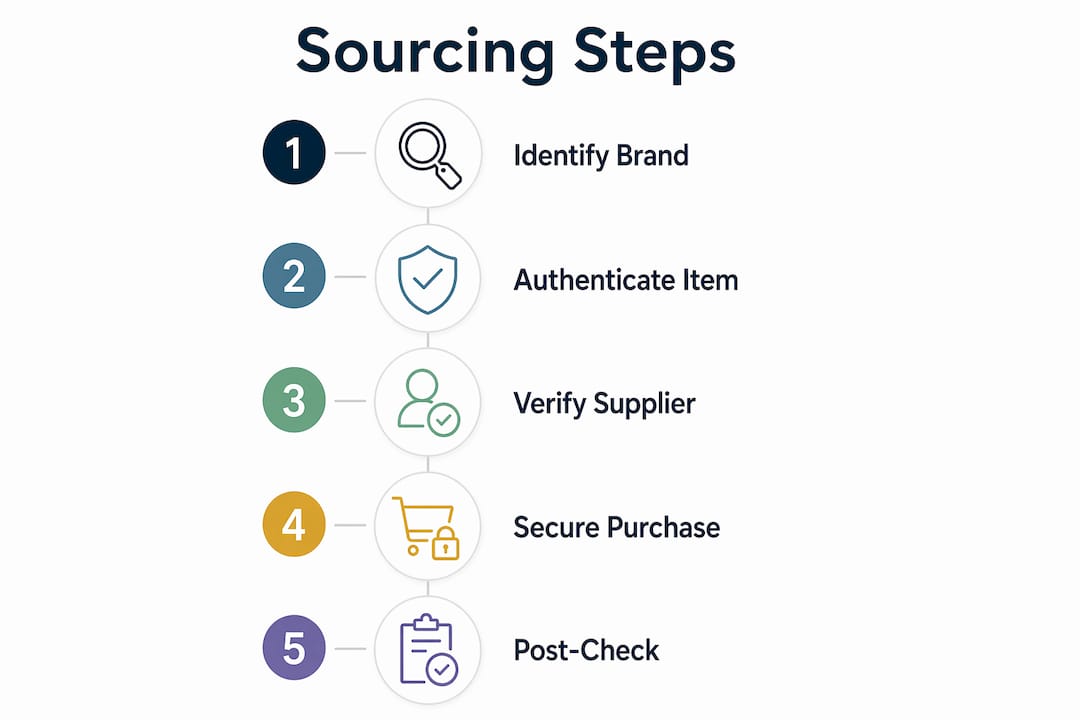
Authentication is a structured process, not a gut feeling. The most reliable method combines physical evidence, direct communication, and measurement verification. Here is a proven framework for understanding designer sourcing at the verification level:
- Request raw, unfiltered photos. Ask for images showing the serial number, date stamp, hardware markings, and stitching. Sellers who hesitate or provide only polished marketing shots are a clear risk signal.
- Verify measurements, not letter sizes. Ask for pit-to-pit width, shoulder seam length, and sleeve length in centimeters or inches. Measurement-based sizing verification eliminates the most common source of buyer disappointment.
- Email the seller with a specific question. Ask something only a legitimate seller could answer accurately, such as the lining material or the hardware finish on a specific model. A prompt, thoughtful response signals operational legitimacy. A vague or delayed reply signals the opposite.
- Cross-reference serial numbers. Gucci, Prada, and Chanel all use internal serial coding systems. Match the number format against known databases or brand-specific authentication guides before buying.
- Check compliance certifications for resellers. Reputable resale platforms carry authentication guarantees backed by third-party audits. Ask for documentation if it is not displayed publicly.
The table below shows which verification steps apply to which product categories:
| Product category | Key verification step | Red flag signal |
|---|---|---|
| Handbags (Chanel, Gucci) | Serial number + date stamp photo | Filtered images only |
| Ready-to-wear (Balenciaga, Valentino) | Pit-to-pit and length measurements | Letter size only, no measurements |
| Footwear (Saint Laurent, Jimmy Choo) | Insole stamp + box label photo | No box or missing insole markings |
| Watches (Gucci G-Timeless) | Movement reference + case back engraving | No case back photo available |
Pro Tip: Send your email inquiry from a new address with no purchase history. Legitimate sellers respond the same way regardless of who is asking. Selective responses are a warning sign.
What modern tools and strategies accelerate efficient designer brand sourcing?
Digital tools have fundamentally changed how buyers source luxury fashion. Experienced buyers using digital tracking and discovery tools increase their sourcing speed by 40–60% compared to traditional browsing. That speed advantage comes from better organization, faster cross-referencing, and smarter search behavior.
The most effective digital sourcing habits include:
- Search by model number, not just brand name. Typing “Gucci Marmont 443497” surfaces far more specific and often lower-visibility listings than searching “Gucci crossbody bag.”
- Use highly descriptive keyword strings. Phrases like “lambskin gold medium flap” or “black patent kitten heel pointed toe” uncover authentic low-visibility listings that generic searches miss entirely.
- Tag and organize finds digitally. Saving products with notes on condition, price, and seller history creates a reference library that speeds up future decisions.
- Track margin and price history. Knowing what a Prada Re-Edition 2005 sold for in march versus september helps you recognize a genuine deal versus an inflated “sale.”
Building a digital strategy for sourcing also means knowing when to step away from the screen. The most coveted pieces rarely appear in public listings at all.
Pro Tip: Set up saved searches with misspelled brand names. “Chanell,” “Guci,” and “Pradda” listings sometimes contain authentic pieces mislabeled by sellers who do not know what they have.
Where do top consumers source the most exclusive and authentic designer pieces?
The most exclusive luxury pieces do not live on public marketplaces. Private atelier networks and boutique workshops rarely appear in standard online searches. Accessing them requires relationships, not just a credit card.
The top sourcing channels used by experienced luxury buyers include:
- Direct boutique relationships. Sales associates at Gucci, Saint Laurent, and Bottega Veneta boutiques reserve high-demand pieces for loyal clients. Texting or DMing your SA before a drop is now the standard method for accessing real inventory.
- Private resale networks. Closed Facebook groups, invite-only Telegram channels, and curated Instagram accounts run by trusted resellers offer pieces that never hit public listings.
- Secondary supplier relationships. Building secondary supplier connections in different regions protects against geopolitical disruptions and keeps access to luxury goods steady even when primary channels dry up.
- Authenticated platforms with curation guarantees. Platforms like Naiseshopper offer pre-vetted collections from Gucci, Chanel, Prada, and Valentino with authentication built into the purchase process.
“The best pieces I have ever found came from a text message, not a search engine. Relationships are the real sourcing infrastructure.” This reflects what the most experienced luxury shoppers consistently report.
For a deeper look at how sourcing channels shape what you can actually buy, the luxury fashion investing guide covers which categories hold value best across sourcing tiers.
Key takeaways
Authentic luxury acquisition requires combining measurement verification, direct seller communication, and private network access to avoid the 38% failure rate that comes from skipping due diligence.
| Point | Details |
|---|---|
| Counterfeit risk is rising | Luxury fraud has increased 27% year over year, making verification non-negotiable. |
| Measurements beat letter sizes | Request pit-to-pit and length data to avoid the sizing errors behind 90% of bad purchases. |
| Email verification works | A prompt, specific response from a seller confirms legitimacy faster than any policy page. |
| Private networks hold the best pieces | Top buyers source through SA relationships and closed resale networks, not public listings. |
| Digital tools speed up sourcing | Buyers using digital discovery tools source 40–60% faster than those using traditional methods. |
My honest take on sourcing luxury fashion in 2026
The shift I have noticed most clearly over the past few years is how much the sourcing game has moved off the public internet. The buyers who consistently land the best Chanel flaps, the rare Bottega Veneta clutches, and the limited Saint Laurent styles are not spending hours on search engines. They are texting their boutique contacts on a Tuesday afternoon and getting a photo back within the hour.
What surprises most new buyers is how willing sales associates are to build these relationships. You do not need to spend six figures a year to get on a SA’s radar. Showing up consistently, asking smart questions, and being easy to work with goes further than most people expect. I have seen buyers land waitlisted Gucci pieces simply because they were the first person their SA thought of when stock arrived.
The other thing I would push back on is the idea that digital tools replace physical verification. They do not. They speed up discovery and help you organize what you find. But the final call on any significant purchase still comes down to raw photos, serial numbers, and a direct conversation. No algorithm replaces that. The step-by-step luxury shopping guide at Naiseshopper captures this balance well for buyers who want a structured process to follow.
Patience is the skill that separates great sourcing from impulsive buying. The right piece at the right price from a verified source is worth waiting for. Rushing that process is how buyers end up with beautiful-looking fakes and zero recourse.
— Camila
Naiseshopper: authenticated luxury sourcing made accessible
Naiseshopper brings together curated collections from Gucci, Chanel, Prada, Valentino, Bottega Veneta, Saint Laurent, and Balenciaga, with authentication guaranteed on every piece. Every item goes through a verification process before it reaches you, so you skip the fraud risk and get straight to the style.
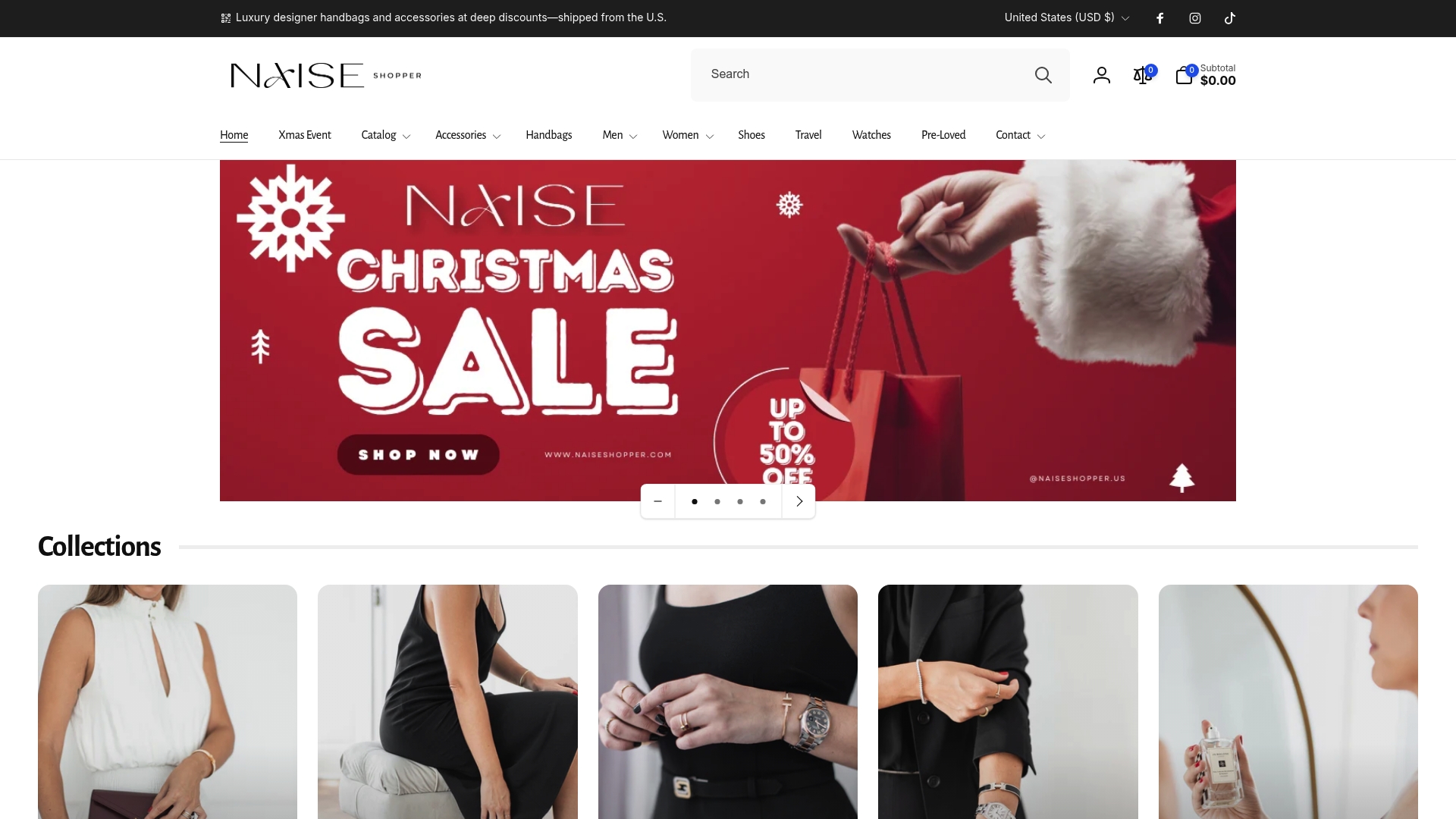
Right now, the collection includes standout pieces like the Saint Laurent mid-top blue sneakers, the Jimmy Choo pointed toe leather flats, and the Gucci G-Timeless 38mm watch. Each listing includes detailed product photos, sizing information, and secure international shipping. For buyers who want the confidence of authenticated sourcing without the legwork, Naiseshopper delivers exactly that.
FAQ
What is designer brand sourcing?
Designer brand sourcing is the process of identifying, authenticating, and acquiring genuine luxury fashion items through verified sellers, boutique networks, or authenticated platforms. It covers everything from supplier vetting to sizing verification and fraud prevention.
How do I verify a designer item is authentic?
Request raw photos showing serial numbers, date stamps, and hardware details, then cross-reference the serial format against known brand coding systems. Sellers who refuse clear photos are a reliable red flag.
Why do letter sizes fail in luxury fashion sourcing?
Sizing conventions differ significantly across luxury brands, meaning a Gucci size M and a Balenciaga size M are not the same garment. 90% of negative purchase experiences come from sizing discrepancies that measurement verification would have prevented.
What is the fastest way to source exclusive designer pieces?
Building direct relationships with boutique sales associates is the fastest route to exclusive inventory. Sales associates reserve high-demand items for loyal clients before pieces go to the general public.
How does Naiseshopper support safe luxury sourcing?
Naiseshopper offers pre-authenticated designer pieces from brands including Gucci, Chanel, and Saint Laurent, with secure international shipping and flexible payment options. Every item is verified before purchase, removing the authentication burden from the buyer.