TL;DR:
- Matching accessories with handbags involves coordinating color temperature, metal tone, texture, and scale for a cohesive look. Properly matching metal hardware to jewelry and using contrasting textures enhances visual depth, while scale ensures proportions are balanced. Occasion and outfit complexity further guide accessory choices, with overall emphasis on intentional coordination rather than exact matching.
Matching accessories with handbags is the practice of coordinating color temperature, metal tone, texture, and scale to create a polished, intentional look. Modern styling has moved well past the old rule of exact color matching. The goal today is harmony through shared design elements, not duplication. Whether you’re pairing jewelry with a Bottega Veneta woven tote or choosing a scarf for a Prada structured bag, the same four principles apply. Master them, and you’ll build outfits that look considered and confident every time you step out.
How to match accessories with handbags using color and metal tones
Color coordination starts with temperature, not shade. Warm and cool color families behave differently, and pairing accessories across the wrong temperature creates subtle visual tension that most people feel but can’t name. Warm-toned bags in brown, camel, red, or beige look richest with gold or rose gold hardware and jewelry. Cool-toned bags in black, gray, navy, or cobalt shine with silver or white gold accents.
Metal hardware on your bag is the anchor for every other metal accessory you wear. Gold hardware calls for gold jewelry; silver hardware calls for silver. This one rule alone eliminates most coordination mistakes. When you match metal tones, the whole outfit reads as intentional rather than assembled in a hurry.
Mixing metals is possible, but proportion matters. One tone should dominate, roughly 70% of the metal visible, with the secondary tone as an accent. A gold-hardware Gucci bag worn with a gold chain necklace and one silver ring works. An equal split of gold and silver across bag, bracelets, and earrings creates visual noise instead of interest.
Gemstone colors in jewelry offer another way to reinforce your bag’s color story. A deep burgundy bag pairs beautifully with garnet or ruby-toned stones set in gold. A soft blush bag gains warmth from rose quartz or morganite. You’re not matching the color exactly. You’re staying within the same warm or cool family to keep the palette cohesive.
- Warm bags (brown, tan, red, beige): gold, rose gold, bronze hardware and jewelry
- Cool bags (black, gray, navy, blue): silver, white gold, gunmetal hardware and jewelry
- Neutral bags (white, cream, taupe): both metal families work; let your outfit decide
- Mixed-metal bags: let the dominant hardware tone lead your jewelry choices
Pro Tip: If your bag has mixed hardware, identify the dominant metal and match 70% of your jewelry to it. The minority metal becomes a deliberate accent, not a mistake.
Does texture matter when pairing accessories with a bag?
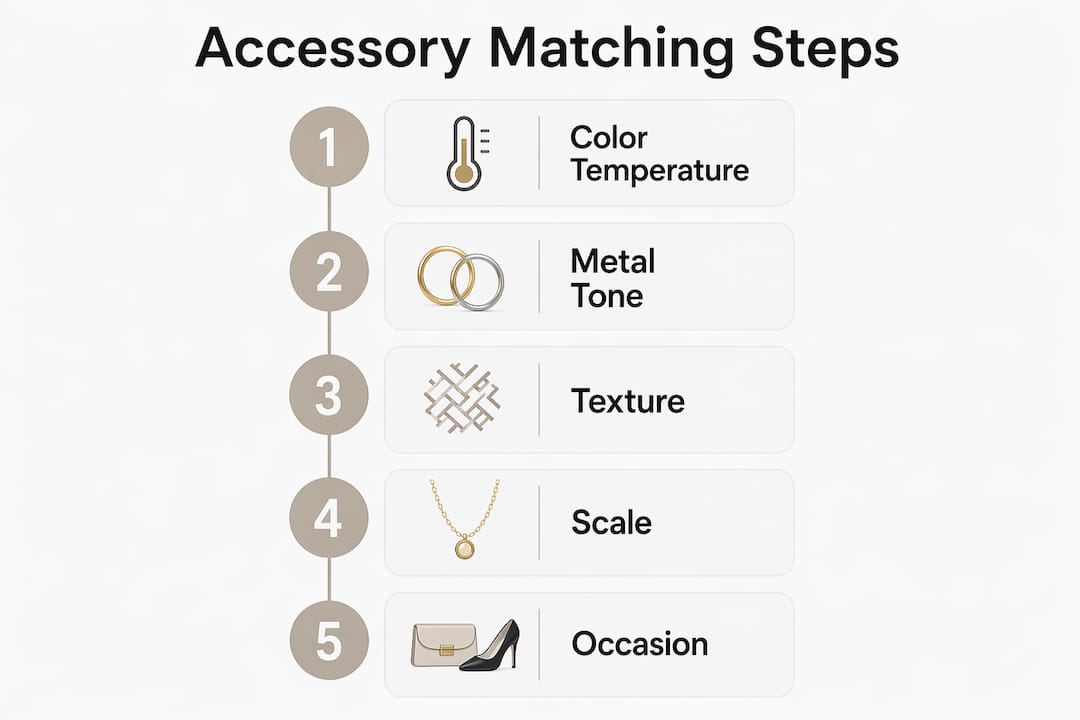
Texture is one of the most underused tools in accessory coordination, and it delivers real visual depth. Contrasting textures add dimension to an outfit in a way that same-texture pairings simply cannot. A smooth patent leather bag against a matte suede charm creates a tension that reads as luxurious and considered. A pebble-grain leather tote paired with polished gold jewelry highlights the richness of both materials.
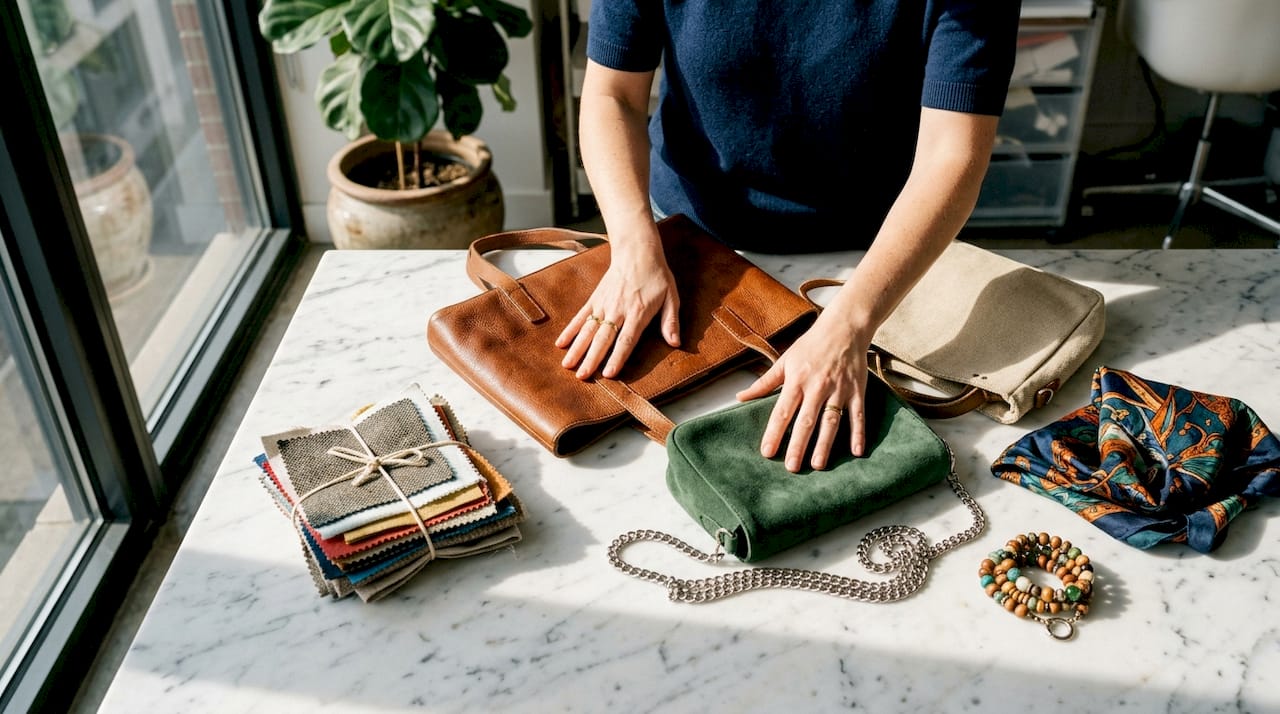
Shared textures work differently. They create cohesion when colors differ, tying an outfit together through material language instead of color. A woven Bottega Veneta bag worn with a raffia or natural-fiber bracelet creates a unified tactile story even if the colors don’t match at all. This technique is especially useful when your outfit already carries a lot of color.
The key is balance. Too many competing textures clutter the eye and make an outfit feel busy rather than layered. Limit yourself to two or three distinct textures across your full look. Your bag, your shoes, and your accessories each bring a texture. Choose two to harmonize and let one contrast for interest.
Here are the texture combinations that consistently deliver strong results:
- Smooth leather bag + matte suede charm or keyring: classic contrast, always polished
- Patent leather bag + brushed or matte metal jewelry: the shine of the bag leads; jewelry supports
- Woven or basketweave bag + natural fiber scarf or bracelet: cohesive, relaxed luxury
- Structured fabric bag + polished metal hardware accessories: fabric softness balanced by metal clarity
- Suede bag + shiny chain strap or metallic charm: soft material elevated by bright accent
Pro Tip: Before you leave the house, run your hand across your bag and your accessories. If every surface feels the same, add one contrasting texture. If every surface feels different, remove one piece.
How does scale affect the balance between shoes, bags, and accessories?
Scale is the principle that most fashion guides skip, yet it controls whether an outfit looks proportionate or off. Heavy footwear requires a medium to large bag to maintain visual balance. Chunky boots or platform sandals paired with a tiny clutch create a top-heavy silhouette that draws the eye downward awkwardly. Delicate heels or strappy sandals pair best with smaller bags to preserve the lightness of the overall look.
The same logic applies to accessories. Small, compact bags like a Chanel mini flap or a Saint Laurent Lou call for delicate charms, thin chain straps, and understated jewelry. Oversized totes and structured work bags can carry chunkier hardware, bold bag charms, and statement jewelry without looking overloaded. The bag sets the scale; your accessories follow it.
Visual weight also comes from structure and material, not just size. Soft, unstructured bags pair well with polished, shiny accents because the contrast creates definition. Structured, architectural bags in stiff leather or canvas need matte, understated accessories to avoid competing with the bag’s own strong lines. Check the luxury handbag trends for 2025 to see how current silhouettes are influencing accessory choices.
| Shoe style | Bag size | Accessory scale |
|---|---|---|
| Delicate heels or strappy sandals | Small to mini bag | Fine jewelry, thin chains, small charms |
| Mid-heel pumps or loafers | Medium structured bag | Medium jewelry, classic hardware |
| Chunky boots or platform shoes | Medium to large bag | Bolder charms, layered jewelry |
| Sneakers or casual flats | Tote or hobo bag | Playful charms, casual scarves, keyrings |
What accessories work best for different occasions and outfits?
Occasion formality is the ultimate constraint in accessory selection. Formal events call for understated, refined accessories that support the bag rather than compete with it. A structured Prada saffiano bag at a business dinner pairs best with a simple gold bangle and clean leather shoes. Adding a playful bag charm or a printed scarf would break the formality of the look.
Casual settings give you full creative range. Scarves, bag charms, keyrings, and colorful straps all work here. A Gucci canvas tote at a weekend market looks great with a silk scarf tied to the handle and a pair of white sneakers. The accessories add personality without requiring the precision that formal dressing demands. You can find inspiration for this kind of relaxed luxury in Naiseshopper’s designer accessory styling tips.
Your outfit’s complexity also determines how much your accessories should do. Fashion experts recommend letting bold bags and bold accessories work with neutral outfits, while patterned or printed clothing requires simpler accessory choices. A floral dress already carries visual weight. Adding a printed scarf and a statement bag creates chaos. A solid-color bag and minimal jewelry let the dress lead.
Here’s how to calibrate accessories by occasion:
- Work or formal events: structured bag, minimal jewelry matching hardware tone, no bag charms
- Smart casual (dinners, events): medium bag, coordinated jewelry, one accent piece like a silk scarf
- Weekend or casual: tote or hobo bag, playful charms, colorful straps, relaxed jewelry
- Evening or cocktail: small clutch or mini bag, statement jewelry, metallic or embellished shoes
- Travel: functional tote or backpack, practical accessories, handle wraps to protect leather
Scarves deserve special mention as one of the most versatile fashion accessories for handbags. A silk scarf tied to a handle adds color, texture, and personality in seconds. It also protects the handle from wear. For bags with light-colored handles, a scarf or leather handle wrap extends the bag’s life significantly.
Key Takeaways
Matching accessories with handbags requires coordinating color temperature, metal tone, texture, and scale, with occasion formality as the final filter for every choice.
| Point | Details |
|---|---|
| Color temperature leads | Warm bags need gold tones; cool bags need silver. Match metal hardware to jewelry first. |
| Texture contrast adds depth | Pair one smooth surface with one matte or woven surface for a layered, luxurious effect. |
| Scale must stay proportionate | Heavy shoes call for larger bags; delicate shoes call for smaller bags and finer accessories. |
| Occasion sets the rules | Formal settings require restraint; casual settings allow bold, playful accessory choices. |
| One piece leads the look | Let either the bag or the accessories be the focal point. Never let both compete equally. |
Why I stopped trying to “match” and started coordinating instead
For years, I chased exact matches. Same color bag and shoes. Jewelry that mirrored every metal tone on the bag. The result always looked assembled, not styled. The shift happened when I started treating my bag as the anchor of an outfit rather than one piece among many equals.
The biggest mistake I see is over-accessorizing a strong bag. A Valentino Rockstud tote already carries enormous visual weight. Adding a chunky charm, a printed scarf, and statement earrings doesn’t amplify the bag. It buries it. One piece should lead, and the rest should support. That principle alone will improve 80% of outfit decisions.
I also think people underestimate functional accessories. Silk or leather handle wraps protect leather from sweat and friction, which matters enormously for light-colored bags. They also let you change the look of a bag without permanent alteration. A white handle wrap on a tan bag creates a fresh, preppy contrast. A printed silk wrap on the same bag reads completely differently. That kind of versatility is worth more than buying a second bag.
My practical advice: build your look from the bag outward. Choose the bag first, identify its dominant metal tone and color temperature, then select shoes and jewelry that echo those elements without duplicating them. Finish with one accent piece, a scarf, a charm, or a bold ring, and stop there.
— Camila
Naiseshopper’s curated pieces make coordination effortless
Great coordination starts with pieces that are worth coordinating. Naiseshopper carries authenticated designer handbags, shoes, and accessories from Gucci, Prada, Chanel, Valentino, and more, all at genuine discounts with guaranteed authenticity.
A Gucci G-Timeless watch in gold or silver anchors your metal tone instantly and works across every bag in your collection. For footwear that balances any bag size, the Alexander McQueen black leather sandals pair with everything from a mini clutch to an oversized tote. Browse Naiseshopper’s full collection to find the pieces that make your coordination instinctive rather than effortful.
FAQ
What is the first rule for matching accessories with handbags?
Match the metal hardware on your bag to your jewelry metal tone first. Gold hardware calls for gold jewelry; silver hardware calls for silver. This single step creates immediate cohesion.
How do I coordinate shoes and handbags by size?
Heavy or chunky shoes require a medium to large bag to maintain visual balance. Delicate heels and strappy sandals pair best with smaller bags. The shoe’s visual weight sets the bag size.
Can I mix metals when matching jewelry with bags?
Yes, but one metal tone should dominate at roughly 70% of the total metal visible. Let the bag’s hardware determine the dominant tone, then use the secondary metal as a deliberate accent.
How do I choose handbag accessories for a formal event?
Formal events require understated, refined accessories that support the bag without competing with it. Stick to minimal jewelry matching the bag’s hardware tone, and skip bag charms or printed scarves.
What are the best accessories for personalizing a designer bag?
Silk scarves tied to the handle, leather bag charms, and colored replacement straps add personality without permanent changes. Handle wraps also protect leather and refresh the bag’s appearance.