TL;DR:
- Proper packing of luxury apparel involves using acid-free tissue, structured folding methods, and leaving space in luggage to prevent damage. Different garments require specific techniques, such as shoulder-in-shoulder for jackets and air bubble protection for silk blouses. Always carry designer handbags in your carry-on, stuffed lightly and protected from abrasive surfaces.
Packing luxury apparel is defined as the practice of using specialized materials, folding techniques, and luggage organization to preserve the fabric, shape, and finish of high-end garments during transit. The stakes are real: a Chanel tweed jacket or a Valentino silk blouse can suffer permanent creases, stretched seams, or surface abrasion from a single poorly packed bag. Professional stylists rely on acid-free tissue paper, garment bags, and structured folding methods as the industry standard for protecting designer clothing. This guide covers every step, from the right supplies to the exact fold for each garment type, so your wardrobe arrives looking runway-ready.
What materials and tools are essential for packing luxury apparel?
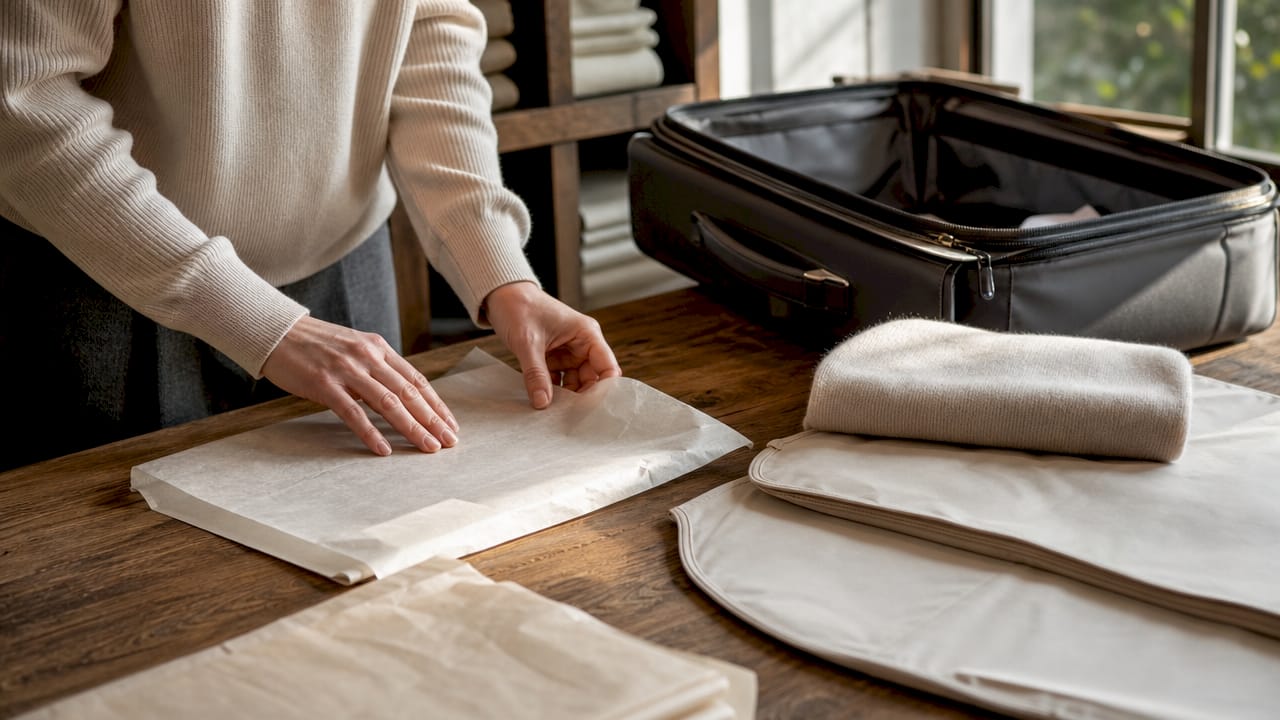
The right supplies make the difference between a wrinkled disaster and a pristine arrival. Acid-free tissue paper is the industry standard for buffering delicate surfaces, including beadwork, lace, and embroidery, against friction during travel. Without it, even a short flight can leave permanent pressure marks on structured fabrics.
Garment bags are the second non-negotiable. Breathable fabric garment bags protect suits, dresses, and coats from dust and surface contact while allowing air circulation. Plastic dry-cleaning bags serve a different purpose: they trap a small air cushion around silk and satin, which reduces friction and prevents creasing.
For luggage, a hard-shell suitcase with internal compression straps outperforms soft-sided bags for luxury travel. The rigid shell absorbs external pressure from overhead bins and baggage handlers, while the straps hold garments flat rather than letting them shift and bunch.
| Tool | Purpose | Best For |
|---|---|---|
| Acid-free tissue paper | Prevents friction and creasing | Beadwork, lace, embroidery, structured fabrics |
| Breathable garment bag | Dust protection with airflow | Suits, coats, formal dresses |
| Plastic dry-cleaning bag | Air cushion barrier | Silk, satin, chiffon |
| Hard-shell suitcase | External pressure protection | All luxury garments |
| Internal compression straps | Keeps garments flat during transit | Folded pieces, structured items |
| Packing cubes (large) | Separates luxury from casual wear | Mixed wardrobe travel |
Pro Tip: Pack a small roll of acid-free tissue in your carry-on. If a garment shifts during the flight, you can re-wrap it at the gate before your connection.
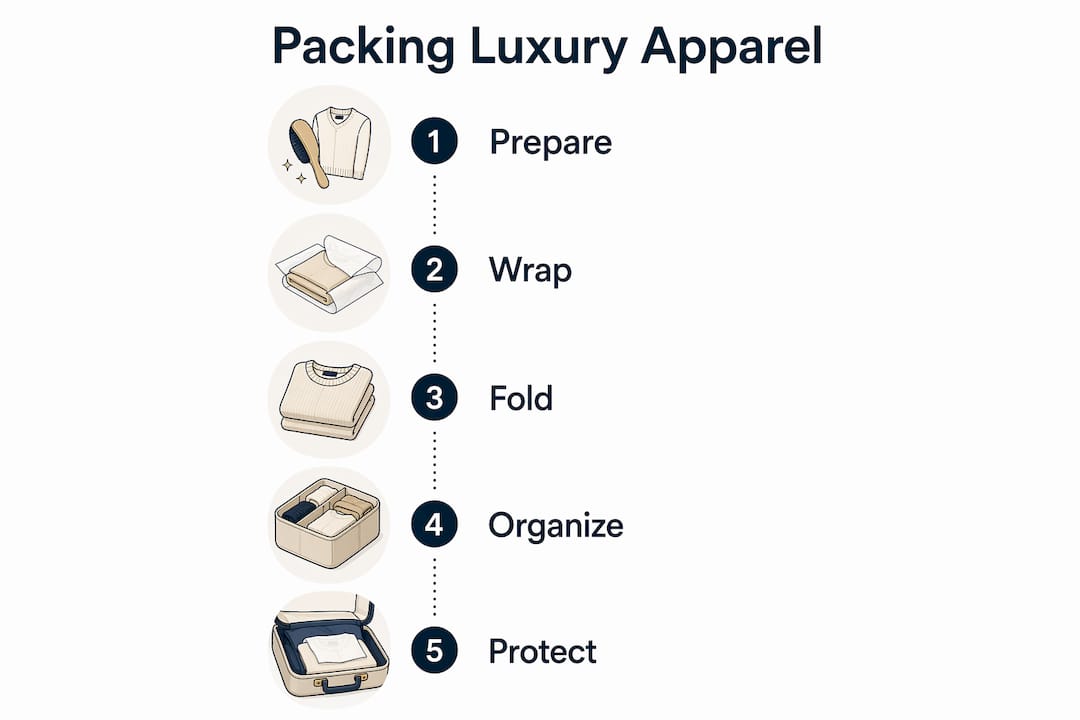
How should you fold and pack different types of luxury garments?
The best way to fold luxury garments depends entirely on the fabric and construction. Structured pieces require folding. Casual knits can tolerate rolling. Mixing up these methods is the most common packing mistake fashion travelers make.
Structured jackets and blazers
The shoulder-in-shoulder technique is the professional standard for suit jackets and blazers. Turn one shoulder inside out, then tuck the other shoulder inside it so the two shoulders nest together. This protects the shoulder pads and keeps the jacket’s architectural lines intact. Lay the folded jacket flat with a sheet of acid-free tissue between each fold.
Wool and cashmere sweaters
Lay the sweater face down on a flat surface. Place a sheet of acid-free tissue across the body, then fold the sleeves inward. Fold the bottom third up and the top third down, creating a compact rectangle. The tissue prevents the fibers from compressing against each other, which causes pilling and distortion.
Silk blouses and delicate tops
Placing silk inside a plastic dry-cleaning bag traps air around the fabric, creating a cushioned barrier that prevents creasing. High-end boutiques use this “air bubble” method as standard practice. Seal the bag loosely so the air pocket stays intact.
Trousers and structured pants
Fold along the natural crease line, matching the seams precisely. Place tissue between the layers and fold in thirds lengthwise. Never roll pressed trousers. Rolling structured garments damages the fabric’s shape and leaves creases that are difficult to remove without professional pressing.
| Garment Type | Recommended Method | Key Technique |
|---|---|---|
| Structured jacket | Shoulder-in-shoulder fold | Nest shoulders, tissue between folds |
| Cashmere sweater | Flat fold with tissue | Tissue between layers, fold in thirds |
| Silk blouse | Dry-cleaning bag air bubble | Loose seal to preserve air cushion |
| Pressed trousers | Flat fold along crease | Match seams, tissue between layers |
| Casual knit | Rolling | Only for elastic, unstructured fabrics |
Pro Tip: Bundle wrapping works well for a full outfit. Lay each garment flat in sequence, largest first, then wrap them around a central core item like a soft sweater. This method distributes tension evenly and reduces individual fold lines.
How to pack luxury handbags and accessories safely for travel
Luxury handbags need their own packing strategy, separate from clothing. Nesting smaller bags inside larger structured bags, with each piece wrapped individually in a flannel dust bag, prevents color transfer and hardware scuffing during transport. This technique keeps your collection organized and protected without adding bulk.
Stuffing matters too. Fill bags moderately with soft items like rolled socks or tissue paper to maintain their shape during transit. Overstuffing designer bags causes leather stretching, stitching stress, and permanent deformation. The goal is gentle support, not maximum fill.
Always keep designer handbags in your carry-on rather than checked luggage. Checked bags face rough handling, temperature swings, and compression from other luggage. A Bottega Veneta intrecciato weave or a Prada nylon tote can sustain surface damage that no amount of conditioning will fully reverse.
Handbag packing do’s and don’ts:
- Do use the original dust bag or a soft flannel pillowcase for each bag
- Do stuff bags lightly with tissue or soft socks to hold their shape
- Do place bags in the carry-on, centered and cushioned by soft clothing
- Don’t place designer bags directly on airport security bins or floors
- Don’t stack hard-bottomed bags directly on top of each other
- Don’t use plastic bags that trap moisture against leather
For shoes, stuff toe boxes with tissue or cedar inserts and place each pair in a breathable shoe bag. This prevents creasing and maintains the leather’s moisture balance during transit. Read more about long-term handbag care to extend the life of your collection beyond travel.
Pro Tip: Slip a silica gel packet inside each stuffed bag to absorb any moisture that builds up during long flights or humid destinations.
How to pack your suitcase for maximum protection of luxury items
Suitcase organization is where most luxury travelers lose ground. The layout inside your bag determines whether your garments arrive flat or crushed.
- Leave 10% of space empty. Leaving suitcase space unfilled allows garments to shift slightly without compressing against each other. Most travelers pack to capacity, which is the single biggest cause of deep-set wrinkles in luxury clothing.
- Layer by weight. Place heavier items like shoes and denim at the bottom of the suitcase, nearest the wheels. Stack lighter, delicate garments on top. This prevents heavy items from pressing down on silk or structured pieces during transit.
- Use large packing cubes for separation. Packing cubes keep luxury dry-clean-only items separate from casual wear. Never overstuff the cubes themselves, or you recreate the same compression problem you were trying to avoid.
- Secure internal straps. Most hard-shell suitcases include cross-straps or butterfly dividers. Use them. They hold folded garments flat and prevent the entire stack from shifting when the bag is tipped or dropped.
- Add desiccant packs for humid climates. A small silica gel packet placed in the main compartment absorbs moisture that accumulates during long flights or layovers in tropical destinations. Moisture causes mildew on natural fibers like wool and cashmere.
Pro Tip: Pack your most delicate garment last, on top of everything else, wrapped in tissue. It’s the first thing you unpack on arrival, which means it spends the least time under pressure.
Common mistakes to avoid when packing luxury apparel
Most damage to luxury clothing happens before the suitcase even closes. Recognizing these errors saves you from costly repairs or replacements.
“Overstuffing is the enemy of luxury. Whether it’s a Gucci bag or a Saint Laurent blazer, excess pressure causes damage that no dry cleaner or cobbler can fully undo. Pack with intention, not convenience.”
- Overstuffing garments and bags. Excess pressure causes permanent creases in fabric and stretches leather beyond its natural elasticity. Pack with breathing room.
- Rolling structured pieces. Professional stylists consistently warn against rolling formal jackets, pressed trousers, or tailored dresses. The rolling motion distorts the fabric’s grain and collapses structured elements like shoulder pads and boning.
- Placing bags on abrasive surfaces. Airport security bins, floors, and conveyor belts are covered in grit and debris. Never place designer bags directly on these surfaces. Use the original dust bag or keep the bag on your lap.
- Delaying unpacking. Garments left folded in a suitcase for hours after arrival develop set-in creases. Unpack immediately, hang structured pieces, and allow everything to air for at least 30 minutes.
- Ignoring suitcase weight limits. Overpacking to the airline’s maximum weight limit means your bag is at maximum compression. For luxury travel, treat the weight limit as a ceiling you stay well below.
Proper luxury bag care practices extend naturally from how you pack to how you store and maintain pieces at home.
Key Takeaways
Packing luxury apparel correctly requires acid-free tissue, proper folding by garment type, and leaving space in your suitcase to prevent compression damage.
| Point | Details |
|---|---|
| Use acid-free tissue paper | Wrap every delicate garment to prevent friction, creasing, and surface damage. |
| Match folding to fabric type | Use shoulder-in-shoulder for jackets, air-bubble bags for silk, flat folds for cashmere. |
| Keep handbags in carry-on | Checked luggage exposes designer bags to rough handling and temperature extremes. |
| Leave 10% suitcase space empty | Empty space lets garments shift without compressing, preventing deep-set wrinkles. |
| Unpack immediately on arrival | Hanging garments right away stops fold lines from setting permanently into fabric. |
What I’ve learned from packing luxury pieces the hard way
The conventional advice is to pack light and roll everything. For luxury apparel, that advice is wrong. I’ve watched a perfectly pressed Saint Laurent blazer come out of a suitcase looking like it had been slept in, simply because someone rolled it to save space. The fabric’s structure doesn’t forgive that kind of shortcut.
The insight that changed how I pack was the air bubble technique for silk. Placing a silk blouse loosely inside a plastic dry-cleaning bag and sealing it with a pocket of air feels counterintuitive. You’d expect the bag to make things worse. Instead, the air acts as a floating cushion that keeps the fabric from pressing against anything. I’ve used this on Prada silk shirts and Valentino chiffon blouses with zero creasing on arrival.
The bigger mindset shift is moving from “how much can I fit” to “what does each piece need.” Luxury garments are investments. A Chanel jacket or a Bottega Veneta leather bag represents hundreds or thousands of dollars. Treating packing as a preservation exercise, not a space puzzle, is what separates fashion enthusiasts who travel well from those who arrive with a suitcase full of regrets.
Invest in quality packing materials once and they last for years. Acid-free tissue, a set of large packing cubes, and a hard-shell carry-on are not extravagances. They are the cost of protecting what you already own.
— Camila
Naiseshopper: where luxury fashion meets lasting quality
Packing your designer wardrobe well starts with owning pieces worth protecting. Naiseshopper offers authenticated luxury fashion from Gucci, Chanel, Prada, Valentino, and more, at prices that make building a real wardrobe investment accessible.
A well-packed luxury wardrobe deserves equally considered accessories. The Gucci G-Timeless Quartz Watch is the kind of piece that travels as well as it dresses, compact, elegant, and built to last. Browse Naiseshopper’s full collection of authenticated designer watches and ready-to-wear apparel to find pieces that reward careful ownership. Every item ships with secure packaging and authenticity guaranteed.
FAQ
What is the best way to fold luxury garments for travel?
The best way to fold luxury garments depends on the fabric. Use the shoulder-in-shoulder technique for structured jackets, flat folds with acid-free tissue for cashmere, and the air-bubble dry-cleaning bag method for silk.
Can you roll designer clothes to save space?
Rolling is suitable only for elastic, casual fabrics. Rolling structured garments like blazers, pressed trousers, and tailored dresses damages their shape and creates creases that are difficult to remove.
How should I pack a designer handbag for a flight?
Keep designer handbags in your carry-on, stuffed lightly with tissue to hold their shape, and wrapped in the original dust bag. Never place them on airport security bins or floors, as abrasive surfaces cause scratches and scuffs.
How full should my suitcase be when traveling with luxury clothing?
Fill your suitcase to no more than 90% capacity. Leaving space in your suitcase allows garments to shift without compressing against each other, which prevents deep-set wrinkles during transit.
What should I do when I arrive to protect my luxury clothes?
Unpack immediately and hang structured garments to let them air for at least 30 minutes. Garments left folded in a closed suitcase after arrival develop set-in creases that become harder to remove the longer they sit.