TL;DR:
- Fashion collector terminology enables enthusiasts to accurately identify and authenticate luxury pieces by describing design, construction, and provenance. Mastery of terms like archival, vintage, and season codes enhances appraisal skills and resale confidence in a rapidly growing market. Clear language in listings and descriptions elevates market value and connects buyers and sellers through shared expertise.
Fashion collector terminology is the specialized vocabulary that allows enthusiasts, students, and professionals to identify, authenticate, and discuss luxury and vintage fashion pieces with precision. Mastering this collector jargon separates casual shoppers from serious collectors. The language spans archival designations, construction techniques, authentication markers, and resale market phrases. As the luxury resale market accelerates in 2026, fluency in these terms directly shapes your ability to buy, sell, and appreciate pieces at their true value.
What are the key categories of fashion collector terminology?
Fashion terminology functions as the building blocks of design, enabling precise identification and preventing miscommunication between collectors, dealers, and auction houses. The vocabulary breaks into five major categories, each covering a distinct layer of the collecting world.
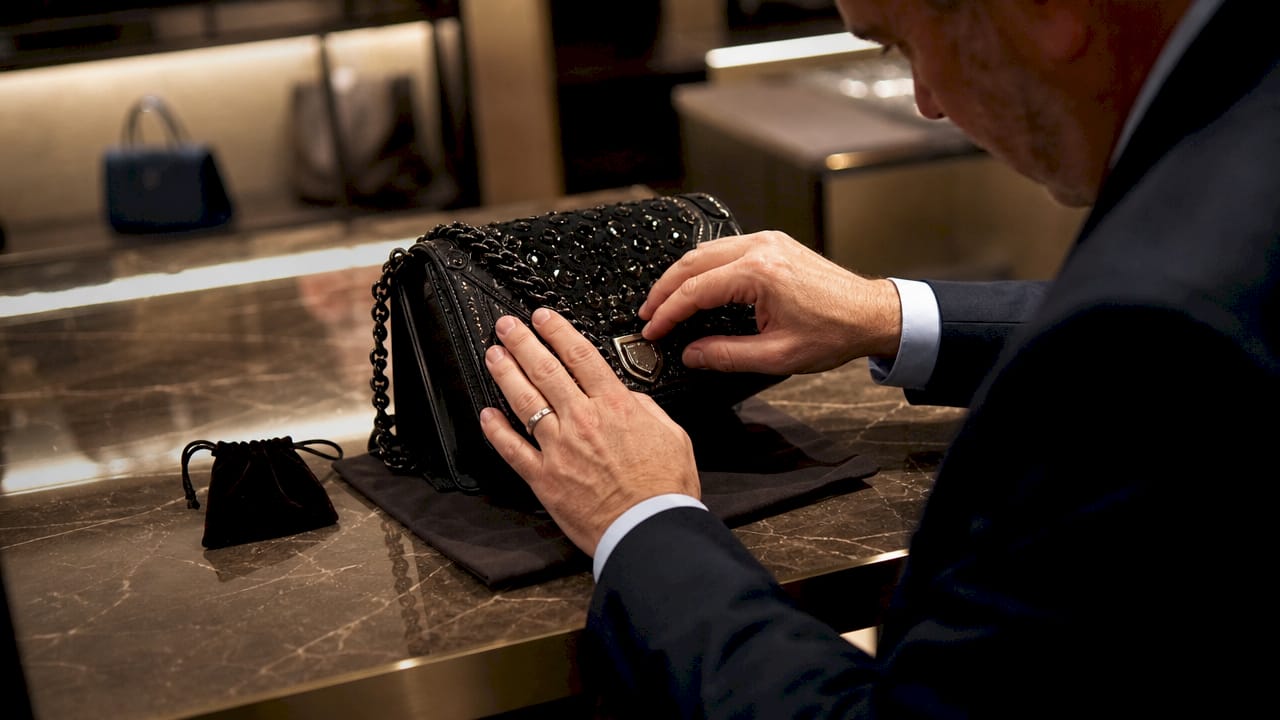
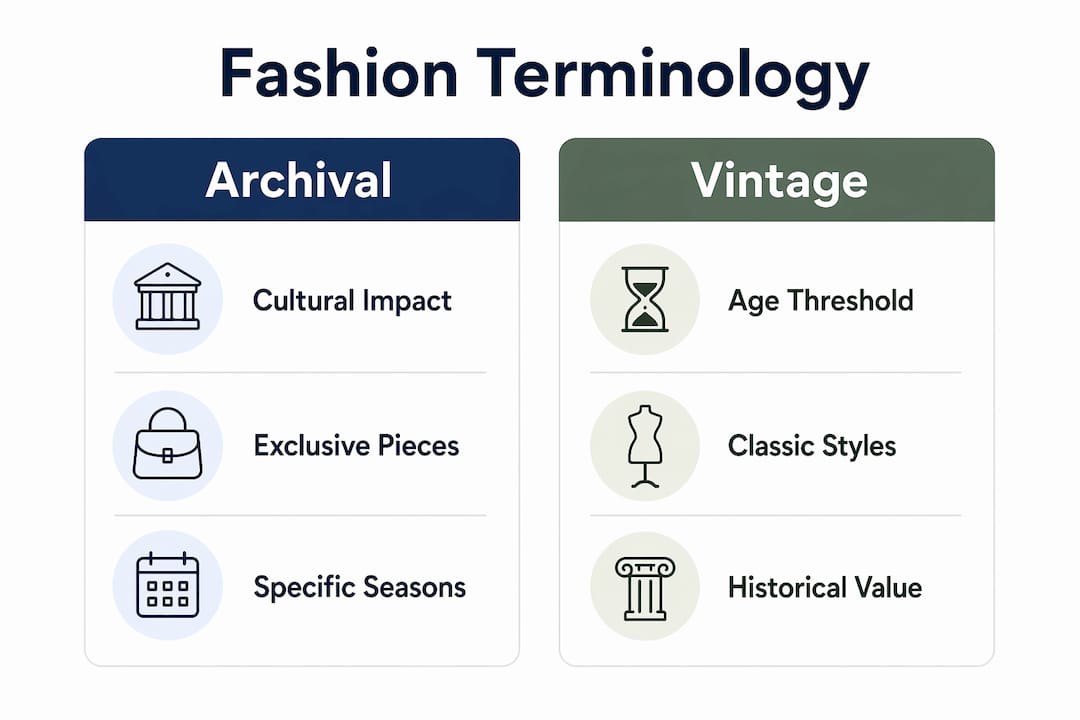
Archival fashion refers to pieces with significant cultural or creative impact, not simply old or discontinued garments. A true archival piece marks a “rupture moment” in a house’s history, such as John Galliano’s 1999 homeless-chic collection for Dior or Alexander McQueen’s “Bumster” trousers. Collectors use “archival” to signal that a piece redefined aesthetics or reflected a cultural shift. Misusing the term to describe any old designer item is one of the most common errors in collector circles.
Vintage fashion carries a specific age threshold. Vintage is generally defined as items produced between the 1920s and 1980s, or any item at least 20 years old. That definition matters because it affects pricing, authentication standards, and the research methods collectors apply. A 2003 Gucci Tom Ford era bag qualifies as vintage today. A 2020 Balenciaga Triple S sneaker does not.
Haute couture describes custom-fitted garments made by hand in a Parisian atelier, produced according to strict standards set by the Chambre Syndicale de la Haute Couture. Only a small number of houses hold official haute couture status at any given time. Collectors prize these pieces for their craftsmanship and rarity. The term is frequently misapplied to describe any expensive or elaborate garment, which dilutes its meaning.
Ready-to-wear (also called prêt-à-porter) refers to designer garments produced in standard sizes for retail sale. Most runway collections shown at Fashion Week fall into this category. Collectors distinguish between runway samples, production pieces, and limited-edition drops within ready-to-wear.
Here are the core collector jargon terms you need in your vocabulary:
- Atelier: The workshop or studio where a designer and their team construct garments by hand.
- Provenance: The documented ownership history of a piece, which directly affects its value and authenticity.
- Deadstock: Unsold new-old-stock merchandise, never worn and often still tagged, from a past season.
- Capsule collection: A small, focused set of pieces designed around a specific theme or collaboration.
- Colorway: A specific color combination applied to a single design across a collection.
- Season code: A production identifier sewn into a garment that links it to a specific runway season.
Pro Tip: When you encounter the word “archival” in a listing, ask the seller to name the specific collection and season. Genuine archival pieces have a traceable runway history.
How do collectors use terminology to authenticate luxury fashion pieces?
Authentication is where fashion industry vocabulary becomes a practical tool, not just a conversation starter. Labels alone do not confirm authenticity. Craftsmanship details distinguish originals from reproductions, and collectors who know the right terms know exactly what to examine.
The authentication process follows a structured sequence:
-
Examine the seam finish. Authentic luxury garments use specific finishing techniques tied to their era and house. Chanel suits from the 1960s feature hand-sewn chain weights in the hem. Prada bags from the 1990s use a particular nylon weave with a specific thread count. Knowing the correct term, “seam allowance” or “flat-felled seam,” tells you what to look for and how to describe what you find.
-
Check the lining material. Lining fabrics are a fingerprint. Vintage Saint Laurent pieces often used a silk charmeuse lining with a specific jacquard pattern. Reproductions typically substitute polyester. The term “basting stitch” refers to temporary stitching used during construction, and its presence in a finished garment signals either a prototype or a fake.
-
Inspect hardware and serial marks. Authentication involves detailed examination of hardware weight, engraving depth, and serial number placement. Authentic Chanel bags carry a hologram sticker with a serial number that corresponds to a specific production year. Collectors use the term “date code” to describe these embedded production identifiers.
-
Assess the label typography. Font weight, spacing, and country-of-origin language on care labels changed by decade. A “Made in France” label with a specific font style places a garment in a precise production window. Collectors call this “label dating.”
-
Evaluate construction technique. Terms like “hand-rolled hem,” “pick stitch,” and “French seam” describe finishing methods that require skilled labor. Their presence signals genuine luxury construction. Their absence, or the presence of machine-equivalent shortcuts, raises red flags.
Pro Tip: Build a reference binder with dated photographs of authentic labels, hardware, and seam finishes for each brand you collect. Cross-reference every new acquisition against it before purchase.
A common pitfall is confusing provenance with authenticity. Provenance documents ownership history. Authenticity confirms the item is what it claims to be. A piece can have excellent provenance and still be a reproduction if the original owner was deceived. Collectors treat these as separate but equally important evaluations.
What role does fashion collector terminology play in the luxury resale market of 2026?
The luxury resale market is forecast to grow two to three times faster than the primary market through 2027. That growth rate reflects a fundamental shift in how collectors think about fashion. Pieces are no longer just clothing. They are cultural assets with stable investment value, reclassified from “used luxury” to collectibles with documented histories.
Precise terminology drives confidence in resale transactions. Buyers and sellers who share a common vocabulary reduce friction, disputes, and returns. The table below maps the most critical resale terms to their practical meaning for collectors.
| Term | Definition | Why It Matters in Resale |
|---|---|---|
| Condition grade | A standardized rating (mint, excellent, good, fair) describing wear and preservation | Sets price expectations and reduces disputes |
| NWT / NWOT | New with tags / new without tags | Signals deadstock status and commands premium pricing |
| Runway piece | A garment worn or shown in an official runway presentation | Adds provenance and cultural significance to a listing |
| Investment piece | A fashion investment piece expected to hold or increase in value | Frames the purchase as an asset, not a consumption decision |
| Authentication card | A document or digital certificate confirming a piece’s origin and legitimacy | Increases buyer confidence and resale liquidity |
Collectors who use these terms correctly signal expertise to other market participants. That expertise translates to better prices, faster sales, and access to private sales networks. Sellers who describe a bag as “mint condition, NWT, runway piece with authentication card” attract a different buyer than those who write “barely used, great bag.” The luxury resale vocabulary you use positions you within the market hierarchy.
Which specialized terms cover design elements and fashion production?
Design and production vocabulary gives collectors the language to describe what they see and feel in a garment. Fashion Week terminology including haute couture, ready-to-wear, atelier, and collection types forms the backbone of this vocabulary for collectors and professionals alike.
Garment construction terms are the most granular layer of fashion industry vocabulary:
- Silhouette: The overall shape of a garment as seen from a distance. Collectors use silhouette to date pieces, since A-line, trapeze, and hourglass silhouettes each dominated specific decades.
- Dart: A tapered fold sewn into fabric to create shape around curves. The placement and depth of darts are house-specific and era-specific.
- Draping: A construction method where fabric is arranged directly on a dress form rather than cut from a flat pattern. Madeleine Vionnet pioneered bias-cut draping in the 1930s, and collectors identify her pieces partly by this technique.
- Toile: A prototype garment made in inexpensive fabric to test a design before cutting into final material. Collectors occasionally acquire toiles from major houses as historical artifacts.
- Bespoke: A garment made entirely to a single client’s measurements and specifications. The term originates from Savile Row tailoring and carries specific meaning in collector circles distinct from “custom” or “made-to-order.”
Collection type terminology helps collectors place pieces within a brand’s seasonal calendar:
- Cruise collection (also called resort): A mid-season collection shown between the main spring/summer and fall/winter presentations, typically in november or december.
- Pre-fall: A transitional collection shown in june or july, bridging the main fall/winter runway and the retail floor.
- Capsule: A limited, thematic collection often tied to a collaboration or cultural moment.
Understanding these collection types matters because global luxury collections follow a specific calendar, and a piece’s season placement affects its rarity and collector desirability. A cruise collection piece from a house that later discontinued that line carries different value than a mainline runway piece from the same year.
Collectors who also appreciate fine accessories will find that the same precision applies beyond clothing. Collector-focused terminology in jewelry, for example, follows parallel structures around provenance, condition grading, and maker identification. The discipline transfers across categories.
Key Takeaways
Mastering fashion collector terminology requires learning archival, vintage, authentication, and production vocabulary as distinct but connected systems that together define a piece’s identity and value.
| Point | Details |
|---|---|
| Archival vs. vintage distinction | Archival signals cultural impact; vintage signals age. Never use them interchangeably. |
| Authentication beyond labels | Seam finishes, lining fabrics, hardware, and date codes confirm authenticity more reliably than labels alone. |
| Resale market fluency | Precise condition grading and provenance language directly affect sale price and buyer confidence. |
| Design vocabulary for dating | Silhouette, dart placement, and construction technique help collectors date and attribute pieces accurately. |
| Terminology as market access | Collectors who use correct jargon gain access to better deals, private networks, and informed buyers. |
Why terminology is the real currency of collecting
I have spent years watching collectors make expensive mistakes not because they lacked taste, but because they lacked vocabulary. A collector who cannot distinguish “archival” from “vintage” will overpay for a discontinued piece that carries no cultural weight. A collector who does not know what a “date code” is will miss the fastest authentication check available to them.
The most underrated skill in this space is reading a listing critically. Sellers who use vague language like “designer,” “luxury,” or “rare” without specifics are often hiding a lack of provenance or knowledge. Sellers who write “1997 Prada nylon backpack, season code intact, original receipt, mint condition” are speaking the language of serious collectors. You learn to tell the difference by building your vocabulary first.
The cultural shift happening in 2026 makes this more urgent. Collectors are prioritizing archival fashion as fixed-meaning cultural assets precisely because fast fashion cycles have diluted the perceived value of newness. The pieces that hold value are the ones with documented histories, traceable construction, and names that mean something in the canon of fashion history. You cannot participate in that market without the words to describe what you are looking at.
My recommendation: start with one brand you love and learn its specific construction signatures, label history, and collection calendar cold. That depth of knowledge in one area builds the pattern recognition you carry into every other brand you collect.
— Camila
Authenticated luxury pieces worth knowing at Naiseshopper
Knowing the terminology is only half the equation. The other half is finding pieces that meet the standards you now know how to apply.
Naiseshopper carries authenticated luxury accessories from Gucci, Chanel, Prada, Valentino, Bottega Veneta, Saint Laurent, and Balenciaga, all verified for authenticity before listing. For collectors looking at investment-grade timepieces, the Gucci G-Timeless Quartz Watch is a strong example of an iconic accessory with clear house provenance and collector appeal. Naiseshopper also offers personal shopper assistance and shipping insurance, so you can apply your terminology knowledge to a purchase with full confidence. Browse the full collection and put your new vocabulary to work.
FAQ
What is the difference between archival and vintage fashion?
Archival fashion refers to pieces that marked a cultural or creative turning point for a fashion house, while vintage describes any item at least 20 years old. Not all vintage pieces are archival, and the distinction significantly affects value.
How do collectors verify the authenticity of a luxury piece?
Collectors examine construction details including seam finishes, lining materials, hardware weight, and date codes rather than relying on labels alone. Labels can be replaced; construction techniques tied to a specific era and house cannot.
What does “provenance” mean in fashion collecting?
Provenance is the documented ownership and exhibition history of a piece. Strong provenance, such as a receipt, original packaging, or auction record, increases a piece’s value and confirms its legitimacy in the resale market.
What is a season code and why does it matter?
A season code is a production identifier sewn into a garment that links it to a specific runway season and year. Collectors use season codes to date pieces accurately and verify that a garment matches its claimed production period.
How does terminology affect prices in the luxury resale market?
Listings that use precise condition grades, provenance details, and correct category terms attract more informed buyers and command higher prices. The luxury resale market rewards sellers who communicate with accuracy and specificity.