The global counterfeit trade is worth $467 billion annually, and luxury goods sit squarely in the crosshairs. Handbags, watches, and shoes from Chanel, Gucci, and Prada are among the most replicated items on earth. For affluent shoppers, the stakes are not just financial. Buying a fake strips away the emotional reward, the heritage, and the status that make luxury worth the price. This guide breaks down what authenticity really means in luxury retail, how it gets verified, and why it protects both your investment and your confidence as a buyer.
Table of Contents
- What does authenticity mean in luxury retail?
- The impact of counterfeits on luxury retailers and consumers
- Authenticity and brand trust: Building long-term value
- How is authenticity verified? Methods, tools, and technology
- Secondhand luxury and the authenticity paradox
- Balancing authenticity and luxury appeal in the digital age
- Discover verified authentic luxury at NAISEshopper
- Frequently asked questions
Key Takeaways
| Point | Details |
|---|---|
| Authenticity defines trust | Genuine products are the backbone of customer trust and long-term brand loyalty in luxury retail. |
| Counterfeits threaten value | Fake luxury goods undermine emotional satisfaction, brand reputation, and your investment value. |
| Verification is advanced | Luxury authentication blends expert inspection and tech like NFC or DPPs for maximum buyer protection. |
| Shop only where trust is proven | Choose official or verified resellers to reduce risk and protect the prestige and value of your purchases. |
What does authenticity mean in luxury retail?
Authenticity in luxury retail means one thing above all else: the item is exactly what it claims to be. It was made by the brand, using the materials and craftsmanship the brand is known for, and it carries the full weight of that brand’s heritage. A genuine Bottega Veneta intrecciato bag is not just leather and stitching. It is decades of Venetian craft tradition, a specific weave pattern perfected over generations, and a product that holds its value because of everything behind it.
This is where luxury diverges sharply from mass-market retail. When you buy a generic product and it turns out to be a knockoff, you lose a few dollars. When you spend four figures on a designer piece and it is fake, you lose the money, the status, and the emotional experience you paid for. Authenticity drives consumer trust, loyalty, and brand preference in luxury in ways that simply do not apply to everyday goods.
“Luxury is not just about owning something expensive. It is about owning something real, rare, and made with intention.”
The emotional rewards of owning a verified authentic luxury item are real and measurable:
- Pride of ownership: Knowing your piece is genuine reinforces your identity and taste.
- Trust in the brand: Authenticity confirms the brand delivers on its promise.
- Status signaling: Authentic items carry social currency that fakes cannot replicate.
- Longevity: Genuine materials and craftsmanship mean the item lasts and ages beautifully.
- Resale confidence: Verified pieces hold and often grow in value over time.
Building trust in luxury shopping starts with knowing your purchase is the real thing. Everything else follows from that foundation.
The impact of counterfeits on luxury retailers and consumers
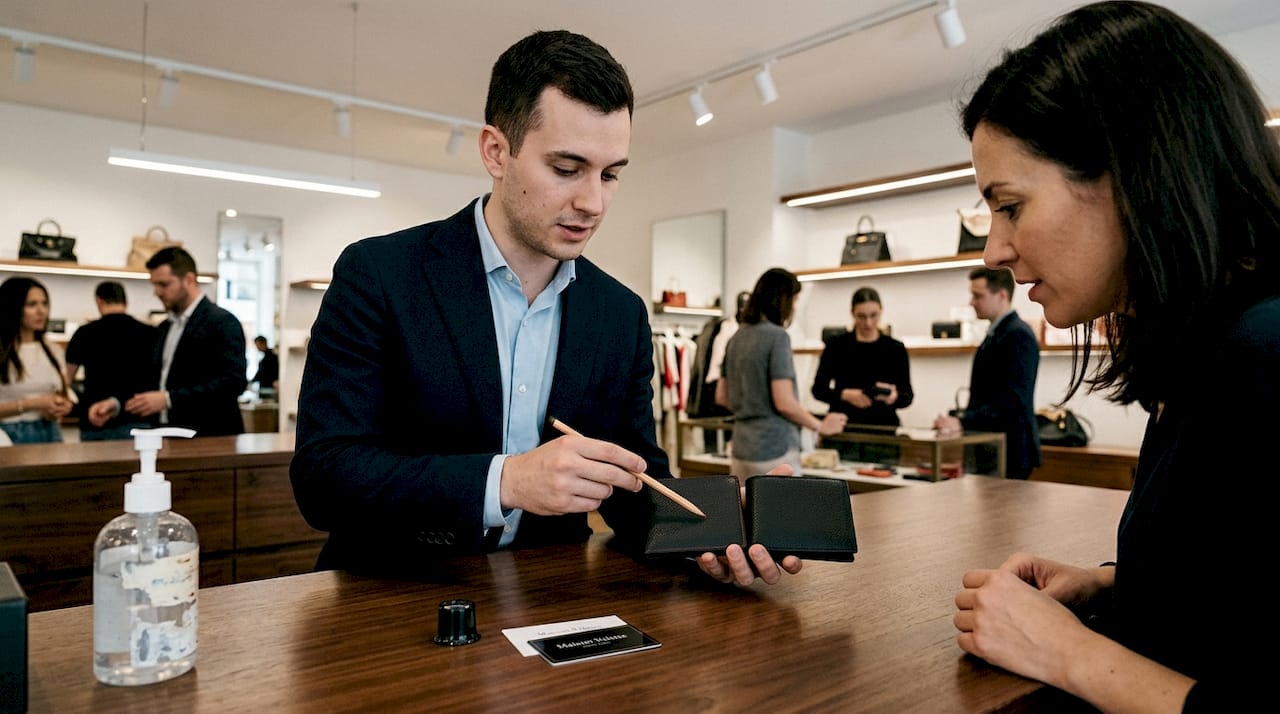
Counterfeiting is not a niche problem. It is a massive, organized industry that specifically targets the brands you love. Counterfeits make up 8% of luxury sales globally, and the secondhand luxury market grows three times faster than the primary market, creating more entry points for fakes. The numbers are staggering, and the consequences reach far beyond lost revenue.
| Metric | Data |
|---|---|
| Global counterfeit trade value | $467 billion annually |
| Counterfeit share of luxury sales | ~8% |
| Secondhand market growth vs. primary | 3x faster |
| World import share of counterfeits | Over 2% |
For brands, counterfeits mean lawsuits, brand dilution, and years of reputation damage. For consumers, the risks are just as serious. You could spend thousands on a piece that loses all resale value the moment an expert examines it. In some jurisdictions, knowingly buying counterfeit goods carries legal consequences too.
“The rise of superfakes means even experienced collectors can be fooled. The only real protection is buying from verified, trusted sources.”
Counterfeits infiltrate the market through several channels. Understanding how they spread helps you avoid authentication pitfalls and protect your investment:
- Unverified online marketplaces with no authentication process
- Social media sellers using stock photos of real items
- Unofficial resale platforms with no expert oversight
- Peer-to-peer sales where provenance cannot be confirmed
- Counterfeit goods mixed into legitimate inventory at gray-market dealers
Authenticity and brand trust: Building long-term value
Trust in luxury is not transactional. It is emotional. When you buy an authenticated Chanel flap bag, you are not just completing a purchase. You are entering a relationship with a brand that has spent decades earning its reputation. That relationship is only possible when authenticity is guaranteed. Authenticity is a core driver of consumer trust, loyalty, and brand preference in luxury retail, and it is the reason repeat buyers return again and again.
Authenticity also protects resale value in a direct, measurable way. A Gucci bag with full documentation, original receipts, and a verified serial number commands significantly more at resale than an identical-looking piece without provenance. Brands with strong authenticity reputations see their items appreciate over time, making them genuine investments rather than just purchases.
Here is what authenticity does for you as a shopper:
- Confirms the item’s origin and manufacturing standards
- Protects your ability to resell at fair market value
- Validates the emotional and social value of the purchase
- Reduces the risk of financial loss from fraud
- Strengthens your confidence in future luxury purchases
Understanding real luxury value means recognizing that authenticity is not a bonus feature. It is the product itself. The customer trust in luxury that drives repeat purchases is built entirely on this guarantee.
Pro Tip: Before buying from any online luxury retailer, check for clear authentication policies, third-party verification partnerships, and detailed product photos showing hardware, stitching, and serial numbers. If a seller cannot provide these, walk away.
How is authenticity verified? Methods, tools, and technology
Authentication has evolved dramatically. What once relied entirely on expert eyes and hands now combines traditional inspection with cutting-edge technology. Authentication methods include craftsmanship inspection, serial numbers, certificates with holograms, UV checks, and new tech like NFC chips, blockchain, and Digital Product Passports (DPPs).
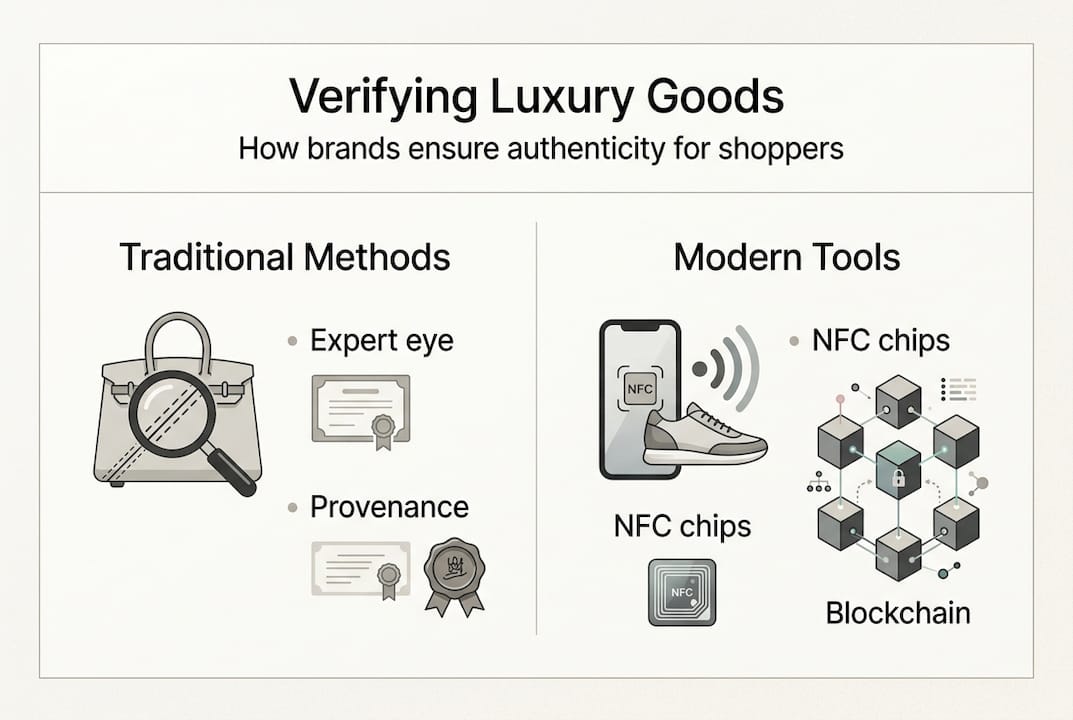
| Method | Traditional | Technology-driven |
|---|---|---|
| Inspection | Stitching, hardware, materials | AI imaging analysis |
| Proof of origin | Serial numbers, date codes | Blockchain traceability |
| Documentation | Certificates, receipts | Digital Product Passports (DPPs) |
| Security features | Holograms, dust bags | NFC chips embedded in items |
| Expert review | Brand historians, specialists | Machine learning pattern recognition |
Here is how a thorough authentication process works step by step:
- Materials check: Examine leather grain, fabric weave, and hardware weight and finish.
- Stitching inspection: Count stitches per inch and check consistency. Luxury brands maintain exact standards.
- Serial number verification: Cross-reference the serial or date code with brand records.
- Certificate and documentation review: Confirm holograms, authenticity cards, and original receipts.
- UV and magnification check: Reveal hidden security features invisible to the naked eye.
- Digital verification: Scan NFC chips or check DPP records for tamper-proof provenance data.
- Expert sign-off: A trained specialist reviews all findings and issues a formal authentication.
Superfakes now challenge even seasoned experts. DPPs are valued by 70% of consumers as a key trust signal when buying luxury, which is why tech-driven authentication is becoming the new standard. For handbag authentication specifically, the process is especially detailed. You can also use a bag authenticity checklist to guide your own pre-purchase review, and learning how to spot authentic bags is a skill every serious collector should develop.
Interestingly, the principles behind art authentication share a lot with luxury fashion. Both rely on provenance, expert review, and increasingly, digital traceability.
Pro Tip: Always demand a written authentication certificate, photos of the serial number, and ideally a DPP or NFC scan result before completing any luxury purchase online. A reputable seller will provide these without hesitation.
Secondhand luxury and the authenticity paradox
The secondhand luxury market is booming. Resale platforms have made it easier than ever to find a pre-owned Saint Laurent bag or a vintage Rolex at a fraction of retail. But growth brings risk. The same channels that make secondhand luxury accessible also make it easier for fakes to circulate. This is the authenticity paradox: the more popular resale becomes, the more important verification gets.
Research makes the stakes clear. Purchasing secondhand luxury from unofficial retailers lowers brand image perceptions, while official retailers activate high-level brand associations. In other words, where you buy matters almost as much as what you buy.
“Buying a genuine Prada bag from an unofficial reseller still carries reputational risk. The channel shapes the perception, not just the product.”
When shopping luxury online, use these signals to identify trustworthy secondhand sellers:
- Clear, published authentication process with named experts or third-party partners
- Full provenance documentation including original receipts where available
- High-resolution photos of all authentication markers
- Transparent return and dispute resolution policies
- Verified buyer reviews with specific mentions of authentication quality
- Affiliation with recognized luxury authentication services
Balancing authenticity and luxury appeal in the digital age
Luxury brands face a genuine tension in 2026. Consumers want access, transparency, and relatable content. But luxury’s power has always come from exclusivity, mystery, and aspiration. Push too hard toward openness and you risk losing the aura that justifies the price. Over-emphasizing UGC and influencers for authenticity risks diluting luxury exclusivity, and the balance with aspirational imagery is essential.
At the same time, rising prices and brand scandals erode trust, and brands must prove value through supply chain integrity and craftsmanship. Consumers are more skeptical than ever. They want proof, not just prestige.
“The brands winning in 2026 are those that can show their work without losing their mystique.”
Effective strategies for blending authenticity with aspiration include:
- Showcasing artisan craftsmanship through behind-the-scenes content without overexposing the brand
- Using DPPs and NFC technology to give buyers verifiable proof without disrupting the luxury experience
- Partnering with authenticated resale platforms to control the secondhand narrative
- Maintaining price integrity to signal genuine scarcity and value
- Investing in emotional value in luxury storytelling that connects buyers to the brand’s heritage
The handmade authenticity that defines true luxury, whether in fashion or fine art, remains the most powerful differentiator no algorithm can replicate. Genuine materials, expert hands, and a traceable story are what separate a $5,000 bag from a $500 imitation, even when the two look nearly identical at first glance.
Discover verified authentic luxury at NAISEshopper
Everything covered in this guide points to one conclusion: the source of your luxury purchase matters enormously. At Naise Shopper, every item in the collection goes through a rigorous authentication process before it reaches you. You get the real thing, backed by documentation, expert review, and a platform built specifically for buyers who will not compromise on genuineness.
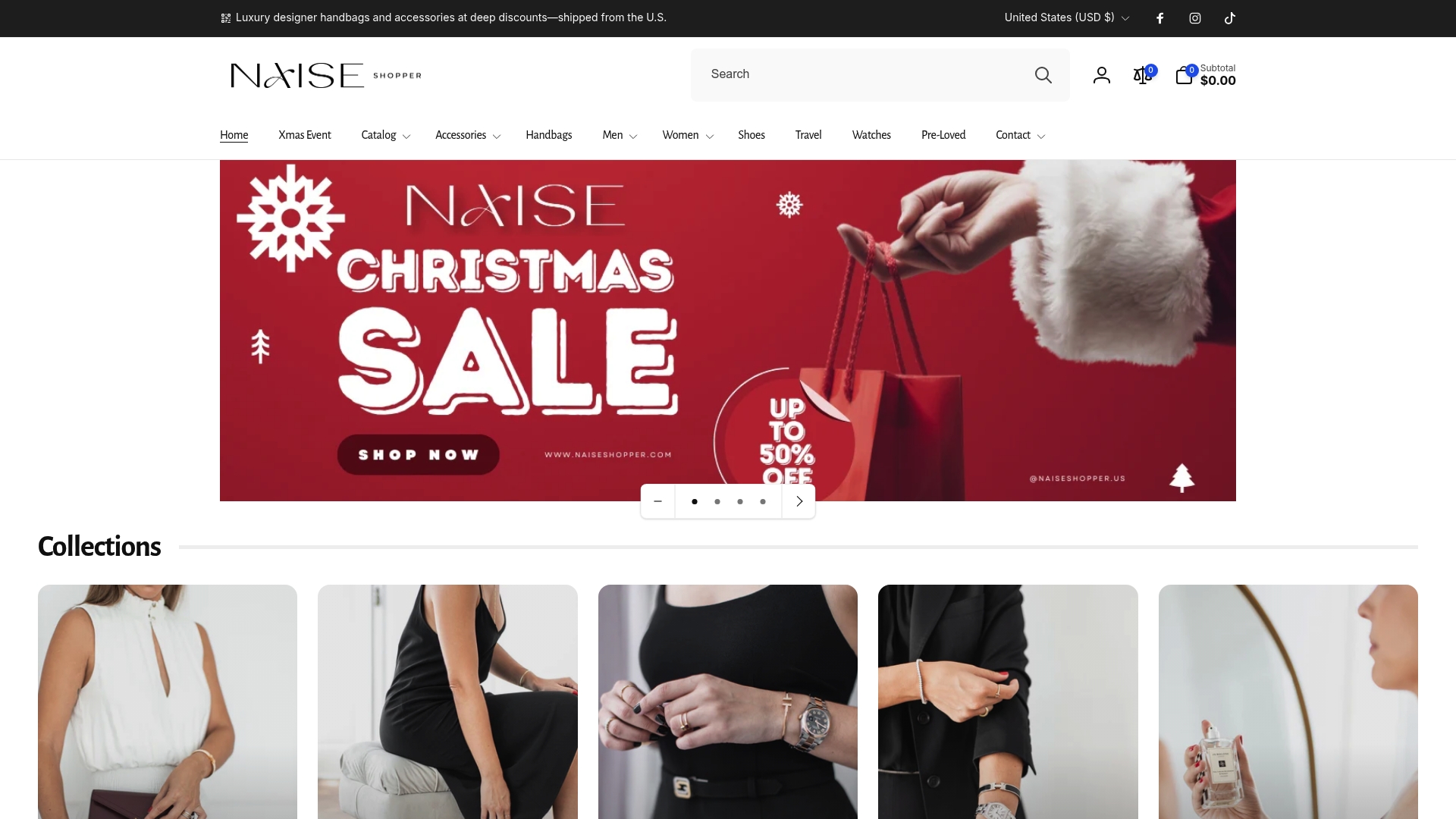
The curated selection spans the most coveted names in luxury fashion, from Gucci and Chanel to Prada, Valentino, and Balenciaga, all available at genuine discounts without sacrificing authenticity. Whether you are searching for a statement timepiece like the Gucci G-Timeless Watch or a pair of investment-worthy Prada leather heels, every piece comes with the trust signals this guide has outlined. Shop with confidence, knowing your investment is protected from the first click to the final delivery.
Frequently asked questions
How can I be sure a luxury item is authentic?
Look for official documentation, serial numbers, and authentication methods including craftsmanship inspection, certificates with holograms, and digital proof like NFC chips or DPPs. Always buy from a trusted, verified source.
Does buying secondhand luxury from unofficial sellers affect brand value?
Yes. Unofficial channel purchases lower brand image perceptions and increase your exposure to counterfeit risk, even when the item appears genuine.
Why are superfakes such a big threat?
Superfakes use advanced materials and manufacturing to closely mimic originals, and they challenge even experts, requiring tech-driven traceability strategies to detect reliably.
Is technology making luxury authentication better?
Absolutely. Solutions like NFC chips, blockchain, and DPPs provide tamper-proof, verifiable proof of authenticity that traditional methods alone cannot match.
How does authenticity relate to resale value?
Verified authenticity directly protects your investment. Authenticity drives consumer trust and brand preference, which translates into stronger resale prices and easier, more confident future sales.