You’ve probably heard that designer handbags are smart investments, but what about designer shoes? The truth is, the value of luxury footwear extends far beyond simple resale potential. While shoes may not always match the consistent returns of iconic handbags, they deliver something equally compelling: immediate style elevation, exceptional craftsmanship, and the potential for strategic financial gains when you know what to look for. This article explores the multi-faceted world of designer shoe investing, revealing how to balance personal enjoyment with smart purchasing decisions that protect and potentially grow your investment.
Table of Contents
- Understanding the appeal of designer shoes
- Are designer shoes a good investment? Perspectives and realities
- The resale market: Trends and what buyers should know
- What gives certain designer shoes lasting value?
- Smart ways to invest in designer shoes
- Find your next designer shoe investment
- Frequently asked questions
Key Takeaways
| Point | Details |
|---|---|
| Lifestyle and enjoyment | Designer shoes deliver satisfaction and prestige beyond potential resale profits. |
| Investment returns vary | Only select pairs provide reliable appreciation due to market volatility and condition sensitivity. |
| Buy smart | Choose reputable sources and focus on authentic, limited-edition shoes for the best value. |
| Resale market shifts | Recent years have seen shrinking profit margins for most designer shoes, so research is key. |
Understanding the appeal of designer shoes
Designer shoes captivate fashion enthusiasts for reasons that go deeper than surface-level aesthetics. These pieces represent the pinnacle of footwear craftsmanship, combining innovative design with materials that simply cannot be replicated at lower price points. When you slip into a pair of Gucci loafers or Saint Laurent pumps, you’re experiencing leather that’s been carefully selected and treated, construction techniques perfected over decades, and design details that reflect genuine artistic vision.
Brand prestige plays a massive role in the allure. Limited releases from houses like Balenciaga or Valentino create instant exclusivity, transforming shoes into coveted collectibles. These pieces become immediate markers of taste and cultural awareness, signaling to others that you understand fashion at its highest level. The satisfaction extends beyond wearing them, it’s about curating a collection that reflects your personal style evolution and appreciation for luxury craftsmanship.
Designer shoes deliver unique value through multiple dimensions:
- Craftsmanship excellence: Hand-stitched details, premium materials, and construction that ensures longevity
- Brand legacy: Heritage houses bring decades of design innovation and cultural significance
- Style elevation: Instantly upgrade any outfit with recognizable luxury pieces
- Collecting satisfaction: Build a curated wardrobe of investment-worthy footwear
- Exclusivity factor: Limited editions and seasonal releases create scarcity and desirability
Pro Tip: Focus on styles that blend timelessness with brand signature elements for versatility and longer enjoyment. A classic Prada combat boot or Bottega Veneta stretch sandal will serve you across multiple seasons and trends.
Are designer shoes a good investment? Perspectives and realities
The investment question requires honest examination. Designer shoes provide undeniable lifestyle value for wearers, offering daily enjoyment and style confidence that’s difficult to quantify financially. However, when we talk about pure investment returns, the picture becomes more complex. Unlike certain designer handbags that hold value remarkably well, shoe resale is highly sensitive to wear patterns, rapidly shifting fashion cycles, and fluctuating market demand.
Market experts have weighed in on this distinction. Research shows that designer shoes may not offer returns as reliable or consistent as high-end handbags, which have established track records of appreciation. Shoes face unique challenges: they show wear more visibly, sizing limitations restrict buyer pools, and trend cycles move faster in footwear than in bags.
“While designer handbags have proven themselves as alternative investments with measurable returns, luxury footwear operates in a different category. Shoes deliver exceptional personal value and occasional resale wins, but expecting consistent appreciation sets unrealistic expectations. The smart approach treats shoes as lifestyle investments with potential upside, not guaranteed financial instruments.”
Let’s break down the honest pros and cons:
Advantages:
- High personal enjoyment and daily utility
- Unique style expression unavailable at lower price points
- Potential for profit on rare, limited-edition pairs
- Collectible value for iconic designs
- Access to exclusive brand experiences and releases
Challenges:
- Risk of depreciation, especially with worn pairs
- Condition issues dramatically impact resale value
- Market fluctuations based on trend cycles
- Sizing constraints limit resale buyer pool
- Authentication concerns in secondary markets
The key is approaching designer shoes with realistic expectations. Buy pieces you genuinely love and will wear, then consider any resale value as a bonus rather than the primary motivation.
The resale market: Trends and what buyers should know
The luxury footwear resale landscape has shifted dramatically in recent years. Data reveals sobering realities about profitability expectations. According to market analysis, only 47% of 2025 sneaker releases were profitable, with reduced 10-25% profit margins compared to prior years when nearly all releases generated returns. This trend reflects market saturation, increased competition, and more sophisticated buyer behavior.
| Market Segment | Average Profit Margin | Profitability Rate | Volume Required | Key Success Factors |
|---|---|---|---|---|
| Limited Sneakers | 10-25% | 47% | High | Data-driven timing, rare colorways |
| Designer Heels | 15-35% | 38% | Medium | Condition, classic styles |
| Luxury Boots | 20-40% | 52% | Medium | Brand prestige, seasonal demand |
| Collaboration Pieces | 30-60% | 65% | Low | Authenticity proof, hype cycles |
Today’s resale success demands strategic thinking. Demand now favors rare colorways, pristine condition, and data-driven release timing. Buyers who understand market dynamics, track trend cycles, and move quickly on limited drops see the best returns. The days of automatic profits on any designer shoe purchase have ended, replaced by a more mature market requiring genuine expertise.
Several factors drive current market dynamics. Authentication technology has improved dramatically, making fake detection easier but also raising buyer expectations. Social media influences trend velocity, with styles gaining and losing popularity at unprecedented speeds. Economic conditions affect luxury spending patterns, creating opportunities during market dips for savvy buyers willing to hold pieces until demand rebounds.
Pro Tip: Focus on limited editions and brand collaborations for best resale odds, and always buy with authenticity proof. Documentation from certified luxury resale platforms provides crucial credibility when you eventually sell. Keep original boxes, dust bags, and purchase receipts to maximize future value.
Understanding these market realities helps you make informed decisions. Compare options across luxury shoe categories to identify which styles and brands align with your investment goals. The luxury resale ecosystem continues evolving, with 2026 bringing new opportunities for discerning buyers who do their homework.
What gives certain designer shoes lasting value?
Not all designer shoes are created equal when it comes to value retention. Brand, rarity, style longevity, and condition drive long-term value retention in luxury footwear. Understanding these factors helps you identify pieces worth your investment dollars.

| Brand | Iconic Model | Value Trajectory | Key Factors | Resale Strength |
|---|---|---|---|---|
| Gucci | Horsebit Loafer | Stable to Rising | Heritage design, versatility | Strong |
| Saint Laurent | Opyum Pump | Moderate | Signature hardware, trend-dependent | Moderate |
| Balenciaga | Triple S Sneaker | Volatile | Hype-driven, condition-sensitive | Variable |
| Prada | Monolith Boot | Rising | Distinctive silhouette, quality | Strong |
| Bottega Veneta | Stretch Sandal | Stable | Understated luxury, craftsmanship | Moderate to Strong |
Certain characteristics consistently predict better value retention. Heritage brands with decades of design history tend to hold value better than newer labels riding temporary hype. Classic silhouettes that transcend seasonal trends maintain relevance longer than avant-garde experimental designs. Limited production runs create scarcity that supports pricing, while mass-produced styles face downward pressure.
Collaborations between luxury houses and cultural icons often spike in value, particularly when production numbers stay low. Think Prada x Adidas releases or special artist editions from major houses. These pieces combine brand prestige with cultural moment significance, creating collectible appeal beyond pure fashion utility.
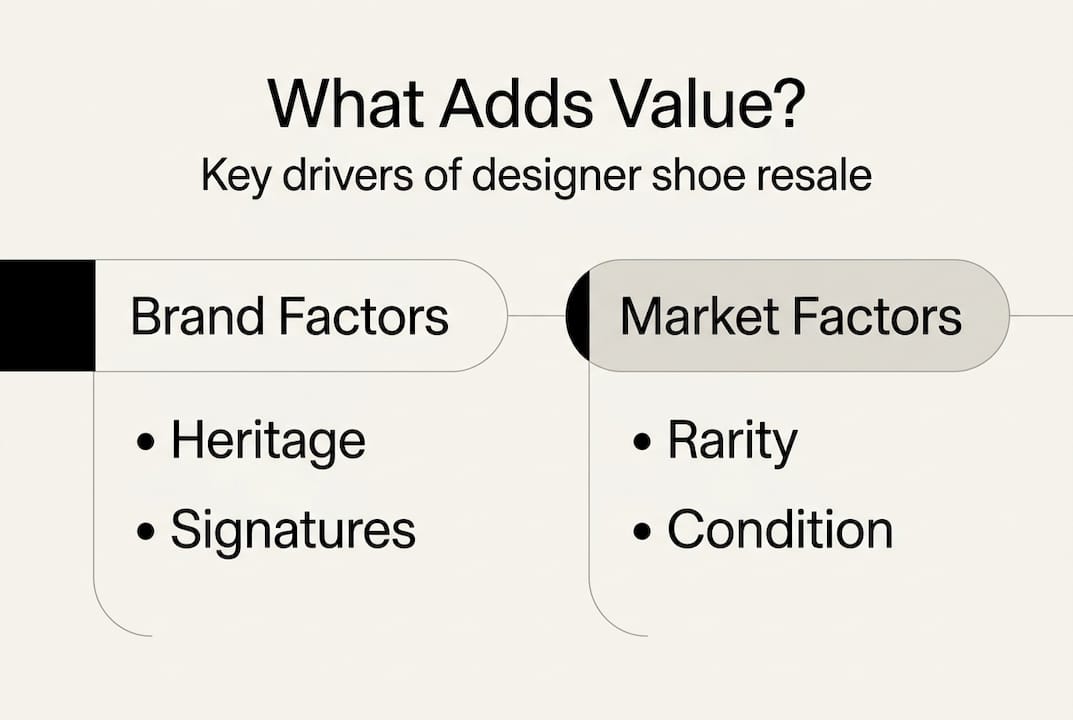
Provenance matters enormously in the resale market. Shoes with complete documentation, original packaging, and verifiable purchase history command premium prices. Condition reports from authentication experts add credibility and buyer confidence. Even minor details like keeping the original dust bag and box can increase resale value by 15-20%.
Follow these steps to safeguard your investment:
- Store and protect properly: Use shoe trees, keep in original boxes, store in climate-controlled spaces away from direct sunlight
- Document authenticity thoroughly: Maintain purchase receipts, authentication certificates, and detailed condition photos from day one
- Time buying and selling strategically: Purchase during off-season sales, sell when demand peaks for specific styles or brands
- Maintain pristine condition: Minimize wear, use protective sprays, address any damage immediately with professional repairs
- Track market trends: Follow resale platforms, fashion publications, and collector communities to understand value shifts
The comparison between different luxury shoes reveals patterns worth studying. Shoes that balance distinctive design with wearability tend to perform best. Pieces too trendy become dated quickly, while overly conservative styles lack the excitement that drives collector interest. The sweet spot combines recognizable brand signatures with timeless silhouettes that work across multiple styling contexts.
Learning from designer bag resale patterns provides valuable insights. Many principles that govern handbag value apply to shoes: brand hierarchy matters, condition is paramount, and documentation separates amateur sellers from serious collectors. Apply these lessons to your footwear investments for better outcomes.
Smart ways to invest in designer shoes
Knowing where and how to buy makes all the difference in your investment success. Strategic purchasing starts with identifying trustworthy sources that guarantee authenticity while offering competitive pricing. The landscape includes several viable options, each with distinct advantages.
Where to shop strategically:
- Certified resale platforms: Access authenticated pieces at significant discounts with buyer protection guarantees
- Brand boutiques: Purchase new releases directly, ensuring authenticity and building relationships for exclusive access
- Trusted luxury retailers: Established department stores and specialty shops offer seasonal sales and loyalty programs
- Private sales and trunk shows: Gain early access to limited editions through personal shopper relationships
- Estate sales and consignment: Find vintage treasures and discontinued styles at below-market prices
Authenticity and expert documentation are non-negotiable. The proliferation of sophisticated counterfeits makes professional authentication essential. Work only with sellers who provide detailed condition reports, clear return policies, and verifiable authentication processes. This protects both your immediate purchase and future resale potential.
The pricing landscape offers significant opportunities for savvy buyers. Certified luxury resale markets offer 30-70% off retail with authenticity guarantees, enhancing value for discerning buyers. These discounts transform the investment equation, allowing you to acquire premium pieces at prices that leave room for value appreciation or minimal loss if you later resell.
Timing your purchases strategically maximizes value. End-of-season sales, holiday promotions, and new collection launches create pricing opportunities. Brands often discount previous season inventory heavily to make room for new arrivals. Patient buyers who understand these cycles can acquire investment-worthy pieces at fraction of original retail.
Pro Tip: Develop connections with reputable sellers for insider deals and early access. Personal relationships with boutique managers, personal shoppers, and resale platform specialists give you first look at incoming inventory. These connections often mean the difference between scoring a coveted limited edition and missing out entirely.
Building a strategic approach requires balancing personal style preferences with investment potential. Buy shoes you genuinely love and will wear, ensuring you extract lifestyle value regardless of resale outcomes. Focus on versatile pieces that work across multiple outfits and occasions, maximizing cost-per-wear while maintaining condition. Consider your existing wardrobe and identify gaps where designer shoes would deliver maximum impact.
Research before every purchase. Compare prices across multiple platforms, verify authentication credentials, and understand the specific model’s market history. Check completed sales on resale sites to gauge realistic value expectations. Join collector communities and forums where enthusiasts share insights about emerging trends and value predictions.
The 2026 luxury resale landscape offers unprecedented access to authenticated designer shoes at accessible price points. This democratization of luxury creates opportunities for building impressive collections without the traditional financial barriers. Smart buyers leverage these platforms to acquire pieces that would otherwise remain out of reach.
Find your next designer shoe investment
Ready to put your knowledge into action? The world of designer shoes awaits, offering pieces that deliver both immediate style satisfaction and potential long-term value. Whether you’re drawn to the architectural elegance of Saint Laurent luxury sneakers, the timeless sophistication of Jimmy Choo leather flats, or other iconic designs, the key is starting with authenticated pieces from trusted sources.
Explore curated collections of authenticated designer shoes at Naiseshopper, where every piece comes with guaranteed authenticity and significant discounts off retail prices. Our expertly sourced inventory spans the most coveted brands and styles, giving you access to investment-worthy footwear without compromise. From limited editions to timeless classics, find pieces that elevate your wardrobe while protecting your investment.
Frequently asked questions
Are designer shoes a better investment than handbags?
Handbags typically deliver more reliable returns, while shoes offer greater lifestyle value and face higher resale volatility. Choose based on your priorities: consistent appreciation or daily enjoyment with occasional profit potential.
How much do designer shoes typically appreciate in value?
Most designer shoes do not consistently appreciate; only 47% of releases were profitable recently. Only rare or highly sought-after pairs may see value growth, and market trends vary significantly by brand and style.
Where can I buy authentic designer shoes at a discount?
Certified luxury resale platforms offer authenticated designer shoes at 30-70% off retail prices. These sources provide authentication guarantees and buyer protection, making them ideal for investment purchases.
What features make designer shoes hold their value?
Shoes from top brands, limited editions, and those in excellent condition tend to retain value best. Brand reputation, style rarity, and meticulous care matter most for lasting value and successful resale.
Should I wear my investment designer shoes or keep them pristine?
Balance enjoyment with preservation. Wear your shoes to extract lifestyle value, but maintain them carefully with proper storage, protective treatments, and minimal exposure to harsh conditions. Shoes in excellent worn condition can still command strong resale prices.