TL;DR:
- Providing a detailed brief with photos, budget, and deadline ensures faster and more accurate personal shopping results.
- Confirm fees, authentication, and shipping policies through a scheduled call before finalizing any purchase.
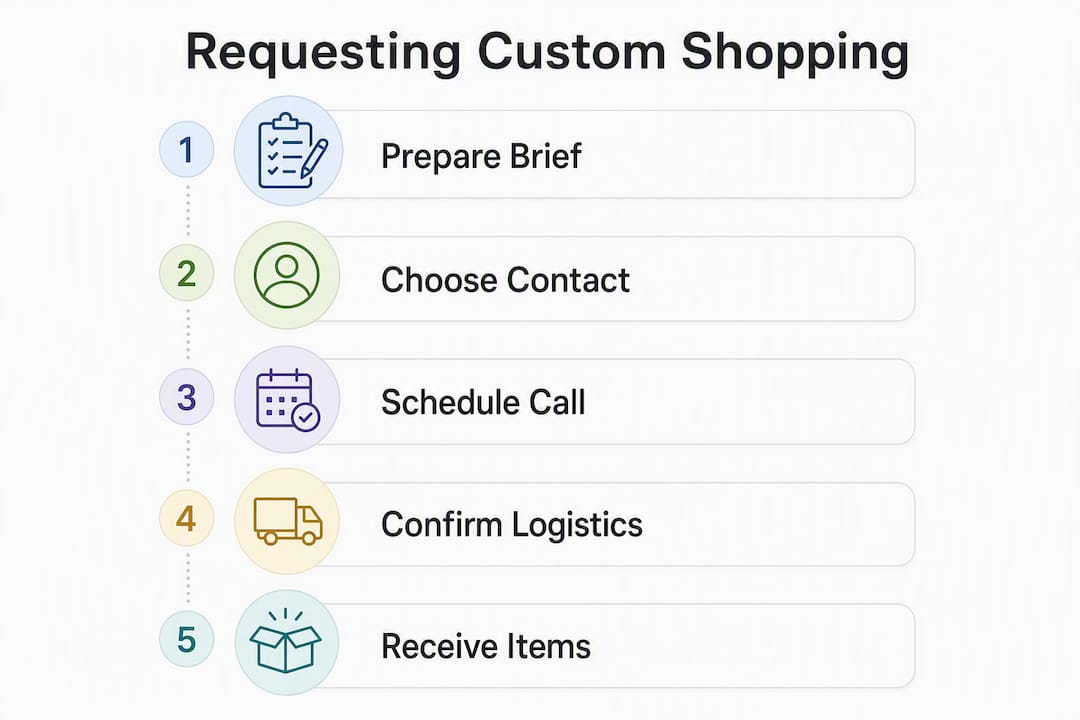
To request custom personal shopping, send a concise one-paragraph brief with the item type, your size, budget range, deadline, and at least one reference photo or product link. Then choose a contact method and schedule a short chemistry call to confirm fees, authentication, and shipping. That’s the entire process in three steps.
Step 1 — Prepare your brief. Write one paragraph covering what you want (a Gucci bag, a Prada heel, a full event look), your sizes, your budget range (minimum and maximum), your deadline or event date, and any brand or style preferences. Attach 1–3 reference photos or direct product links. Experts recommend including intended use, budget, brand preferences, and specific product details like size, color, and material.
Step 2 — Choose your contact method. Use a site form or email for detailed requests with attachments. Phone or live chat works better when you want a fast reply or want to book a call immediately.

Step 3 — Schedule a chemistry call. Confirm the fee structure, authentication and insurance coverage for luxury goods, and delivery timeline. When paying online, Federal Trade Commission protections apply to disputed charges on credit cards, so use one.
Pro Tip: Always attach at least one photo or exact product link when you need a rare or high-demand item. It lets the shopper contact vendor networks immediately and cuts sourcing time dramatically.
Table of Contents
- How do you request custom personal shopping step by step?
- What should you include in your personal shopping request?
- How do personal shoppers charge, and what should you ask about cost?
- What happens after you submit your request?
- How do you vet a personal shopper and spot red flags?
- How does Naiseshopper handle custom personal shopping?
- Key Takeaways
- What professionals wish every client knew before the first call
- Naiseshopper makes authenticated luxury personal shopping straightforward
- Useful sources
How do you request custom personal shopping step by step?
The process has more texture than the three-step summary above. Here’s how to move from a vague wish to a confirmed, professional request.
Define your objective first
Industry experts are clear on this: a full wardrobe overhaul and a single-event outfit are completely different scopes, and a shopper prices them differently. Nail down your objective before you write a word. Common objectives include:
- A wardrobe refresh or seasonal overhaul
- One outfit or look for a specific event
- Sourcing a hard-to-find or sold-out designer piece
- Gift shopping with a set budget and recipient profile
- Ongoing monthly or quarterly styling support
Clarity here shapes the timeline, the fee model, and which shopper is the right fit for you.
Gather the details your shopper needs
Before you contact anyone, pull together:
- Item types (handbag, shoes, ready-to-wear, watch, accessories)
- Sizes and any fit notes (e.g., “runs narrow in the heel,” “prefer a relaxed shoulder”)
- Preferred colors, materials, or silhouettes
- Brand preferences and any brands you want to avoid
- Budget range (a firm minimum and maximum, not a vague “reasonable”)
- Delivery deadline or event date
- Reference photos or direct product links for rare items
The more specific you are, the faster the shopper can act. Vague briefs produce vague results.
Choose how to contact the service
Live chat, email, and phone each serve a different kind of request. Email handles attachments and detailed written briefs best. Live chat is ideal for real-time browsing or a quick back-and-forth. Phone works when you want conversational clarity or need to book a call right away. Site forms are great for structured requests because they prompt you for the exact fields a shopper needs.
For a luxury purchase with authentication and insurance requirements, email or a site form is the smarter first move. It creates a written record from day one.
What to write in your opening message
Keep it short and structured. One paragraph of context, a bullet list of specifics, and a direct ask for a chemistry call and fee estimate. Two quick versions:
Detailed request: “I’m looking for a Prada black leather pump in a US size 8, for a black-tie event on June 14. My budget is $600–$900. I’ve attached a photo of the exact style I want. Could you confirm availability, your fee structure, and schedule a 15-minute call this week?”
Fast request: “Hi, I need help sourcing a specific Gucci bag. Can we schedule a quick call to discuss availability, fees, and timeline?”
Schedule and run the chemistry call
A chemistry call is where you confirm the shopper will act as your advocate, not push inventory for their own margin. Cover these points:
- Fee structure (hourly, flat, or percentage of spend)
- Authentication process and certificate of authenticity for luxury items
- Shipping options, insurance, and tracking
- Return and alteration policies
- Estimated sourcing timeline for your specific request
Ask directly: “How do you handle items that turn out not to be authentic?” A confident, specific answer is a green flag.
Confirm logistics after the call
After the call, expect the shopper to deliver a mood board, curated links, or in-person try-on options depending on the service format. Confirm in writing: who handles returns, what the revision policy is, and which payment methods are accepted. Get milestones in writing before any money changes hands.
Pro Tip: When comparing multiple shoppers, look beyond price. Demonstrated experience with your specific objective, client references, and a clear authentication guarantee matter more than a low hourly rate. Learn more about evaluating personal shopping services before you commit.
What should you include in your personal shopping request?
Use this checklist every time. Copy it, fill it in, and paste it into your email or site form.
Complete request checklist
- Objective: What are you shopping for and why?
- Event/deadline: Specific date or “no rush”
- Sizes: Clothing (US sizing), shoe size, measurements if relevant
- Fit notes: Any fit quirks the shopper should know
- Budget: Exact range (e.g., $800–$1,200)
- Style references: Links or photos of looks you love
- Style dislikes: Anything you want to avoid
- Brand preferences: Preferred brands and any to exclude
- Shipping address: Country and state for logistics and insurance
- Return constraints: Any limitations on returns or alterations
Template A: Detailed request
“I’m looking for [item type] from [brand preference] in [size/color]. The occasion is [event] on [date]. My budget is [$min–$max]. I’ve attached [X] reference photos. I’d love to schedule a short call to discuss fees, authentication, and timeline. Please let me know your availability.”
Then add your bullet checklist below the paragraph.
Template B: Quick chemistry call request
“Hi, I need help sourcing [item]. Can we schedule a 15-minute call this week to discuss availability, your fee structure, and next steps?”
Use Template B when speed matters more than detail. You’ll fill in the full brief on the call.
Attachment guidance
Send JPEGs or PNGs under 5 MB each. Three photos is usually enough: one of the exact item, one of a similar style you like, and one of a look you want to avoid. For rare items, a direct product URL from the brand’s site or a retailer is even better than a photo because it gives the shopper the exact SKU to track.
Pro Tip: Name your files descriptively: “Gala_BlackPump_Prada_Size8.jpg” tells the shopper everything at a glance. It sounds minor, but it prevents the back-and-forth that eats up sourcing time. If you’re also sourcing a fragrance or scent-related gift, a fragrance shopping checklist can help you specify notes and concentration before you brief your shopper.
How do personal shoppers charge, and what should you ask about cost?
Fee structures vary more than most people expect. Knowing the models upfront prevents sticker shock.
Common fee models
Personal shopper fees fall into four main categories:
- Complimentary retail styling: Department stores and mall services often offer free personal shopping. Some stores provide complimentary styling with no minimum spend and a simple booking process. The trade-off is that the shopper works within that store’s inventory only.
- Hourly rates: Common among independent stylists. Rates vary widely based on experience, market, and specialization.
- Percentage of spend: The shopper earns a cut of the total purchase. Typical for high-volume or luxury concierge services.
- Flat project fee: A fixed price for a defined scope (e.g., one event outfit, one wardrobe audit). Predictable and easy to budget.
Questions to ask upfront
Before you agree to anything, ask:
- Is the styling fee complimentary, or is there a charge?
- What is your hourly or flat rate for a project like mine?
- Are fees credited toward my purchases?
- What is the estimated total cost for the scope I described?
- Are there cancellation or revision fees?
Pro Tip: Ask for a small trial task before committing to a large project. A single-item request or one outfit brief gives you a low-risk way to evaluate the shopper’s taste, communication, and sourcing speed. It’s a standard ask, and any confident professional will agree to it.
What happens after you submit your request?
A typical personal shopping workflow moves through five clear stages: initial consultation, research and curation, presentation of picks, purchase and shipping, and follow-up for returns or alterations.
Post-request timeline
For straightforward tasks (a specific shoe in stock, a single outfit), expect first curated picks within 24–72 hours. Harder sourcing, like a sold-out Bottega Veneta bag or a rare vintage Chanel piece, can take several days to a week. Tight deadlines compress the timeline but may increase fees.
After the chemistry call, the shopper typically delivers:
- A mood board or curated link list
- In-person try-on options (for in-store services) or virtual fit sessions
- A revision round based on your feedback
- Final purchase confirmation and shipping details
Authentication and shipping for luxury purchases
For authenticated luxury goods, the delivery process includes a physical inspection, a certificate of authenticity, and insured tracked shipping. Ask specifically whether the service covers secure international shipping with insurance and what happens if an item arrives damaged or fails authentication on arrival.
Returns and restocking fees vary by service. Get the policy in writing before the purchase is made, not after.
Pro Tip: Ask for a written plan with milestones before the shopper starts sourcing. Specify who covers return shipping costs for items that don’t fit or fail authentication. A shopper who resists putting this in writing is a red flag.
How do you vet a personal shopper and spot red flags?
Not every personal shopper is equally trustworthy. A quick vetting process protects your money and your time.
Vetting checklist
- Ask for two or three client references or testimonials
- Request a portfolio or case studies that match your objective
- Verify their authentication process for luxury items
- Confirm secure, traceable payment methods (credit card or verified platform)
- Ask about shipping insurance and what happens if an item is lost or damaged
Red flags to watch for
- Refusal to provide references or a portfolio
- Vague or verbal-only fee and return policies
- Pressure to purchase immediately without a documented returns policy
- Requests for wire transfer, Zelle, or other non-reversible payment methods
- Inconsistent communication or slow response times before you’ve even paid
Questions that reveal competency
Ask for examples of past work that match your specific objective. A shopper who has sourced Valentino heels for a gala is a different skill set from one who handles everyday wardrobe refreshes. Ask how they handle authentication disputes and what their refund policy is for unsatisfactory work. Specific, confident answers signal a professional. Hedging or deflection signals the opposite.
Pro Tip: Use a single-item trial task to test competency before committing to a larger project. It’s low-cost, low-risk, and tells you everything about how the shopper communicates, sources, and delivers.
How does Naiseshopper handle custom personal shopping?
Naiseshopper offers personal shopper assistance for U.S. customers across its authenticated designer inventory, which spans Gucci, Chanel, Prada, Valentino, Bottega Veneta, Saint Laurent, and Balenciaga.
The Naiseshopper workflow
The process follows the same structure outlined above:
- Submit your request via the site form or email with your full checklist (item, size, budget, deadline, photos/links)
- Receive an acknowledgment and a scheduled consult
- Review curated, authenticated selections from Naiseshopper’s inventory
- Confirm your purchase with secure payment and choose your shipping and insurance options
- Receive insured, tracked delivery with authentication documentation
Trust signals
Naiseshopper’s authentication guarantee covers every designer piece in its inventory. Secure international shipping with insurance options is standard. Pricing and return policies are clearly stated before purchase. For buyers sourcing authenticated luxury items like a Prada pump or a Gucci watch, that paper trail matters.
How to submit your request to Naiseshopper
Use the checklist and templates from the earlier sections. Include the exact product link or a high-quality photo for rare or high-demand pieces. Specify your preferred payment timeline. The more precise your brief, the faster Naiseshopper can access its seller networks and confirm availability.
Pro Tip: For rare designer pieces, include the exact product URL from the brand’s site alongside your brief. It lets Naiseshopper reach out to its network immediately rather than spending time confirming which version of a style you mean.
Key Takeaways
A complete, specific brief with photos, budget, and deadline is the single most important factor in getting fast, accurate results from any custom personal shopping service.
| Point | Details |
|---|---|
| Start with a clear brief | Include item type, size, budget range, deadline, and at least one reference photo or product link. |
| Book a chemistry call | Confirm fees, authentication process, shipping insurance, and return policy before any purchase. |
| Know the fee models | Retail styling can be complimentary; independent shoppers charge hourly, flat, or percentage fees. |
| Use a trial task first | A single-item request lets you evaluate communication and sourcing quality at low risk. |
| Naiseshopper for luxury | Submit your checklist via Naiseshopper’s site form or email for authenticated designer pieces with insured shipping. |
What professionals wish every client knew before the first call
The gap between a frustrating personal shopping experience and a great one almost always comes down to how the client communicates, not how skilled the shopper is.
Professionals consistently prefer goal-oriented tasks with clear success metrics. “Source black pumps for a wedding by May 15, budget $700–$1,000, US size 8, no platforms” is a brief a shopper can execute and measure. “I need something elegant” is not. The specificity isn’t about being demanding. It’s about giving the shopper a target they can actually hit, which means faster results and fewer revision rounds.
The second thing professionals wish clients understood: specific feedback accelerates everything. Telling a shopper “the heel was too chunky and the toe too square” teaches them your taste in one sentence. “Not really my style” teaches them nothing and adds another round to the process. The feedback loop is where the relationship either clicks or stalls.
Three behavioral habits that make every client-shopper relationship more productive:
- Be decisive on returns. If something doesn’t work, say so immediately and say why. Delayed decisions hold up the next sourcing round.
- Respond promptly to fit questions. A shopper waiting on your measurements or confirmation can’t move forward. A 24-hour response window is a reasonable standard to set for both sides.
- Keep reference images handy. A Pinterest board, a saved Instagram post, or a screenshot folder gives your shopper a visual vocabulary for your taste that no written description fully replaces.
The chemistry call exists precisely to surface these dynamics before money changes hands. A shopper who asks good questions in that call, who pushes back on a vague brief rather than just accepting it, is one worth working with.
Naiseshopper makes authenticated luxury personal shopping straightforward
Sourcing a Gucci G-Timeless watch or a pair of Valentino Garavani stiletto sandals through a personal shopper means you need authentication you can trust and shipping you can track. Naiseshopper delivers both, with an authenticated designer inventory spanning Gucci, Prada, Chanel, Valentino, Bottega Veneta, Saint Laurent, and Balenciaga, plus insured international shipping and flexible payment options for U.S. shoppers.
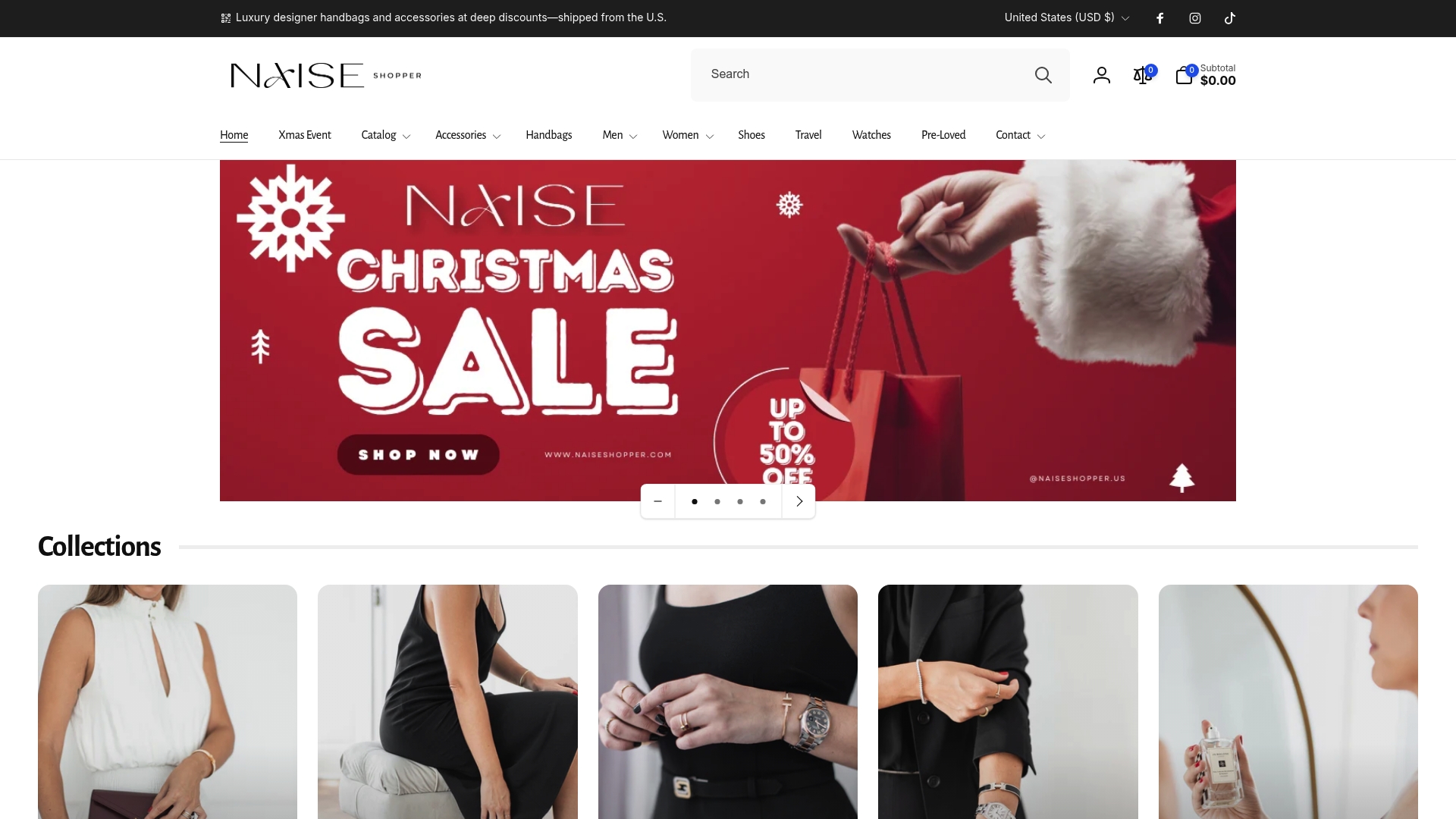
The process is direct: fill out the site request form or send an email using the checklist from this guide (item, size, budget, deadline, photos or product links), and Naiseshopper’s team will confirm availability, schedule a consult, and walk you through pricing and shipping options. For rare or high-demand pieces, include the exact product URL so the team can reach its seller network immediately.
Ready to start? Visit Naiseshopper to submit your request or browse the authenticated collection now.
Useful sources
These are the primary references behind this guide, worth bookmarking if you want to go deeper on any aspect of personal shopping.
- Personal Shopper Service Guide (mangamofo.com) — Covers fee structures, the chemistry call, and the full workflow from consultation to follow-up. The most comprehensive single reference for understanding how personal shopping services are structured.
- How to Hire a Personal Shopper (TJ Divine Image) — Practical guidance on defining goals, evaluating fit, and setting expectations before you hire. Especially useful for first-time clients.
- Personal Shopping Services FAQ (Inspire Uplift) — Explains contact channels (chat, email, phone) and what details to include in a request. Good quick reference for the brief-writing process.
- Personal Shopping Concierge (Gallemar) — Explains why direct product links and photos reduce sourcing time for rare luxury items. Relevant for anyone sourcing hard-to-find designer pieces.
- Fashion Island Personal Shopper Services — A real-world example of complimentary retail styling with no minimum spend, useful for understanding the difference between store-based and independent shopper models.
- Naiseshopper: Luxury Personal Shopping Workflow — Naiseshopper’s own guide to the authenticated luxury shopping process, from initial request to insured delivery.