TL;DR:
- Verifying designer item authenticity demands multiple checks, including photos, provenance, and expert reviews.
- Using timestamped evidence and professional authentication increases chances of dispute resolution and buyer protection.
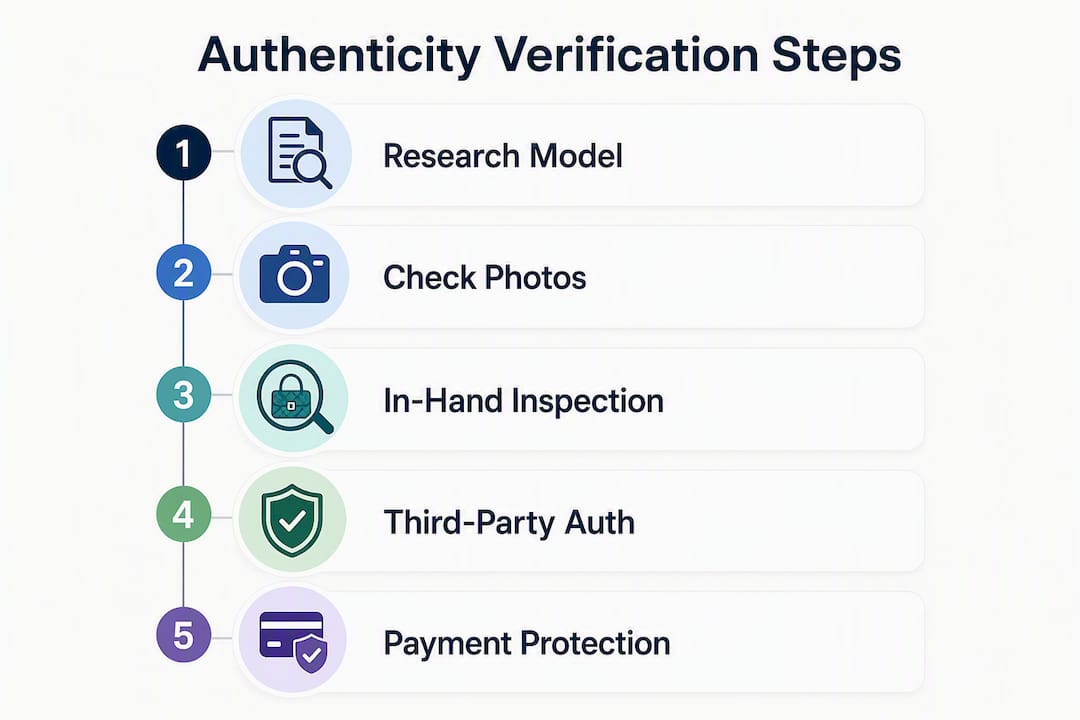
You can reliably verify a designer item’s authenticity before you buy by running a short, defense-in-depth checklist: inspect photos, confirm the model exists, check provenance, and lock in payment protection. No single detail proves an item real. Convergence of multiple independent checks is what separates a confident purchase from a costly mistake.
Before you hit Buy, run these five checks:
- Review full listing photos in natural light (front, back, interior, hardware, serial panel)
- Verify seller history: feedback score, account age, past luxury sales
- Run a price-sanity check: a Chanel Classic Flap priced far below retail is a red flag, not a deal
- Request extra shots (heat stamp, hardware reverse, edge finishing, care tag)
- Confirm the platform’s returns policy and pay by credit card or PayPal for dispute coverage
Table of Contents
- How to verify designer product authenticity before checkout
- What to look for in photos and in-hand inspections
- Confirm the model exists before you trust the listing
- Third-party authentication: photo services vs. in-hand lab analysis
- How to use payment protections and dispute workflows in the U.S.
- Red flags and “too good to be true” signals to stop you cold
- What to do if you already received a suspected fake
- How professional authenticators work and why one check is never enough
- Key Takeaways
- The smarter play for bargain luxury buyers
- Naiseshopper: authenticated luxury, already verified for you
- Trusted sources and further reading
How to verify designer product authenticity before checkout
- Pull every listing photo and zoom in on stitching, hardware, and logo areas. Blurry close-ups or stock images in place of actual item shots are immediate walk-away signals.
- Check seller history on the platform. Look for verified sales of luxury goods specifically, not just general positive feedback. A seller with 500 reviews for phone cases is not a luxury specialist.
- Run a price-sanity check. Research recent sold listings for the exact model and condition. If the price is significantly below comparable authenticated sales, probe harder before proceeding.
- Request specific photos you did not see in the listing: the interior heat stamp, the reverse of all hardware, the edge finishing on straps, and the care label. A legitimate seller sends these without hesitation.
- Confirm shipping origin and returns policy in writing before paying. Domestic U.S. shipping with a clear return window is a baseline expectation for any credible seller.
- Save a timestamped evidence packet the moment you decide to proceed: screenshots of the full listing, seller profile, all messages, and the listing URL. This packet is your primary protection if a dispute arises later.
Pro Tip: Screenshot the listing price and photos with your phone’s timestamp visible. Listings can be edited or deleted after purchase, and a timestamped record is often decisive in a PayPal or credit card dispute.
What to look for in photos and in-hand inspections
Strong visual checks cover several independent markers, none of which is conclusive alone. Together, they build a picture.
- Stitching: Count stitches per inch on a seam and compare against documented examples for that model. Uneven spacing, thread color variation, or loose ends are red flags.
- Leather grain and patina: Authentic Gucci or Prada leather has a consistent, natural grain. Overly uniform or plasticky texture suggests synthetic material.
- Hardware weight and markings: Real hardware feels heavy and has crisp, deep engravings. Lightweight, hollow-feeling clasps or blurry brand stamps are common fake tells.
- Logo typography and embossing: Compare font weight, letter spacing, and embossing depth against brand reference images. Even a millimeter of misalignment in a Chanel double-C is significant.
- Lining and care tags: Interior lining should be taut and cleanly finished. Care tags must match the brand’s documented font, country of origin, and label format for that production era.
- Serial and date codes: Useful reference points, but serial numbers are easily replicated and must be cross-checked against model era, material, and hardware simultaneously.
Request these specific shots from any seller before buying: interior heat stamp in natural light, hardware reverse showing any engravings, edge finishing on all straps, interior corners showing lining attachment, and the underside of any flap or closure.
Pro Tip: Measure apparent proportions in listing photos against the brand’s official dimensions. A Bottega Veneta Jodie that looks slightly too wide or too tall compared to official specs is worth questioning before you buy.
For a deeper bag-specific checklist, the guide to spotting authentic designer bags covers brand-by-brand markers worth bookmarking.
Confirm the model exists before you trust the listing
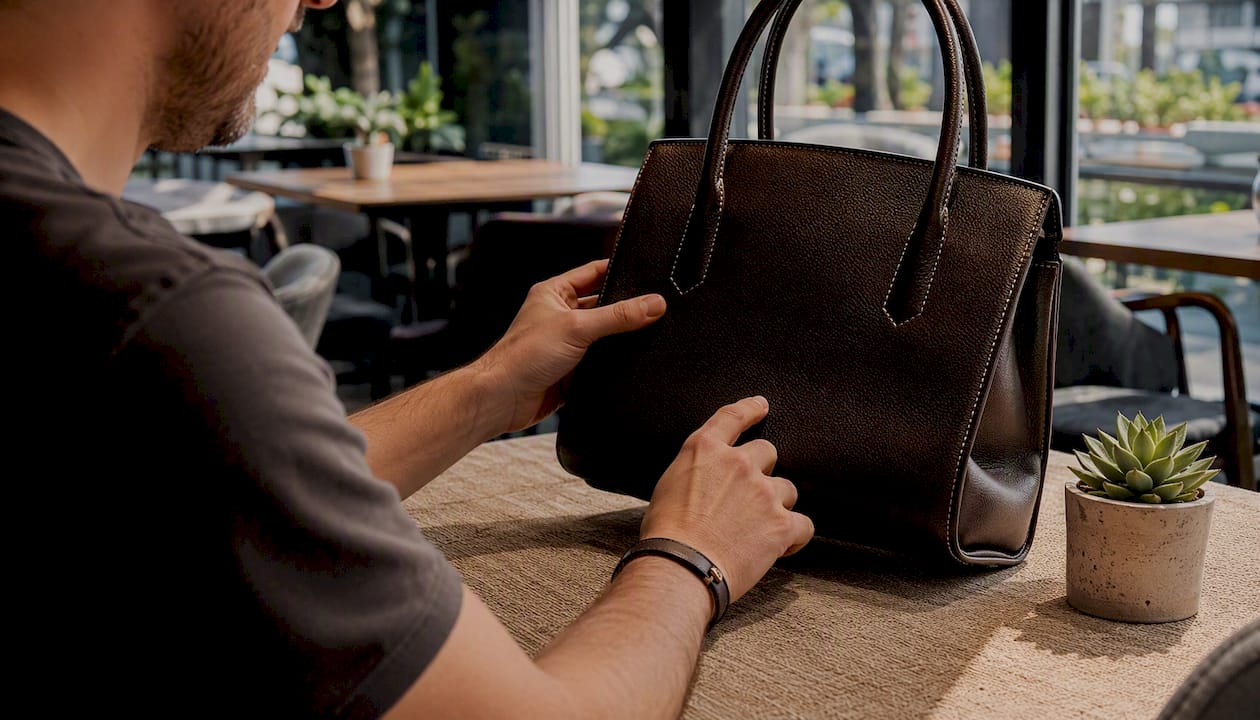
Counterfeiters frequently produce “fantasy items”: model, color, and material combinations the brand never actually made. Verifying existence is a non-negotiable step.
- Search the brand’s official website and archived lookbooks for the exact model name, style code, and colorway.
- Cross-reference the SKU or reference number against reputable resale archives and season catalogs.
- Confirm production-era markers: a bag with a date code suggesting 2018 production should match 2018 hardware finishes, lining materials, and logo styles for that line.
- Use image search to find authenticated examples of the exact model in the claimed color and material.
- If you cannot find a single verified example of the item anywhere, treat it as a strong red flag and walk away.
Pro Tip: Tools like the LuxeDetect Hermès Blind Stamp Decoder or Louis Vuitton Date Code Checker let you cross-reference production dates against the claimed model era in seconds, for free.
Third-party authentication: photo services vs. in-hand lab analysis
When self-checks leave doubt, professional authentication is the right call. Two main routes exist, and the right one depends on item value and what you need the result for.
| Factor | Photo-only service | In-hand / lab service |
|---|---|---|
| Speed | 24 hours | several weeks |
| Cost | $30–$50 typical | $100–$800+ |
| Accuracy | Strong for most bags and accessories | Highest; required for watches |
| Legal usefulness | Accepted by PayPal and many card issuers | Strongest evidence for disputes and legal action |
| Best for | Items under $1,000; pre-purchase decisions | High-value items; watches; active disputes |
Photo services like LuxeDetect deliver expert opinions by email within 24 hours, starting at $9 for sneakers and scaling by category. For watches, movement analysis is decisive, and brand service centers offer the highest certainty, though they may retain items they determine are counterfeit and can take several weeks.
A written expert opinion or certificate of authentication is accepted evidence by major payment providers. For disputes, a stamped report materially improves your recovery odds.
How to use payment protections and dispute workflows in the U.S.
If authenticity is in doubt after delivery, move quickly and methodically.
- Stop all new claims conversations with the seller about the item’s condition or authenticity until you have documentation.
- Photograph the received item immediately: exterior, interior, hardware, tags, and packaging, with timestamps.
- Order a professional authentication and request a written report or Statement of Non-Authenticity.
- Notify the seller and marketplace in writing, citing the authentication result and requesting a return or refund.
- Escalate to your payment provider (PayPal Buyer Protection or a credit card chargeback) if the seller or platform does not resolve within their stated window.
Evidence to collect before and after delivery:
- Saved listing screenshots with timestamps
- All seller messages (do not delete)
- Original listing photos and shipping label
- Photos of the received item vs. listing photos
- Professional authentication report
- Payment confirmation and order record
Pro Tip: Credit card chargebacks for “item significantly not as described” (SNAD) typically have a 60–120 day window from the transaction date. File before that window closes, even if the seller is still promising a resolution.
A PayPal SNAD claim or credit card chargeback generally resolves within 30–75 days when supported by a professional authentication report.
Red flags and “too good to be true” signals to stop you cold
- Price more than 40% below recent authenticated sold comps for the same model and condition
- Seller with no verifiable luxury sales history or a newly created account
- Listing photos that are stock images, heavily filtered, or suspiciously low resolution on key areas
- Requests to pay outside the platform (Venmo, Zelle, wire transfer)
- No returns policy or a policy that excludes “authenticity disputes”
- Model, color, or material combination you cannot verify ever existed
- Authentication papers with font inconsistencies, mismatched serial numbers, or generic seller addresses
- Seller who becomes evasive or hostile when asked for additional photos
Pro Tip: Never let a visually convincing item override missing paperwork or provenance gaps. A real Chanel bag from a legitimate source comes with a story you can verify. If the seller cannot explain where it came from, that gap matters.
For a full breakdown of listing-level red flags, spotting counterfeit luxury goods online covers the most common photographic manipulations sellers use.
What to do if you already received a suspected fake
Act fast. The clock on your dispute window starts at the transaction date, not the delivery date.
- Do not use, alter, or return the item until you have documentation.
- Photograph everything: item, packaging, shipping label, and any included papers.
- Order a professional authentication immediately and request a written report.
- Send a written notice to the seller and marketplace with your authentication findings attached.
- Open a payment dispute with your card issuer or PayPal, attaching all evidence.
- If the seller refuses to cooperate, escalate directly to the platform’s trust and safety team.
Evidence checklist for your dispute file:
- Timestamped photos of the received item
- Expert authentication report (written, stamped)
- Original listing URL and screenshots
- Shipping label and tracking record
- All seller communications
- Payment confirmation
How professional authenticators work and why one check is never enough
Professional authentication is a convergence process, not a single test. Experts match multiple independent data points: materials, stitching density, hardware weight and markings, serial and date codes, provenance chain, and digital markers like NFC or RFID. A single correct serial number rarely proves authenticity because counterfeiters replicate codes routinely.
- Photo triage: Initial review flags obvious tells and determines whether in-hand inspection is needed.
- Specialist review: Category experts check brand-specific markers against documented authentic examples.
- In-hand forensic tests: For watches, movement analysis and component originality checks are decisive. Surface-level dial and case checks can mislead because modern clones replicate many exterior traits.
- Written expert opinion: The final deliverable, usable as documentary evidence in disputes and legal proceedings.
On digital markers: NFC and RFID chips are increasingly embedded in luxury goods, but a chip alone is not proof. When scanning, verify that the response resolves to the brand’s official, branded-domain website. A generic URL or third-party verification page is a red flag, not a green light.
Pro Tip: Blockchain and RFID solutions are promising for traceable provenance, but consumer awareness remains uneven. Until these become standard, treat digital markers as one data point among many, not a standalone verdict.
For a deeper look at how the authentication process works from intake to certificate, the luxury handbag authentication process guide walks through each professional stage.
Key Takeaways
Verifying designer product authenticity requires converging multiple independent checks: photos, provenance, model existence, third-party authentication, and payment protection working together.
| Point | Details |
|---|---|
| Defense-in-depth is non-negotiable | No single check proves authenticity; converge photos, provenance, serial codes, and expert review together. |
| Photo services cost $30–$50 | Fast, affordable authentication works for most bags; use in-hand lab analysis for watches or higher-value items. |
| Evidence packet saves disputes | Save timestamped screenshots, seller messages, and shipping labels before and after purchase. |
| Fantasy items are a real threat | Always confirm the exact model, color, and material combination was produced by the brand before buying. |
| Naiseshopper removes the guesswork | Every item on Naiseshopper ships with an authenticity guarantee, so you skip the verification checklist entirely. |
The smarter play for bargain luxury buyers
Most authentication guides treat verification as a solo sport. You, a magnifying glass, and a YouTube tutorial versus a professional counterfeiting operation. That framing undersells how sophisticated the fakes have become and how much the odds favor the counterfeiter when a buyer is working from photos alone.
The defense-in-depth approach covered here is genuinely effective, but it requires time, access to reference materials, and the willingness to pay for professional authentication on anything above a few hundred dollars. For a Prada bag or a pair of Saint Laurent heels, that investment is worth it. The real question is whether you want to run that process every single time you shop.
For high-value purchases or buyers who simply want certainty without the research sprint, buying from a guaranteed-authentic source is the cleaner answer. The verification work has already been done, the provenance is documented, and your dispute position is strong from the moment you check out.
Naiseshopper: authenticated luxury, already verified for you
Naiseshopper carries authenticated Gucci, Chanel, Prada, Valentino, Bottega Veneta, Saint Laurent, and Balenciaga, with every item verified before it ships. You get the discounted price without the authentication sprint: no chasing sellers for heat stamp photos, no $50 photo service fees, no evidence packets to assemble. Personal shopper assistance is available for U.S. buyers who want help sourcing a specific piece, and shipping insurance covers your order in transit. For risk-averse shoppers or anyone buying above $500, this is the route that skips the uncertainty entirely. Browse authenticated Prada sneakers or explore the full collection at Naiseshopper.com to shop with confidence today.
Trusted sources and further reading
These are the primary sources used throughout this guide. Save them for reference when researching specific brands or building a dispute file.
- PawkBroker: How to Authenticate Luxury Items — Covers defense-in-depth methodology, serial code limitations, watch movement analysis, and brand service center trade-offs.
- Real Authentication — Professional photo and in-hand authentication service; written reports accepted by PayPal and card issuers for SNAD disputes.
- LuxeDetect — Free brand-specific serial number and date code checkers for Louis Vuitton, Chanel, Hermès, Gucci, Prada, and Goyard.
- The Zoe Report: How to Spot a Fake Designer Handbag — Professional authenticator interviews covering fantasy items and photo-based red flags.
- Selinko: How to Verify a Luxury Product Is Authentic — NFC/RFID domain validation guidance and digital provenance best practices.
- Springer: Methods to Authenticate Luxury Products — Academic research on blockchain, RFID, and QR-based traceability solutions and current consumer awareness gaps.
Save these links before you shop. If a dispute arises, referencing a credible authentication source in your claim documentation strengthens your case with the payment provider.