The fastest, most reliable way to pick runway trends worth wearing is a four-step filter: identify the trend, reduce it to one wearable signal, anchor it with basics you already own, and personalize it to your life. Skip the runway show entirely and grab your closet instead. Before you buy anything trend-driven, run this checklist:
- Can I style it with at least three pieces I already own?
- Do I have a real occasion for it, not just an aspirational one?
- Does it fit my comfort level and budget without stretching either?
That is the core of runway trend analysis, and it works whether you’re eyeing a WGSN-flagged silhouette or a color you spotted on three different runways in one season. Naiseshopper built its curated collections around this exact logic: trends that translate, not trends that expire in your closet.
Key Takeaways
Selecting runway trends successfully comes down to isolating one wearable signal, anchoring it with basics, and testing it before you spend.
| Point | Details |
|---|---|
| Use the four-step filter | Identify the trend, reduce it to one signal, anchor with basics, personalize to your life. |
| Apply the three-item rule | If you can style a piece with three existing wardrobe items, it’s worth buying. |
| Test before you commit | Try digital try-on, rental, or accessories-first before investing in a full trend piece. |
| Match price tier to risk | Save luxury spending for construction-driven pieces; use affordable buys for micro-trends. |
| Shop curated, not chaotic | Naiseshopper’s authenticated collections let you test trend-forward pieces at a discount instead of full retail risk. |
Table of Contents
- How to identify what element of a runway look is the real trend
- Reduce runway drama: pick one element and anchor it with basics
- Personalize it: the three-item rule and a quick pre-buy checklist
- Low-risk ways to try a trend before committing
- Runway-to-real-life outfit formulas that actually work
- When to adopt a runway trend and how to run a seasonal audit
- What the research says about selective trend adoption
- Common mistakes and quick fixes
- Why slow, curated trend adoption builds real style
- Test a runway trend without the risk
- Frequently Asked Questions
- Sources
How to identify what element of a runway look is the real trend
A runway look is rarely one trend. It’s usually five things stacked on top of each other, and your job is to spot which one is doing the actual work. Learn to isolate it and you’ve mastered how to identify fashion trends before they hit every storefront.
Look for these five trend types:
- Color direction — a single hue repeated across multiple designers in one season.
- Silhouette shift — dropped waists, boxy shoulders, exaggerated hems.
- Styling trick — a belt worn over a coat, tucked pants, layered collars.
- Fabric or finish — high-shine leather, sheer organza, brushed suede.
- Hero item — one accessory or piece that anchors the entire look, like an oversized bag or statement boot.
Pro Tip: Treat the runway as a mood board, not a shopping list. Find the dominant “molecule” in a look. Everything else is set dressing.
Reduce runway drama: pick one element and anchor it with basics
Professional stylists break a runway look into core molecules: color, texture, print, silhouette. The rule is simple. Borrow one or two, never the whole outfit. A look that reads as costume on the runway reads as confidence on the street once you strip it down.
Take the oversized blazer trend. On the runway, it comes with wide-leg trousers, chunky boots, and an exaggerated collar. In real life, pair the blazer with a white tee, straight-leg jeans, and loafers. One signal, three anchors.
Do this:
- Choose one trend molecule per outfit.
- Let familiar basics carry the rest of the look.
Don’t do this:
- Stack three trends into one outfit and hope it reads intentional.
- Skip the anchor pieces and go full runway replica.
Pro Tip: Denim, plain tees, tailored trousers, and simple knitwear are your universal anchors. They make almost any trend molecule look deliberate instead of costumed.
Personalize it: the three-item rule and a quick pre-buy checklist
Before any trend piece enters your cart, ask three questions. Where will I actually wear this? Can I style it with three or more pieces I already own? Does it match my comfort and budget?
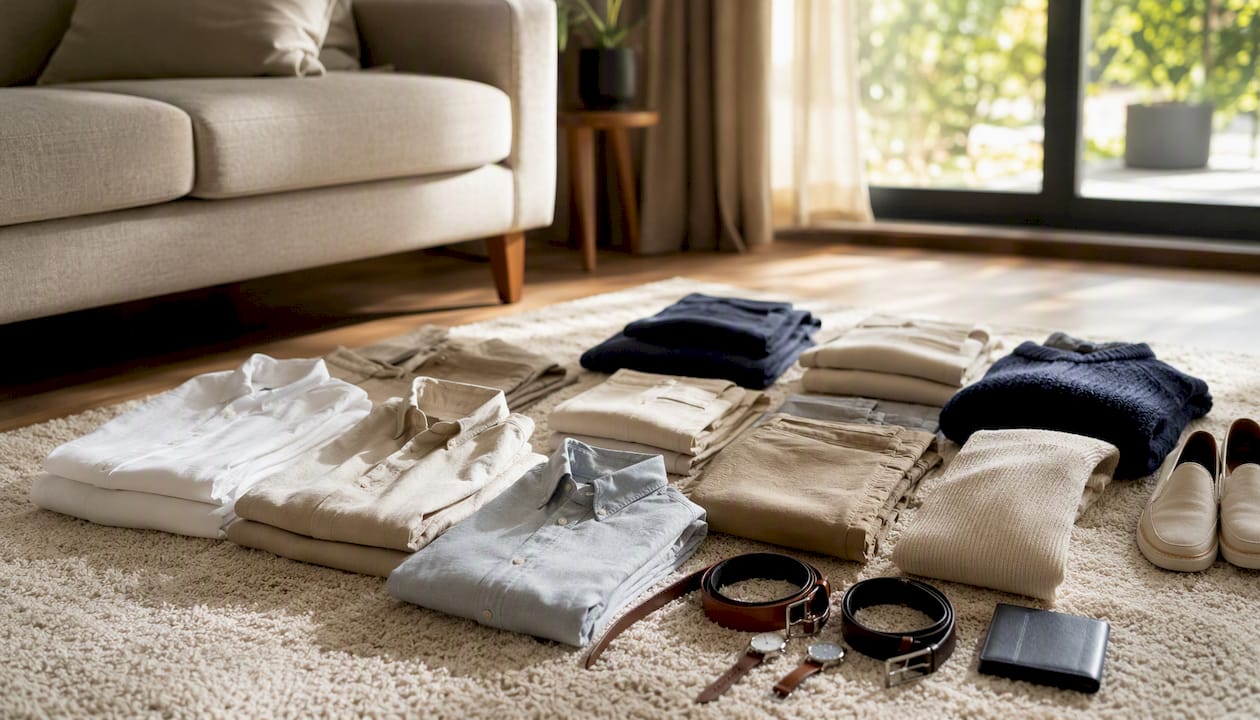
The three-item rule takes thirty seconds. Picture the piece with three existing outfits. If you can name them fast, buy it. If you’re stalling, that hesitation is your answer.
Run the decision this way:
- Yes to all three → move to a low-risk test before committing to a full price purchase.
- No to any one → try it as an accessory first, or skip it this season.
Selective buying isn’t about being precious with your money. Trusting your personal style reduces overconsumption and helps you buy less often, with far more confidence in what you actually pick up.
Low-risk ways to try a trend before committing
Testing a trend costs nothing if you do it right. Digital try-on tools and virtual fitting apps let you preview silhouettes without opening your wallet. Rental platforms and resale marketplaces work well for anything you suspect is a one-season fling. Accessories-first testing (a bag, a scarf, a pair of sunglasses) lets you flirt with a directional signal at low financial risk.
Match your price tier to the experiment:
- Luxury — reserve for pieces where fabrication and construction genuinely matter, like investment-grade outerwear.
- Mid-range — the sweet spot for wearability testing on silhouette or color trends.
- Affordable — perfect for micro-trends you expect to fade by next season.
Runway-to-real-life outfit formulas that actually work
These mini-recipes translate directional runway signals into outfits you’d actually wear on a Tuesday.
- Color gateway: Runway shows head-to-toe cherry red. Real life: one cherry red accessory (bag or shoes) against a neutral base.
- Silhouette tweak: Runway sends a dropped-waist dress. Real life: belt worn at the hip over a straight dress for the same effect, minus the commitment.
- Accessory lead: Runway pairs oversized chain jewelry with tailoring. Real life: one statement chain necklace over a plain crewneck.
- Texture swap: Runway shows full leather looks. Real life: one leather piece (skirt or jacket) with soft knits to balance the weight.
- Volume play: Runway sends voluminous sleeves or trains. Real life: pair volume with a clean, form-fitting base underneath so the proportion doesn’t swallow you.
Each formula follows the same math: one loud signal, everything else quiet.
When to adopt a runway trend and how to run a seasonal audit
Timing matters as much as taste. Watch for repeated runway appearances across multiple designers, street-style adoption at fashion week, retail silhouettes showing up in stores, and editorial coverage that keeps circling the same idea. Recent runway recaps from Fall/Winter 2026 already show which motifs are gaining that kind of traction.
Run this quick audit every season:
- Save three runway looks that caught your eye.
- Label the dominant molecule in each one.
- Pick one trend to test using a low-risk method.
- Build two outfits from pieces already in your closet.
Pro Tip: Revisit this audit right after major fashion weeks, or whenever your lifestyle shifts (new job, new city, new season of life). Trends that fit six months ago might not fit now.
What the research says about selective trend adoption
The four-step filter isn’t a gut feeling. Practical runway-to-real-life guides consistently recommend the identify, reduce, anchor, personalize sequence because it works across seasons and price points.
A few evidence points worth knowing:
- Runway silhouettes typically take 18 to 24 months to reach mass-market retail, so there’s rarely urgency to buy the moment you see something on a runway feed.
- Filtering trends through your existing wardrobe keeps new pieces working with what you already own instead of competing against it.
That lag is your advantage. You have time to test before you buy.
Common mistakes and quick fixes
The most avoidable trend mistakes come from impatience, not bad taste.
- Don’t buy every micro-trend you see in one haul.
- Don’t ignore proportion when scaling a trend into your closet.
- Don’t copy a full runway look wholesale.
Pro Tip: Start with an accessory, scale silhouettes down one size from the runway version, and test bold trends in neutral colors first.
Why slow, curated trend adoption builds real style
I’d rather see a closet with five trend pieces someone actually loves than fifty someone bought on impulse. Curated, patient selection, the kind Naiseshopper builds its collections around, produces a wardrobe that feels like you, not a runway recap.
Test a runway trend without the risk
Chasing every runway trend at full retail price is how closets fill up with regret. Naiseshopper gives you a lower-risk entry point: curated, authenticated pieces at a discount, so testing a directional trend doesn’t mean gambling on full luxury pricing.
If you’re leaning toward an accessory-first test, the Saint Laurent mid-top sneakers are a low-commitment way to try a footwear-forward runway signal, and the Gucci G-Timeless watch works as a permanent anchor piece rather than a seasonal gamble. Naiseshopper also offers personal shopper assistance if you want a second opinion before you commit. Browse the curated selection and pick one piece to test this season.
Frequently Asked Questions
How do I know if a runway trend is worth trying?
Run the three-item rule: if you can immediately picture styling it with three pieces you already own, it’s worth testing. If you can’t, it’s likely a passing trend for your specific wardrobe, even if it’s dominating this season’s runway coverage.
How long does it take for a runway trend to reach regular stores?
Industry analysis pegs the runway-to-retail lag at roughly 18 to 24 months for most silhouettes, which gives you plenty of time to watch a trend before buying into it.
What’s the safest way to test a bold runway trend?
Start with accessories. A bag, a pair of sunglasses, or one statement piece of jewelry lets you experiment with a directional trend at a fraction of the financial risk of full apparel.
Should I buy trend pieces in luxury materials or affordable versions?
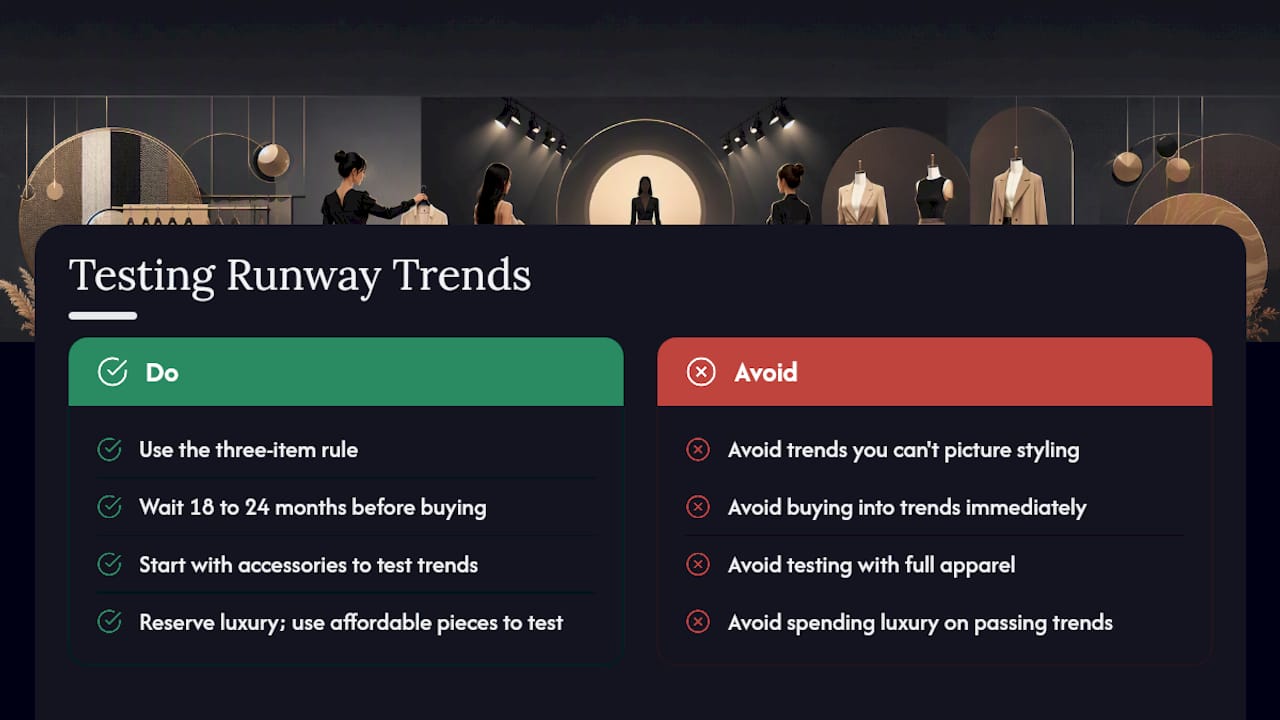
Reserve luxury spending for pieces where construction genuinely matters, like outerwear or footwear. Use affordable or mid-range pieces to test color and silhouette trends you’re not fully sold on yet.
Sources
- Styles
- How to actually find your personal style in 2026 | CNN
- Fashion trends that fit your personal style | The Velvet Runway
- Best 7 trend research methods for independent fashion brands (2026) | Vistoya