TL;DR:
- Luxury fashion is shifting from exclusivity to accessibility through consignment, allowing sellers to retain ownership until items sell. This model offers authenticated designer pieces at lower prices, with sellers earning up to 85% of the sale, while buyers enjoy verified luxury goods with protected return policies. The booming global market is driven by sustainability, rising prices, and younger consumers valuing quality and provenance over newness.
Luxury fashion has long carried a reputation for exclusivity, reserved for those with unlimited budgets and insider access. But that story is changing fast. Fashion consignment is a retail model where a store sells pre-owned goods on behalf of the original owner, who keeps ownership until the item sells and then receives a cut of the proceeds. It’s a smarter, more accessible way to participate in the world of Chanel, Gucci, and Prada, whether you’re buying your first designer bag or clearing space in your closet for something new.
Table of Contents
- What is fashion consignment? The basics explained
- How fashion consignment shops work: The process step by step
- Luxury consignment vs thrift and resale: What makes it different?
- Luxury consignment market growth: Who shops, and why now?
- How to maximize your consignment experience: Insider tips for savvy shoppers and sellers
- The real value of consignment: Rethinking luxury and sustainability
- Upgrade your wardrobe: Shop authenticated designer consignment now
- Frequently asked questions
Key Takeaways
| Point | Details |
|---|---|
| Consignment defined clearly | Stores sell pre-owned luxury goods for their owners, sharing sale proceeds after items are authenticated and sold. |
| Shop and sell smarter | Consignment allows access to curated designer goods at lower prices and helps sellers unlock value from unused pieces. |
| Authentication and curation | Luxury consignment stands out for item verification, higher quality, and a more secure shopping experience than thrift or resale shops. |
| Market is surging | Sustainability, affordability, and younger consumers are making consignment the fastest-growing sector in luxury retail. |
| Boost your returns | Prep and time your items, and negotiate when consigning high-value or bulk designer goods to maximize payouts. |
What is fashion consignment? The basics explained
Fashion consignment might sound technical, but the concept is refreshingly simple. The person selling the item is called the consignor. The store or platform handling the sale is the consignee. The consignor keeps ownership of the item until it sells, at which point both parties split the proceeds based on a pre-agreed commission rate.
This model is different from selling outright to a resale store. You don’t hand over your Bottega Veneta bag for a flat fee and walk away. Instead, your item is listed, marketed, and sold on your behalf. You earn more when the item fetches a higher price. That’s a meaningful incentive for both parties to price items well.
For buyers, luxury consignment explained in detail reveals a curated world of authenticated designer goods at prices well below retail. Here’s a quick look at what makes consignment work for everyone involved:
- Sellers retain ownership and earn a percentage of the final sale price
- Buyers access authenticated, curated designer pieces at reduced prices
- Stores earn commission without purchasing inventory upfront
- Items are typically authenticated before being listed for sale
- Payouts are issued after the sale, often on a fixed schedule
According to consignment commission data, sellers typically receive between 40% and 60% for standard items, with high-value luxury pieces earning up to 85% of the sale price. That’s a significant earning potential for well-maintained designer goods.
How fashion consignment shops work: The process step by step
Understanding what is luxury consignment from a process standpoint helps you navigate it confidently. The journey looks different depending on whether you’re the seller or the buyer, but both experiences are designed to be straightforward.
For sellers, the process typically follows these steps:
- Submit your item. You bring or ship your designer piece to the consignment shop or platform for review.
- Authentication. The store verifies the item is genuine. Counterfeits are rejected immediately.
- Pricing agreement. The store suggests a price based on condition, brand, and current market demand. You can often negotiate.
- Item is listed. Your piece goes live in-store or online, styled and photographed to attract buyers.
- Sale occurs. When a buyer purchases the item, the transaction is processed by the consignment shop.
- You get paid. Your commission is transferred, usually on a set schedule like the 15th of each month.
For buyers, the experience is equally structured:
- Browse curated collections, either in-store or on a platform like The RealReal.
- Confirm authentication documentation before purchasing.
- Review return and after-sale policies carefully.
- Complete payment through the platform’s secure checkout.
- Receive your item with any included certificates of authenticity.
Commission rates vary by price tier. Here’s a real-world example based on The RealReal’s commission structure:
| Item sale price | Seller commission |
|---|---|
| Under $150 | 40% |
| $150 to $500 | 55% |
| $500 to $2,000 | 60% |
| $2,000 to $10,000 | 70% |
| Over $10,000 | Up to 85% |
Payments are issued monthly on the 15th, giving sellers a predictable payout schedule.

What happens when items don’t sell? Unsold items are typically returned to the consignor or donated after a set period, usually between 60 and 90 days. Items priced below $150 earn only 40% commission, making low-value pieces less worthwhile to consign. Counterfeits are rejected outright, which protects both sellers and buyers.
Pro Tip: Before submitting a luxury item for consignment, invest in minor repairs or a professional cleaning. A refurbished Gucci loafer or a freshly conditioned Saint Laurent bag can command a noticeably higher price, sometimes adding $100 or more to your final payout.
Luxury consignment vs thrift and resale: What makes it different?
You may wonder how consignment stands out from other secondhand shopping experiences. Here’s what sets it apart.
The terms “thrift,” “resale,” and “consignment” are often used interchangeably, but they describe very different models. Understanding the distinctions helps you make smarter choices as both a buyer and a seller.
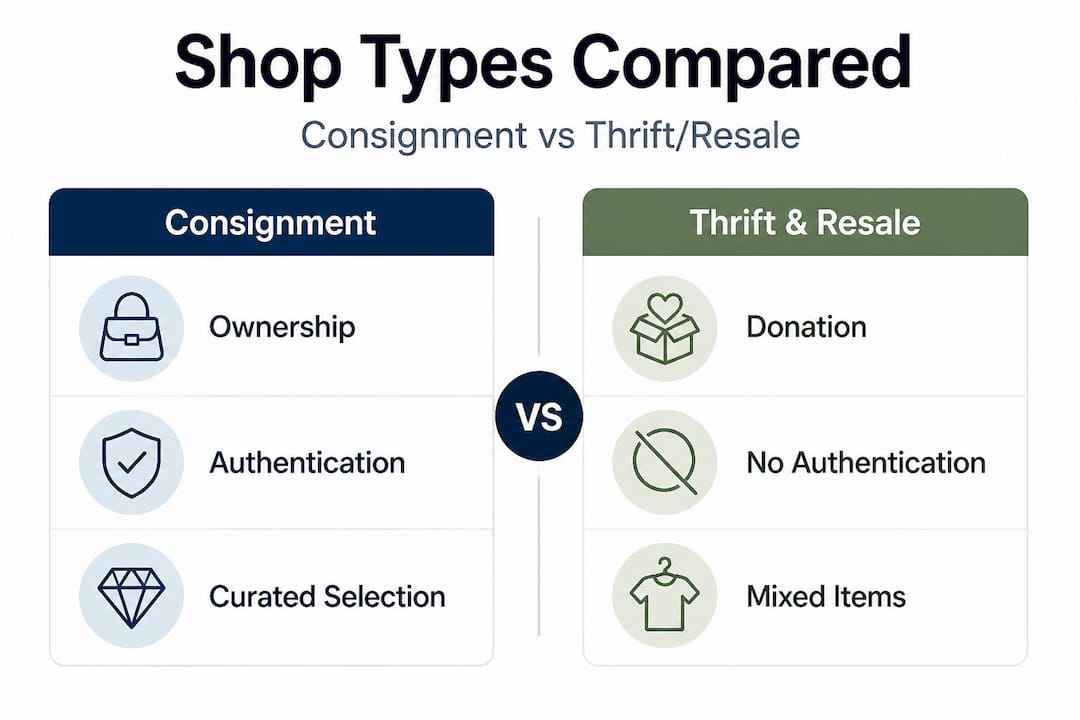
Thrift stores receive donated items and sell them at low, flat prices. There’s minimal curation, no authentication, and no payout to the original owner. You might find a gem, but you’ll sort through a lot to get there.
Resale stores purchase items outright from sellers at a fixed price, then resell them at a markup. The seller gets immediate cash but typically less than what the item could earn through consignment.
Consignment shops curate, authenticate, and price items strategically. Sellers earn more, buyers get verified designer goods, and the experience is closer to a boutique than a garage sale.
“Consignment is curated, authenticated, and higher-priced. Thrift stores rely on donated, lower-priced goods with less curation. Resale stores buy outright, cutting the seller out of any upside.” Consignment vs thrift stores
Here’s a side-by-side comparison:
| Feature | Consignment | Thrift store | Resale store |
|---|---|---|---|
| Item ownership | Retained by seller until sold | Donated, no ownership | Bought outright by store |
| Curation level | High, selective | Low | Medium |
| Authentication | Yes, especially for luxury | Rarely | Sometimes |
| Seller payout | Percentage of sale price | None | Flat upfront fee |
| Price range | Higher, reflects brand value | Very low | Moderate |
| Buyer protections | Strong, return policies | Minimal | Varies |
For fashion-forward shoppers, the certified luxury resale discounts available through consignment are the sweet spot. You get the real thing, at a real discount, with real accountability. And designer goods authentication is the backbone of that promise, separating legitimate platforms from risky marketplaces.
Key advantages of consignment over other secondhand models:
- Items are pre-screened for quality and authenticity
- Pricing reflects actual brand and market value
- Buyers benefit from return policies and authentication guarantees
- Sellers earn significantly more than through outright resale
- Seasonal selection keeps inventory fresh and trend-relevant
Luxury consignment market growth: Who shops, and why now?
With a clear understanding of the consignment model, let’s look at who’s driving its popularity and what’s fueling rapid market growth.
The numbers tell a compelling story. The U.S. luxury resale market reached $8.65 billion in 2024 and is projected to hit $13.04 billion by 2030, growing at a compound annual growth rate of 7.07%. Globally, the market was valued at $37.95 billion in 2025 and is expected to reach $60.11 billion by 2030, driven by a 9.6% annual growth rate. Handbags consistently dominate sales across all categories.
This isn’t a niche trend. It’s a structural shift in how people think about fashion.
Key factors fueling the boom:
- Sustainability. Shoppers want to reduce fashion waste and participate in the circular economy
- Rising luxury prices. Entry-level Chanel and Prada prices have surged, making consignment an attractive alternative
- Affordability without compromise. Buyers want genuine luxury, just not at full retail cost
- Digital platforms. Apps and online consignment shops have made access global and instant
- Gen Z and Millennial demand. Younger shoppers prioritize value, sustainability, and unique finds over brand-new retail
Gen Z and Millennials are the most active drivers of this market. They grew up with resale apps and are deeply motivated by both luxury fashion trends and environmental responsibility. For them, buying a pre-loved Balenciaga bag isn’t a compromise. It’s a flex.
Handbags lead the category because they hold resale value exceptionally well. A classic Chanel flap or a Gucci Dionysus retains significant market value years after purchase, making them ideal for consignment. Watches, shoes, and ready-to-wear are also strong performers. Understanding the importance of luxury resale in today’s fashion ecosystem helps explain why even major luxury brands are now entering or partnering in the resale space. Brands like Gucci and Valentino have explored resale programs, recognizing that the secondary market strengthens long-term brand equity rather than threatening it.
How to maximize your consignment experience: Insider tips for savvy shoppers and sellers
Armed with knowledge about the landscape, here’s how you can get top value and avoid pitfalls whether shopping or selling on consignment.
For sellers, follow these steps to maximize returns:
- Research the right platform. Not all consignment shops are equal. Specialist luxury platforms offer better pricing and a more targeted buyer pool than general secondhand stores.
- Prep your items before submission. Clean, condition, and repair where possible. Expert guidance confirms that minor repairs can add $100 or more to your payout.
- Time your listing strategically. Submit handbags and outerwear in fall, swimwear and sandals in spring. Seasonal alignment drives faster sales and better prices.
- Understand the commission structure. Know your tier before you agree to pricing. If your item can be positioned in a higher bracket, it’s worth waiting for the right moment.
- Negotiate for volume. If you’re consigning multiple high-value items at once, ask for a better commission rate. Many platforms will accommodate batch consignors.
- Gather original accessories. Dust bags, original boxes, and authenticity cards increase perceived value and can push your item into a higher price tier.
Pro Tip: If you’re spotting authentic bags as a buyer, always request authentication documentation before completing a purchase. Reputable platforms provide this as standard, but it’s worth confirming upfront.
For buyers, smart consignment shopping comes down to a few key practices:
- Always verify the platform’s authentication process before purchasing
- Review return and after-sale policies carefully, especially for high-ticket items
- Check the item’s condition rating and photos thoroughly
- Use the pre-loved fashion trust guide to understand what authentication standards to expect
- Look for platforms that offer buyer protections, including dispute resolution
The best consignment experiences happen when both buyers and sellers are informed. A little preparation on either side delivers maximum style value for your investment.
The real value of consignment: Rethinking luxury and sustainability
Fashion consignment isn’t just a sales channel. It’s a mindset shift for modern shoppers who care about what they buy and why.
Here’s the perspective that most articles miss: consignment is quietly redefining what luxury means. For decades, luxury was defined by newness. The freshest season, the latest drop, the untouched box. But that definition is becoming outdated. Today, luxury is about curation, intention, and quality that lasts.
When you buy a pre-loved Valentino blazer or a gently worn Bottega Veneta clutch, you’re not settling. You’re choosing a piece with provenance, a story, and a lower environmental footprint. That’s a more sophisticated relationship with fashion than simply buying whatever’s new this season.
Market growth driven by sustainability and affordability confirms that Gen Z and Millennials are leading this charge, not because they can’t afford new luxury, but because they actively prefer the consignment model. They see through the myth that buying new equals buying better.
Consignment also fights throwaway culture in a direct, practical way. Every designer piece that finds a second home is one less item ending up in a landfill. The circular fashion economy, where goods move from owner to owner rather than from factory to trash, is one of the most meaningful shifts happening in the industry right now.
The authenticity checklist approach to shopping, verifying every detail before committing, is also a form of mindfulness that makes you a more deliberate, confident consumer. That’s the real luxury: knowing exactly what you have and why you chose it.
Upgrade your wardrobe: Shop authenticated designer consignment now
Ready to use what you’ve learned? Here’s how you can find standout luxury pieces at incredible prices.
At Naise Shopper, every item in our collection is authenticated before it reaches you. We curate designer pieces from Gucci, Chanel, Prada, Saint Laurent, and more, so you never have to compromise on quality or style.
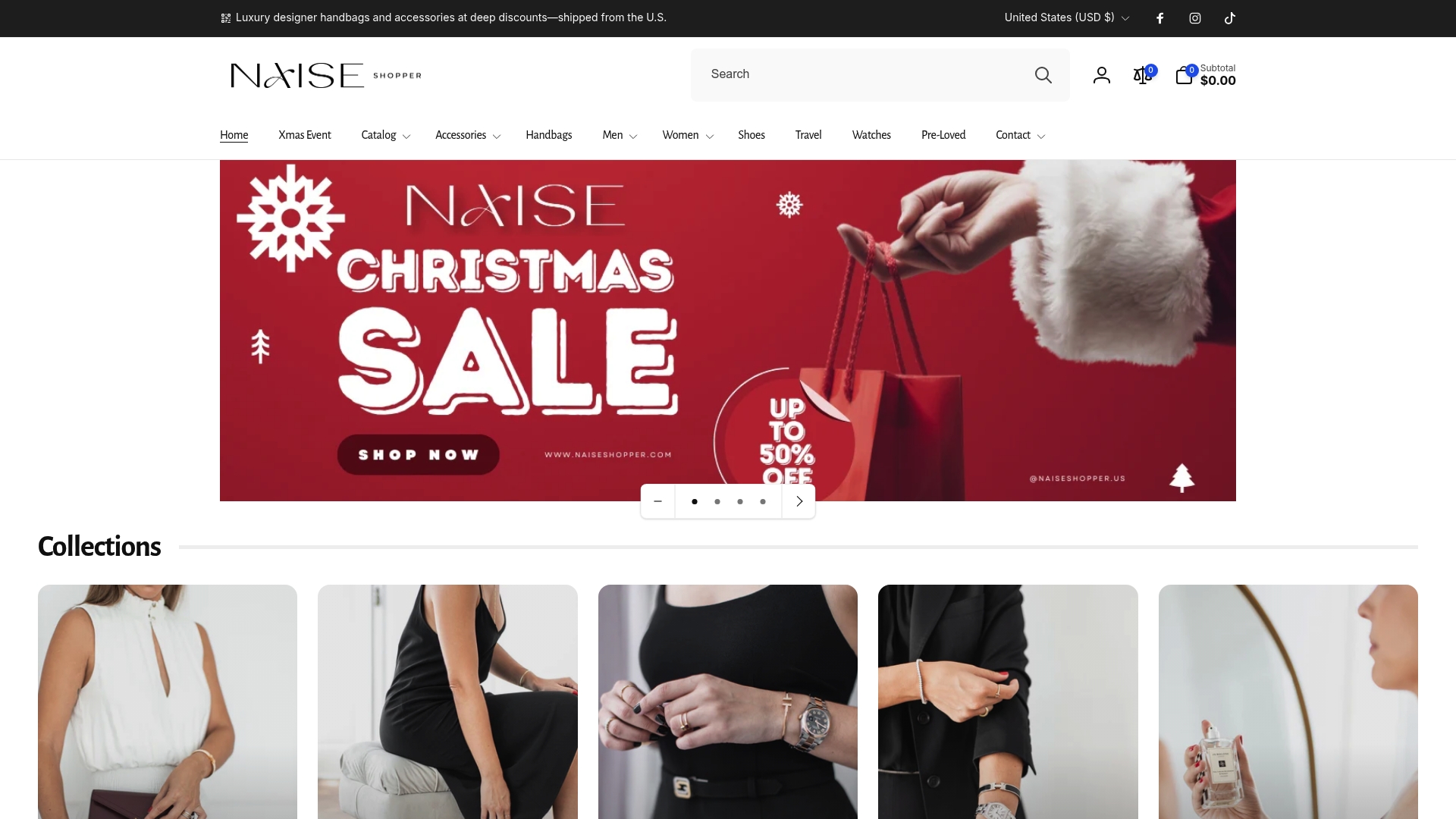
Whether you’re hunting for a statement accessory or a wardrobe refresh, our inventory delivers. Explore the Saint Laurent mid-top sneakers for a bold, street-ready look, or elevate your everyday style with the iconic Gucci G-Timeless watch, a piece that speaks to timeless sophistication. Every product comes with authenticity guarantees, secure international shipping, and flexible payment options. Your next favorite designer piece is already waiting.
Frequently asked questions
How are consignment commissions calculated for designer goods?
Commissions are tiered by sale price. Based on The RealReal’s structure, sellers earn 40% for items under $150 and up to 85% for pieces sold above $10,000, rewarding high-value luxury consignments the most.
What happens if my item doesn’t sell on consignment?
Unsold items are typically returned to the consignor or donated after 60 to 90 days, depending on the platform’s policy. It’s always worth confirming the return terms before submitting.
Are consignment shops safe for purchasing authentic luxury goods?
Reputable consignment platforms authenticate every item before listing, making them significantly safer than unverified marketplaces. As consignment vs thrift research confirms, authentication and curation are the defining features of the consignment model.
Why are luxury handbags so dominant in consignment shops?
Handbags from brands like Chanel and Gucci hold their resale value exceptionally well. The U.S. luxury resale market data shows handbags consistently leading all categories, driven by strong demand and durable brand equity.
How can I increase my payout when consigning luxury items?
Prepping items with minor repairs, consigning in bulk to negotiate better rates, and timing your listing to match seasonal demand are all proven strategies. Expert consignment advice confirms that preparation alone can add $100 or more to your final payout.
Recommended
- Why Choose Luxury Consignment for Designer Finds
- How to get the best designer deals: authentic savings guide
- How to choose authentic designer accessories with real value
- Luxury Consignment Explained: Ensuring Authentic Value
- Boutique craftsmanship: The secret behind timeless luxury handbags – San Rocco Italia