TL;DR:
- Shoe grading grades leather based on texture, imperfections, and quality, but standards vary by tannery and brand.
- Authentic luxury shoes showcase full-grain, top-grain, or corrected-grain leather, with wear and patina indicating genuine quality.
- Fake grading labels like “AAA” or “7A” are marketing tricks; genuine quality relies on material inspection and provenance.
Spending thousands on a pair of Gucci loafers or Saint Laurent pumps feels like a guarantee of perfection. But even the finest luxury shoes carry subtle imperfections rooted in the very materials that make them exceptional. Shoe grading is the system behind the scenes, shaping price, quality, and long-term value, yet most buyers never hear about it until something looks off. Understanding it changes how you shop. This article breaks down how grading really works, what authentic materials look like up close, how to read preloved shoe condition honestly, and how to avoid the misleading grade claims flooding the online luxury market.
Table of Contents
- What luxury shoe grading really means
- How authentic luxury shoe grading works: Materials and inspection
- Patina, wear, and grading: What’s acceptable in the luxury world
- Decoding replica shoe grading and avoiding buyer pitfalls
- Why real expertise trumps grading labels in luxury shopping
- Shop authentic designer shoes with confidence
- Frequently asked questions
Key Takeaways
| Point | Details |
|---|---|
| Grading isn’t universal | Each tannery and brand uses different grading standards, so labels aren’t always comparable. |
| Authentic grades focus on quality traits | True luxury shoe grading considers hide clarity, grain, and finish rather than just grade labels. |
| Natural wear adds value | Patina, creasing, and light wear can enhance, not diminish, the value of authentic luxury shoes. |
| Replica grades are marketing | Terms like AAA or 7A are used by counterfeits and not recognized in the real luxury shoe world. |
| Expert evaluation matters | Observing shoe quality and trusting reputable sources is more important than the grade alone. |
What luxury shoe grading really means
Shoe grading is the process of evaluating leather and other materials before and after a shoe is constructed. It considers texture, surface clarity, hide thickness, flexibility, and the presence of natural imperfections like scars or insect marks. Grades are then assigned to reflect the overall quality tier of the material used.
The most common grading language you’ll see from legitimate suppliers runs along the lines of Grade 1, Grade 2, and Grade 3. Grade 1 describes hides with the fewest visible imperfections and the most uniform texture. Grade 2 allows for minor blemishes, often placed in less visible areas of the shoe. Grade 3 includes more obvious irregularities and is typically used in lining materials or budget-tier products.
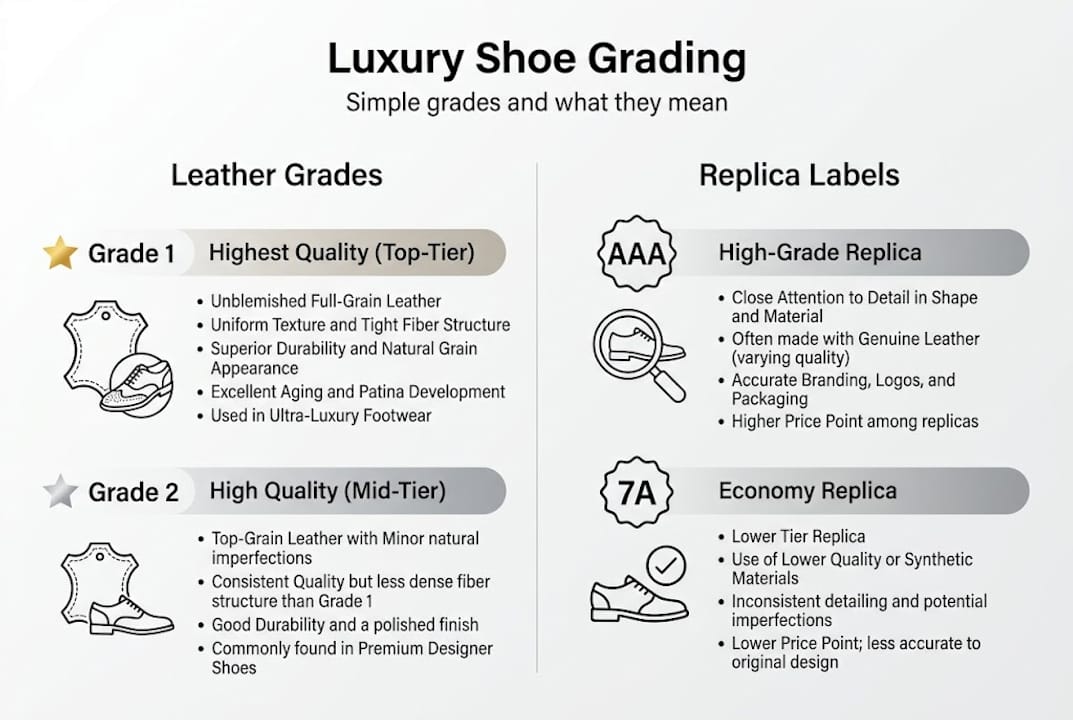
Here’s the catch: tannery hide grading is not standardized globally; each tannery uses its own proprietary criteria. A Grade 1 hide from a Florentine tannery and a Grade 1 hide from a Spanish one may look and perform very differently. When you see a luxury brand boast top-grade materials, it means top grade by their standards, which is actually a meaningful statement when you understand how rigorously the best houses vet their suppliers.
This matters enormously when you explore the luxury shoe grading overview across different designer houses, because each brand essentially sets its own bar. Prada, Bottega Veneta, and Balenciaga all work with elite tanneries, but their internal grading benchmarks differ.
“Grade labels only carry meaning within the context of a specific tannery or brand. Cross-brand comparisons based on grade alone are unreliable.”
Now, what about the labels you see on replica or grey-market shoes, things like “A,” “AAA,” or “7A”? These are pure seller marketing. They mimic the language of grading to make counterfeits sound premium, but they have no connection to any real quality system. The designer terminology guide is a helpful reference for understanding how authentic houses actually communicate quality versus how fakes imitate that language.
| Grade label | Used by | What it signals |
|---|---|---|
| Grade 1 | Authentic tanneries | Fewest imperfections, prime hide area |
| Grade 2 | Authentic tanneries | Minor blemishes, secondary placement |
| Grade 3 | Authentic tanneries | Visible irregularities, lining use |
| AAA / 7A | Replica sellers only | Marketing language, no quality standard |
Key takeaways for smart shoppers:
- Grading is material-level, not shoe-level: one shoe may contain leathers from multiple grades.
- No global standard exists, so brand reputation and tannery sourcing matter more than a grade number.
- Replica grading labels are designed to mislead, not inform.
How authentic luxury shoe grading works: Materials and inspection
Understanding the basic grading system sets the stage, but the real difference is in the materials and production process.
A hide is not uniform from edge to edge. Tanneries cut the most valuable portions from the central back and spine, where the grain is tightest and fiber density highest. This area yields the strongest, most consistent leather. The flanks and belly sections are softer and more prone to stretch, so they’re used in less structural parts of a shoe.
Within that prime material, three distinct categories define most luxury footwear:
- Full-grain leather: The surface is entirely intact. Natural markings like a subtle scar or grain variation are present and celebrated. This leather breathes, ages beautifully, and develops patina over time.
- Top-grain leather: The very top layer is lightly sanded to remove significant imperfections, then a finish is applied. It’s more uniform in appearance than full-grain but slightly less breathable and durable over decades.
- Corrected-grain leather: Surface imperfections are heavily buffed and an embossed pattern is applied to mimic natural grain. Widely used in mid-tier products; rarely seen in true luxury houses at the upper price points.
Thickness and flexibility are equally telling. Italian and French tannery finishes affect how leather shines and how it creases under flex, which is why a hand-lasted Parisian shoe often ages differently from a Milan-crafted one despite using similar-grade hides.
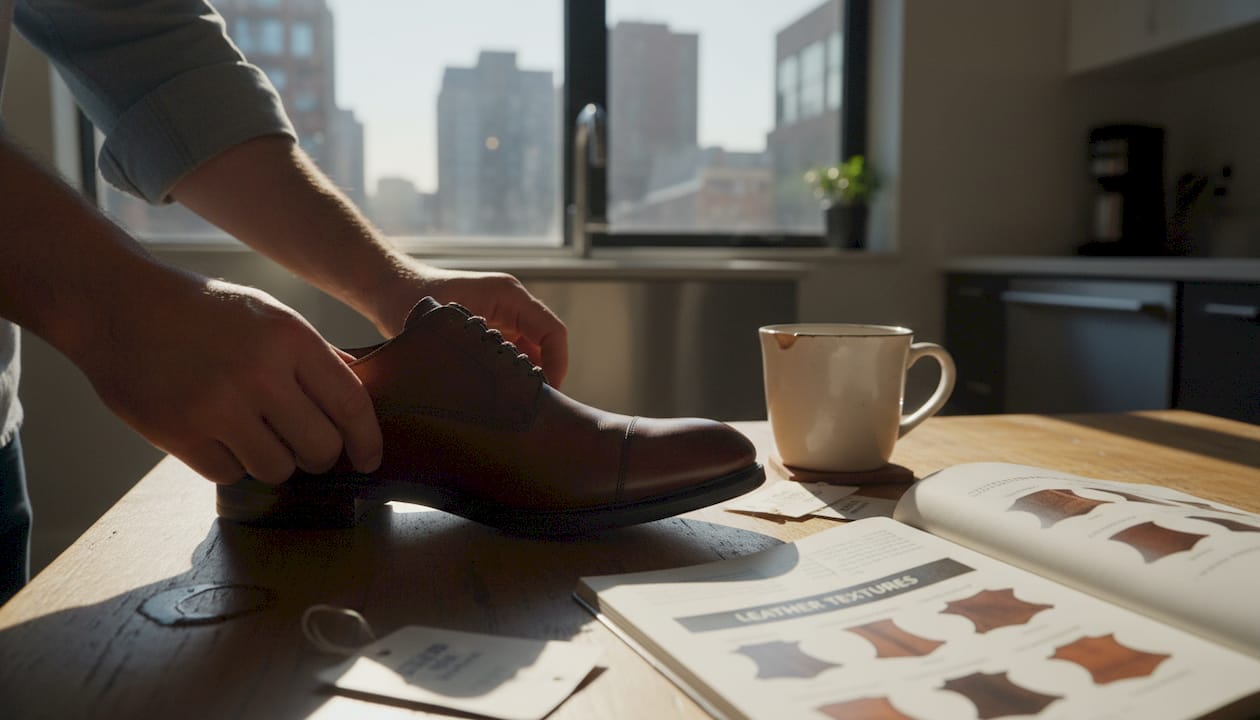
Pro Tip: When inspecting a shoe in person, flex the toe box gently. Quality full-grain leather will crease softly and evenly. Corrected-grain leather tends to show surface cracking at flex points much sooner.
| Leather type | Surface treatment | Durability | Typical luxury use |
|---|---|---|---|
| Full-grain | None | Highest | Upper, vamp, toe cap |
| Top-grain | Light sanding + finish | High | Uppers, some linings |
| Corrected-grain | Heavy buffing + emboss | Moderate | Budget luxury, linings |
For a broader understanding of why luxury authentication matters at the material level, it helps to know that even authenticated shoes will carry minor natural marks. Perfection is not the benchmark. Consistency, craftsmanship, and material integrity are.
No perfect hides exist in nature. Any seller claiming otherwise is either misinformed or not being honest with you.
Patina, wear, and grading: What’s acceptable in the luxury world
Beyond new shoes, those seeking authenticated preloved luxury footwear need clarity on what counts as acceptable wear.
Patina is the gradual change in leather’s color and sheen as it ages and absorbs oils from skin, light, and the environment. Far from being a flaw, natural patina and creasing are signs that full-grain leather is alive and responding to the world. Experienced collectors often seek out beautifully aged pieces precisely because the patina is rich and unique.
Here’s how to distinguish character from damage:
- Acceptable: Light creasing at the toe box and vamp, especially on full-grain shoes worn regularly.
- Acceptable: Minor impressions inside the insole where the foot has rested.
- Acceptable: Slight sole wear at the ball and heel, consistent with normal use.
- Acceptable: Subtle color deepening along edges and high-contact points.
- Red flag: Deep surface cracks that break through the leather finish layer.
- Red flag: Any presence of mold or mildew, visible as white or gray powder or bloom.
- Red flag: Deep gouges, cuts, or scarring that alter the structural integrity of the upper.
- Red flag: Delaminating soles or collapsed heel counters.
“The presence of patina on a quality hide signals authenticity, not neglect. It is the mark of a real shoe living a real life.”
Premium brands like Hermès and Berluti have shaped entire customer cultures around patina appreciation. Even Gucci and Saint Laurent produce shoes in full-grain calfskin specifically because the leather tells a story over time.
Pro Tip: Before dismissing a preloved pair as worn, photograph the creasing pattern under natural light. Even creasing that follows the toe box curve is normal flex behavior. Irregular, branching cracks radiating from a single point often indicate a structural issue worth avoiding.
When reviewing any authenticated preloved pair, using a spotting fakes checklist adapted for shoes helps you separate cosmetic character from genuine damage quickly.
Decoding replica shoe grading and avoiding buyer pitfalls
After discovering what genuine grading encompasses, it’s crucial to know how to protect yourself from inaccurate grading claims, especially with replicas flooding the market.
Replica “A/AAA/7A” grading is seller marketing for counterfeits, not authentic luxury. These labels exist to give counterfeit shoes a veneer of quality that makes buyers feel they’re getting something close to the real thing at a fraction of the price. They are not. The materials, construction, and craftsmanship are fundamentally different from what any authentic luxury house produces.
“If a seller’s main quality claim is a letter-based grade you’ve never seen on an authentic product’s documentation, that’s your first warning sign.”
Protecting yourself online comes down to concrete steps:
- Check seller provenance. Legitimate sellers of authenticated luxury shoes provide documentation, receipts, or authentication certificates. Look for established platforms with verifiable track records.
- Request detailed photos. Ask for images of the insole stamp, stitching pattern, heel logo, and sole markings. Replicas frequently fail at fine detail.
- Verify stitching consistency. Authentic shoes from top houses show machine-precise or hand-finished stitching with even spacing. Irregular or skipped stitches are a red flag.
- Examine hardware and logos. Embossing depth, font accuracy, and metal weight are reliable tell-signs on buckled or logoed styles.
- Trust expert authentication. Use an authenticity guide for buyers or submit to a professional authentication service before finalizing any high-value purchase.
For an even more thorough verification process, the authenticity checklist walks you through expert steps that apply equally well to shoes as to bags.
Physical inspection and documented provenance remain the only true guides in luxury shopping. No amount of “7A” labeling replaces either of them.
Why real expertise trumps grading labels in luxury shopping
Here’s our honest take: most buyers place far too much weight on grade labels and not nearly enough on what’s directly in front of them. A shoe’s grade label tells you how a supplier categorized a hide before it was cut and constructed. It says very little about the skill of the craftsperson who assembled it, the accuracy of the lasting, or the quality of the finishing work.
The attributes that really predict a great shoe are observable. How does the leather flex when you bend the forefoot? Is the coating even and well-adhered? Do the creases follow a natural, predictable path? These signals matter more than any number attached to a hide grade. Observable traits like flex and coating reveal far more than labels do, and the reputation of the maker and tannery behind the shoe is the foundation everything else rests on.
We’d go further: subjectivity adds value, not uncertainty. A beautifully patinated Grade 1 full-grain leather shoe that has been worn and cared for is, in our view, more valuable as an object than a pristine Grade 1 shoe that’s never been tested. Aging, when it happens to quality materials, is evidence of those materials working as designed.
Focusing on comparing designer shoe brands through the lens of craftsmanship and material pedigree, rather than numerical grades, is how discerning buyers consistently make the best purchases.
Shop authentic designer shoes with confidence
Now that you know how grading really works, you can shop with a sharper eye and genuine confidence.
At Naise Shopper, every pair of authenticated designer shoes comes with expert verification and clear, honest descriptions so you know exactly what you’re getting. From sleek Saint Laurent luxury sneakers to statement Gucci luxury collection pieces, our curated selection reflects the material standards and craftsmanship benchmarks covered in this article. Explore the collection and put your new grading knowledge to work on pieces that genuinely deliver on the luxury promise.
Frequently asked questions
Is there a universal system for grading luxury shoes?
No. No global grading standard exists; every tannery and brand applies its own proprietary criteria, making cross-brand grade comparisons unreliable.
What are the main types of leather used in high-end shoes?
Luxury shoes use full-grain, top-grain, and corrected-grain leather. Full-grain versus top-grain differences in surface treatment directly affect durability, breathability, and how the shoe ages over time.
What kinds of wear are acceptable on pre-owned luxury shoes?
Light sole wear, minor insole impressions, and natural creasing are all normal and acceptable. Natural patina versus damage is the key distinction; deep cracks, mold, and structural collapse are not acceptable.
Are ‘AAA’ or ‘7A’ shoes really luxury grade?
No. Replica ‘A/AAA/7A’ grades are seller marketing for counterfeits and have no connection to the grading systems used by authentic luxury houses.
How can I avoid buying counterfeit luxury shoes online?
Prioritize documented provenance, seller reputation, and expert authentication. Physical inspection and provenance are the only reliable tools; fake grade labels are a warning sign, not a quality signal.
Recommended
- Why Invest in Designer Shoes: Unlock Value and Style
- Luxury Handbag Terminology Explained: Expert Insights
- Luxury Fashion Investing Guide for Handbags and Apparel
- Luxury Fashion Buying Process: Shop Designer Brands Safely
- Step-by-step sneaker shopping guide to authentic kicks – Flex Store
- How to travel with designer bags: style meets security