TL;DR:
- Authentic limited edition designer bags require thorough research of production details, scarcity, and authentication markers to avoid counterfeits. Proper preparation, strategic shopping channels, and patience are essential for maximizing value and building a genuine collection. Recognizing fake details and understanding true scarcity ensures smarter purchases and long-term investment growth.
Imagine spending thousands on a coveted Chanel flap or a Gucci collaboration bag, only to discover weeks later that the serial number is duplicated across hundreds of counterfeit units flooding the market. It happens more than you’d think, even to collectors who pride themselves on knowing their labels. The demand for limited edition designer bags has never been higher, and that scarcity creates both golden opportunities and serious traps. This guide covers everything you need to shop with confidence, from researching authentication features to timing your purchase for the best possible price on a genuine piece.
Table of Contents
- What you need before you search
- Step-by-step: How to shop for limited edition bags
- How to verify authenticity (and spot fakes) before you buy
- Advanced strategies: Maximizing value and resale potential
- Perspective: The truth no one tells you about limited edition bag shopping
- Shop smarter for limited edition bags with NAISEShopper
- Frequently asked questions
Key Takeaways
| Point | Details |
|---|---|
| Prioritize authentication | Only buy from sellers with strong authentication and buyer protection policies. |
| Beware of fake scarcity | Research whether a ‘limited edition’ bag is truly rare or a marketing tactic. |
| Check market pricing | Be suspicious of deals far below average resale prices, as they often signal fakes. |
| Buy at the right time | Look for price drops during sales or special events, and act quickly when authentic deals appear. |
| Inspect before purchase | Review photos, details, and documentation closely for authenticity before you buy. |
What you need before you search
Before you dive into bids and offers, you need to be set up for success with the right knowledge and tools. Rushing into a purchase without preparation is the single fastest way to overpay or get fooled.
Start by collecting the essential information about the specific bag you want. That means knowing the exact collection name, the production year, the colorway, the expected retail price, and the typical resale range. For example, a Bottega Veneta Intrecciato limited edition clutch from a specific runway season will have documented hardware details, lining colors, and even a distinct serial code format. Write all of this down before you search a single listing.
Key information to gather before shopping:
- Brand and sub-line: Know whether it’s a mainline or collaboration piece
- Edition details: Season, year, collaborating artist if applicable
- Expected price range: Retail, resale low, and resale high
- Authentication markers: Stitching pattern, hardware type, serial code format, dust bag style
- Condition grading norms: How the brand and resale market define “excellent” or “very good” condition
Knowing how to spot authentic designer bags before you browse listings saves you from wasting time on fakes. Authentication knowledge is your first line of defense.
| Research tool | What it helps you find | Best use case |
|---|---|---|
| Brand archive sites | Original retail pricing and official edition details | Confirming production run legitimacy |
| Resale price trackers | Current market value across platforms | Avoiding overpaying or spotting deals |
| Fashion auction records | Historical high and low bids | Understanding investment potential |
| Authentication communities | Real-time collector insights | Cross-checking suspicious listings |
Set up alerts on your preferred shopping platforms so you’re notified the moment a relevant listing goes live. Limited edition pieces move fast, sometimes within hours of being posted, and a 24-hour delay can mean missing a listing entirely. As platforms with authentication and buyer protection are your safest option, prioritize those that verify items before sale and provide clear photos, condition notes, and return policies.
Pro Tip: Create a dedicated folder or spreadsheet for each bag on your wish list. Track the listing URL, asking price, platform, and any authentication notes. This habit alone will save you from impulse decisions and help you spot when a price is genuinely compelling versus suspicious.
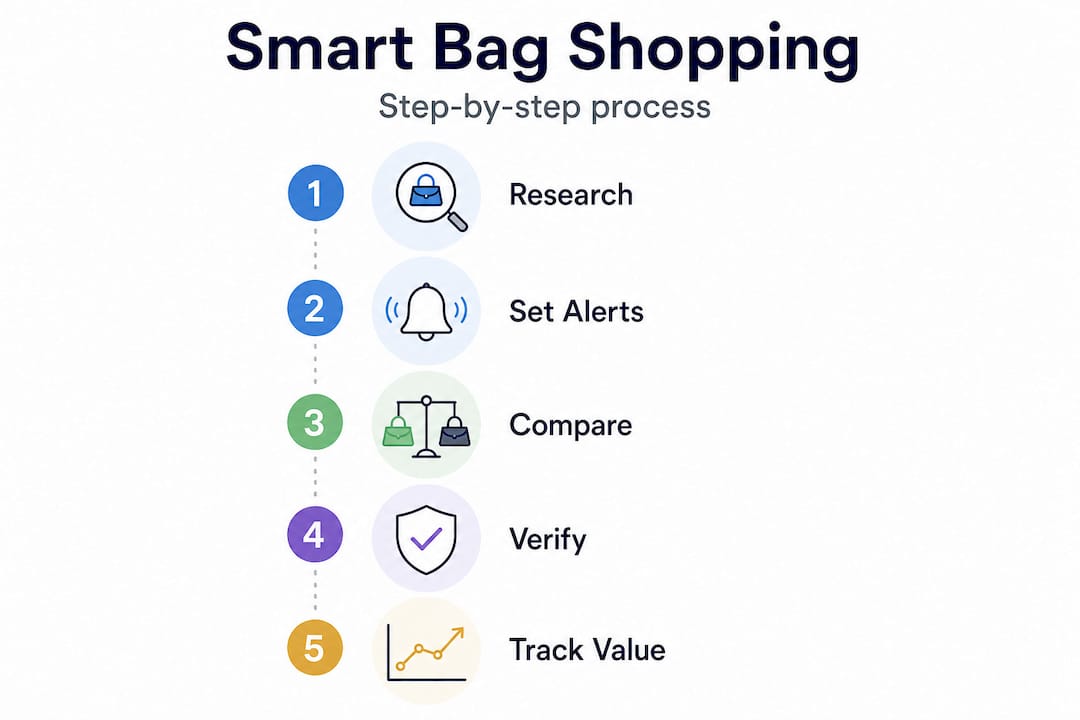
Step-by-step: How to shop for limited edition bags
With the prep work done, it’s time to begin the actual search and shopping process, step by step.
-
Define your budget and non-negotiables. Set a ceiling before you search. Decide in advance whether you’ll accept anything less than pristine condition, and whether you need the original receipt, dust bag, or box. These boundaries protect you from rationalizing a risky purchase just because the bag is beautiful.
-
Start with primary market channels. Check the brand’s official website, flagship boutiques, and authorized retailers first. Limited edition drops occasionally appear directly through brand apps or subscriber lists, where authenticity is guaranteed and pricing is transparent.
-
Expand to resale and auction platforms. Authenticated resale channels carry a wide range of limited edition bags, often at prices below what you’d expect. Compare listings across multiple platforms to get a real sense of market value.
-
Time your purchase strategically. Price dislocations at private/sample sales and seasonal clearances can create real deals, but only if the platform authenticates what it sells. Flash sales at reputable retailers are worth monitoring, especially at the start and end of fashion seasons.
-
Initiate contact with the seller. For private resale listings, ask specific questions: Can you provide additional photos of the hardware, lining, and serial code? Is the original receipt available? What is the return policy if the item fails third-party authentication? A confident seller with a genuine item will answer these without hesitation.
-
Use buyer-protection payment methods. Never complete a transaction outside the platform’s payment system. Credit cards and secure platform checkouts provide recourse if something goes wrong.
-
Review the listing conditions carefully. Read every word of the item description. Phrases like “inspired by” or “style of” are clear signals that a bag is not authentic.
| Shopping channel | Authenticity guarantee | Price potential | Best for |
|---|---|---|---|
| Brand boutique | Highest | Retail only | New limited edition drops |
| Authenticated resale platform | High | Below retail possible | Recent seasons |
| Auction house | Medium to high | Variable, often premium | Vintage and archival pieces |
| Private/flash sale | Varies | Significant discounts | Savvy, fast-moving buyers |
| Unverified private seller | Low | Unpredictable | Not recommended without expert verification |
“When you find a listing that excites you, pause before acting. Ask yourself: have I verified the edition details, reviewed the authentication markers, and confirmed the platform’s buyer guarantee? Excitement is great fuel for style, but discipline is what protects your investment.”
The full step-by-step buying guide walks through this process in even more detail, and if you’re thinking long-term, learning how to build a designer bag collection will help you make purchases that work together as a curated whole rather than impulsive one-offs.
Pro Tip: Open multiple tabs when comparing listings for the same bag. Side-by-side comparison makes it immediately obvious when one listing’s photos are unusually vague or the price is out of step with every other offer on the market.
How to verify authenticity (and spot fakes) before you buy
Even after you spot a dream deal, it’s essential to ensure you’re not falling for a sophisticated fake.
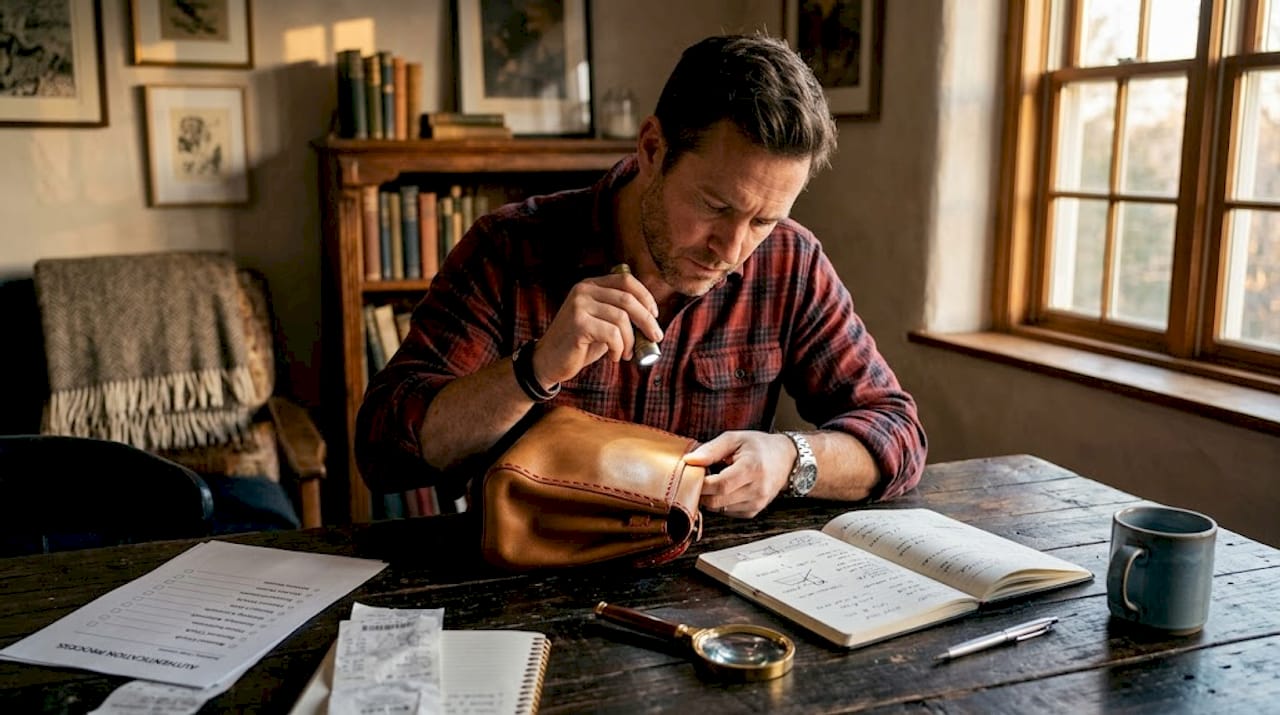
Counterfeits have become remarkably sophisticated. Some replicas now include fake serial codes, imitation dust bags, and even reproduced authenticity cards. Visual inspection alone is no longer enough. You need a structured checklist.
Authentication checklist for limited edition bags:
- Stitching: Count stitches per inch and verify they match the brand’s documented standard. Uneven stitching or threads that pull are immediate red flags.
- Hardware: Check weight, finish, and function. Authentic hardware feels substantial and operates smoothly. Counterfeit zippers often snag or feel hollow.
- Serial or date code format: Each brand uses a specific format. A Gucci serial, for instance, follows a particular numeric pattern that changes by decade. Verify the format matches the claimed production year.
- Lining material and logo print: Interiors are frequently where fakes fall short. Check that the logo pattern is correctly aligned at seams, and that the lining material matches documented specifications.
- Documentation: Original receipt, authenticity card, and dust bag all add confidence, but remember that skilled counterfeiters also reproduce these. They are supporting evidence, not sole proof.
- Seller consistency: If a seller has multiple identical bags listed at identical prices, that’s a serious warning sign. Repeated serial numbers across listings are among the strongest red flags authentication experts point to.
“A price that seems too good for a limited edition piece is almost always telling you something important. Treat extreme discounts as a reason to increase scrutiny, not decrease it.”
Suspicious pricing as a risk signal is one of the most reliable counterfeit indicators. If a Balenciaga limited edition shoulder bag that consistently trades at $1,800 to $2,200 appears for $600 with no explanation, walk away unless authentication documentation is exceptionally strong and independently verified.
Use the full bag authentication checklist when evaluating any purchase. If you want even more depth on the process of spotting fake handbags or following formal authenticity steps for bags, these resources will sharpen your eye considerably.
Advanced strategies: Maximizing value and resale potential
Once you’ve mastered the basics, there are ways to ensure your purchase not only delights now but also grows in value.
The most important advanced insight is this: not all “limited edition” pieces are truly limited. Some items get restocked or reissued, which quietly erodes their resale premium. Brands sometimes use the phrase “limited edition” as marketing language rather than a strict production constraint. If you’re buying partly as an investment, you need to verify the actual scarcity, not just trust the label.
How to research genuine scarcity:
- Production window verification: Confirm when the item was made and whether the factory run has officially closed. Runway archive sites and brand press releases often document this.
- Distribution restrictions: A bag exclusive to one city or one pop-up event carries different scarcity than one sold across hundreds of boutiques globally.
- Reissue history check: Search the brand’s archive and collector forums for any evidence that the piece was brought back. If it was reissued even once, factor that into your valuation.
- Resale volume tracking: If hundreds of identical bags are available across platforms simultaneously, the “limited” claim deserves skepticism.
| Scarcity factor | Impact on resale value | How to verify |
|---|---|---|
| Single-season production | High positive impact | Brand press releases, archive records |
| Regional exclusivity | High positive impact | Boutique records, collector communities |
| Reissued or restocked | Significant value reduction | Search brand history, resale platforms |
| Collaboration exclusives | Very high if both brands are strong | Official collaboration announcements |
| Marketing-only “limited” | Minimal or no premium | Cross-check production claims |
Doing extensive research before purchasing is what separates collectors who build value over time from those who collect regret. Resale executives consistently emphasize this, and the data from auction house results backs it up: documented, genuinely rare pieces outperform “limited” marketing claims every time.
Understanding resale value for designer bags gives you a framework for evaluating what you’re really paying for, and the investment checklist for designer bags helps you apply that framework to specific purchase decisions.
Pro Tip: Before committing to any “limited edition” purchase above a certain price threshold, spend 30 minutes searching resale platforms to see how many identical listings exist. A truly rare piece will be hard to find. If you see 40 identical bags with the same photos, that tells you everything you need to know.
Perspective: The truth no one tells you about limited edition bag shopping
Now that you know the steps and expert strategies, here’s what most guides won’t tell you about buying limited edition bags.
The luxury market runs on desire, and desire is easy to manufacture. Brands know exactly how to create urgency around a new drop, how to use social media to build anticipation, and how to make a piece feel utterly necessary before it even arrives in stores. The “limited” label is one of the most powerful tools in that playbook. And it works, even on experienced collectors.
Here’s what we’ve seen repeatedly: buyers who chase every hyped drop end up with collections that feel scattered and overpriced. The bags they treasure most are almost never the ones they bought at peak excitement. They’re the ones they researched carefully, purchased with patience, and understood deeply before committing.
The real skill in limited edition bag shopping is not speed. It’s discernment. Knowing when a piece is genuinely rare versus cleverly marketed. Knowing when a deal is a real opportunity versus a trap set by someone who knows you want the bag badly enough to skip your own checklist. Mastering the luxury handbag authentication process is part of that discernment, but so is learning to pause when your emotions are running high.
The collectors with the most satisfying, valuable collections are the ones who said no more often than yes. They passed on three hyped drops to wait for one piece they truly understood. That patience is the real luxury here, and it’s available to any buyer willing to practice it.
Shop smarter for limited edition bags with NAISEShopper
Ready to add the next coveted piece to your collection? Make your first move with a trusted resource.
NAISEShopper gives you access to authenticated limited edition designer pieces across the most sought-after labels, from Chanel and Prada to Valentino and Balenciaga, all at prices that make the luxury market genuinely accessible. Every item on the platform is curated for authenticity, so you can shop with the confidence that your new piece is exactly what it claims to be.
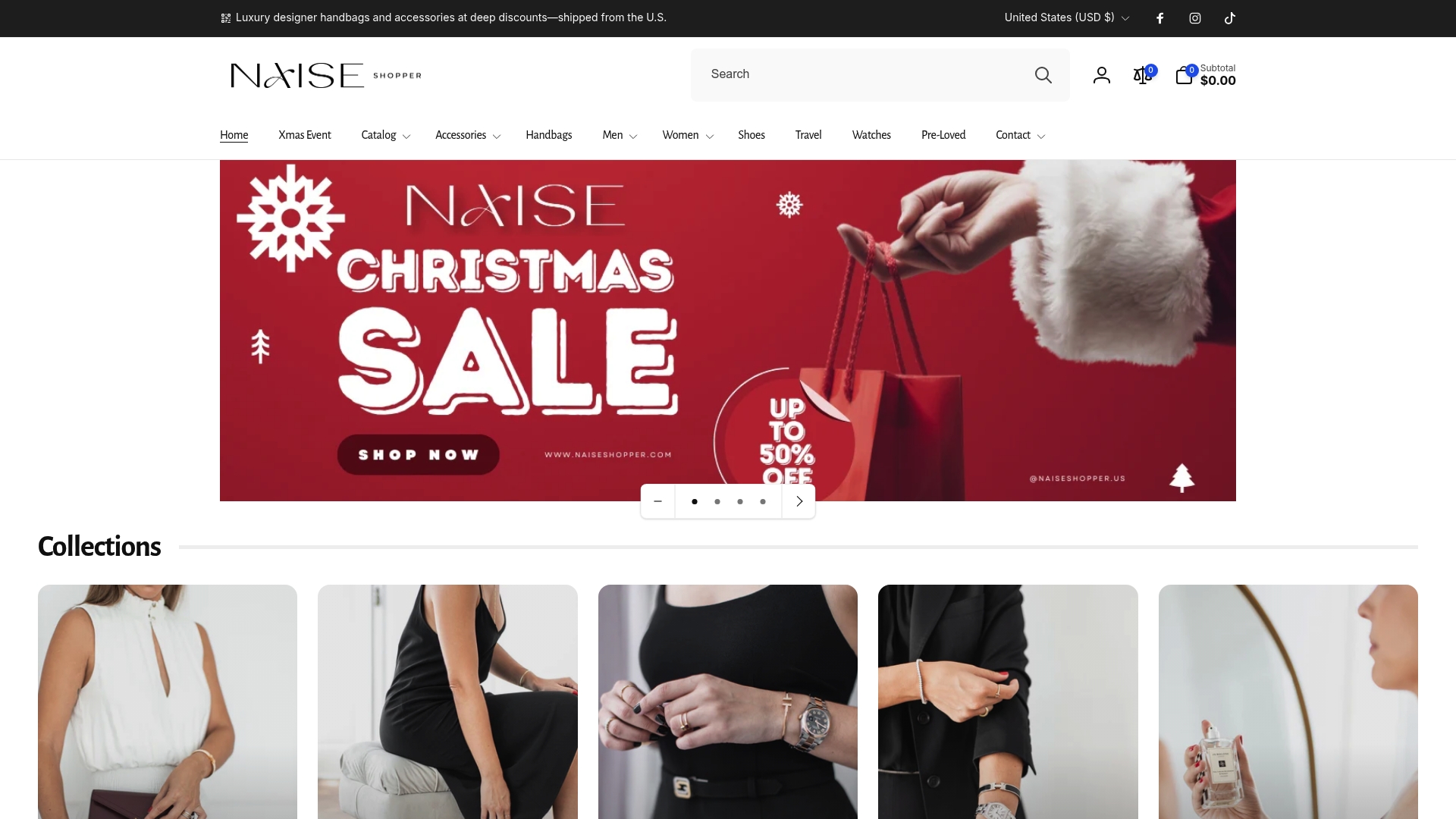
Whether you’re building your first serious collection or adding to an already impressive lineup, the personal shopper service helps you navigate options and find pieces that match your style and budget. Beyond bags, you’ll find beautifully curated footwear like Dior black leather oxfords and Alexander McQueen boots to complete the look from head to toe. Browse the current curation and discover what’s available at a price that makes the decision easy.
Frequently asked questions
How do I know if a limited edition bag is truly rare?
Check the production numbers and reissue history; genuine scarcity is confirmed by restricted runs and the absence of restocks. Some items get restocked or reissued repeatedly, which means the “limited” label alone is not sufficient proof of true rarity.
What is the safest payment method for designer bags?
Always use platforms with buyer protection and authenticated payment services; never wire money or pay with untraceable methods. Platforms that provide authentication and buyer protection offer your best recourse if something goes wrong after purchase.
Is it possible to get a discount on a limited edition bag?
Yes, during seasonal sales, private sales, and at select authenticated resale channels, real discounts do appear but often require fast action. Private and sample sales create pricing dislocations that reward buyers who are prepared and move quickly.
What are warning signs a bag is likely fake?
Look for mismatched details, repeated serial numbers across listings, and prices dramatically below typical market value for the brand. Counterfeit red flags including repeated serial numbers and extremely low prices are the signals authentication experts consistently flag as the most reliable indicators of a fake.