TL;DR:
- Authenticating luxury items ensures consumer trust and protects brand reputation from sophisticated counterfeits.
- Reliable authentication methods, including digital passports and AI, enhance resale value and market confidence.
A high price tag doesn’t guarantee the real thing. Plenty of shoppers have paid full designer prices only to discover later that what they bought was a sophisticated fake. In today’s luxury market, where pre-owned Chanel flaps and vintage Gucci totes trade hands across global platforms, the risk is real and growing. Authentication has moved from a nice-to-have to an absolute necessity, whether you’re buying directly from a boutique or sourcing that dream Bottega Veneta piece from a resale platform. Here’s exactly why brands authenticate, what it means for your investment, and how to shop smarter because of it.
Table of Contents
- Why authentication matters in luxury: trust and brand protection
- How brands authenticate: methods, digital innovation, and challenges
- Authentication’s impact on value: price, resale, and buyer protection
- The fine print: limits, controversies, and what ‘authenticated’ really means
- What most guides miss: the human factor and the future of luxury authentication
- Shop authenticated luxury with confidence
- Frequently asked questions
Key Takeaways
| Point | Details |
|---|---|
| Authentication protects trust | Luxury brands authenticate products to defend against counterfeits and give shoppers peace of mind. |
| Digital tools are evolving fast | Innovations like digital product passports and AI analysis are reshaping how products are verified and tracked. |
| Resale value depends on proof | Items with clear, credible authentication sell faster and for more on the secondary market. |
| Not all authentication is equal | Methods and evaluators differ, so understanding a certificate’s credibility is crucial when buying. |
| Expert judgment still matters | Behind every authentic piece are skilled professionals making difficult calls, not just tech or paperwork. |
Why authentication matters in luxury: trust and brand protection
The counterfeit luxury market has never been more sophisticated. Fakes today aren’t the obvious knockoffs from street vendors. They are precision-engineered replicas that replicate stitching patterns, hardware weight, dust bag textures, and even serial number formats with alarming accuracy. For both brands and buyers, this creates a serious problem.
Luxury brands invest in authentication programs primarily to protect their most valuable asset: trust. When a Prada bag or a Saint Laurent wallet lands on the secondary market without verified origins, it opens the door to doubt. That doubt erodes confidence in the brand itself. It makes buyers hesitant, drives down perceived value, and creates a “buyer beware” culture that luxury houses simply cannot afford.
“Authentication protects brand equity and consumer trust because counterfeit goods erode confidence and make ‘buyer beware’ more common in secondary channels.” — Secondhand luxury soars
For collectors, this protection matters on a deeply personal level too. When you spend thousands on a pre-owned Balenciaga or a lightly used Valentino, you’re not just buying a bag. You’re buying into a legacy. Authentication keeps that legacy intact.
The benefits of robust authentication extend across the entire market:
- Verified items sell faster and at higher prices on resale platforms
- Buyers feel confident returning for repeat purchases
- Brands maintain control over their narrative and perceived craftsmanship
- Resale ecosystems become more liquid and trustworthy overall
Understanding designer goods authentication helps you recognize that authenticity in luxury retail is not just about protecting brands. It protects you, your investment, and your confidence in every purchase. As experts note, the timeless value of authenticity in luxury goods means a verified piece holds its meaning and worth across decades.
How brands authenticate: methods, digital innovation, and challenges
Understanding that trust is essential, let’s explore how luxury brands actually authenticate their products and how technology is changing the game entirely.
Traditional authentication relied on physical markers. Holograms, embossed serial numbers, date codes, heat stamps, and authenticity cards were the gold standard for decades. Experts would examine these alongside craftsmanship details like stitch count per inch, hardware engravings, and lining quality. This approach worked well when counterfeits were cruder. Today, it’s not enough on its own.
Modern authentication has layered in several additional strategies, and the pace of innovation is accelerating fast. Brands now use cryptographic tags, NFC chips embedded in products, and QR codes that link directly to brand-managed databases. The most forward-thinking houses are moving toward digital product passports, a system where every item carries a verifiable, tamper-proof digital identity from the moment it’s made. According to global trends reshaping the resale market, brands back authentication with verifiable product identity and lifecycle linkage through digital product passports, with the goal of instant authentication and reduced counterfeit risk throughout the product’s entire lifecycle, including resale.
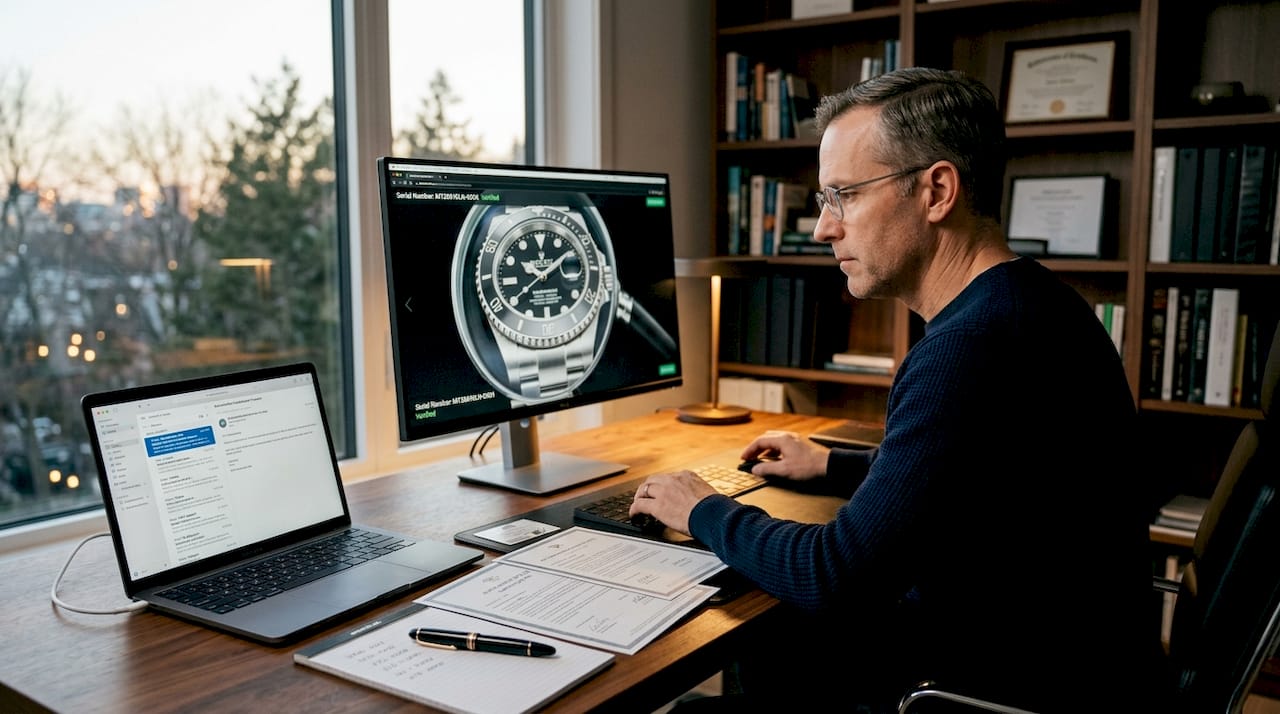
Artificial intelligence is also transforming the process at scale. AI-powered image analysis tools can scan thousands of product images to flag inconsistencies that human eyes might miss. Platforms processing large volumes of items use AI for initial screening, freeing up expert authenticators to focus on complex judgment calls. This combination of machine speed and human expertise raises overall accuracy significantly.
Here’s a comparison of major authentication methods and their relative strengths:
| Method | Strengths | Weaknesses |
|---|---|---|
| Serial numbers and date codes | Fast, widely understood | Easily replicated by sophisticated counterfeiters |
| Holograms and heat stamps | Difficult to duplicate precisely | Older formats can be copied with better tech |
| NFC chips and QR codes | Real-time verification, hard to fake | Chips can be transferred between items |
| Digital product passports | Full lifecycle tracking, resale-ready | Still rolling out across most brands |
| AI-assisted image analysis | High throughput, consistent screening | Only as good as the training data |
| Expert physical inspection | Nuanced and highly skilled | Costly and time-consuming at scale |
Authentication programs are also a strategic response to the counterfeit market’s scale and sophistication. The best systems layer multiple methods together, because no single approach catches everything. That’s what luxury authentication means in practice: a coordinated effort across physical, digital, and expert channels working together.
Pro Tip: When evaluating whether a seller’s authentication process is credible, ask specifically which methods they use and whether they combine human expertise with digital verification. A single-method approach is a warning sign.
Understanding what makes a bag luxury goes hand in hand with understanding how authentication works. The same craftsmanship details that make a piece extraordinary are the ones authenticators examine most closely. Knowing this helps you ask smarter questions when protecting your investment in any luxury purchase.
Authentication’s impact on value: price, resale, and buyer protection
Modern authentication doesn’t just offer peace of mind. It directly shapes what a luxury item is worth and what the buying or selling process looks like today.
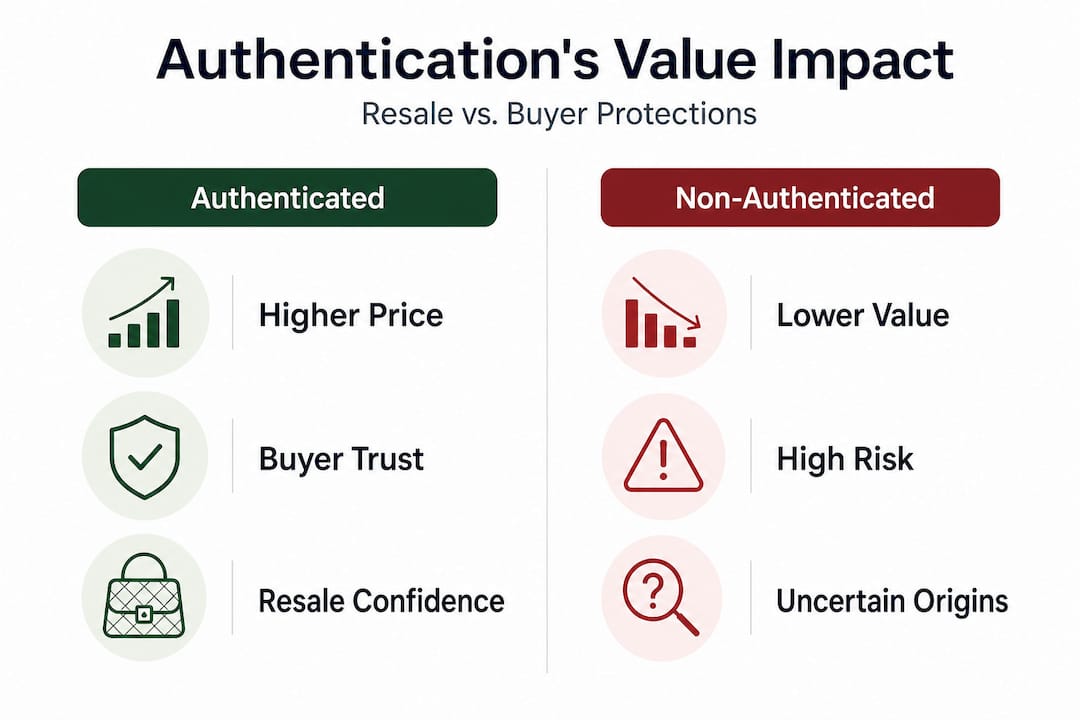
BCG research highlights consumers’ strong demand for trust and verification in secondhand transactions. This demand translates into real, measurable differences in resale prices. Authenticated items consistently command higher prices than unverified equivalents, sometimes by significant margins. A Chanel Classic Flap with verified provenance and a clear authentication history can sell for 15 to 25 percent more than an identical bag without documentation, simply because buyers feel secure. Liquidity improves dramatically too: verified pieces sell faster because the barrier to purchase is lower when trust is already established.
Here’s how the authenticated and non-authenticated resale experience compare side by side:
| Factor | Authenticated item | Non-authenticated item |
|---|---|---|
| Sale price | Higher, often by 15-25% | Lower, discount expected by buyers |
| Time to sell | Faster, less negotiation | Slower, more buyer hesitation |
| Dispute risk | Significantly reduced | Higher risk of returns and chargebacks |
| Buyer confidence | Strong, repeat buyers likely | Variable, first-time buyers may avoid |
| Resale platform access | Full platform access | May be restricted on premium platforms |
| Long-term collectibility | Maintains and increases over time | May depreciate due to unresolved doubts |
The advantages of authenticated bags go beyond price. When disputes arise, whether over condition, provenance, or identity, authentication records provide a paper trail that resolves issues quickly and fairly. Without that trail, both buyers and sellers are left in an uncomfortable limbo.
As a luxury buyer, here’s exactly what to ask for before committing to any significant purchase:
- Request the authentication documentation. Ask for the specific method used, who performed it, and when. A dated certificate from a recognized service carries weight.
- Verify serial and date codes independently. Cross-reference codes against brand-specific databases or guides before buying.
- Ask about the item’s ownership history. A shorter chain of ownership with documented transitions is a positive signal.
- Confirm whether digital verification is available. If the brand supports NFC or QR authentication, scan it yourself before completing the purchase.
- Check the platform’s guarantee policy. Understand what recourse you have if authentication is later disputed. A strong money-back guarantee is essential.
The Italian luxury authenticity tradition shows us that this matters deeply at the heritage level too. Craftsmanship and provenance are inseparable in the best luxury pieces, and authentication is the bridge between the two.
The fine print: limits, controversies, and what ‘authenticated’ really means
It’s possible to follow all the right steps and still encounter complications. Not all authentication is created equal, and understanding this nuance keeps you protected.
Here’s the reality: the word “authenticated” covers a wide spectrum. A certificate from a well-established, multi-method authentication service with certified gemologists and leather experts carries far more weight than a quick visual check by a resale platform’s generalist staff. Both might issue documentation labeled “authenticated,” but the reliability differs enormously.
“Even ‘authenticated’ does not necessarily mean a uniform or equally reliable method. The reliability depends on who performed the assessment, what methods they used, and the conditions under which the judgment was made.” — What ‘Authenticated’ Means in Luxury Resale
This matters practically. Authentication disputes and secrecy in the luxury industry reveal that even reputable platforms have faced high-profile cases where items passed authentication and were later revealed as fakes. No system is perfectly infallible. Human error, database gaps, and the sheer evolution of counterfeiting techniques all create cracks in even well-designed processes.
The gray areas extend to what criteria assessors use. One platform might focus primarily on hardware and stitching. Another may prioritize serial code matching and provenance documents. Neither approach is wrong, but the differences mean two services can reach different conclusions about the same item. This happens more often than the industry likes to admit.
For smart buyers, your authenticity checklist for bags should include evaluating the authentication source itself, not just its conclusion. And knowing the key tips for spotting counterfeit luxury goods empowers you to add your own layer of verification on top of any professional service.
Pro Tip: Always ask for the specific name of the authentication service and look them up independently. A credible service will have transparent methodology, publicly stated standards, and a history you can research before you trust their certificate.
The strongest protection comes from layering: professional authentication plus your own informed review plus a platform with a clear buyer guarantee. Together, these create a safety net that any single source alone cannot provide.
What most guides miss: the human factor and the future of luxury authentication
We’ve walked through the systems, the tech, and the challenges. But the part most guides overlook is this: the best authentication processes are only as strong as the humans and standards behind them.
Technology can process thousands of images per hour. AI can flag anomalies faster than any expert. Digital passports can store every detail of a piece’s history. But the judgment call at the end of that process still relies on trained human expertise, clear standards, and open communication with buyers about what those standards actually are. Half of luxury shoppers now prefer resale, and leading platforms have responded by investing in AI-driven intake and automation specifically so their expert authenticators can focus entirely on the cases that require nuanced human judgment. That’s exactly the right balance.
What we believe, from watching this market closely, is that transparency beats technology as the true differentiator. A platform or seller who can explain their authentication process clearly, who can tell you exactly who examined your item, which methods were used, and what the limitations of those methods are, is a seller you can trust. Opacity, even when wrapped in impressive-sounding certification language, should give you pause.
The future of luxury authentication is moving toward hybrid models. Automation handles volume and initial screening. Experts handle the edge cases and final judgments. Digital passports tie everything together across the item’s full lifetime, from factory floor to your wardrobe. This evolution is exciting because it makes the entire ecosystem more reliable for collectors and buyers at every level.
We also think the emotional dimension is underrated. When you buy pre-loved luxury and you know exactly where it came from, who verified it, and what standards were applied, the purchase feels different. It feels confident. That feeling is not a small thing. It’s the foundation of genuine trust in the luxury market, and it’s what we think the best platforms should be building toward with every sale.
Shop authenticated luxury with confidence
You’ve just equipped yourself with the knowledge to shop smarter. Now put it to work.
At Naise Shopper, every designer piece in our curated collection comes with authenticity guaranteed. We specialize in verified luxury from Gucci, Chanel, Prada, Valentino, Bottega Veneta, Saint Laurent, and Balenciaga, offered at deep discounts from retail prices. Our authentication process means you shop with real confidence, not hope. Explore our collections today, and discover what it feels like to secure a genuinely authenticated luxury piece at a price that makes it even more satisfying. Your next investment piece is waiting.
Frequently asked questions
Do all luxury brands authenticate their products the same way?
No, authentication processes and tools vary widely between brands and between resale platforms. As research confirms, reliability depends on who performed the assessment and which method they used.
What are digital product passports and how do they fight counterfeits?
Digital product passports store detailed, tamper-proof information about an item, letting buyers and sellers verify authenticity instantly and reducing the risk of fakes. BCG research notes that brands backing authentication with verifiable product identity through digital passports significantly reduce counterfeit risk throughout the item’s full lifecycle.
Does an authentication certificate mean an item is 100% genuine?
No, certificates indicate expert evaluation but are not infallible. As noted by luxury resale experts, even “authenticated” does not mean a uniform or equally reliable method was applied.
Why does authentication increase resale value on the secondary market?
Authentication builds buyer trust, making items more attractive and frequently boosting their price compared to non-verified pieces. BCG research confirms that consumers actively demand trust and verification in secondhand transactions, which directly drives up the value of properly authenticated items.