To consign a designer handbag successfully, you need to choose the right channel, gather authentication documentation and professional photos, agree on clear contract terms, and ship with insured tracking. That’s the whole playbook in one sentence. Here’s where to start:
- Choose your channel based on your top priority: speed, maximum payout, or full control over pricing.
- Gather documentation before anything else: original receipt, authenticity card, dust bag, box, spare strap, and lock/keys.
- Photograph everything front, back, interior, hardware, serial number, and any wear points.
- Review contract terms in writing: commission rate, markdown schedule, payout timing, and exit terms.
- Ship with insured tracking and photograph the parcel and waybill before handing it over.
Naiseshopper’s authentication checklist and the consignment mechanics explained on the Naiseshopper blog are solid starting points. With consignment, you retain ownership until the sale completes, then receive proceeds minus agreed commission and any listed fees.
Table of Contents
- Which selling channel is right for your goals?
- How does the step-by-step consignment process actually work?
- How to prepare your bag before consigning it
- What should you expect for fees, payout, and timeline?
- How does authentication work, and how do you ship safely?
- What happens after you list, and what if the bag doesn’t sell?
- Naiseshopper offers a direct alternative to traditional consignment
- Key Takeaways
- What sellers usually get wrong about consignment
- Useful sources and further reading
Which selling channel is right for your goals?
Every channel involves trade-offs. Matching the channel to your priority — speed, payout, low effort, or full control — is the single most important decision you’ll make before listing.
| Channel | Time to Sale | Seller Effort | Price Control | Likely Payout | Fees/Commission | Authentication Rigor | Buyer Protection |
|---|---|---|---|---|---|---|---|
| Resale consignors | Weeks to an extended period | Low | Moderate | Moderate–High | a commission rate that can vary from moderate to high | High | Strong |
| Peer-to-peer marketplaces | Days to a relatively short time period | High | Full | Highest potential | a platform fee that ranges from low to moderate | Varies | Limited |
| Auction houses | Set sale date | Moderate | Low (reserve only) | Variable | a commission rate that generally falls within a moderate to high range | High | Strong |
| Direct resale buyers | Fastest (days) | Lowest | None | Lowest | None | Moderate | Minimal |
Match your priority to your channel:
- Need top payout? Consignment or auction. Both take time, but they reach motivated buyers willing to pay full market value.
- Want the fastest turn? Direct resale. You’ll leave money on the table, but the transaction closes in days.
- Prefer full price control? Peer-to-peer platforms like local marketplace apps let you set and hold your price, though you handle every inquiry yourself.
- Low effort is the goal? Consignment wins. The consignor handles listing, buyer communication, and shipping.
Get valuations from at least two providers before committing, and compare commission rates, markdown schedules, and payout timing side by side.
How does the step-by-step consignment process actually work?
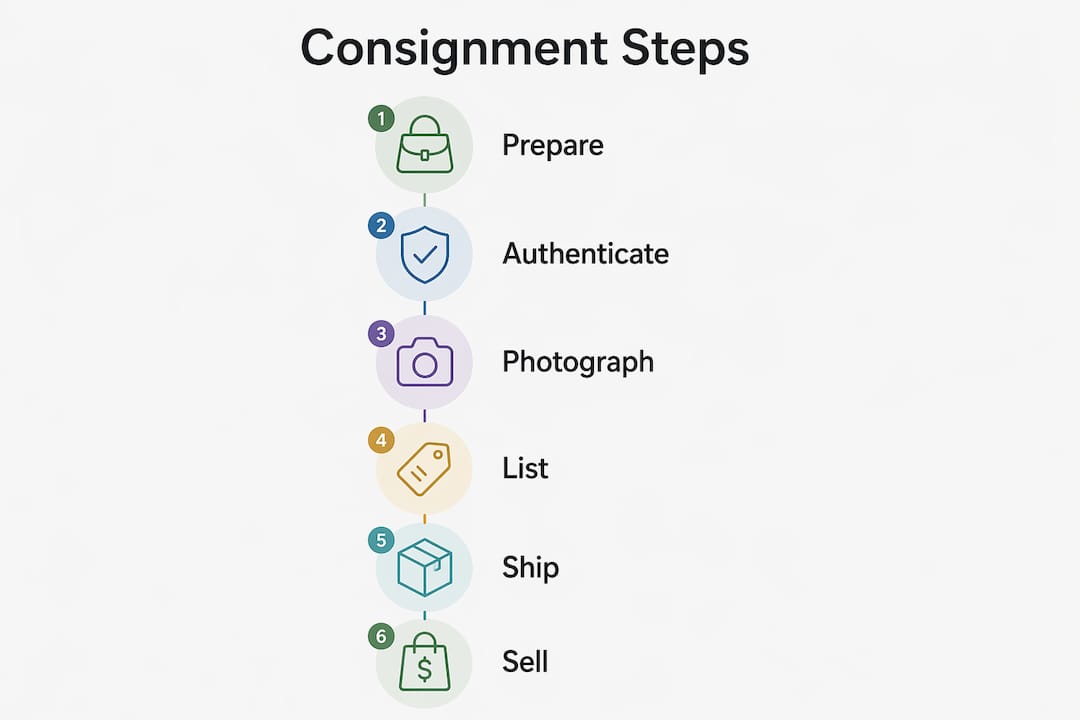
The typical consignment journey moves through seven stages. Each one has a decision point worth pausing on.
- Inquiry and valuation. Submit photos and documentation to your chosen consignor. Request a written valuation range, not a single number — ranges reflect real market variability.
- Authentication and appraisal. The consignor inspects materials, stitching, hardware codes, and provenance documents. In-person drop-off or insured courier collection are the two standard options.
- Pricing and contract negotiation. Agree on a listing price, a reserve (minimum acceptable price), and a markdown schedule. Get every term in writing before handing over the bag.
- Professional listing and marketing. The consignor photographs, writes the listing, and markets to their buyer network. Your job here is to stay available for questions.
- Sale and platform handling. Once a buyer commits, the consignor manages payment, authentication confirmation, and shipment to the buyer.
- Payout and settlement. You receive your share after commission and fees are deducted. Confirm the payout timeline in writing — standard windows range from a few days to a payout window that can extend up to about a month after sale completion.
- Unsold-bag options. If the bag doesn’t sell within the contract period, you can request return, renew the listing at a lower price, or switch to a different channel entirely.
Contract terms to get in writing before you hand over the bag:
- Commission percentage and whether it changes at different price tiers
- Automatic markdown schedule (e.g., a set percentage drop after 30 or 60 days)
- Minimum reserve price the bag will never fall below
- Who pays for cleaning, repairs, or re-photography
- Payout timing and method
- Termination and early exit terms
Pro Tip: Ask for the markdown schedule in writing and calculate the lowest price your bag could reach before the contract ends. If that floor feels too low, negotiate a higher reserve before signing.
How to prepare your bag before consigning it
Condition and documentation are the two levers you actually control. Original packaging and receipts can increase buyer confidence and may improve pricing, though no outcome is guaranteed.
Condition checklist — inspect and document each:
- Stitching: even, unfrayed, no loose threads
- Hardware: zippers, clasps, feet, and D-rings free of tarnish or scratches
- Lining: no stains, tears, or odors
- Exterior leather or suede: scuffs, color transfer, worn corners
- Structure: bag holds its shape without stuffing
- Scent: no mildew, perfume, or smoke odor
Documentation to gather:
- Original purchase receipt
- Authenticity card and care booklet
- Dust bag, box, and any original tissue
- Spare strap, lock, and keys (photograph these together)
For cleaning, use materials appropriate to the leather type. A soft, dry cloth handles surface dust on smooth leather. Suede requires a dedicated suede brush. When hardware tarnish or deep scuffs are present, professional restoration is worth considering — a clean, repaired bag typically commands a better price than a discounted one with visible damage. Read Naiseshopper’s luxury bag care tutorial for safe cleaning steps by material.
Photo shot list:
- Front, back, and both sides
- Interior (open and flat)
- Serial number, date code, or label
- Hardware close-ups (zipper pull, clasps, feet)
- Any wear points — be honest and document defects; transparency reduces disputes and returns
- All accessories laid out together
Use natural daylight or a daylight-balanced lamp. A neutral background (white or light gray) keeps the bag as the focal point.
Pro Tip: Photograph the sealed shipping parcel and the waybill label clearly before handing the bag to your courier. This single image is your proof of dispatch and condition at the moment of collection.

What should you expect for fees, payout, and timeline?
Your take-home follows a straightforward formula: Sale price − commission − platform/payment fees − shipping and insurance − cleaning or repairs = seller payout. Ask for a written breakdown of every line item before consigning.
| Payout Component | Example (Illustrative) |
|---|---|
| Platform/payment fees | −$60 |
Commission shapes vary. Some consignors charge a flat percentage; others use a tiered structure where the rate drops as the sale price rises. Markdown schedules shorten time to sale but also reduce your payout floor, so clarifying these terms upfront protects you.
Timeline depends on model, condition, season, and demand. A sought-after Chanel Classic Flap in excellent condition with full documentation can move in a relatively short time period. A niche or heavily worn piece may take an extended period, even with markdowns. Factor seasonality into your timing — pre-holiday and spring fashion a relatively short time period tend to drive stronger buyer activity.
Questions to ask your consignor about payout:
- When exactly does the payout clock start — sale date or buyer receipt confirmation?
- What payment method do you use, and are there wire or transfer fees?
- What happens to my payout if the buyer returns the bag?
How does authentication work, and how do you ship safely?
Authenticators examine materials, stitching consistency, hardware engravings, date codes, and provenance documents. The more complete your documentation, the faster and more confident the authentication process.
Shipping and insurance checklist before you hand over the bag: Confirm the declared insurance value matches the bag’s estimated market value — basic carrier insurance rarely covers luxury goods at full value. Photograph the sealed parcel and waybill before collection. Get written confirmation of who is liable for damage or theft in transit. Keep your tracking number and proof of dispatch until payout clears.
Trust signals to look for in a consignor:
- Written, documented authentication process
- Insured collection or drop-off with receipt
- Clear return and dispute policy in the contract
- Transparent markdown schedule and reserve terms
Red flags that warrant walking away:
- No written contract or verbal-only terms
- Unusually high upfront fees before the bag sells
- No stated insurance on the bag while in their possession
- Markdown schedules that are undocumented or vague
What happens after you list, and what if the bag doesn’t sell?
Once listed, the post-listing timeline typically runs: appraisal confirmation → live listing → buyer inquiries → offer or purchase → shipment to buyer → payout to you. Request a reasonable update cadence from your consignor — weekly or biweekly check-ins on views and inquiries are standard for active listings.
Post-sale steps to complete:
- Verify payout amount matches the written breakdown you agreed to
- Confirm funds have cleared before closing out the transaction
- Keep all records: contract, payout statement, shipping receipts, and photos for tax reporting
- Note the sale date and net proceeds — consignment income is reportable in the US; consult a tax professional for your specific situation
If the bag doesn’t sell:
- Request return and reassess condition or pricing
- Renew the contract at a lower listing price or adjusted reserve
- Accept a below-reserve offer if the consignor presents one (you are never obligated to)
- Switch to a peer-to-peer platform or direct resale buyer for a faster exit
Understanding resale value factors for designer bags helps you make a sharper call on whether to hold, reprice, or switch channels.
Naiseshopper offers a direct alternative to traditional consignment
If the consignment timeline feels too long or the commission math doesn’t work for you, Naiseshopper is a direct-sale alternative worth comparing. Naiseshopper specializes in authenticated designer handbags, shoes, and accessories from Gucci, Chanel, Prada, Valentino, Bottega Veneta, Saint Laurent, and Balenciaga — with insured international shipping, flexible payment options, and a curated checkout experience built for buyers who know exactly what they want.
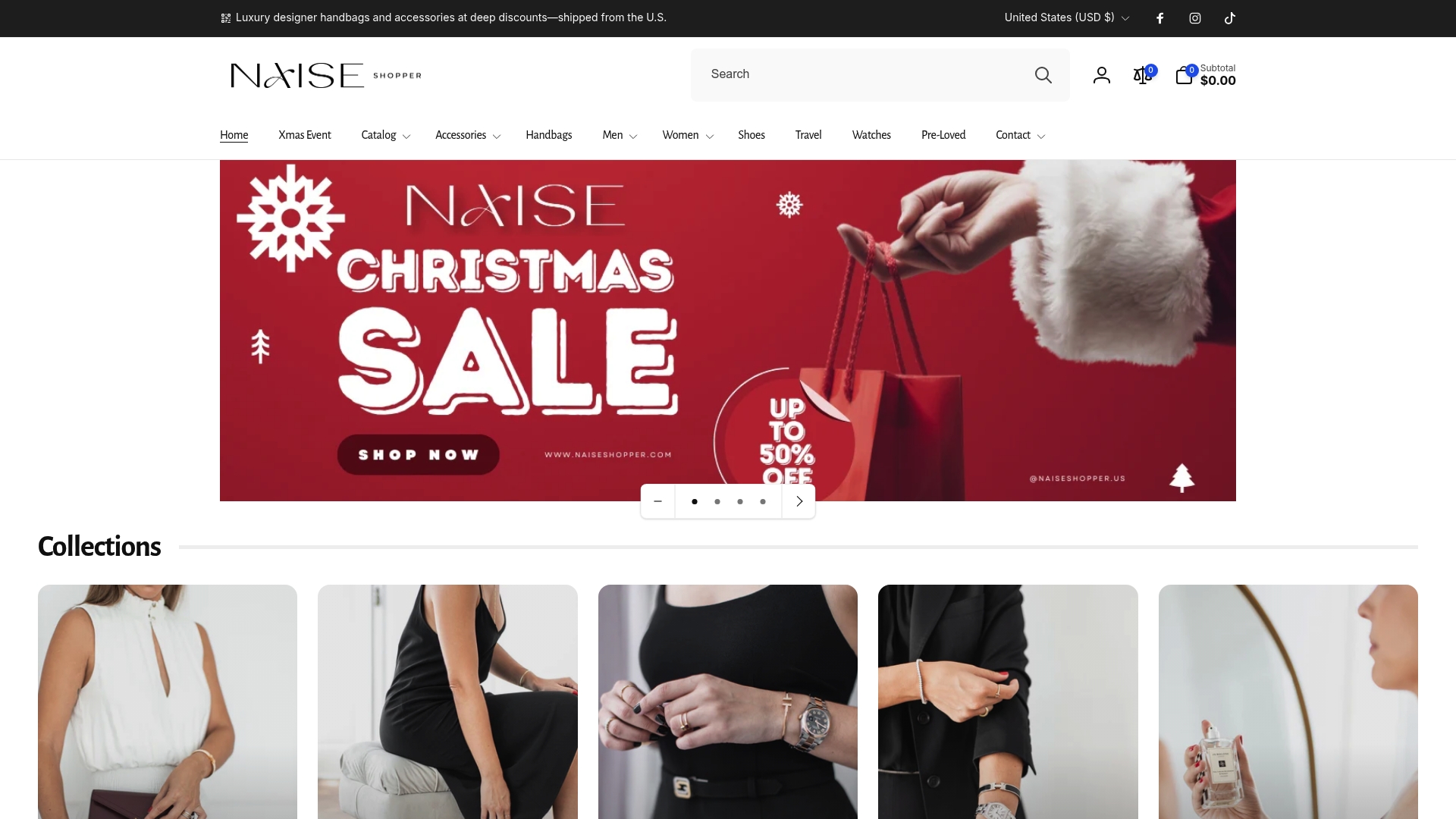
For sellers who prefer a predictable, fast transaction over a relatively short time period-long consignment window, Naiseshopper’s direct-sale model removes the commission uncertainty and markdown risk. Authentication is built into every listing, and the platform’s personal shopper service handles the details for US-based transactions. Browse authenticated listings like the Gucci G-Timeless watch to see the standard Naiseshopper applies across categories. Compare the commission and timeline against your consignor’s offer before you decide — the numbers often tell the story.
Key Takeaways
Successful bag consignment comes down to choosing the right channel, documenting everything in writing, and shipping with insurance that actually covers your bag’s market value.
| Point | Details |
|---|---|
| Match channel to priority | Choose consignment for payout, direct resale for speed, peer-to-peer for price control. |
| Gather full documentation | Collect receipt, authenticity card, dust bag, box, and spare accessories before any valuation. |
| Confirm contract terms in writing | Get commission rate, markdown schedule, reserve price, and payout timing documented before handover. |
| Insure the shipment properly | Confirm declared insurance value matches market value; photograph parcel and waybill before pickup. |
| Naiseshopper as a direct option | Naiseshopper offers authenticated direct-sale listings with insured shipping and no consignment wait. |
What sellers usually get wrong about consignment
Most sellers focus on the commission percentage and ignore the markdown schedule. That’s the real risk. A commission that may seem reasonable sounds reasonable until you realize the bag’s listing price drops a markdown schedule involving periodic price reductions, and by month three it’s selling for far less than you expected. The commission is the visible cost; the markdown schedule is the hidden one.
Documentation also matters more than sellers expect. Buyers at the luxury level ask for serial number photos, original receipts, and authenticity cards as a matter of course. A bag with complete provenance moves faster and holds its price better than an identical piece with missing paperwork. Photograph your serial number before you send anything — once the bag is with a consignor, getting that image back quickly isn’t always easy.
Timing listings for seasonality is underused. Pre-holiday an extended period and a relatively short time period around fashion a relatively short time period in February and September tend to generate stronger buyer interest for statement pieces. If your bag is a bold, seasonal style, listing it in alignment with that energy pays off. A classic neutral, on the other hand, sells year-round and doesn’t need the timing play.
Useful sources and further reading
- Designer Handbag Consignment: A Practical Guide to Selling Smart — Naluda Magazine’s overview of consignment mechanics, channel trade-offs, and contract terms.
- Luxury Consignment Explained: Ensuring Authentic Value — Naiseshopper’s guide to how consignment works, commission models, and seller expectations.
- Luxury Bag Care Tutorial: Keep Designer Bags Pristine — Safe cleaning and care steps by material type, directly applicable before listing.
- Resale Value for Designer Bags: What Buyers Need to Know — Factors that drive resale pricing and how to position your bag competitively.
- 7-Step Designer Bag Investment Checklist for Smart Shoppers — A decision framework for sellers weighing whether to consign, hold, or sell directly.